Search Header Logo
BIOLOGY REVIEW

BIOLOGY REVIEW

Assessment

Presentation

•

Biology

•

University

•

Hard

•
NGSS
HS-LS1-7, HS-LS1-5, HS-LS2-3

+9

Standards-aligned

Created by

JOCELYN SIYANG

Used 1+ times

FREE Resource

0 Slides • 59 Questions

1

Multiple Choice

A protein that binds to the operator and blocks the RNA polymerase
1
regulator
2
repressor
3
activator
4
corepressor

2

Multiple Choice

The "on/off" switch for an operon is called the
1
promoter
2
repressor
3
operator
4
gene

3

Multiple Choice

In the lac operon the inducer is

1

allolactose

2

glucose

3

galactose

4

all of the above

4

Multiple Choice

Question image

What is 1 in the diagram?

1

RNA polymerase

2

Inducer

3

Repressor

4

Operator

5

Multiple Choice

Question image

What is 2 in the diagram?

1

RNA polymerase

2

Inducer

3

Repressor

4

Operator

6

Multiple Choice

Question image

What is 4 in the diagram?

1

RNA polymerase

2

Inducer

3

Repressor

4

Operator

7

Multiple Choice

Question image

What is 5 in the diagram?

1

RNA polymerase

2

Inducer

3

Repressor

4

Operator

8

Multiple Choice

Question image

In the top picture the operon is

1

on

2

off

9

Multiple Choice

Question image

In the bottom picture the operon is

1

on

2

off

10

Multiple Choice

The lac operon genes only become expressed if:
1
lactose binds to the repressor
2
glucose binds to the repressor
3
lactose binds to the operator
4
the repressor binds to the operator

11

Multiple Choice

Question image

What type of operon is the trp (tryptophan) operon?

1

inducible

2

repressible

3

positive control

4

promoible

12

Multiple Choice

What does a promoter do?

1

it allows a gene to be transcribed

2

it creates a DNA segment

3

it is another word for ribosomes

4

it is another word for RNA

13

Multiple Choice

The tryptophan operon is

1

permanently turned on.

2

turned on when tryptophan is present in the growth medium.

3

turned off only when glucose is present in the growth medium.

4

turned off when tryptophan is added to the growth medium.

14

Multiple Choice

Which of the following is NOT a component in electron transport chain?

1

Cytochrome

2

Flavoprotein

3

Cytochrome c

4

ATP synthase

15

Multiple Choice

What is the final product of the Electron Transport Chain?

1

ATP

2

NADH

3

FADH2

4

ADP

16

Multiple Choice

As electrons travel down the electron transport chain, they release

1

ADP

2

Energy

3

ATP

4

Hydrogen ion

17

Multiple Choice

How many ATP produced for each NADH that enter the electron transport chain from Kreb's cycle?

1

1

2

2

3

3

4

4

18

Multiple Choice

How many ATP produced for each FADH2 that enter the electron transport chain from Kreb's cycle?

1

1

2

2

3

3

4

4

19

Multiple Choice

Where does oxidative phosphorylation take place?

1

Cytosol

2

Matrix of mitochondria

3

Innermembrane of mitochondria

4

Intermembrane space of mitochondria

20

Multiple Choice

Which of the following is not a feature of oxidative phosphorylation?

1

Direct transfer of phosphate from a substrate molecule to ADP

2

An electrochemical gradient across the inner mitochondrial membrane

3

A membrane bound ATP synthase

4

A proton motive force

21

Multiple Choice

What does FADH2 and NADH bring to the electron transport chain?

1

Oxygen

2

Water

3

Electron

4

ATP

22

Multiple Choice

ATP synthesis by ATP synthase is driven by

1

H+ movement

2

electron movement

3

NADH movement

4

FADH2 movement

23

Multiple Select

Question image

What are the final products of oxidative phosphorylation?

1

NADH

2

ATP

3

CO2

4

H2O

24

Multiple Choice

Chemiosmosis occurs as H+ ions move through ____ in the cristae, making ATP.

1

foldings

2

ATP synthase

3

protein channels

25

Multiple Choice

A poison which inhibits the activity of any cytochrome in the ETC will result in the following reaction:

1

Excess ATP

2

oxygen production

3

Insufficient ATP

4

water synthesis

26

Multiple Choice

Where, precisely in the cell, does glycolysis occur?

1

cytoplasm

2

matrix of mitochonria

3

cristae of mitochondria

4

Golgi apparatus

27

Multiple Choice

Where, precisely in the cell, does Kreb's Cycle occur?

1

cytoplasm

2

matrix of mitochonria

3

cristae of mitochondria

4

Golgi apparatus

28

Multiple Choice

In the electron transport chain, Oxygen acts as...

1

a carrier of electrons, passing electrons down the chain

2

a reducing agent

3

the final electron acceptor

4

a coenzyme

29

Multiple Choice

When protons are pumped outside the matrix, across the inner membrane...

1

water is made

2

a concentration gradient of H+ ions (protons) is created

3

NADH gets reduced

4

CO2 is produced

30

Multiple Choice

Which one of the following is not produced in cyclic photophosphorylation?

1

ATP

2

NADPH

31

Multiple Choice

An external source of electrons is not required in

1

Cyclic photophosphorylation

2

Non-cyclic photophosphorylation

3

Z-scheme of flow of electrons

4

All of these

32

Multiple Choice

Anoxygenic and oxygenic photosynthesis are respectively shown by

1

green algae and red algae

2

Red algae and monocots

3

Pigmented sulphur bacteria &cyanobacteria

4

BGA and higher plants

33

Multiple Select

Examples for electron carriers

1

NADH

2

FADH

3

Oxygen

4

pyrroloquinolone

34

Multiple Choice

Question image
What supplies the electrons that are lost in PS I?
1
the electrons from PS II
2
water
3
glucose
4
oxygen

35

Multiple Choice

What is the function of NADP+?
1
It absorbs light
2
It is an electron carrier
3
It is a light-reflecting pigment
4
It acts as long-term energy storage

36

Multiple Choice

Question image
Which of the following molecules is not needed for the Calvin Cycle?
1
CO2
2
ATP
3
NADPH
4
H2O

37

Multiple Choice

If the proton (H+) pump in the thylakoid was not working which molecule could not be made during the light reaction?

1

NADPH

2

ATP

3

Water

4

Oxygen gas

38

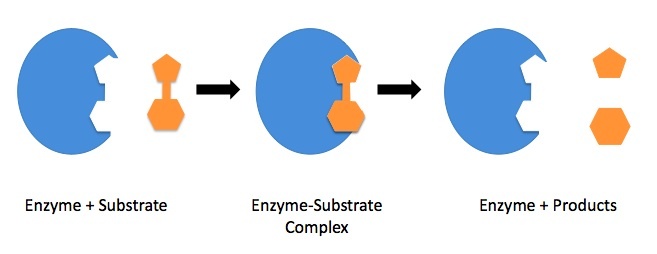
Multiple Choice

Question image
What is structure A?
1
Substrate
2
Active site
3
Enzyme
4
Products

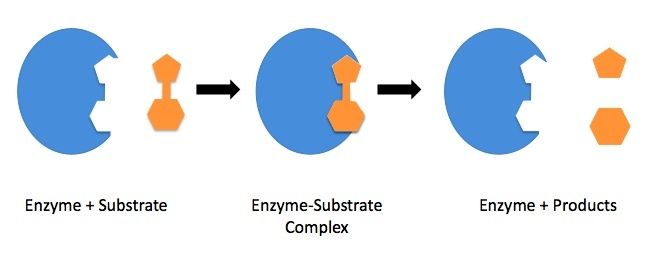
39

Multiple Choice

Question image
What is structure D?
1
Substrate
2
Active site
3
Enzyme
4
Products

40

Multiple Choice

Blocking Active site of an enzyme
1
competitive inhibition
2
allosteric inhibition

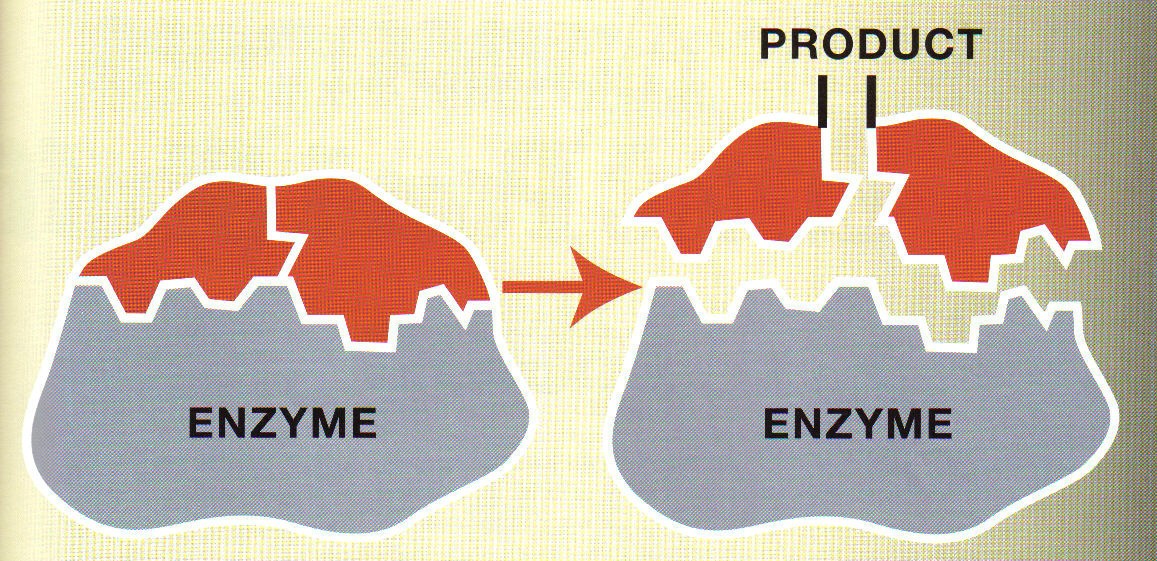
41

Multiple Choice

Question image
When a molecule can occupy the same active site as the substrate, a situation called __________________ can result
1
Competitive lnhibition
2
Allosteric Regulation
3
Non-Competitive Inhibition
4
Feedback Inhibition

42

Multiple Choice

Question image

A receptor site that a molecule can bind to that changes the shape of the active site is called a(n):

1

Allosteric Site

2

Active Site

3

Activation site

4

Reactant site

43

Multiple Choice

Question image

Molecules that bind to enzymes and enhance an enzyme's ability are called:

1

CoFactors

2

Competitive Inhibitors

3

Allosteric Inhibitors

44

Multiple Choice

If a mutation occurs in a DNA sequence that codes for an enzyme, what is the most likely result?

1

There will likely be no change in the shape and function of the enzyme.

2

The enzyme will most likely fold in a way that makes its shape incompatible with the substrate and the enzyme will not function correctly.

3

The enzyme will not be produced at all.

4

The enzyme will have an enhanced ability to bind with the substrate.

45

Multiple Choice

Describes the process by which an enzyme's function at the active site may be either activated or inhibited by the binding of a regulatory molecule at a separate site.

1

Allosteric Interactions

2

Feedback Inhibition

3

Competitive Inhibition

4

Noncompetitive Inhibition

46

Multiple Choice

The process by which a metabolic pathway is shut off by the product it produces

1

Allosteric Inhibition

2

Feedback Inhibition

3

Competitive Inhibition

4

Noncompetitive Inhibition

47

Multiple Choice

When Substance A was added to an enzyme reaction, product formation decreased. The addition of more substrate did not increase product formation. From this we can conclude that Substance A could be

1

product molecules.

2

an allosteric enzyme.

3

a competitive inhibitor.

4

a noncompetitive inhibitor.

48

Multiple Choice

Bacterial production of the enzymes needed for the synthesis of the amino acid tryptophan declines with increasing levels of tryptophan in the cell and increases with decreasing levels of tryptophan. This is an example of

1

Competitive Inhibition

2

Noncompetitive Inhibition

3

Feedback Inhibition

4

Irreversible Inhibition

49

Multiple Choice

In E.Coli, an enzyme called RelA catalyzes the formation of a molecule called alarmone. Alarmone binds to RelA at a location different than the active site and the binding of Alarmone to RelA increases the affinitiy of RelA for its substrate.

1

Positive Feedback

2

Allosteric Inhibition

3

Negative Feedback

4

Allosteric Activation

50

Multiple Choice

Movement of an organism toward or away from a chemical stimulus

1

phototaxis

2

chemotaxis

3

homeostasis

4

pseudopods

51

Multiple Choice

An organism's response to chemicals in the environment

1

gravitaxis or geotaxis

2

thigmotaxis

3

phototaxis

4

chemotaxis

52

Multiple Choice

How do bacteria have an impact on its environment

1

By multiplying and absorbing its host's nutrients

2

By constantly releasing toxins

3

By communicating with each other and releasing huge amounts of toxins together at once together

4

By eating away at the body

53

Multiple Choice

A process that allows bacteria to sense population density through concentration of signaling molecules

1

Quorum Sensing

2

Biofilm

3

Gap Junctions

4

Endocrine Signaling

54

Multiple Choice

Cyclic photophosphorylation has both photosystem I and II.

1

True

2

False

55

Multiple Choice

If a culture starts with 50 cells, how many cells will be present after five generations with no cell death?

1

200

2

400

3

1600

4

3200

56

Multiple Choice

Which of the following statements about autoinducers is incorrect?

1

They bind directly to DNA to activate transcription.

2

They can activate the cell that secreted them.

3

N-acylated homoserine lactones are autoinducers in gram-negative cells.

4

Autoinducers may stimulate the production of virulence factors.

57

Multiple Choice

Cells are active and synthesizing new protoplasm. This stage of growth is called

1

Lag phase

2

Log phase

3

STationary phase

4

Death phase

58

Multiple Choice

If the source of energy for bacteria is from chemical compounds they are said to be

1

Chemolithotrophs

2

Chemotrophs

3

Photoautotrophs

4

Autotrophs

59

Multiple Choice

You are working with a type of bacterium that has a GENERATION TIME of 30 minutes. You transfer cells from an EXPONENTIALLY GROWING culture to a fresh source of the SAME MEDIUM (assume no lag phase) so that the freshly inoculated medium CONTAINS 3.2 x 10⁶ CELLS PER MILLILITER. This new culture does NOT EXHIBIT A LAG PHASE. About HOW MANY CELLS (per milliliter) should you have AFTER 1.5 HOURS INCUBATION?

1

2.56 X 10⁷

2

1.28 X 10⁷

3

4.8 X 10⁷

4

3.2 X 10⁷

A protein that binds to the operator and blocks the RNA polymerase
1
regulator
2
repressor
3
activator
4
corepressor

Show answer

Auto Play

Slide 1 / 59

MULTIPLE CHOICE