Cell transport Mechanisms
Presentation
•
Biology
•
10th Grade
•
Medium
Standards-aligned
Used 12+ times
FREE Resource
15 Slides • 29 Questions
1
Cell transport Mechanisms
by Coach wilson
2
Cell Transport
3
Cell Membrane
Cell transport involves the movement of molecules across the cell membrane. All cells have a membrane; for example,
Eukaryotes: animals, plants, fungi
Prokaryotes: bacteria, archaea
4
Video Segments
In this lesson you will watch video segments from the Amoeba Sisters' video, Cell Transport, and other short video segments. In addition you will answer questions. To play each video segment, click on the video preview.
5
6
Multiple Choice
The cell membrane is made of a
DNA double helix
phospholipid bilayer
cellulose fiber framework
7
Multiple Select
Examples of molecules that are small enough to diffuse through the cell membrane using passive transport are (choose 3)
water
DNA
oxygen
carbon dioxide
polysaccharide
8
9
Multiple Choice
Channels in the membrane for facilitated diffusion are formed by
transport sugars
transport lipids
transport proteins
10
Multiple Choice
An important molecule that needs a transport protein to enter a cell is
oxygen
carbon dioxide
glucose
11
Multiple Choice
The energy used for active transport in cells comes from
ATP
polysaccharides
proteins
12
Multiple Choice
The process that can move molecules against the concentration gradient is
active transport
passive transport
13
14
Multiple Choice
Endocystosis is the process for moving materials
into a cell
out of a cell
15
Multiple Choice
Waste is moved out of cells through the process of
phagocytosis
exocytosis
pinocytosis
16
Phagocytosis
Phagocytosis means "cell eating," and it is the process used by human immune cells to eat pathogens in the body. Unicellular organisms , such as amoebas, get their food through phagocytosis. Hear how to pronounce phagocytosis correctly in this next video.
17
18
Phagocytosis in the human immune system
In the next video you will see a white blood cell, called a neutrophil, chasing bacteria and eating them.
19
20
Multiple Choice
When the neutrophil eats bacteria, it is using
active transport
passive transport
21
Phagocytosis in unicellular organisms
In the next video you will see an amoeba eat a paramecium. The sound effects are just that -- those are not the real sounds of unicellular organisms.
22
23
Multiple Choice
The molecule that provides energy for the amoeba is
DNA
phospholipid
ATP
24
Multiple Choice
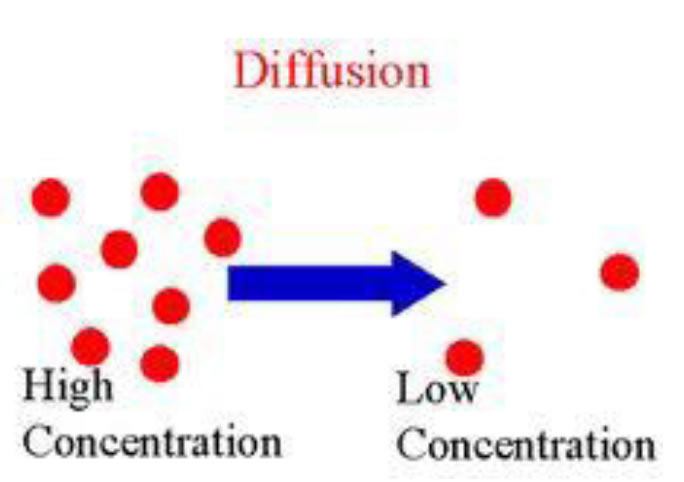
The movement of particles from an area of high to low concentration is known as--
Passive Transport
Active Transport
25
Multiple Choice
What is it called when large molecules move across the cell membrane from an area of high concentration to an area of low concentration through a protein channel?
Diffusion
Osmosis
Active Transport
Facilitated Diffusion
26
Multiple Choice
What is the name of the process in which small molecules move from an area of high concentration to an area of low concentration across the cell membrane
Diffusion
Osmosis
Active Transport
Facilitated Diffusion
27
Multiple Choice
28
Multiple Choice
The movement of molecules from low to high is known as
simple diffusion
facilitated diffusion
active transport
osmosis
29
Multiple Choice
30
Multiple Choice
31
Multiple Choice
32
33
Multiple Choice
34
Multiple Choice
35
Multiple Choice
36
Multiple Choice
37
Multiple Choice
38
Multiple Choice
39
Multiple Choice
40
Multiple Choice
41
Multiple Choice
42
Multiple Choice
43
Multiple Choice
Is it safe to drink salt water?
Yum, so salty!
No, you could die of dehydration.
44
Cell transport Mechanisms
by Coach wilson
Show answer
Auto Play
Slide 1 / 44
SLIDE

Similar Resources on Wayground
40 questions
Concept 1 Notes - Cell Theory and Organelles
Presentation
•
10th Grade
42 questions
Lesson 1 Homeostasis introduction
Presentation
•
10th Grade
37 questions
Photosynthesis/Cellular Respiration
Presentation
•
9th Grade
38 questions
Rhetorical Appeals and Strategies
Presentation
•
9th Grade
39 questions
G9 Chap 2.1 - Organisms and Their Relationships
Presentation
•
9th Grade
38 questions
Introduction to Genetics
Presentation
•
9th - 10th Grade
37 questions
Enzymes Theory
Presentation
•
10th Grade
38 questions
Reproduction in Plants
Presentation
•
10th Grade
Popular Resources on Wayground
24 questions
PBIS-HGMS Day 10
Quiz
•
6th - 8th Grade
10 questions
HCS SCI 03 Summer School Review 3
Quiz
•
3rd Grade
11 questions
Home Scope
Quiz
•
7th - 8th Grade
15 questions
HCS SCI 05 Summer School Assessment 3 Review
Quiz
•
5th Grade
35 questions
Lufkin Road Middle School Student Handbook & Policies Assessment
Quiz
•
7th Grade
18 questions
Geo 11.3 Area of Circles and Sectors
Quiz
•
9th - 11th Grade