Maxwell's Equation
Presentation
•
Physics
•
12th Grade
•
Medium
KEE CHIN HUI
Used 2+ times
FREE Resource
13 Slides • 27 Questions
1
Maxwell's Equation
By Dr KEE CH
2
3
4
Lesson objectives:
Students will be able to describe Maxwell's Equations.
Students will be able to recognized that electromagnetic radiation is part of electromagnetic spectrum.
Students will be able to acknowledge the importance and implications of Maxwell's Equations.
5
Revision (Wave)
6
Multiple Choice
7
Multiple Choice
8
Multiple Choice
9
Multiple Choice
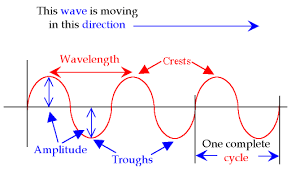
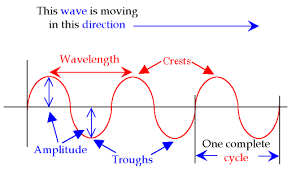
What is another name for wave height?
Frequency
Amplitude
Wavelength
Origin
10
Multiple Choice
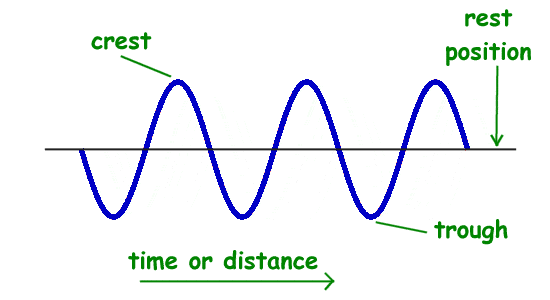
What is measured from crest to crest or trough to trough?
mediums
resting position
wavelength
origin
11
Multiple Choice
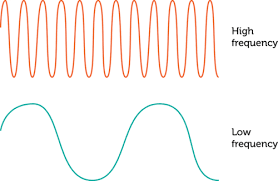
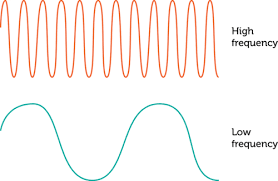
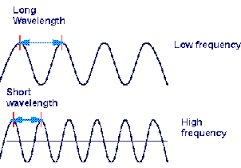
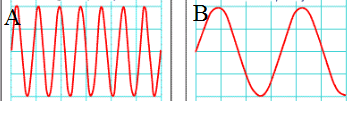
If a wave has a greater frequency, what happens to the wavelength?
increases
decreases
stays the same
12
Multiple Choice
If a wave has a greater frequency, what happens to number of waves per second?
increases
decreases
stays the same
13
Multiple Choice
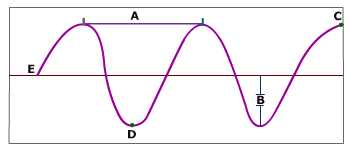
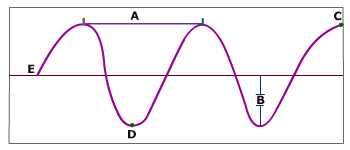
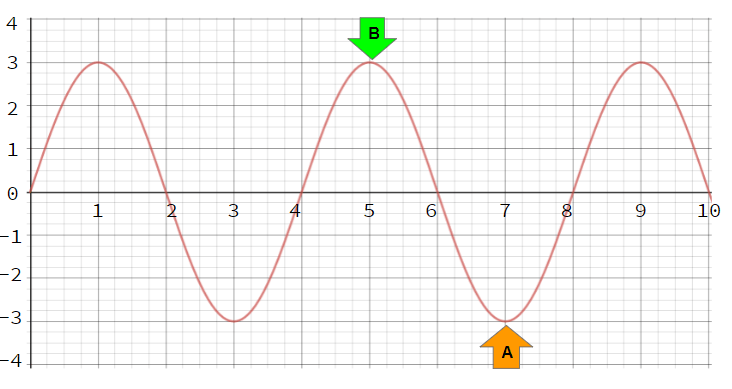
What is the amplitude of this wave?
2
3
6
10
14
Multiple Choice
What is the wavelength of this wave?
1
2
3
4
15
Multiple Choice
What property does the orange arrow (A) represent?
Crest
Trough
Wavelength
16
Multiple Choice
What property does the green arrow (B) represent?
Crest
Trough
Wavelength
17
Multiple Choice
This sound has high pitch, which means it has a higher frequency. This means when you hear the sound...
More waves hit your ears per second
Bigger waves hit your ears
Less waves hit your ears per second
Longer waves hit your ears
18
Multiple Select
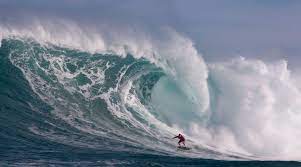
All waves carry energy from one place to another, but some waves carry more energy than others. A leaf falling on water produces waves so small they are hard to see. An earthquake under the ocean can produce huge waves that cause great destruction.
What affects the energy of a wave? Select the 3 that apply.
The energy in a wave is determined by amplitude, which is the distance from the rest position of a wave to the top or bottom.
Large amplitude waves contain more energy.
The energy in a wave is determined by frequency, which is the number of waves that pass by each second.
The medium (material) moving along with the wave.
19
Multiple Choice
A disturbance that transfers energy from place to place through matter or space
wave
position
time
protein
20
Multiple Select
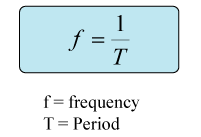
Frequency and period are closely related. Frequency is the inverse of period.
suppose the time from one crest to another (one crest to another is also known as "the period") is 5 seconds; what is the frequency?
Select the 2 that apply.
.2
1/5
.5
1/2
21
Multiple Choice
One hertz is equal to:
1 cycle per second
1 amplitude
1 frequency
all the cycles in the wavelength
22
Multiple Select
The particles in cold air have less kinetic energy than the particles in warm air. this means that they collide less often and take longer to transmit a sound wave pulse. What is this an explanation of:
the speed of mechanical energy
the speed of sound
the speed of electromagnetic energy
the speed within a vacuum
23
Multiple Choice
Each wavefront expands in a sphere, spreading the energy across a larger area. This means that the energy per unit area of the wave decreases as it moves farther form its source, causing the loudness of the sound wave to decrease. This is an example of:
energy of the sound wave changing as it moves farther away from the source.
energy of the sound wave remaining constant as it moves farther away from the source.
energy of the sound wave increases as it moves farther away from the source.
24
Multiple Choice
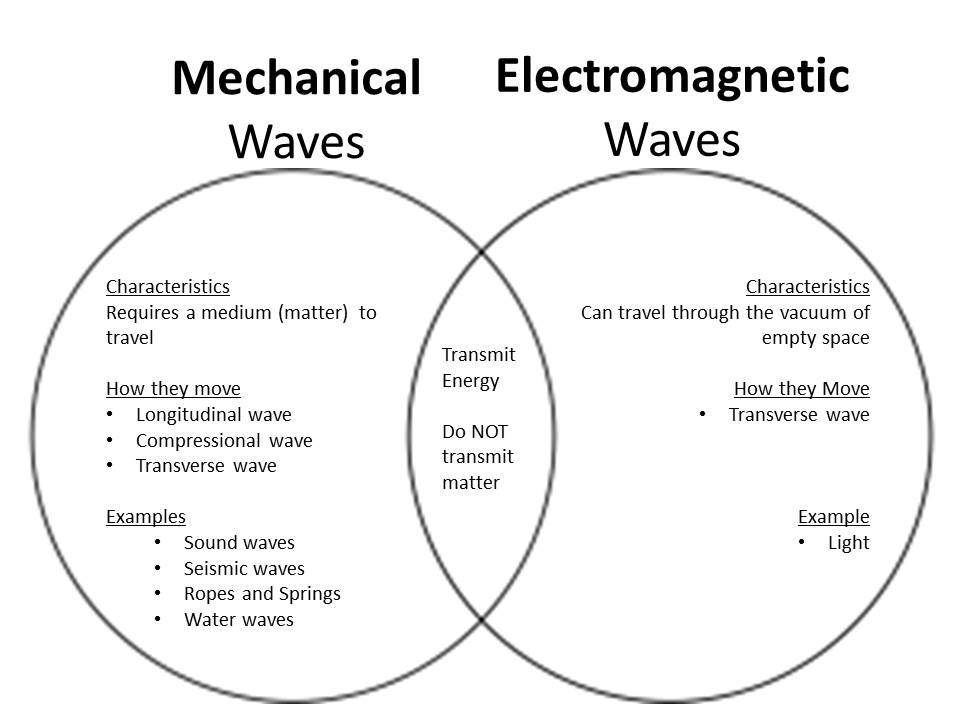
How are Electromagnetic waves different from Mechanical waves?
EM waves have very short wavelengths
EM waves transmit energy instead of matter
EM waves can travel through the vacuum of space (without particles)
EM waves can change direction by reflection
25
Multiple Choice
Wavelength and Frequency are related in that...
they are always the same
when one increases, the other decreases (inversely proportional)
there is no correlation
they both vary in an irregular pattern
26
What is Maxwell's Equations?
4 complicated equations that describe the world of electromagnetics.
27
What is Maxwell's Equations?
Gauss' Law
Gauss' Magnetism Law
Faraday's Law
Ampere's Law
28
Why is Maxwell's Equations important?
Critical in understanding antennas and electromagnetics.
29
Light is an Electromagnetic Wave
Maxwell's Equations showed that the speed of an Electromagnetic Wave is 3.00 x 10⁸m/s
30
So what?
First to determine the speed of propagation of electromagnetic (EM) waves was the same as the speed of light - and hence to conclude that EM waves and visible light were really the same thing.
31
32
Edpuzzle
Please click on the link
33
Check your understanding
34
Multiple Choice
An electric field is produced by a separation of charges or by:
a changing magnetic field
a constant magnetic field
a changing or constant magnetic field
35
Multiple Choice
A changing Electric Field will produce:
a changing electric field
a changing magnetic field
a gravitational field
36
Multiple Choice
Maxwell's Equations consist of ________ equations.
1
2
3
4
37
Multiple Choice
Which of Maxwell's Equations allows you to figure out an equation for the electric field created by a distribution of charge?
Gauss' Law
Gauss' Law for Magnetism
Faraday's Law
Ampere's Law
38
Multiple Choice
Which of Maxwell's Equations describes an electric field can be created by a changing magnetic field?
Gauss' Law
Ampere's Law
Faraday's Law
Gauss' Law for Magnetism
39
Multiple Choice
Which of Maxwell's Equations describes a changing electric field can create a magnetic field
Gauss' Law
Ampere - Maxwell law
Faraday's Law
Gauss' Law for Magnetism
40
Open Ended
What is the key takeaway from today's lesson?
Maxwell's Equation
By Dr KEE CH
Show answer
Auto Play
Slide 1 / 40
SLIDE

Similar Resources on Wayground
36 questions
5.2 Credit
Presentation
•
12th Grade
35 questions
Mining
Presentation
•
12th Grade
36 questions
General Physics 2 : Work Hard, Play Hard
Presentation
•
12th Grade
34 questions
LESSON #10
Presentation
•
12th Grade
36 questions
Levels of Organization - Cells to Biome
Presentation
•
KG
36 questions
Vibrations and Sound Revision
Presentation
•
11th - 12th Grade
37 questions
Frame of Reference
Presentation
•
12th Grade - University
37 questions
Complex numbers: add, subtract, multiply, and divide
Presentation
•
11th - 12th Grade
Popular Resources on Wayground
6 questions
Secondary Safety Quiz
Presentation
•
9th - 12th Grade
10 questions
MyPath Diagnostic Overview
Presentation
•
6th - 8th Grade
20 questions
Lab Safety Quiz
Quiz
•
6th Grade
21 questions
Continents and Oceans
Quiz
•
6th Grade
20 questions
Adding and Subtracting Decimals
Quiz
•
5th Grade
20 questions
Parts of Speech
Quiz
•
5th Grade
16 questions
Subject & Predicate
Quiz
•
5th Grade
21 questions
Lab Safety
Quiz
•
10th Grade