Search Header Logo
Cell Cycles and DNA Replication

Cell Cycles and DNA Replication

Assessment

Presentation

Science

9th - 12th Grade

Medium

NGSS
HS-LS1-4, HS-LS1-1, HS-LS3-2

+2

Standards-aligned

Created by

ms. sciencedonewright

Used 5+ times

FREE Resource

9 Slides • 44 Questions

1

Cell Cycles and DNA Replication

By ms. sciencedonewright

2

3

Multiple Choice

Question image

What is the longest stage of the cell cycle called?

1

Cytokinesis

2

M phase

3

Interphase

4

G1 Phase

4

Multiple Choice

During what stage does the G1, S and G2 phases happen?
1
Interphase
2
M phase
3
Mitosis
4
Cytokinesis

5

Multiple Choice

During which stage of the cell cycle does mitosis and cytokinesis occur?
1
Interphase
2
S phase
3
M phase
4
G1 phase

6

Multiple Choice

During what phase of the cell cycle is DNA replicated?
1
G1 phase
2
S phase
3
G2 phase
4
M phase

7

Multiple Choice

During what phase of the cell cycle does the cell grow?
1
G1 phase
2
S phase
3
M phase
4
Cytokinesis

8

Multiple Choice

During what phase of the cell cycle does the cell prepare for mitosis?
1
G1 phase
2
S phase
3
G2 phase
4
M phase

9

Multiple Choice

What must occur during the cell cycle to ensure proper division of the chromosomes?  
1
The cell must grow in size
2
The mitochondria must divide 
3
The DNA of the cell must replicate
4
The cell membrane must dissolve

10

Multiple Choice

The main purpose of DNA replication is to ___.  
1
Capture sunlight
2
Store energy in the bonds of a glucose molecule
3
Synthesize proteins 
4
Copy genetic information 

11

Mitosis

Let's look at the part of the cell cycle labeled "M Phase" or MITOSIS.

  • the goal of mitosis is to create 2 IDENTICAL DAUGHTER CELLS, or DIPLOID cells.

  • There are 4 main phases...​

Biology | Cells

Cell Cycle: Mitosis

12

media

13

Multiple Choice

Question image

In mitosis, the two resulting cells are

1

different from the starting cell and identical to each other.

2

different from the starting cell and different from each other.

3

identical to the starting cell and different from each other.

4

identical to the starting cell and identical to each other.

14

Multiple Choice

Question image

How many stages are in mitosis?

1

1

2

2

3

3

4

4

15

Multiple Choice

Question image
What is the diploid number of chromosomes in the above diagrams?   
1
2
2
4
3
6
4
8

16

Multiple Choice

A daughter cell that resulted from a mitotic division has 24 chromosomes.  How many chromosomes did the parent cell have?   
1
6
2
12
3
24
4
48

17

Multiple Choice

Question image

Put the following stages of mitosis in order: anaphase, prophase, metaphase, and telophase.

1

prophase, metaphase, telophase, anaphase

2

prophase, anaphase, metaphase, telophase

3

prophase, metaphase, anaphase, telophase

4

prophase, telophase, metaphase, anaphase

18

Multiple Choice

Question image

The stages of the cell cycle are shown in random order to the left.  Starting with prophase, sequence the diagrams to show the stages of mitosis.                          

1
5-3-1-2-4
2
3-1-4-2-5
3
4-1-2-5-3
4
2-3-1-5-4

19

Multiple Choice

Question image

What phase of Mitosis is pictured here?

1

Prophase

2

Metaphase

3

Anaphase

4

Telophase

20

Multiple Choice

Question image

What phase of Mitosis is pictured here?

1

Prophase

2

Metaphase

3

Anaphase

4

Telophase

21

Multiple Choice

Question image

What phase of Mitosis is pictured here?

1

Prophase

2

Metaphase

3

Anaphase

4

Telophase

22

Multiple Choice

Question image

What phase of Mitosis is pictured here?

1

Prophase

2

Metaphase

3

Anaphase

4

Telophase

23

Multiple Choice

Mitosis results in how many cells, and of what type?

1

2, Haploid

2

2 Diploid

3

4 Haploid

4

4 Diploid

24

Multiple Choice

Uncontrolled cell division results in what?

1

Cell growth

2

Cell death

3

tumors/cancer

4

none of these

25

Mitosis vs Meiosis

Now let's look at a very similar process to Mitosis, called MEIOSIS.

  • meiosis creates 4 NON-IDENTICAL DAUGHTER CELLS, or HAPLOID cells

  • Has 4 phases, just goes through it TWICE :0

Biology | Cells

Some text here about the topic of discussion

26

27

media

28

Multiple Choice

Question image

What is the result when a single cell reproduces by meiosis?

1

two cells that have twice the genetic information as the parent cell

2

four cells that have half the genetic information as the parent cell

29

Multiple Choice

Question image

Which process and type of resulting cells are represented?

1

mitosis, gametes

2

mitosis, body cells

3

meiosis, gametes

4

meiosis, body cells

30

Multiple Choice

Question image

CROSSING OVER TAKES PLACE DURING

1

PROPHASE II

2

PROPHASE I

3

INTERPHASE

4

METAPHASE I

31

Multiple Choice

What is it called when a sperm and egg meet?
1
meiosis
2
fertilization
3
cell division
4
mitosis

32

Multiple Choice

The chromosomes that pair up during meiosis, are called __________ chromosomes.  
1
homozygous 
2
asexual
3
homologous
4
genes

33

Multiple Choice

A male shark has 40 chromosomes in each of its sex cells. How many would be present in its body cells?
1
20
2
40
3
80
4
160

34

Multiple Choice

Question image
Which letter(s) in the diagram correspond to cells that are haploid? 
1
A
2
B
3
C
4
A and B

35

Multiple Choice

Compared to the number of chromosomes contained in a body cell, how many chromosomes would normally be contained in a gamete?
1
The same number
2
One-fourth as many
3
Twice as many
4
Half as many

36

Multiple Choice

A human zygote should have _____ chromosomes inside.
1
46
2
23
3
92
4
64

37

Multiple Choice

Females have ____ and males have _____ chromosomes.
1
XX, XY
2
XY, XX
3
XX, XX
4
XY, XY

38

Multiple Choice

A human being has a somatic cell that has 46 chromosomes.  What is the haploid number found in a gamete?
1
23
2
46
3
69
4
92

39

Multiple Choice

Diploid Cells are represented by
1
2n
2
n
3
4n
4
1/2 n

40

Multiple Choice

This law describes how each member of a homologous pair is pulled randomly to one side or another in anaphase I

1

Law of Segregation

2

Law of Independent Assortment

3

Law of Gravity

4

Law of Mathematical Order

41

Multiple Choice

This law describes how each homologous pair separates independently of any other pairs during Anaphase I of meiosis

1

Law of Segregation

2

Law of Independent Assortment

3

Law of Gravity

4

Law of Mathematical Order

42

Multiple Choice

Any change in the sequence of DNA is a

1

recombination

2

mutation

3

chromatin

4

independent assortment

43

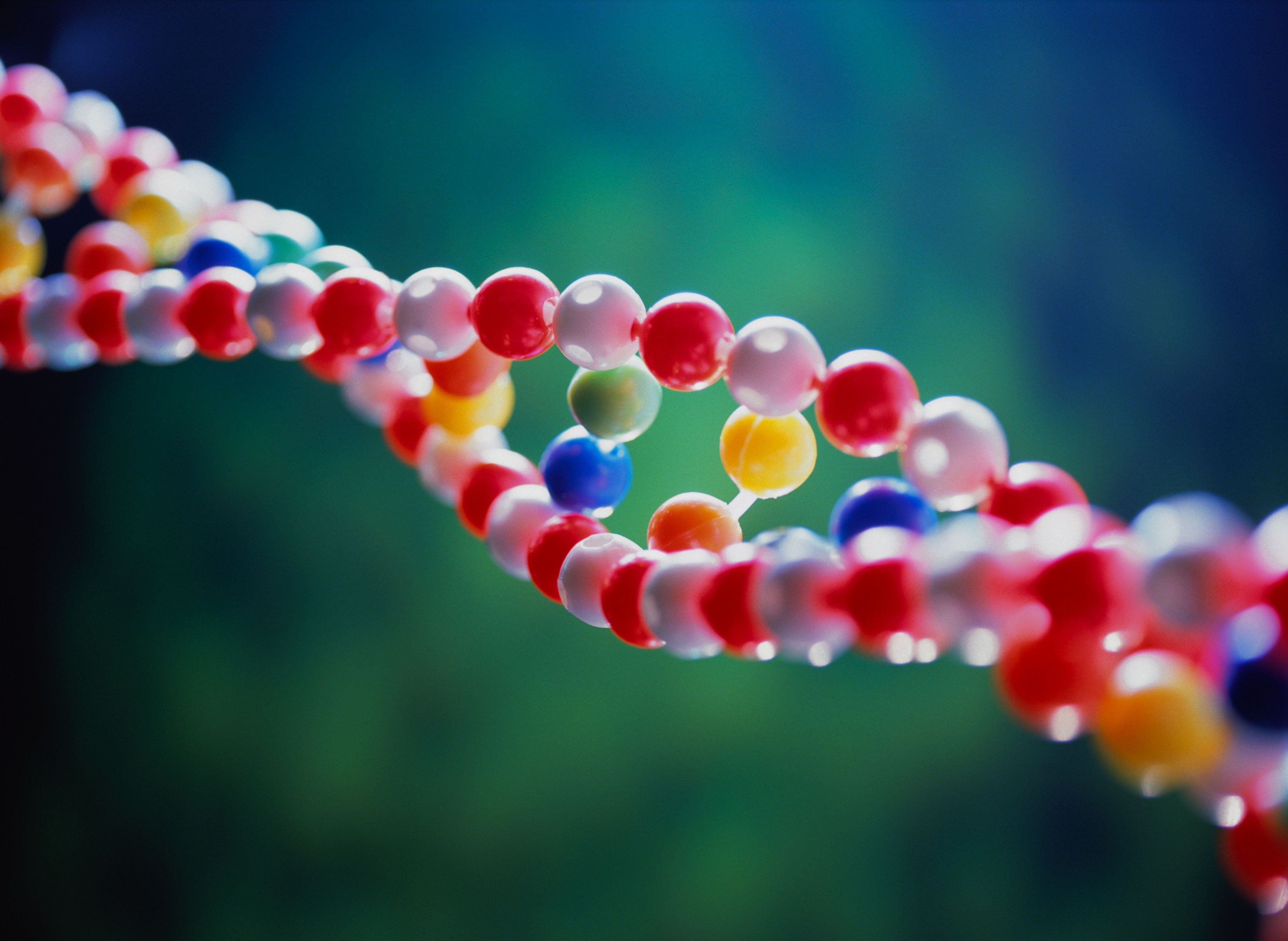
DNA and Nucleotides

DNA= Deoxyribonucleic Acid (aka your genes!)

  • DNA is comprised of nucleotides. Nucleotides link together to form a double helix structure that links together compose chromosomes DURING REPLICATION in Interphase and Mitosis/Meiosis :)​

Subject | Subject

Some text here about the topic of discussion

44

45

Multiple Choice

What does DNA stand for?
1
Deoxyribonucleic acid
2
Denitrogenous acid
3
Deribonucleic acid
4
Diribonucleic acid

46

Multiple Choice

Question image
Which of the following best describes a DNA molecule?
1
double helix
2
contains ribose
3
made of amino acids
4
contains Uracil

47

Multiple Choice

Question image
DNA is a polymer made of:
1
Nucleotides
2
Ribosomes
3
Purines
4
Pyrimidines

48

Multiple Choice

Question image
Why is DNA important?
1
it is very small and very complicated
2
it's in everything
3
it serves as the blueprint for traits of all living things
4
because we eat it every day for energy

49

Multiple Choice

Which organelle is DNA usually found in?
1
cell membrane
2
vacuole
3
ribosome
4
nucleus

50

Multiple Choice

What are the three components of a nucleotide?
1
sugar, hydrogen, nitrogen base
2
sugar, oxygen, nitrogen base
3
sugar, phosphate, nitrogen base
4
sugar, phosphate, protein

51

Multiple Choice

Question image
DNA codes for...
1
bases
2
proteins
3
amino acids
4
phosphates

52

Multiple Choice

Question image

Name this structure

1

double helix

2

nucelotide

3

twisted ladder

4

hydrogen bond

53

Multiple Choice

Why is DNA important?

1

It gives each cell instructions on how to do its job.

2

It is what the cell membrane is made of.

3

It helps the cell use water.

4

It is food for the cell.

Cell Cycles and DNA Replication

By ms. sciencedonewright

Show answer

Auto Play

Slide 1 / 53

SLIDE