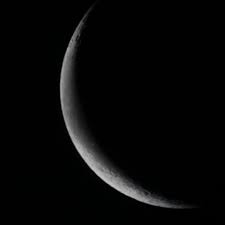
Moon Phases/Lunar Cycle Guided Lesson
Presentation
•
Fun, Science
•
6th - 8th Grade
•
Medium
Bobby Menendez
Used 175+ times
FREE Resource
22 Slides • 36 Questions
1
Learning Objective: SWBAT demonstrate and predict the the sequence of events in the Lunar Cycle 8.7B
Phases of the Moon
2
Poll
Which best conveys your MOOd?
3
•
It takes the moon 27.3 days to revolve around
the Earth one time
•
The lunar cycle (from new moon back to new
moon) takes 29.5 days
•
The phases of the moon are a reflection of the
Sun’s light bouncing off of the moon’s surface
•
The moon appears to change shape because
only certain portions of its illuminated side are
seen as the moon revolves around Earth
4
5
•
There are 8 moon phases
•
The same moon phase is seen by everyone on
Earth each night – people in the northern and
southern hemispheres do not see opposite
moon phases
•
The first half of the lunar cycle the light reflected
off of the moon’s surface appears to increase (waxing phase)
•
The second half of the lunar cycle the light
reflected off of the moon’s surface appears to
decrease (waning phase)
6
7
Waxing Phases
Occur after the New Moon
The moon appears to be growing
Only the right side of moon is visible
8
Waning Phases
Occurs after the Full Moon
The Moon appears to be shrinking
Only the left side of the moon is visible
9
Multiple Choice
What does waning mean?
Light on moon is increasing on the right side
light on the moon is decreasing on the right side
10
Multiple Choice
What does waxing mean?
Light on moon is increasing on the right side
light on the moon is decreasing on the right side
11
Multiple Choice
What does crescent mean?
less than half of the moon appears to be illuminated
more than half of the moon appears to be illuminated
12
Multiple Choice
What does gibbous mean?
less than half of the moon appears to be illuminated
more than half of the moon appears to be illuminated
13
14
Multiple Choice
How long is a lunar cycle?
7.5 days
29.5 days
365 days
15
Multiple Choice
Why does the moon look different each night?
the moon orbits the earth so it is in a different spot each night
the earth orbits the moon so it is in a different spot each night
16
Multiple Choice
What phase occurs on the designated part of this graph?
New Moon
Full Moon
Waning Crescent
Waxing Crescent
17
Multiple Choice
What direction does the moon orbit the earth?
clockwise
counter-clockwise
18
19
20
Multiple Choice
What does WAXING mean?
light on the moon appears to be increasing
light on the moon appears to be decreasing
21
Multiple Choice
What does WANING mean?
light on the moon appears to be increasing
light on the moon appears to be decreasing
22
Multiple Choice
1 week
1 month
1 year
1 Day
23
Multiple Choice
Earth
inner core
Sun
We can never know
24
•
No reflected light from the sun is visible
•
Occurs directly after a waning crescent, but
before a waxing crescent
25
•
Less than half of the moon is visible from Earth
•
The visible light appears on the right
•
Occurs directly after a new moon, but before a
first quarter
26
Multiple Choice
27
•
Half of the moon is visible from Earth
•
The visible light appears on the right
•
Occurs directly after a waxing crescent, but
before a waxing gibbous
28
•
More than half of the moon is visible from Earth
•
The visible light appears on the right
•
Occurs directly after a first quarter, but before a
full moon
29
•
A full moon is fully visible (100% illuminated) as
viewed from Earth
•
Marks the half way point of the lunar cycle
•
Occurs directly after a waxing gibbous, but
before a waning gibbous
30
•
More than half of the moon is visible from Earth
•
The visible light appears on the left
•
Occurs directly after a full moon, but before a
third/last quarter
31
Multiple Choice
Name the phase of the moon for letter "f"
Waning Gibbous
Waxing Gibbous
Waning Crescent
Waxing Crescent
32
•
Half of the moon is visible from Earth
•
The visible light appears on the left
•
Occurs directly after a waning gibbous, but
before a waning crescent
33
•
Less than half of the moon is visible from Earth
•
The visible light appears on the left
•
Occurs directly after a third/last quarter, but
before a new moon
34
Multiple Choice
waning crescent
waxing crescent
waning gibbous
35
New
Moon
Full
Moon
1stQuarter
Waxing
Gibbous
Waxing
Crescent
3rdQuarter
Waning
Gibbous
Waning
Crescent
36
Multiple Choice
What is the phase of the Moon at position #5?
New Moon
Third Quarter Moon
First Quarter Moon
Full Moon
37
Multiple Choice
can't tell
always changes
half
3/4
38
Multiple Choice
Observe the moon and determine if it is a crescent, quarter, or gibbous
Crescent
Quarter
Gibbous
39
Multiple Choice
What is this phase called?
First Quarter
Waning Crescent
Third Quarter
40
Multiple Choice
Where would the Sun need to be in this diagram to cause these phases of the moon?
At the Bottom
At the Left
At the Top
At The Right
41
Multiple Choice
What is this phase called?
Waxing Gibbous
First Quarter
Waning Gibbous
Third Quarter
42
Match
Match the following Moon Phases with the name
Last Quarter
Waning Crescent
Waxing Crescent
Waxing Gibbous
Full Moon
Last Quarter
Waning Crescent
Waxing Crescent
Waxing Gibbous
Full Moon
43
Match
Match the following Moon Phases with the name
Waxing Gibbous
New Moon
Waxing Crescent
Waning Gibbous
1st Quarter
Waxing Gibbous
New Moon
Waxing Crescent
Waning Gibbous
1st Quarter
44
Multiple Choice
all of it
the same side
none of it
only one quarter
45
Multiple Choice
Click on the waxing gibbous phase
46
Multiple Choice
Observe the moon and determine if it is waxing or waning
Waxing
Waning
47
Multiple Choice
What moon phase will occur next in the lunar cycle?
waning crescent
waning gibbous
waxing crescent
waxing gibbous
48
Multiple Choice
What would the moon look like in about 2 weeks after this one?
Full Moon
New Moon
Waning Crescent
Waxing Crescent
49
Multiple Choice
Which represents the First Quarter phase?
50
Multiple Choice
April 29th
July 4th
May 4th
September 12th
51
52
Multiple Choice
Which of the following completes the lunar cycle?
53
Hotspot
Where must the moon be for a solar eclipse?
54
Hotspot
Where must the moon be for a lunar eclipse?
55
If the Earth was flat, we would see a bar shape on the moon
Blood Moon/ Harvest Moon
Blue Moon
Examples of
Normal Lunar Eclipses
56
Draw
Shade the moon to represent the WAXING CRESCENT PHASE
57
Match
new moon
full moon
first quarter
waxing crescent
Waning crescent
new moon
full moon
first quarter
waxing crescent
Waning crescent
58
Congrats! You have completed this lesson!
Learning Objective: SWBAT demonstrate and predict the the sequence of events in the Lunar Cycle 8.7B
Phases of the Moon
Show answer
Auto Play
Slide 1 / 58
SLIDE

Similar Resources on Wayground
53 questions
The Immune System Lessons
Presentation
•
6th - 8th Grade
52 questions
Energy Transformation
Presentation
•
6th - 8th Grade
51 questions
7th-T2 L1: States of Matter
Presentation
•
6th - 8th Grade
53 questions
The immune system and more
Presentation
•
6th - 8th Grade
49 questions
Electricity and Magnetism
Presentation
•
6th - 8th Grade
51 questions
Catastrophic Events
Presentation
•
7th Grade
53 questions
M NM MD Graphic Organizer
Presentation
•
6th - 8th Grade
56 questions
Unit 5 Adaptations
Presentation
•
7th Grade
Popular Resources on Wayground
20 questions
STAAR Review Quiz #3
Quiz
•
8th Grade
20 questions
Equivalent Fractions
Quiz
•
3rd Grade
6 questions
Marshmallow Farm Quiz
Quiz
•
2nd - 5th Grade
20 questions
Main Idea and Details
Quiz
•
5th Grade
20 questions
Context Clues
Quiz
•
6th Grade
20 questions
Inferences
Quiz
•
4th Grade
19 questions
Classifying Quadrilaterals
Quiz
•
3rd Grade
12 questions
What makes Nebraska's government unique?
Quiz
•
4th - 5th Grade
Discover more resources for Fun
15 questions
EASTER FUN
Quiz
•
3rd - 6th Grade
15 questions
Brain Teaser
Quiz
•
3rd - 9th Grade
22 questions
Disney Trivia
Quiz
•
6th - 8th Grade
53 questions
Trivia
Quiz
•
6th - 8th Grade
18 questions
candy
Quiz
•
8th Grade
18 questions
Trivia Questions
Presentation
•
1st - 6th Grade
16 questions
Logos
Quiz
•
7th Grade
20 questions
FAST FOOD Fun!!!
Quiz
•
6th - 8th Grade