Search Header Logo
Biology EOC part 1: Molecular and Cellular bio.

Biology EOC part 1: Molecular and Cellular bio.

Assessment

Presentation

Biology

9th - 12th Grade

Easy

NGSS
HS-LS1-6, HS-ESS2-5, HS-LS1-1

+9

Standards-aligned

Created by

Chris Viadero

Used 36+ times

FREE Resource

30 Slides • 35 Questions

1

Biology EOC part 1: Molecular and Cellular bio.

By Chris Viadero

2

media

3

Multiple Choice

What are the building blocks of proteins?
1
amino acid
2
fatty acid
3
nucleotide
4
lipid

4

Multiple Choice

What are the single sugars that are the building blocks of carbohydrates?
1
monosaccharides
2
disaccharides
3
polysaccharides
4
amino acid

5

Multiple Choice

DNA and RNA are examples of 
1
Carbohydrates
2
Lipids
3
Proteins
4
Nucleic Acids

6

Multiple Choice

Question image
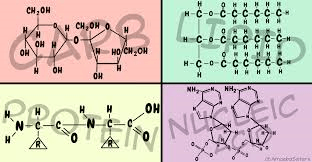
Building blocks of the body, hair , muscles etc.
1
protein
2
nucleic acid
3
lipids
4
carbohydrates

7

media

8

media

9

Multiple Choice

Question image
What elements are common to all 4 biomolecules?
1
Carbon, hydrogen, nitrogen
2
Carbon, Nitrogen, Phosphorus
3
Carbon, Hydrogen, Oxygen
4
Carbon, Hydrogen, Phosphorus

10

Multiple Choice

A monomer is ...
1
a single atom
2
a building block for polymers
3
a single element
4
is an inorganic molecule

11

media

12

media

13

Multiple Choice

When water is added to split a molecule, the reaction is known as a(n) __ reaction.
1
dehydration synthesis
2
condensation
3
hydrolysis
4
super magical 

14

Multiple Choice

Which of the 4 major macromolecules provides a quick burst of energy?
1
Carbohydrates
2
Lipids
3
Proteins
4
Nucleic Acids

15

Multiple Choice

How does your body use lipids?
1
Primary source of energy
2
energy storage and insulation
3
speeds up chemical reaction
4
defense

16

Multiple Choice

Question image

Water is a polar molecule, which means it has a positive and a negative side. Hydrogen bonds form when:

1

The positive end of one water molecule bonds to the positive end of another water molecule.

2

The negative end of one water molecule bonds to the negative end of another water molecule.

3

The positive end of one water molecule bonds to the negative end of another water molecule.

17

media

18

media

19

Multiple Choice

Question image

The ability of water molecules to stick to each other, creating surface tension is called:

1

Cohesion

2

Adhesion

3

Insulation

4

Ph

20

21

media

22

media

23

Multiple Choice

Question image

The fact that water can stick to other substances is called:

1

Ph

2

Adhesion

3

Cohesion

4

Insulation

24

media

25

media

26

Multiple Choice

Question image

Heat Capacity is a measure of the heat required to raise the temperature of 1g of a substance by 1°C.


So...

True or False:

Water has a very high heat capacity, which means it resists changing temperature when heat is added or removed.

1

True

2

False

27

media

28

Multiple Choice

Question image

Why does ice float on water?


1

When it freezes it becomes less dense

2

When it freezes it becomes more dense

3

When it freezes its density stays the same

29

Multiple Choice

Question image

Oil and water don't mix because oil is

1

hydrophilic

2

hydrophobic

3

an emulsifier

4

a buffer

30

Multiple Choice

Question image

Which acid listed is the strongest acid?

1

Hydrochloric acid pH 1.0

2

Sulfuric acid pH 1.2

3

Tomatoes pH 4.2

4

Water pH 7.0

31

media

32

Multiple Choice

What is a substance called if it speeds up a chemical reaction?
1
reusable
2
catalyst
3
specific
4
fragile

33

media

34

media

35

Multiple Choice

With what 3 letters do enzymes typically end?
1
-ose
2
-ase
3
-ese
4
-tic

36

media

37

Multiple Choice

Enzymes are an example of

1

Lipids

2

Carbohydrate

3

Protein

4

Nucleic Acid

38

Multiple Choice

Question image
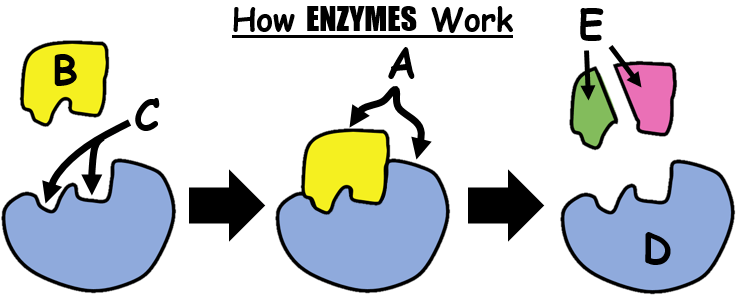
Letter D...
1
active site
2
enzyme
3
substrate
4
products

39

Multiple Choice

Question image
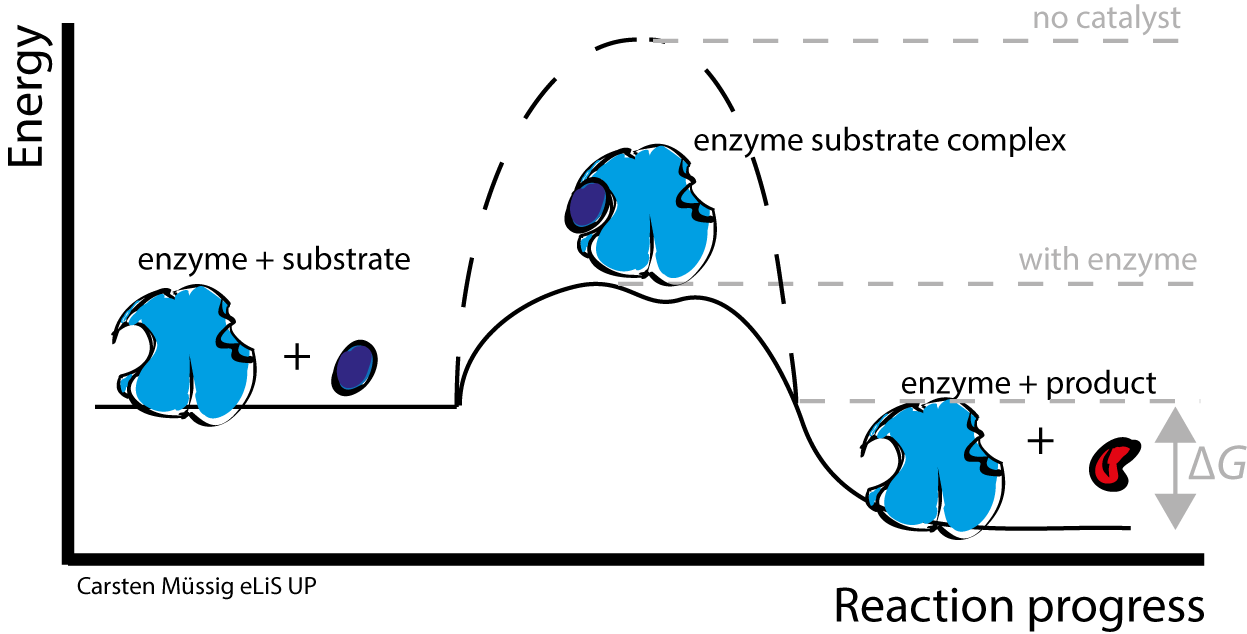
An enzyme speeds up a reaction by
1
lowering the activation energy.
2
raising the activation energy.
3
releasing energy.
4
absorbing energy.

40

Multiple Choice

What happens when enzymes are heated to a high temperature?

1

The enzymes die.

2

The shape of the enzyme are changed and it denatures

3

The enzymes' amino acid sequence changes.

4

The enzymes remain the same

41

media

42

media

43

media

44

Draw

Draw a prokaryotic cell vs a eukaryotic cell

45

Multiple Choice

Which organelle is only found in a plant cell? 
1
nucleus
2
chloroplast
3
mitochondria
4
cell membrane

46

Multiple Choice

This organelle helps plants keep their rigid structure. 
1
Cell wall
2
Cell membrane
3
Chloroplast
4
Nucleus

47

Multiple Choice

The green pigment in plants is due to the presence of 
1
chlorophyll
2
Chlorine
3
Chlorophyta
4
chromatophores

48

Multiple Choice

Controls what enters and leaves the cell
1
Cell Membrane
2
Ribosome
3
Chloroplast
4
Vacuole

49

media

50

media

51

Multiple Choice

Osmosis is the movement of _____ across a membrane.
1
food
2
energy
3
oxygen
4
water

52

media

53

Multiple Choice

What is the phospholipid bilayer?

1

the layer of the outside of the cell

2

Something I have never heard of before.

3

a structure that performs important cellular functions

4

the lipid molecules that form a cell membrane with hydrophobic ends inward and hydrophilic ends outward

54

Multiple Choice

The levels of organization from the simplest to the most complex are
1
Cells, tissues, organs, organ systems, organism
2
Organisms, organs, tissues, cells, organ systems
3
Cells, organs, organ systems, tissues, organism
4
Tissues, cells, organs, organism

55

Multiple Choice

What are ribosomes?

1

small particles in cells where protein is made

2

another word for cells

3

structures that performs important cellular functions

4

Something in the ribs of living things...

56

media

57

Multiple Choice

What are the inputs (reactants) of photosynthesis?

1

glucose and oxygen

2

glucose and carbon dioxide

3

carbon dioxide and oxygen

4

carbon dioxide and water

58

media

59

media

60

Multiple Choice

What are the inputs (reactants) of cellular respiration?

1

carbon dioxide and water

2

glucose and water

3

carbon dioxide and oxygen

4

glucose and oxygen

61

Multiple Choice

What is an autotroph?

1

an organism that can makes its own food

2

an organism that needs to consume food

3

an organism that has absorbs food by diffusion

4

all living organisms

62

media

63

Multiple Choice

Question image

What is the purpose of cellular respiration?

1

Make glucose

2

Make energy

3

Make oxygen

64

media

65

media

Biology EOC part 1: Molecular and Cellular bio.

By Chris Viadero

Show answer

Auto Play

Slide 1 / 65

SLIDE