

Sound

Presentation
•
Physics, Science
•
8th - 10th Grade
•
Easy
+1
Standards-aligned

Sonam Ratu
Used 23+ times
FREE Resource
12 Slides • 21 Questions
1

2
Lesson Objectives
Explore the concepts of sound wave, loudness of sound, amplitude, frequency and pitch.
Formulate the relationship between the loudness of the sound and the amplitude.
Investigate the relationship between the pitch of the sound and the frequency using tuning forks.
Subject | Science
3
Multiple Choice
When people speak their ________ vibrate.
Ear drums
Vocal chords
Ears
Tongue
4
5
Open Ended
Name five things that produces sound.
6
Open Ended
How is sound produced?
7

Requires a Medium
Cannot travel in a Vacuum
Speed: Gas < Liquid < Solid
8

9
Multiple Choice
10
The frequency of a wave is the number of wavelengths that pass through a point in one second. It is also described as the numbers of vibrations a body makes in one second. It is denoted by ‘f’.
It is measured in hertz (Hz).
Frequency

Low Frequency=Low Pitch=Dull Sound
High Frequency=High Pitch=Sharp Sound
11
12
Multiple Choice
13
Multiple Choice
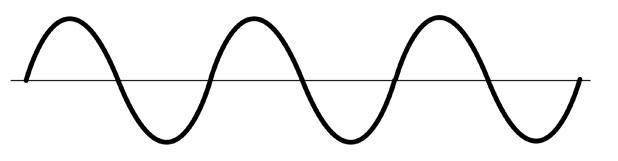
Which of the sounds, A or B, has the lower frequency?
14
Draw
Sketch two sound waves with different pitches (frequencies) and label them.
15
Multiple Choice
Sound is a form of energy produced by ______________.
Vibrations
Distances
Prisms
Forces
16
Multiple Choice
In a guitar, a thin string vibrates with high frequency than a thick string. Therefore, a thin string produces high pitch sound.
True
False
17
Multiple Choice
A sound with a high frequency has a _____ pitch. A sound with a ____ frequency has a low pitch.
high, low
low, high
medium, high
high, medium
18
Amplitude is the measure of displacement of vibrating body on either side about its mean position.
Amplitude is measured in metre and generally denoted by ‘a’.
Greater the energy a wave carries, the larger is its amplitude.
Amplitude

Low Amplitude=Low Energy=Low Intensity
High Amplitude=High Energy=High Intensity
19
Open Ended
What makes a sound loud or soft?
20
A loud sound can be produced by striking the cymbals hard and a soft sound can be produced by striking them gently.
Loud sounds have more energy than soft sounds.
The amount of energy that a wave carries across a unit area in each second is the intensity of the sound.
The intensity of sound waves is related to the amplitude.
The intensity of sound waves is measured in decibels (dB).
Loudness of Sound

21

22
Multiple Choice
______________ sounds have a larger amplitude
Quiet
Loud
23
Multiple Choice
24
Multiple Choice
25
Multiple Choice
26
Multiple Choice
Which sound wave has the lowest pitch?
27
Open Ended
Why do we see lightning before thinder?
28
29
Multiple Choice
Which state of matter do sounds travel fastest in?
Solid
Liquid
Gas
Plasma
30
Multiple Choice
Why does sound travel faster in solids than in liquids or gases.
They are harder.
The particles are closer together.
Solids have more energy.
Gases fill their container.
31
Multiple Choice
Roughly what is the speed of sound in air?
The speed of light.
About 10 m/s
About 340 m/s
About 1 500 m/s
32
Multiple Choice
The speed of sound depends on:
Temperature
Speed of the aircraft
Direction
Type of the sound source
33
Show answer
Auto Play
Slide 1 / 33
SLIDE
Similar Resources on Wayground

23 questions
Introduction to Biomolecules
Presentation
•
9th Grade
23 questions
Prokaryotic V Eukaryotic Cells
Presentation
•
9th Grade
23 questions
Mass of atom
Presentation
•
7th - 10th Grade
28 questions
Transcription and Translation
Presentation
•
9th - 10th Grade
25 questions
16.1 Mining & resources
Presentation
•
9th - 10th Grade
28 questions
Weather Maps and Station Models
Presentation
•
8th - 10th Grade
28 questions
History of the atom
Presentation
•
8th - 10th Grade
31 questions
Light Waves
Presentation
•
8th - 9th Grade
Popular Resources on Wayground
10 questions
How much do you know about our Portrait of an Eagle?

Quiz
•
10th Grade
10 questions
Fast Food Slogans
Quiz
•
6th - 8th Grade
21 questions
Continents and Oceans
Quiz
•
6th Grade
20 questions
Parts of Speech
Quiz
•
5th Grade
16 questions
Subject & Predicate
Quiz
•
5th Grade
25 questions
Multiplication Facts
Quiz
•
5th Grade
12 questions
Map Skills
Quiz
•
3rd Grade
22 questions
Continents and Oceans
Quiz
•
5th Grade
Discover more resources for Physics
20 questions
Position vs. Time Graphs
Quiz
•
9th Grade
20 questions
Free Body Diagrams
Quiz
•
8th Grade
20 questions
Calculating Net Force
Quiz
•
6th - 9th Grade
18 questions
Interpreting Motion Graphs
Presentation
•
9th - 12th Grade
10 questions
Exit Check 4.1 - Destructive Processes
Quiz
•
9th Grade
18 questions
Newton's Laws of Motion
Quiz
•
8th Grade
21 questions
Distance/Time Graphs
Quiz
•
9th Grade
20 questions
Unit 2 - Waves Test - 2026
Quiz
•
9th - 12th Grade