

How was life really in the colonies TCI Lesson 4

Presentation
•
History
•
8th Grade
•
Medium

Sabine Fleshner
Used 25+ times
FREE Resource
17 Slides • 26 Questions
1
2

The English people had won the right to participate in their government only after a long struggle, the key victory to this struggle being the signing of Magna Carta, or “Great Charter,” by King John in 1215, which established the idea that the power of the monarch, or ruler, was limited. Not even the king was above the law.
Some text here about the topic of discussion.
1215 Magna Carta
3
Multiple Choice
What was an effect of Magna Carta in England?
A. It limited the power of the king.
B. It established a democratic government.
4
Proud to be British subjects
Some text here about the topic of discussion
Colonists in America considered themselves to be English citizens. They expected the same rights that citizens enjoyed in England, the most important of which was the right to have a voice in their government.
5
More rights 1265 and 1685 no more king- at least for a short time
The next major victory was the founding of Parliament in 1265. Parliament was made up of representatives from across England. Over time, it became a lawmaking body with the power to approve laws and taxes proposed by the king or queen.
In 1685, James, the Duke of York, became King James II and did not want to share power with an elected assembly in New York nor an elected Parliament in England. When he tried to rule without Parliament, James was forced off his throne. This change in power, which took place without bloodshed, is known as the Glorious Revolution.
Subject | Subject
Some text here about the topic of discussion
6
Multiple Choice
How did the establishment of Parliament strengthen the rights of English citizens
A. Citizens were able to choose the monarch.
D. Laws were made by representatives of the citizens.
7
Multiple Choice
What occurred as a result of the Glorious Revolution?
A. Parliament abolished the monarchy.
C. Parliament retained lawmaking powers
8
Following the Glorious Revolution, Parliament offered the crown to Prince William of Orange and his wife, Mary in 1689. After being crowned, they approved an act, or law, known as the English Bill of Rights. This act said that the power to make laws and impose taxes belonged to the people's elected representatives in Parliament and to no one else. It also contained a bill, or list, of rights that belonged to the people. Among these were the right to petition the king (request him to change something) and to have a trial by jury. English colonists saw the Glorious Revolution as a victory not only for Parliament, but also for their colonial assemblies. They wanted to select those individuals who made their laws as well as those who set their taxes. After all, this was a cherished right of all English citizens.
9
Multiple Choice
Which right did the English Bill of Rights provide?
to petition the king
to choose the kind of school children would attend
10
Multiple Choice
Why was the English Bill of Rights important to the colonists?
It spelled out what was due to the colonists as English citizens
It gave the colonists the ability to choose members of Parliament.
11
12
Puritans in New England!
In New England, the sound of a drum or horn called Puritans to worship on Sunday morning. “Captains of the watch” made sure everyone was a “Sabbath-keeper.” Sometimes houses were searched to ensure that everyone was at the church service.
Church services were held in the town meetinghouse, the most important building in the community that was used for all public gatherings. Inside were rows of wooden benches, called pews, and a pulpit (a platform where the preacher stood). A “seating committee” carefully assigned seats, with the best ones going to older, wealthy people, while colonists with less influence sat farther away.
Services could last as long as five hours. At midday, villagers would go to “noon-houses” near the church to warm themselves by a fire, eat, and socialize before returning to church for the long afternoon sermon.
13
14
Great Awakening of 1730
Subject | Subject
Some text here about the topic of discussion
The Great Awakening had a powerful effect on the colonies because it helped spread the idea that all people are equal in the eyes of God. Ordinary people could understand God's will if they had an open heart and a desire to know God's truth. By encouraging ideas of liberty, equality, and self-reliance, the Great Awakening helped pave the way for the American Revolution.
15
Multiple Choice
Which belief spurred the Great Awakening?
Farm life is better than city life.
Women are not as educated as men.
People have lost their faith.
16
Multiple Choice
How did the Great Awakening in the 1730s prepare the colonists for the American Revolution?
It encouraged the ideals of liberty and equality.
It created anti-colonial sentiment.
It required colonists to pay heavy taxes.
17
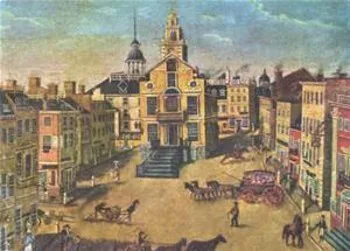
In 1750, about one out of every 20 colonists lived in a city.
The heart of the colonial city was the waterfront.
The nearby streets were lined with shops.
Cities were often noisy, smelly places. Church bells rang out several times a day, while carts clattered loudly over streets paved with round cobblestones where animals ran loose.
City homes were close together on winding streets.
With torches and candles lighting homes, fire was a constant danger. To counter the threat of fires, colonists kept fire buckets hanging by their front doors
Life in the cities TCI L4 S 2
18
19
20
Parents were asked to contribute whatever they could to the village school. Contributions included money, vegetables, firewood, or anything else the school needed. Often, land was set aside as “school meadows” or “school fields” which could then be rented out to raise money for teachers' salaries.
Schools were one-room buildings with a chimney and fireplace. There were no boards to write on or maps of the Americas, and pencils and paper were scarce. Students shouted out spelling words and wrote sums in ink on pieces of bark. There was usually one book, the New England Primer, which was used to teach the alphabet, syllables, and prayers.
Most colonists believed that boys needed more education than girls. “Female education, in the best families,” wrote First Lady Abigail Adams, “went no further than writing and arithmetic; in some few and rare instances, music, and dancing.”
Subject | Subject
Some text here about the topic of discussion
21
22
Leisure
Bees and Frolics When possible, colonists combined work and recreation by organizing “bees” and “frolics.” New settlers might hold a “chopping bee” in which all the neighbors helped clear the trees off their land. Other frolics included corn-husking bees for men and quilting bees for women. Sharing the work increased the production of goods while also making the work more enjoyable.
Other people participated in house and barn raisings throughout the colonies. At these events, neighbors joined together to build the frame of a house or barn in one day. The men assembled the four walls flat on the ground and then raised them into place. Meanwhile, the women prepared a huge feast. At the end of the day, everyone danced on the barn's new floor.
Subject | Subject
Some text here about the topic of discussion
23
Toys and Sports
Colonial children had a few basic toys, such as dolls, marbles, and tops. They played tag, blindman's bluff, and stoolball, which was related to the English game of cricket (a game like baseball). Children in New England also enjoyed coasting down snowy hills on sleds, although adults must have thought coasting was dangerous because several communities forbade it.
Adults enjoyed several sports. One popular sport was lawn bowling where men would roll egg-shaped balls down a lane of grass toward a white ball called a jack. Colonists also played a game similar to backgammon called tick-tack and a form of billiards (pool) called trock.
In the Southern Colonies, fox hunting with horses and hounds was a popular sport. Card playing was another favorite pastime, one that New England Puritans disapproved of strongly. Horse racing, cockfighting, and bull baiting were also popular in the South.
Fairs were held throughout the colonies where colonists could compete in contests of skill and artistry. There were footraces, wrestling matches, dance contests, and wild scrambles to see who could win a prize by catching a greased pig or climbing a greased pole.
Subject | Subject
Some text here about the topic of discussion
24

25
Multiple Choice
What English document called the "Great Charter" limited the power of the king and gave more power to the people?
The Mayflower Compact
The Magna Carta
The Salem Trials
The 10 Commandments
26
Multiple Choice
Which of these documents is most similar to the Mayflower Compact?
the Bible
the Constitution
the Gettysburg Address
the Declaration of Independence
27
Multiple Choice
Which of these shows the chronological order of the founding of these concepts? (Think back to the timeline in your notebook).
Parliament, English Bill of Rights, Magna Carta, Great Awakening
Magna Carta, Great Awakening, English Bill of Rights, Parliament
English Bill of Rights, Parliament, Magna Carta
Magna Carta, Parliament, English Bill of Rights, Great Awakening
28
Multiple Choice
How did the colonist combine work & play?
by having "bees & frolics"
they went coasting & sledding
they wrestled & bull baited
they played cards & billiards
29
Multiple Choice
Which of the following is true about colonial marriage & families?
most colonist married in their 20's
colonial famillies were usually large
family members took care of each other
all of the above
30
Multiple Choice
In the colonies, why were most women guaranteed a marriage proposal?
getting married was not allowed in the colonies
there were more men than women in the colonies
men lived much longer than women in the colonies
women were treated better than men in the colonies
31
Multiple Choice
Which of the following is true about colonial marriage & families?
most colonist married in their 20's
colonial famillies were usually large
family members took care of each other
all of the above
32
Multiple Choice
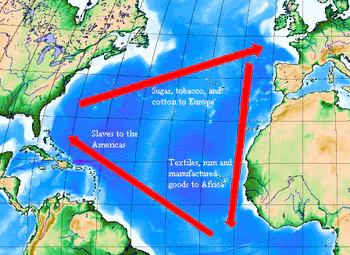
The slave's ocean journey from Africa to the colonies is called the __
Disney cruise
Great Revolt
Middle Passage
Magne Carta
33
Multiple Choice
Cities were ......
crime filled & dangerous
open & spacious
smelly & crowded
34
Multiple Choice
Most colonists lived ....
on small family farms
in crowded cities
in wealthy colonial homes
near factories
35
Multiple Choice
What was the main goal of education for students in the New England colonies?
to be able to read the Bible
to be prepared to attend college
To learn how to run a business
To keep the kids busy during the day.
36
Multiple Choice
What did colonial public schools use the New England Primer for?
to teach reading & writing
to prepare students for paying taxes
to attract new teachers to schools
37
Multiple Choice
What slowed the growth of public education in the Middle Colonies?
lack of materials
discipline problems
religious differences
38
Multiple Choice
Which of these is true about slavery in the colonies?
laws were written to abolish slavery
it expanded throughout the colonies
it was limited to the Southern colonies
Northern slaves were freed and returned to Africa
39
Multiple Choice
What were the expectations of English colonists in America?
they were expected to be governed by the English king
they expected the same rights as English citizens
to expected to denounce their English citizenship
40
Multiple Choice
Which was a common belief among the colonists regarding education?
home schooling was forbidden
the ability to read was not necessary
girls needed less education than boys
girls needed more education than boys.
41
Multiple Choice
The Great Awakening taught people that...
all people were equal in the eyes of God
All people were sinners and would be punished
People needed to beg God for forgiveness
People should do whatever ministers told them to do.
42
Multiple Choice
Which of the following rights was provided by the English Bill of Rights?
to choose punishments for crimes
to choose the kind of school their children would attend
to choose the kind of music played in church services
to allow citizens to petition the king.
43
Multiple Choice
Who both wrote and published Poor Richard's Almanac?
Benjamin Franklin
William Penn
Benjamin Button
George Washington
Show answer
Auto Play
Slide 1 / 43
SLIDE
Similar Resources on Wayground

37 questions
State of Matter/Phase Changes
Presentation
•
8th Grade
36 questions
Ecology
Presentation
•
8th Grade
37 questions
Reconstruction
Presentation
•
8th Grade
40 questions
Chapter 16: Manifest Destiny and Sectionalism
Presentation
•
8th Grade
39 questions
Intro to Robotics
Presentation
•
8th Grade
39 questions
Reading My Brother Sam, Ch. 8
Presentation
•
8th Grade
35 questions
Age of Jackson- Nullification Crisis
Presentation
•
8th Grade
41 questions
French and Indian War
Presentation
•
8th Grade
Popular Resources on Wayground
10 questions
How much do you know about our Portrait of an Eagle?

Quiz
•
10th Grade
10 questions
Fast Food Slogans
Quiz
•
6th - 8th Grade
21 questions
Continents and Oceans
Quiz
•
6th Grade
20 questions
Parts of Speech
Quiz
•
5th Grade
16 questions
Subject & Predicate
Quiz
•
5th Grade
25 questions
Multiplication Facts
Quiz
•
5th Grade
12 questions
Map Skills
Quiz
•
3rd Grade
22 questions
Continents and Oceans
Quiz
•
5th Grade
Discover more resources for History
10 questions
Exploring the Journey of Early Humans

Interactive video
•
6th - 10th Grade
21 questions
13 colonies map review
Quiz
•
8th Grade
10 questions
Exploring Jamestown: John Smith and Pocahontas
Interactive video
•
6th - 10th Grade
20 questions
The Early Colonies
Quiz
•
7th - 11th Grade
10 questions
Recap on Mesopotamia: Key Concepts and Facts
Interactive video
•
6th - 10th Grade
16 questions
Government Unit 2
Quiz
•
7th - 11th Grade
34 questions
Judicial Branch and Juvenile Justice
Quiz
•
8th Grade
18 questions
Causes of the American Revolution Review
Quiz
•
8th Grade