Search Header Logo
Population Ecology

Population Ecology

Assessment

Presentation

•

Biology

•

8th - 10th Grade

•

Medium

•
NGSS
MS-LS2-4, MS-LS2-2, MS-LS2-1

Standards-aligned

Created by

Mariela Wyatt

Used 111+ times

FREE Resource

34 Slides • 13 Questions

1

media

2

media

3

media

4

media

5

media

6

media

7

media

8

media

9

Multiple Choice

Researchers have found that a local squirrel population fluctuates from year to year, increasing one year and decreasing the next. Which of the following factors would cause the squirrel population to grow?

1

the birth rate is equal to the death rate

2

emigration is greater than immigration

3

the death rate is higher than the birth rate

4

the birth rate is greater than the death rate

10

Multiple Choice

Two species of finches are in competition for the limited resources of an ecosystem. One species eats fruit and the second species eats seeds. If a third species of herbivore finches moves into the area, how will the ecosystem change?

1

Resources will be more abundant.

2

Water will become more available.

3

The climate of the ecosystem will change.

4

Fruit and seed resources will become less abundant.

11

Multiple Choice

A population of flat-tailed horned lizards was found in a geographically isolated area. In 2002, the size of the population was about 25,500. In 2004, the size of the population was about 32,800. Which of the following statements explains the change in the size of the lizard population from 2002 to 2004?

1


The birth rate was greater than the death rate.

2

The emigration rate was greater than the birth rate.

3

The death rate was greater than the immigration rate.

4

The emigration rate was greater than the immigration rate.

12

media

13

media

14

media

15

media

16

media

17

media

18

media

19

media

20

Multiple Choice

21

Multiple Choice

Which of the following graphs shows a population of organisms with a carrying capacity?

1
2

22

Multiple Choice

Which of the following is an exponential graph?

1
2
3
4

23

Multiple Choice

Define "carrying capacity"

1

any factors in an environment that are limited

2

when population increases slowly at first then grow at an accelerated rate

3

minimum number of individuals of a species that an environment can support

4

maximum number of individuals of a species that an environment can support

24

Multiple Choice

Define "limiting factor"

1

anything that constrains a population's size and slows or stops it from growing

2

when population increases slowly at first then grow at an accelerated rate

3

minimum number of individuals of a species that an environment can support

4

maximum number of individuals of a species that an environment can support

25

Multiple Choice

Which of the following is NOT a density dependent limiting factor?

1

competition

2

parasitism

3

disease

4

natural disaster

26

media

27

media

28

media

29

media

30

media

31

media

32

media

33

media

34

media

35

media

36

media

37

media

38

media

39

media

40

media

41

media

42

media

43

Multiple Choice

Question image
Cattle egrets forage (feed) in fields among cattle. The egret gets easy access to flying insects stirred up by the cattle, and the cattle don't care if they are there or not.
1
mutualism
2
commensalism
3
competition
4
parasitism

44

Multiple Choice

Question image
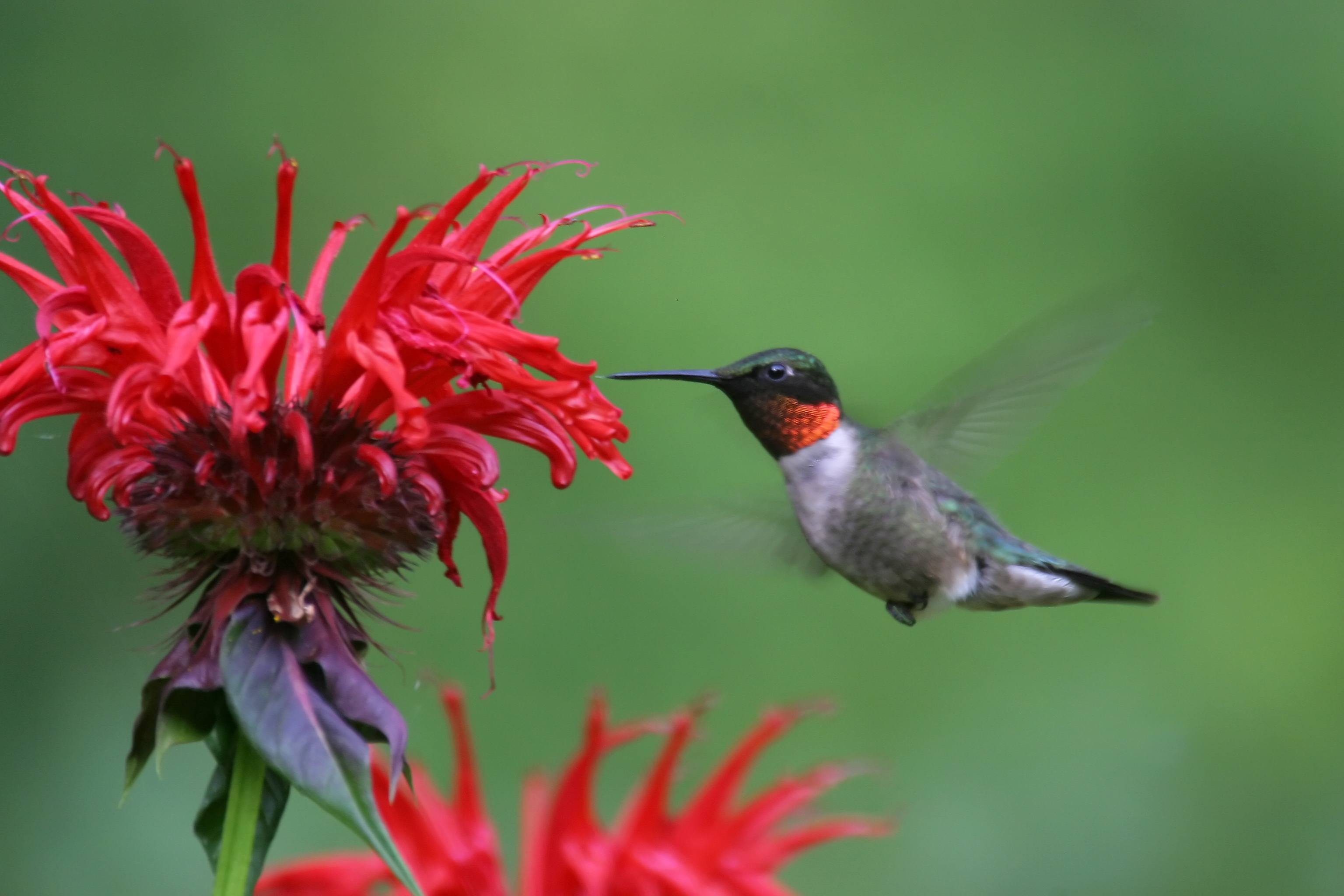
What type of symbiosis?  Hummingbirds feed on nectar from flowers.  The flowers are pollinated by hummingbirds as they move from flower to flower.
1
commensalism
2
mutualism
3
parasitism
4
predation

45

Multiple Choice

Which symbols best describe parasitism?
1
+,+
2
+,-
3
+,0
4
-,0

46

Multiple Choice

Different species are most likely to compete for resources in an ecosystem if both species attempt to –
1
occupy the same niche.
2
successfully reproduce.
3
live in different habitats.         
4
find different food sources.   

47

​Questions?

media

Show answer

Auto Play

Slide 1 / 47

SLIDE