Search Header Logo
Viral Replication Cycles

Viral Replication Cycles

Assessment

Presentation

•

Biology

•

9th - 10th Grade

•

Easy

Created by

Erica Maresh

Used 5+ times

FREE Resource

19 Slides • 16 Questions

1

media

2

media

3

Multiple Choice

What do viruses have in common with living cells? They both...
1
store genetic information
2
have chloroplasts
3
use glucose for cellular respiration
4
have endoplasmic reticulum

4

Multiple Choice

Question image
What part of the phage is the DNA?
1
A
2
B
3
C
4
D

5

Multiple Choice

Question image

Classify the pathogen based on is structure

1

Bacteria

2

Virus

6

Multiple Choice

Question image

Why do viruses have projections on the outside?

1

To send signals to other viruses.

2

To maintain their structure.

3

To attach to the host cell.

4

To reproduce.

7

Multiple Choice

Question image

The part labeled A is......

1

DNA

2

envelope

3

surface protein

4

antibody

8

media

9

media

10

media

11

media

12

media

13

Multiple Choice

What is the first step of the virus reproduction cycle?
1
The viruses genetic material (DNA) starts to take over the functions of the cell
2
The host cell bursts open, releasing the new viruses
3
The virus injects its genetic material into the cell
4
A virus attaches to the surface of a host cell

14

Open Ended

Describe the length of time it takes for the lytic virus to cause symptoms.

15

media

16

media

17

media

18

media

19

media

20

Multiple Choice

Which statement is correct about viral replication cycles?

1

Lytic - lyses cells immediately

Lysogenic - virus goes dormant and replicates with the cells

2

Lysogenic - lyses cells immediately

Lytic - virus goes dormant and replicates with the cells

21

media

22

media

23

media

24

media

25

media

26

media

27

media

28

Multiple Choice

The protein coat of a virus is known as the __________.

1

capsid

2

genome

3

cell membrane

4

envelope

29

Multiple Choice

The ___________ cycle allows replication of the phage genome staying dormant in the cell.

1

lysogenic

2

lytic

30

Multiple Choice

Prokaryotes do not have a nucleus. Which of the following is an example of a prokaryote?

1

Virus

2

Plant

3

Bacteria

4

Fungi

31

Multiple Choice

Question image

Besides DNA or RNA, what else is a virus made of?

1

a cell wall

2

a cell membrane

3

a protein coat

4

a carbohydrate coat

32

Multiple Choice

Which of the following is true for both bacteria and viruses?

1

both contain genetic material

2

can be killed using antibiotics

3

have a cell membrane

4

have a protein coat

33

Multiple Choice

Question image

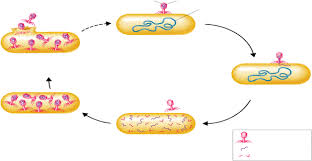
Which viral life cycle kills its host cell by lysing (bursting)?

1

Lysogenic Cycle

2

Lytic Cycle

3

Binary Fission

4

Conjugation

34

Multiple Choice

What helps prevent viral diseases?
1
Vaccines
2
Antibiotics
3
Herbal tea
4
Gene Therapy

35

Multiple Choice

Viruses in the lysogenic cycle can be DORMANT. This means they....

1

are resting and waiting to attack

2

speed up reactions

3

are infecting quickly

4

catalyzing proteins

media

Show answer

Auto Play

Slide 1 / 35

SLIDE