
Moon Phase & Sun's Path Review
Presentation
•
Science
•
8th Grade
•
Easy
+5
Standards-aligned
Nicole Burke
Used 1+ times
FREE Resource
0 Slides • 94 Questions
1
Multiple Choice
2
Multiple Choice
3
Multiple Choice
4
Multiple Choice
5
Multiple Choice
6
Multiple Choice
7
Multiple Choice
8
Multiple Choice
9
Multiple Choice
10
Multiple Choice
11
Multiple Choice
12
Multiple Choice
13
Multiple Choice
14
Multiple Choice
15
Multiple Choice
16
Multiple Choice
17
Multiple Choice
18
Multiple Choice
19
Multiple Choice
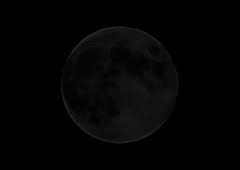
When the Moon is receiving sunlight on the side facing away from Earth, the phase is what?
Waxing Gibbous
New Moon
Waning Gibbous
Full Moon
20
Multiple Choice
We see only one side of the Moon because...
The Moon rotates and revolves around Earth in the same length of time.
We see both sides of the Moon.
The Sun orbits Earth at the same time it rotates.
The Earth orbits the Moon at the same time it rotates.
21
Multiple Choice
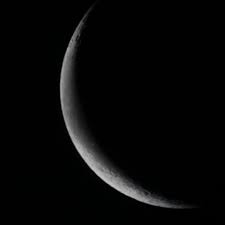
What phase is number 4?
Waning crescent
Waning gibbous
Waxing crescent
Waxing gibbous
22
Multiple Choice
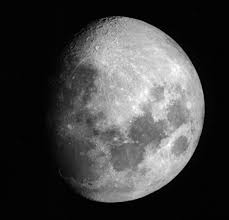
Which phase is number 13?
Waning gibbous
Last quarter
New Moon
Waxing Crescent
23
Multiple Choice
How long does it take for the Moon to rotate on its axis?
One day
One week
One month
One year
24
Multiple Choice
What does "waxing" mean?
Can't be seen at all
Getting smaller and darker
Getting bigger and brighter
Total illumination
25
Multiple Choice
Tides are....
Temperature changes in the ocean caused by the Sun
Caused by daily eclipses
The regular rise and fall of ocean levels
Created by the change of seasons
26
Multiple Choice
Tides occur...
Daily
Hourly
Monthly
Weekly
27
Multiple Select
Which tide would be the highest and lowest?
Tide 1 would be highest
Tide 1 would be lowest
Tide 2 would be lowest
Tide 2 would be highest
28
Multiple Choice
The gravitational pull of the _____ causes the tides on Earth.
Jupiter
Sun
Moon
Mars
29
Multiple Choice
How many tides are there in a 24 hour period?
It takes longer that 24 hours to have tides
2 tides
3 tides
4 tides
30
Multiple Choice
Phases of the moon in which the moon appears to be getting larger are referred to as ____.
waxing
new
waning
eclipse
31
Multiple Choice
Which of the following is most responsible for the changing of seasons on Earth?
Orbit of the Earth around the Sun
Rotation of the Sun
Tilt of axis of Earth
Rotation of the Earth
32
Multiple Choice
The Moon orbits Earth in a _______ direction.
clockwise
upwards
counterclockwise
downwards
33
Multiple Choice
Which type of eclipse occurs when the Moon comes directly between Earth and the Sun?
Lunar Eclipse
Solar Eclipse
34
Multiple Choice
A solar eclipse only happens during a ____ moon.
New
Gibbous
Crescent
Full
35
Multiple Choice
Name the eclipse.
solar eclipse
lunar eclipse
36
Multiple Choice
A lunar eclipse only occurs during which moon phase?
New Moon
Full Moon
3rd Quarter
1st Quarter
37
Multiple Choice
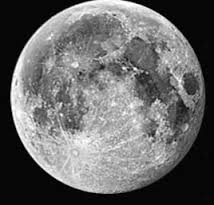
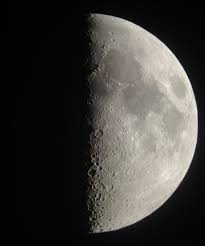
Name the moon phase.
waning crescent
waning gibbous
waxing crescent
waxing gibbous
38
Multiple Choice
You are less likely to see a total solar eclipse than a total lunar eclipse because...
new moon phases occur less often than full moon phases
only people on the daytime side of Earth can see a solar eclipse
the moon's shadow covers all of Earth during a solar eclipse
the moon's umbra only covers a small area on Earth's surface
39
Multiple Choice
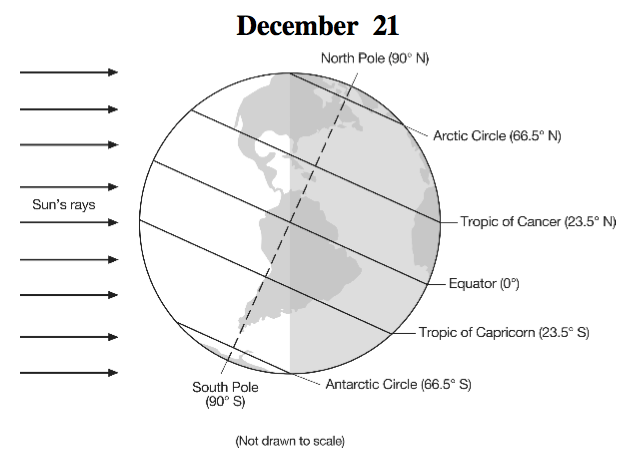
Where is the sun directly overhead on December 21?
The Tropic of Capricorn (23.5 degrees S)
The south pole
The Tropic of Cancer (23.5 degrees N)
The equator
40
Multiple Choice
Where is the sun directly overhead on June 21?
The Tropic of Capricorn (23.5 degrees S)
The north pole
The Tropic of Cancer (23.5 degrees N)
The equator
41
Multiple Choice
Where is the sun directly overhead on March 21?
The Tropic of Capricorn (23.5 degrees S)
The north pole
The Tropic of Cancer (23.5 degrees N)
The equator
42
Multiple Choice
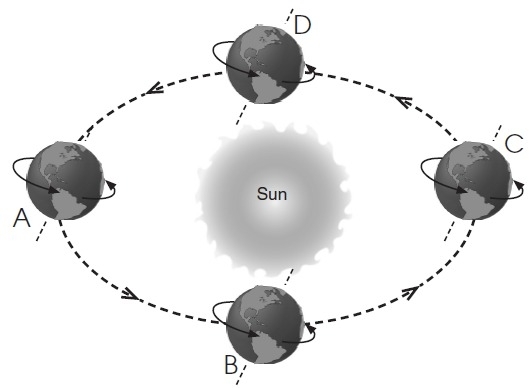
What season is represented at point B?
Winter
Spring
Summer
Fall
43
Multiple Choice
What equation is used to determine Earth's rate of rotation?
360 degrees / 365 days
24 hours / 360 degrees
360 degrees / 24 hours
24 hours / 365 days
44
Multiple Choice
What time is at position 1?
12 p.m. (noon)
9 a.m.
3 p.m.
6 a.m.
45
Multiple Choice
Which date is represented by the diagram?
March 21
June 21
September 21
December 21
46
Multiple Choice
What equation is used to determine Earth's rate of revolution?
360 degrees / 365 days
24 hours / 360 degrees
360 degrees / 24 hours
24 hours / 365 days
47
Multiple Choice
What season is represented at point D?
Winter
Spring
Summer
Fall
48
Multiple Choice
On which day do observers in New York State experience the greatest duration of insolation?
March 21
June 21
September 23
December 21
49
Multiple Choice
What time is at position 3?
12 p.m. (noon)
9 a.m.
3 p.m.
6 p.m.
50
Multiple Choice
How many degrees per hour does the Sun appear to move across the sky?
41 degrees
23.5 degrees
90 degrees
15 degrees
51
Multiple Choice
52
Multiple Choice
53
Multiple Choice
Use the calendar to predict the moon phase on March 26th.
Waxing Crescent
Waning Crescent
Waning Gibbous
Waxing Gibbous
54
Multiple Choice
If we are experiencing a new moon on March 6 what will the moon look like on 15?
55
Multiple Choice
tilt of the earth's axis
56
Multiple Choice
57
Multiple Choice
58
Multiple Choice
What would seasons be like if Earth's axis were straight up and down and not tilted?
59
Multiple Choice
Which location has the greatest number of hours of daylight?
A
B
C
D
E
60
Multiple Choice
The electromagnetic spectrum from long wavelength to short.
gamma, xray, ultraviolet, visible light, infrared, microwaves, radio
radio, visible, microwaves, infrared, ultraviolet,x ray, gamma
radio, microwave, infrared, visible, ultraviolet, xray, gamma
gamma,radio, microwave,infrared, visible, ultraviolet, xray
61
Multiple Choice
The electromagnetic spectrum radiations have the same speed but different wavelength
True
False
62
Multiple Choice
Causes sunburns
Xrays
Ultraviolet
visible light
gamma rays
63
Multiple Choice
Has the longest wavelength
gamma rays
radio waves
microwaves
ultraviolet
64
Multiple Choice
All types of electromagnetic radiation have the same _________ but different frequencies and wavelengths.
Energy
speed
wavelength
frequency
65
Multiple Choice
This type of radiation can help heat up food and can be found in cellphones
microwaves
UV
Infrared
gamma
66
Multiple Choice
Which of the following has longer wavelength than visible light but shorter wavelength than microwaves.
radio waves
infrared
UV
x ray
67
Multiple Choice
As white light travels through a prism
All the colors of the rainbow are seen
Only red and purple are seen
White light is absorbed
White light is refracted
68
Multiple Choice
Colors of white light low frequency to high
red, orange, yellow, green, blue, indigo, violet
violet, indigo, blue, green, yellow, orange, red.
indigo, blue, red, orange, yellow, green, violet
red, yellow, orange,green,blue,indigo,violet
69
Multiple Choice
Which of the following daily uses are correct?
UV and radio broadcasting
gamma rays and heat detection
microwaves and tanning
radio waves and satellite communication
70
Multiple Choice
As wavelength gets longer...
Frequency increases
Frequency decreases
71
Multiple Choice
As wavelength gets shorter (decreases)...
Frequency and energy increases
Frequency and energy decreases
72
Multiple Choice
Which color waves have the shortest wavelength?
red
yellow
green
violet
73
Multiple Choice
What do electromagnetic waves NOT need to transfer energy?
matter
speed
wavelength
frequency
74
Multiple Choice
Why does Earth experience sunrise and sunset each day?
because Earth revolves each day around the sun
because the sun rotates each day around Earth
because the moon revolves around the sun
because Earth rotates each day on its axis
75
Multiple Choice
Why is it light during the day and dark at night?
The sun stops producing light at night.
B. The sun moves away from Earth at night.
Only half of Earth is facing the sun as Earth rotates.
D. Only half of the moon produces light as Earth
76
Multiple Choice
Why do different parts of Earth receive different amounts of sunlight each day?
a. Earth′s axis is tilted.
B. Earth′s gravity is weak.
c. Earth′s revolution speed increases during each day.
D. Earth′s distance from the sun changes during each day
77
Multiple Choice
78
Multiple Choice
79
Multiple Choice
80
Multiple Choice
81
Multiple Choice
82
Multiple Choice
83
Multiple Choice
84
Multiple Choice
85
Multiple Choice
86
Multiple Choice
87
Multiple Choice
88
Multiple Choice
89
Multiple Choice
90
Multiple Choice
91
Multiple Choice
92
Multiple Choice
93
Multiple Choice
94
Multiple Choice
Show answer
Auto Play
Slide 1 / 94
MULTIPLE CHOICE

Similar Resources on Wayground
91 questions
Periodic table -goal is 4-8 secs per ?
Presentation
•
8th Grade
92 questions
8th Grade Math EOG Review
Presentation
•
8th Grade
88 questions
F3 (G) Special Relationships L47
Presentation
•
8th Grade
93 questions
Biology MP2 9 Weeks Test Review
Presentation
•
9th Grade
88 questions
Main Idea and Supporting Details
Presentation
•
7th Grade
90 questions
Scale Factor Lesson
Presentation
•
7th Grade
91 questions
Illustrative Math Unit 4
Presentation
•
7th Grade
Popular Resources on Wayground
20 questions
STAAR Review Quiz #3
Quiz
•
8th Grade
20 questions
Equivalent Fractions
Quiz
•
3rd Grade
6 questions
Marshmallow Farm Quiz
Quiz
•
2nd - 5th Grade
20 questions
Main Idea and Details
Quiz
•
5th Grade
20 questions
Context Clues
Quiz
•
6th Grade
20 questions
Inferences
Quiz
•
4th Grade
19 questions
Classifying Quadrilaterals
Quiz
•
3rd Grade
12 questions
What makes Nebraska's government unique?
Quiz
•
4th - 5th Grade
Discover more resources for Science
8 questions
Amoeba Sister Asexual vs Sexual Reproduction
Interactive video
•
8th Grade
19 questions
Introduction to Properties of Waves
Presentation
•
6th - 8th Grade
16 questions
Interactions within Ecosystems
Presentation
•
6th - 8th Grade
45 questions
Food Webs
Quiz
•
6th - 8th Grade
50 questions
Stars, Galaxies, HR Diagram
Quiz
•
8th Grade
40 questions
Unit F1 Review
Quiz
•
8th Grade
20 questions
Energy Transformations
Quiz
•
6th - 8th Grade
46 questions
8th Science STAAR Review
Quiz
•
8th Grade