Wave Motion
Presentation
•
Science
•
6th Grade
•
Medium
Standards-aligned
Sieiara Courmon
Used 63+ times
FREE Resource
9 Slides • 11 Questions
1
UNIT 4 WAVES
6.P.1.1 Compare the properties of waves to the wavelike
property of energy in earthquakes, light and sound.
Lesson 4: Wave Motion
6.P.1 Understand the properties of waves and the
wavelike property of energy in earthquakes, light and
sound waves.
2
3
Properties of Waves
Trough
Crest
Rest Position
Transverse Wave Vocabulary
crest – where the displace-
ment of the medium is at a
maximum
trough – where the
displacement of the medium
is at a minimum
rest position – where the
medium shows no
disturbance
4
Properties of Waves
Wavelength
Wavelength
Wavelength
Wavelength
• The distance between
two corresponding
parts of a wave
• Crest-to-crest or
trough-to-trough
5
Properties of Waves
Amplitude
• The vertical distance
between a peak or a
valley and the resting
position in a
transverse wave
Amplitude
Amplitude
6
Fuse School: Wave Motion
7
Properties of Waves
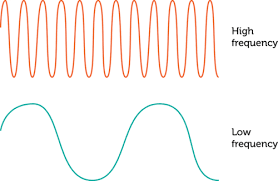
Frequency
•
The number of complete waves (wavelengths)
that pass a given point in a certain amount of
time
•
Number of vibrations per second
•
Measured in units called hertz (Hz)
•
1 vibration per second = 1 Hz
8
Properties of Waves
Period
•
The time it takes for one
wave cycle to travel
•
Measured in seconds per
wave cycle
9
Properties of Waves
Speed
• How far the wave travels in
a unit of time, or distance
divided by time
• The speed, wavelength,
and frequency of a wave
are related to each other
by mathematical formulas.
• Unit for speed is meters
per second, or m/s
speed = wavelength x frequency
10
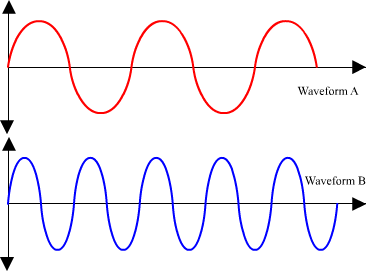
Draw
What is the frequency? (measured in Hz)
11
Draw
What is the frequency? (measured in Hz)
12
Draw
What is the frequency? (measured in Hz)
13
Fill in the Blanks
Type answer...
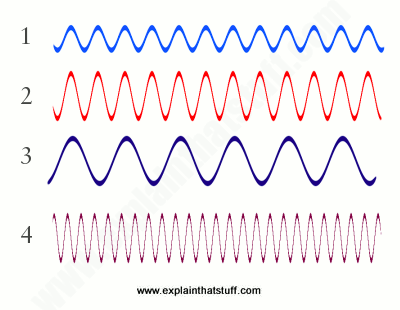
14
Multiple Choice
1
2
3
4
15
Multiple Choice
A wavelength is the distance between which 2 points?
B and G
A and C
C and F
A and H
16
Multiple Choice
amplitude
frequency
period
wavelength
17
Multiple Choice
1
2
3
4
18
Multiple Choice
If a wave has a greater frequency, what happens to the wavelength?
increases
decreases
stays the same
19
Multiple Choice
What is the wavelength of this wave?
1
2
3
4
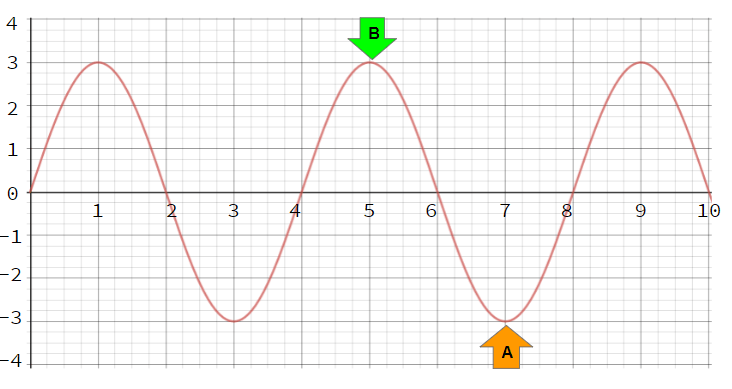
20
Multiple Choice
What is the amplitude of this wave?
2
3
6
10
UNIT 4 WAVES
6.P.1.1 Compare the properties of waves to the wavelike
property of energy in earthquakes, light and sound.
Lesson 4: Wave Motion
6.P.1 Understand the properties of waves and the
wavelike property of energy in earthquakes, light and
sound waves.
Show answer
Auto Play
Slide 1 / 20
SLIDE

Similar Resources on Wayground
18 questions
Demeuse Observation vs. Inference
Presentation
•
6th Grade
15 questions
Science Variables Lesson
Presentation
•
6th Grade
16 questions
Electromagnetism
Presentation
•
6th Grade
16 questions
The Theory of Evolution
Presentation
•
8th Grade
17 questions
Heredity
Presentation
•
6th Grade
13 questions
Climate Change
Presentation
•
6th Grade
17 questions
Density Review
Presentation
•
6th Grade
12 questions
Non renewable Resources
Presentation
•
6th Grade
Popular Resources on Wayground
19 questions
Naming Polygons
Quiz
•
3rd Grade
10 questions
Prime Factorization
Quiz
•
6th Grade
20 questions
Math Review
Quiz
•
3rd Grade
15 questions
Fast food
Quiz
•
7th Grade
20 questions
Main Idea and Details
Quiz
•
5th Grade
20 questions
Context Clues
Quiz
•
6th Grade
20 questions
Inferences
Quiz
•
4th Grade
19 questions
Classifying Quadrilaterals
Quiz
•
3rd Grade
Discover more resources for Science
16 questions
Interactions within Ecosystems
Presentation
•
6th - 8th Grade
20 questions
Rocks and The Rock Cycle
Quiz
•
6th Grade
20 questions
Moon Phases and Eclipses
Quiz
•
6th - 8th Grade
20 questions
Human Body Systems
Quiz
•
6th Grade
22 questions
6th & 8th Grade Science Material SOL Review
Quiz
•
6th - 8th Grade
15 questions
Punnett Squares
Quiz
•
6th Grade
20 questions
Cells! Cell Theory and Characteristics of Eukaryotes/Prokaryotes
Quiz
•
6th Grade
35 questions
Amplify Weather Patterns Unit Review
Quiz
•
6th Grade