

PREDICTING WEATHER PT. 2

Presentation
•
Science
•
4th Grade
•
Medium
+1
Standards-aligned

Lea Epps
Used 4+ times
FREE Resource
8 Slides • 23 Questions
1

PART 2
2
Multiple Choice

It returns water to other locations on Earth
It increases the chance of flooding
It makes evaporation occur faster
It increases condensation
3
Multiple Choice
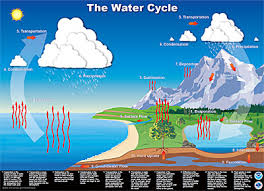
condensation
evaporation
precipitation
4
Multiple Choice

Evaporation
Condensation
Precipitation
Runoff
5
Multiple Choice
Which type of clouds are associated with fair weather?
Stratus clouds
Cumulonimbus clouds
Cumulus clouds
6
Multiple Choice

Characteristics of a Cirrus cloud..
Thin clouds that look like feathers, high in the sky
High in the sky, look like cotton balls bunched together
usually mean rain
Flat on bottom
7
Multiple Choice
Which type of clouds cover the whole sky and block out direct sunlight?
Stratus clouds
Cumulonimbus clouds
Cirrus clouds
8
Multiple Choice
6. Which weather instrument measures wind speed?
Thermometer
Anemomter
Barometer
Wind Vane
9
Multiple Choice

This type of weather instrument measures air temperature.
Barometer
Wind Vane
Anemometer
Thermometer
Rain Gauge
10
Multiple Choice
This type of instrument measures North, East, South, and West.
Wind vane
Barometer
Rain gauge
Anemometer
Thermometer
11


Air Masses
© Erin Kathryn 2016
• An air mass is a large body of air that
has about the same temperature, air
pressure, and moisture.
• Air masses are either warm or cold and
either moist or dry.
12
Multiple Choice
Day-to-day variation of the atmosphere's condition locally.
Weather
Climate
13
Multiple Choice
There are only cirrus clouds in the sky today.
climate
weather
14
Multiple Choice
The variations of weather conditions over long periods of time.
A. Weather
B. Climate
A. Weather
B. Climate
15
Multiple Choice
We average 200 inches of snow each year.
climate
weather
16
Multiple Choice
Fall here tends to be dry and cool.
climate
weather
17
Multiple Choice
The temperature is currently 3°.
climate
weather
18


Weather Patterns & Fronts
© Erin Kathryn 2016
• The place where two
air masses meet is
called a front.
• Weather can change
suddenly when a
front moves across
an area.
• Many storms and
precipitation take
place along fronts.
19


Cold Front
© Erin Kathryn 2016
• When a cold air mass
meets a warm air mass a
cold front forms.
• The cold air moves under
the warm air, pushing it
up.
• The warm air rises,
clouds and precipitation
occur.
• Cold fronts often bring
thunderstorms.
• Cold front symbol on a
weather map 🡪
20


Warm Front
© Erin Kathryn 2016
• A warm front forms
when a warm air mass
pushes into a cold air
mass.
• The warm air slowly
moves up and over the
cold air forming layers
of gray clouds and
steady precipitation.
• Warm front symbol on
a weather map 🡪
21
Multiple Choice
Air masses are either ________ and either _______.
warm or cold
moist or dry
both
22
Multiple Choice
What is an air mass?
large body of air that has about the same characteristics
large body of air that has different characteristics
23
Multiple Choice
What is a front?
when something is in front of you
where two air masses meet
24
Multiple Choice
Storms and precipitation take place along fronts.
true
false
25


Meteorology
© Erin Kathryn 2016
• Meteorology is the study of weather.
• This involves the measuring of
conditions near Earth’s surface and high
in the atmosphere.
• Meteorologists identify air masses and
fronts.
• They also predict where they will move.
26


Weather Maps
© Erin Kathryn 2016
• These predictions help
meteorologists create a
weather map.
• Weather maps are used to
help forecast the
weather.
• Weather maps use
symbols to show the
location of fronts and
precipitation.
• A forecast is a prediction
of what the weather will
be for a certain day, week,
or longer period of time.
27


Severe Weather
© Erin Kathryn 2016
• Severe weather includes
hurricanes, tornadoes, and
snowstorms.
• Meteorologists study and
forecast storms using
various tools.
• Forecasters can give
weather warnings when
severe weather is likely to
move into an area.
• Warning give people time
to prepare or leave an
area.
28
Multiple Choice
Scientists use many ___________ to find weather patterns and forecast how weather will change.
tools
books
29
Multiple Choice
A __________ _________ indicates the temperatures, precipitation, and other upcoming weather predictions over a large area.
weather map
rain gauge
30
Multiple Choice
A weather map may show the high temperatures _____________ for the day.
predicted
guaranteed
31
Multiple Choice
Knowing what the temperature will be helps people decide what to _____________.
wear
eat
PART 2
Show answer
Auto Play
Slide 1 / 31
SLIDE
Similar Resources on Wayground

20 questions
Forms of Energy
Presentation
•
4th Grade
23 questions
Adaptations and Traits
Presentation
•
5th Grade
25 questions
Big Idea 17 Review
Presentation
•
5th Grade
26 questions
Science STAAR TEKS
Presentation
•
5th Grade
23 questions
Water Cycle
Presentation
•
4th Grade
23 questions
Air
Presentation
•
4th Grade
21 questions
Earth's FOUR Systems
Presentation
•
4th Grade
23 questions
CKLA Unit 7 Astronomy
Presentation
•
3rd - 4th Grade
Popular Resources on Wayground
10 questions
How much do you know about our Portrait of an Eagle?

Quiz
•
10th Grade
10 questions
Fast Food Slogans
Quiz
•
6th - 8th Grade
21 questions
Continents and Oceans
Quiz
•
6th Grade
20 questions
Parts of Speech
Quiz
•
5th Grade
16 questions
Subject & Predicate
Quiz
•
5th Grade
25 questions
Multiplication Facts
Quiz
•
5th Grade
12 questions
Map Skills
Quiz
•
3rd Grade
22 questions
Continents and Oceans
Quiz
•
5th Grade
Discover more resources for Science
10 questions
Mixtures and Solutions
Quiz
•
4th Grade
20 questions
Force and Motion
Quiz
•
3rd - 4th Grade
14 questions
Scientific Method
Quiz
•
4th Grade
10 questions
Mixtures and Solutions
Quiz
•
4th Grade
10 questions
Identifying Physical and Chemical Changes

Interactive video
•
1st - 5th Grade
22 questions
Properties of Matter
Quiz
•
4th Grade
11 questions
Energy Transferring
Quiz
•
4th Grade
10 questions
Discovering the Properties of Matter
Interactive video
•
1st - 5th Grade