EMS and Gravity
Presentation
•
Science
•
8th Grade
•
Medium
+8
Standards-aligned
Angela Drake
Used 5+ times
FREE Resource
27 Slides • 27 Questions
1
2
Light Waves Part 1
3
Open Ended
What is GRAVITY?
4
Open Ended
What is the value for speed of light in m/s?
5
6
https://www.edumedia-sciences.com/en/media/222-transverse-electromagnetic-wave
7
Multiple Select
Which of these objects exerts a gravitational pull? (Click all that apply.)
The Sun
The Earth
The Moon
your pencil
a fly
8
9
10
3.00 x 10⁸ m/s
11
Open Ended
So, if gravity is a force between all objects with mass. ...why aren't all of the objects in my room flying towards me right now?
12
13
14
Multiple Choice
EM waves travel at what speed?
3.0 x 10⁸ km/s
300,000 m/s
3.0 x 10⁸ m/s
300,000,000 km/s
15
Multiple Choice
What is something that has a larger gravitational field than the Earth?
my pencil
a fly
Mars
the moon
the Sun
16
17
Multiple Choice
WHY does the Sun create a LARGER gravitational field than the Earth?
The Sun has more magnetism than the Earth and this creates a larger gravitational field
The Sun is hotter than the Earth and this creates a larger gravitational field.
No one knows why
The Sun has more MASS than the Earth, so it creates a larger gravitational field than the earth does.
18
19
20
Multiple Choice
Electromagnetic waves vary in
the speed they travel in a vacuum
wavelength and frequency
the way they reflect
the orientation of their electric and magnetic fields
21
22
Multiple Choice
The full range of frequencies of electromagnetic radiation is called
visible light
the electromagnetic spectrum
radio waves
invisible radiation
23
24
25
Multiple Choice
When objects are MORE MASSIVE, is the force of gravity between them STRONGER or WEAKER?
When objects are MORE MASSIVE, the gravity between the objects is STRONGER.
When objects are MORE MASSIVE, the gravity between them is WEAKER.
26
Audio Response
What did the video clip show? You will need to allow permission to use the microphone on your computer to answer this question

27
28
Multiple Choice
Electromagnetic waves are
transverse waves
longitudinal waves.
29
Multiple Choice
When objects are FARTHER APART, is the force of gravity between them STRONGER or WEAKER?
When objects are farther apart, the gravity between the objects is STRONGER.
When objects are farther apart, the gravity between them is WEAKER.
30
Multiple Choice
Electromagnetic waves
need a medium to travel through
can travel through a vacuum
31
32
33
34
35
Multiple Choice
Plays important role in wireless communication
ultraviolet
visible light
infrared
microwave
36
37
38
39
40
Multiple Choice
Infrared rays have a shorter wavelength than
Ultraviolet ray
X-rays
gamma rays
radio waves
41
Multiple Choice
Helpful in military night vision goggles
radio wave
microwave
infrared
light
42
Multiple Choice
You would expect a 452 nanometer EM wave to be which of the following colors
Red
Blue
Green
Yellow
43
44
Multiple Choice
Select the correct order of waves on the EMS from low to high energy
Radio wave, Microwave, Infrared, Visible, Ultraviolet, X-ray, Gamma
Visible, Microwave, Infrared, Ultraviolet, X-ray, Gamma, Radio wave
Gamma, X-ray, Ultraviolet, Visible, Infrared, Microwave, Radio wave
Microwave, Radio wave, Visible, Infrared, Ultraviolet, X-ray, Gamma
45
Multiple Choice
Which of these electromagnetic waves has the shortest wavelength?
Infrared waves
Light waves
Radio waves
X-rays
Ultraviolet waves
46
Multiple Choice
What does a wave carry?
boats
energy
matter
water
47
The speed of light - The simulation shows the frequency and wavelength for any electromagnetic wave. you can drag the slider to change wavelength and frequency.
Questions
What does this sim tell you?
Define wavelength.
How does changing wavelength in the activity vary the light that you see?
How do you think light travels?
Em Sim
48
Multiple Choice
What happens to frequency when the energy increases?
it increases
it stays the same
it decreases
49
Multiple Choice
when the frequency is higher what happens to the wavelength?
the wavelength gets longer
The wavelength gets shorter
the wavelength doesn't change
I have no idea
50
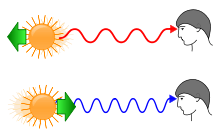
Multiple Choice
What is Redshift
Objects move away us, give off red light
Objects move towards us, give off blue light
Objects move towards us, give off red light
Objects move away us, give off blue light
51
Multiple Choice
Blueshift frequency
Is increasing
Stays the same
Blueshift has no frequency
decreases
52
Multiple Choice
Redshift wavelength
doesn't change
stays the same
Gets longer/increases
gets shorter/decreases
53
Multiple Choice
blue; red
red; red
red; blue
blue; blue
54
Make sure you understand this lesson before you complete the retest! Retest MUST be completed by Friday Jan. 20th.
Show answer
Auto Play
Slide 1 / 54
SLIDE

Similar Resources on Wayground
50 questions
SCIENTIFIC VARIABLES
Presentation
•
7th Grade
50 questions
Energy flow in the Ecosystem
Presentation
•
8th Grade
51 questions
Organs & organ systems
Presentation
•
8th Grade
50 questions
S8P1e & S81pf Summative Review
Presentation
•
8th Grade
48 questions
8.5A Atomic Structure Reteach
Presentation
•
7th - 8th Grade
53 questions
Ocean Zones
Presentation
•
8th Grade
51 questions
Q2- Study Guide- Earth Science
Presentation
•
8th Grade
49 questions
Solar System Lesson
Presentation
•
7th Grade
Popular Resources on Wayground
10 questions
How much do you know about our Portrait of an Eagle?
Quiz
•
10th Grade
10 questions
Fast Food Slogans
Quiz
•
6th - 8th Grade
21 questions
Continents and Oceans
Quiz
•
6th Grade
20 questions
Parts of Speech
Quiz
•
5th Grade
16 questions
Subject & Predicate
Quiz
•
5th Grade
25 questions
Multiplication Facts
Quiz
•
5th Grade
12 questions
Map Skills
Quiz
•
3rd Grade
22 questions
Continents and Oceans
Quiz
•
5th Grade
Discover more resources for Science
20 questions
Scientific Method and Variables
Quiz
•
8th Grade
20 questions
Scientific method and variables
Quiz
•
8th Grade
27 questions
Counting Atoms - Subscripts
Quiz
•
8th Grade
20 questions
Claim, Evidence and Reasoning (CER)
Quiz
•
6th - 8th Grade
18 questions
Counting Atoms
Quiz
•
7th - 8th Grade
20 questions
Elements, Compounds and Mixtures
Quiz
•
8th Grade
10 questions
Exploring Chemical and Physical Changes
Interactive video
•
6th - 10th Grade
10 questions
Decoding the Periodic Table of Elements
Interactive video
•
6th - 10th Grade