
Search Header Logo
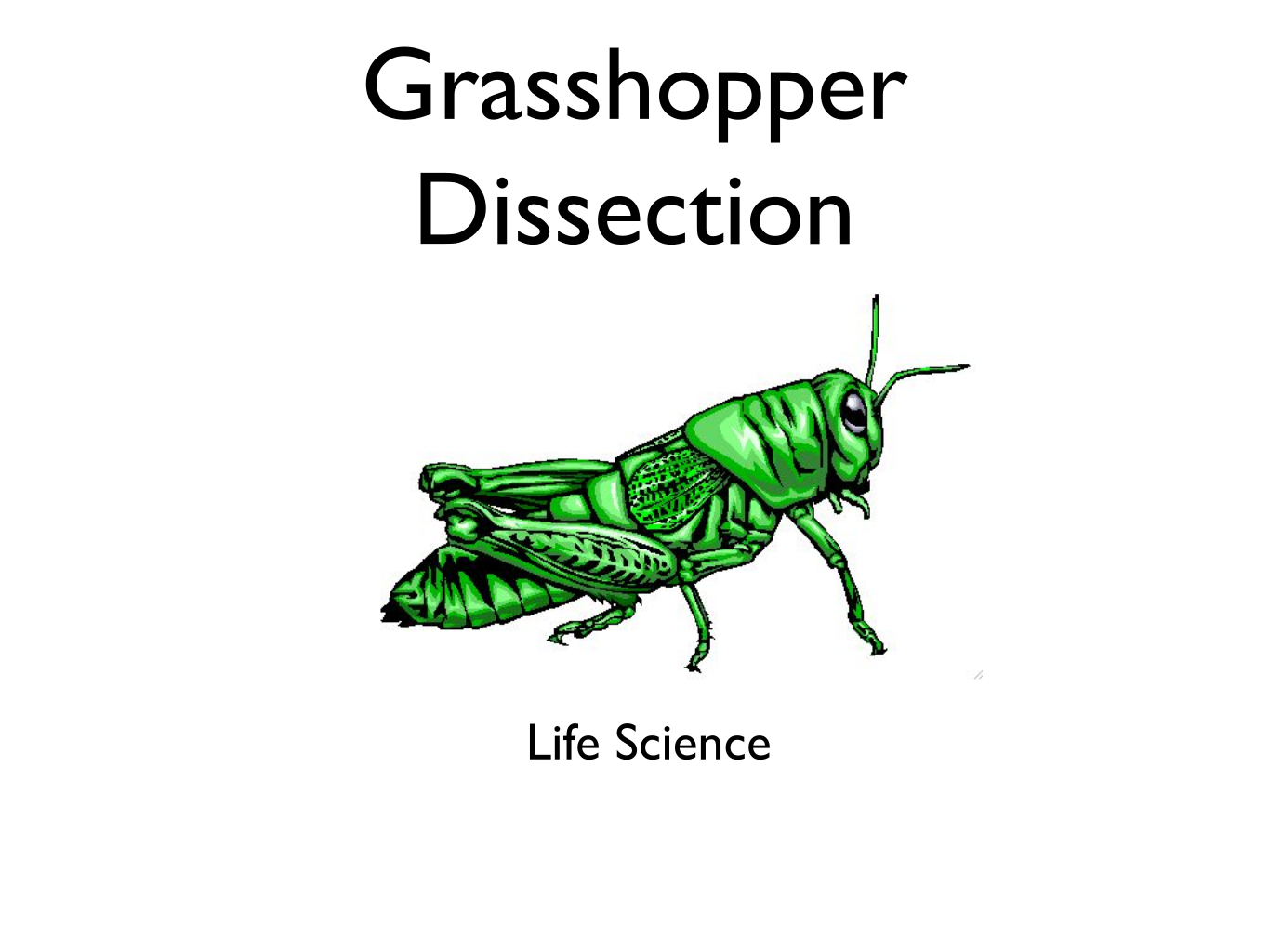
Grasshopper Dissection

Grasshopper Dissection

Assessment

Presentation

•

Biology

•

9th - 12th Grade

•

Easy

•
NGSS
MS-LS4-2, MS-PS4-1, MS-LS1-7

Standards-aligned

Created by

Beth Smith

Used 5+ times

FREE Resource

11 Slides • 36 Questions

1
media

2

media

3

Multiple Select

Which of the following are characteristics of the Phylum Arthropoda?

1

largest phylum

2

jointed appendages

3

segmented body

4

exoskelton

5

calcium carbonate skeleton

4

media

5

Multiple Choice

How many body regions do insects have?

1

1

2

2

3

3

4

4

6

Multiple Choice

How many pairs of legs do insects have?

1

1

2

2

3

3

4

4

7

Multiple Choice

How many pairs of antennae?

1

1

2

2

3

3

4

4

8

media

9

media

10

media

11

Match

Match the following.

labrum

mandibles

maxilla

labium

holds food

chewing

chewing and tasting

holding food while chewing

12

media

13

Multiple Choice

Which of the following senses matches with the tympanum?

1

smell

2

sight

3

sound

4

touch

14

Multiple Choice

Which of the following pairs of legs is associated with jumping?

1

front

2

middle

3

hind

15

media

16

Multiple Choice

What function do the spiracles carry out for the grasshopper?

1

spinning silk

2

breathing

3

chewing

4

reproduction

17

media

18

Multiple Choice

The ovipositor is found in which of the following sexes?

1

male

2

female

19

media

20

media

21

Match

Match the following

esophagus

rectum

malpighian tubules

ovaries

testes

swallowing

storing waste

excretion

producing eggs

producing sperm

22

Multiple Choice

Which region of the

insect's body is specialized for sensory functions?

1

Head

2

Thorax

3

Abdomen

4

Wings

23

Multiple Choice

Which region of the insect's body is specialized for movement?

1

Head

2

Thorax

3

Abdomen

4

Wings

24

Multiple Choice

What is the purpose of compound eyes?

1

detecting motion

2

able to focus

3

making a visual picture

4

detecting UV light

25

Multiple Choice

How does the tympanic

membrane help a grasshopper?

1

Detect Sound

2

Jumping

3

Detecting Light

4

Detecting Motion

26

Multiple Choice

What system do spiracles open into on a grasshopper?

1

Respiratory System

2

Reproductive System

3

Digestive System

4

Circulatory System

27

Multiple Choice

How did you determine the gender of your grasshopper?

1

Females are larger than males.

2

Females are smaller than males

28

Multiple Choice

Grasshopper is in what Class
1

Insecta

2

Animalia

3

Orthoptera

4

Anthropoda

29

Multiple Choice

Grasshopper is in what Kingdom
1

Insecta

2

Animalia

3

Orthoptera

4

Arthropoda

30

Multiple Choice

Grasshopper is in what Phylum
1
Insecta
2
Animalia
3
Orthoptera
4
Arthropoda

31

Multiple Choice

Insects body is divided into 3 parts they are....
1

Head, Thorax, Abdomen

2

Head, Middle, Tail

3

Anterior, Thorax, Posterior

4

Front, Middle, End

32

Multiple Choice

Grinds food with chittinous plates
1

Crop

2

Gizzard

3

Midgut

4

Hind Gut

33

Multiple Choice

Produces saliva to moisten food
1

Mouth

2

Gastric Ceca

3

Salivary Glands

4

Intestines

34

Multiple Choice

Stores food
1

Crop

2

Gizzard

3

Midgut

4

Hind Gut

35

Multiple Choice

Passageway for digested waste from the intestine to the anus
1

Anus

2

Rectum

3

Intestine

4

Salivary Gland

36

Multiple Choice

External opening; removes waste from the organism
1

Anus

2

Crop

3

Gizzard

4

Rectum

37

Multiple Choice

First part of the digestive system that takes food in
1

Anus

2

Rectum

3

Mouth

4

Salivary Glands

38

Multiple Choice

Tube between the mouth and crop
1

Crop

2

Gizzard

3

Esophagus

4

Mouth

39

Multiple Choice

Removes chemical waste from the blood
1

Labium

2

Labrum

3

Malpighian Tubes

4

Dorsal Blood Vessel

40

Multiple Choice

Sense touch and odors
1

Compound Eyes

2

Simple Eyes

3

Antennae

4

Spiracles

41

Multiple Choice

An insects body is covered in a
1

Labium

2

Labrum

3

Exoskeleton

4

Spiracles

42

Multiple Choice

Insects breathe through holes located along the sides of the body called
1

Exoskeleton

2

Antennae

3

Spiracles

4

Tympanum

43

Multiple Choice

Made up of many hexagonal lenses; can see shape, color, movement, and tell distance
1

Compound Eye

2

Simple Eye

3

Spiracles

4

Antennae

44

Multiple Choice

Used for flying
1

Walking Legs

2

Jumping Legs

3

Wings

4

Coxa

45

Multiple Choice

Thin, translucent glycoprotein-rich sheet stretched over a cavity (like an ear)
1

Trochanter

2

Tibia

3

Coxa

4

Tympanum

46

Multiple Choice

Long, hindmost pair of grasshoppers 6 legs
1

Walking Legs

2

Jumping Legs

3

Wings

4

Antennae

47

Multiple Choice

Organ used by some animals for the laying of eggs
1

Coxa

2

Mesothorax

3

Ovipositor

4

Trochanter

media

Show answer

Auto Play

Slide 1 / 47

SLIDE
