
Search Header Logo
Plate Tectonics (6.E.2.2) Test Review

Plate Tectonics (6.E.2.2) Test Review

Assessment

Presentation

Science

6th - 8th Grade

Practice Problem

Medium

NGSS
MS-ESS2-2, MS-ESS3-2, MS-ESS2-3

+2

Standards-aligned

Created by

Anonymous Anonymous

Used 64+ times

FREE Resource

6 Slides • 7 Questions

1
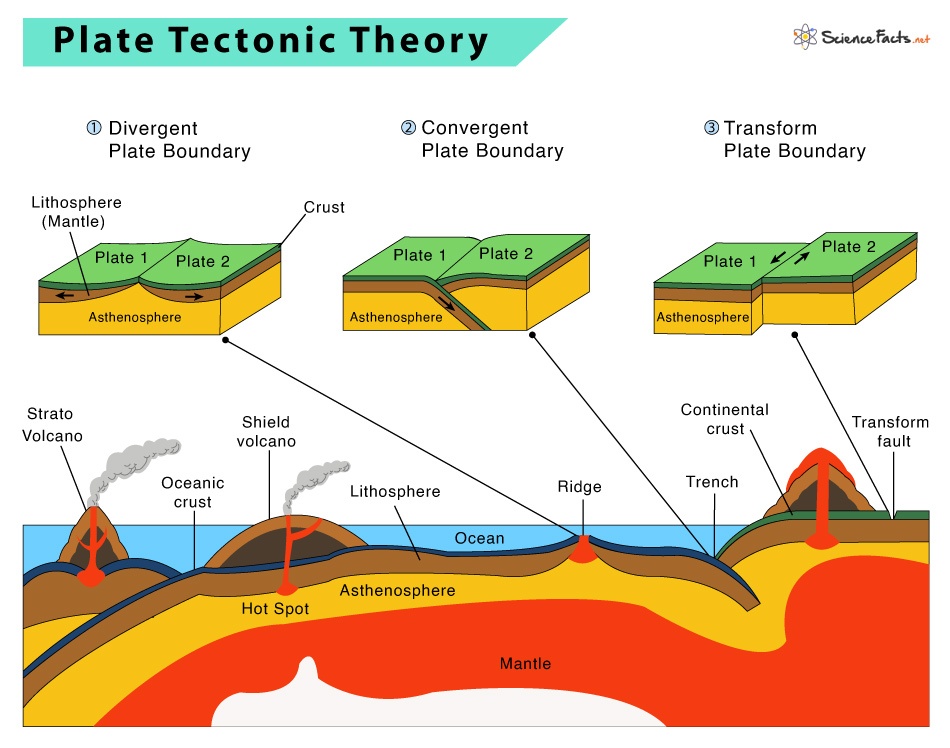
Plate Tectonics Test Review

media

2

3

Multiple Choice

Where do most earthquakes and volcanoes take place?

1

in the oceans

2

at plate boundaries

3

on land only

4

Multiple Choice

Which statement best explains plate tectonics

1

The movement of crustal plates over the mantle prevents continental drift

2

Crustal plates move away from each other at tectonic boundaries

3

The movement of crustal plates over the mantle often results in earthquakes and volcanic eruptions

5

6

Multiple Choice

The Hawaiian Islands are in the middle of a large plate with many volcanoes. The volcanoes are a direct result of the tectonic plate...

1

being forced under another tectonic plate at a subduction zone

2

colliding with another tectonic plate and being forced up

3

moving over a hot spot where magma breaks through the crust

7

8

Multiple Choice

Which event below involves constructive force?

1

earthquake

2

volcanic eruption

3

flood

4

wind storm

9

Multiple Choice

Which geological event will most likely result when two continental plates collide?

1

volcano eruption

2

a rift valley

3

formation of a mountain range

10

11

12

Multiple Choice

Where does the energy from an earthquake originate?

1

from rocks under stress shifting deep below Earth's surface

2

weight from rocks pushing down on bedrock

3

from convection currents

13

Multiple Choice

Which earthquake waves cause the most damage on Earth?

1

secondary waves

2

surface waves

3

transverse waves

Plate Tectonics Test Review

media

Show answer

Auto Play

Slide 1 / 13

SLIDE
