

Week 9: History and Background of Cremation & Liability

Presentation
•
Other
•
University
•
Practice Problem
•
Hard

Tina Belt
Used 6+ times
FREE Resource
59 Slides • 0 Questions
1
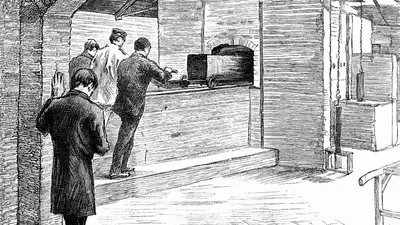
History and Background of Cremation & Cremation Liability
Week 9
2
History and Background of Cremation
Historical Motivations for Cremation
Religious Significance – Seen as a sacred rite in many cultures and belief systems
Spiritual Purification – Believed to cleanse the soul and body

3
History and Background of Cremation
Historical Motivations for Cremation
Practical Disposal – Used to destroy remains and prevent misuse or desecration
Symbolism of Fire and Light – Revered for its beauty and association with transcendence
4
History and Background of Cremation
Cremation in the Ancient World
The earliest recorded reference to cremation appears in Homer’s Iliad, during the Trojan War, describing the cremation of Patroclus, the close companion of Achilles.
In ancient cultures, cremation was often associated with purification of the soul.
This idea of purification resurfaced during the modern cremation movement of the late 1800s, driven by practical concerns such as overcrowded cemeteries and the spread of disease.
5
History and Background of Cremation
Destruction of remains
The cremation process destroys all traces of organic, carbon-based matter
Beauty of Light
The belief that lighting the flame encourages the spirit towards the light and beyond

6
History and Background of Cremation
Cremation Practices in Ancient Cultures
Ancient Greeks and Romans
(Refer to Lesson 3 Class Presentation for detailed discussion.)
Cremation was a common funerary practice, often associated with honor and purification, especially for soldiers and the elite.
7
History and Background of Cremation
Norse Vikings
According to the Ynglinga Saga:
“Odin established the same law in his land that had been in force in Asaland. He decreed that all dead men should be burned, with their belongings laid upon the pyre, and the ashes cast into the sea or buried in the earth.”
This reflects the cultural and spiritual importance of cremation in Norse tradition.Note: Contrary to popular belief, Vikings generally did not burn their ships at sea as part of funeral rites.
8
9
History and Background of Cremation
The Ancient Celts, Saxons, Indians
All Ancient Cremations were performed on funeral pyres

10
History and Background of Cremation
Early Cremation in North America
Indigenous Traditions
The earliest known cremations on the continent were practiced by Indigenous peoples, often as part of deeply rooted spiritual and cultural rituals.
(See Lesson 6 Class Presentation for more details.)

11
History and Background of Cremation
First Documented Cremation
Colonel Henry Laurens – Former President of the Continental CongressDied in 1792
Requested cremation out of fear of being buried alive—a common anxiety of the time
His cremation is widely recognized as the first formally documented case in North American history
12
13
History and Background of Cremation
Historical Significance & Evolution of Cremation
Before 1896:
Cremation was rare and often viewed with skepticism in the U.S.Pioneering Development:
The first stand-alone crematory in North America was built in 1876 by Dr. Julius LeMoyne in Washington, Pennsylvania.
This marked the beginning of the modern cremation movement in the U.S.
14
History and Background of Cremation
First Modern Cremation:
Baron Joseph Henry Louis Charles De Palm was the first person cremated at LeMoyne’s facility.
His highly publicized cremation in 1876 helped bring national attention to the practice.
(Be sure to watch the video for more on this pivotal event!)
15
16
History and Background of Cremation
European Influences on Modern Cremation
In 1873, at the Vienna Exposition, Professor Lodovico Brunetti of Padua, Italy unveiled one of the first modern crematory models to the public.
Alongside the crematory display, he presented actual cremated remains, introducing many Europeans to the concept of modern cremation for the first time.
17
History and Background of Cremation
His exhibit included a striking Latin inscription:
“Vermibus erepti, puro consummimur igni”
—translated: “Saved from the worms, we are consumed by the flames.”This presentation played a key role in sparking global interest and dialogue about cremation as a hygienic and dignified alternative to burial.
18
History and Background of Cremation
Sir Henry Thompson & the British Cremation Movement
In January 1874, Sir Henry Thompson, a respected British surgeon, published a bold article in The London Contemporary Review dvocating for human cremation—a shocking idea to many in Victorian society at the time.
19
History and Background of Cremation
Thompson’s article helped spark the British cremation movement, laying the groundwork for the modern cremation practices we recognize today.
His advocacy was rooted in concerns about:
Sanitary reform and public health
Purification of space through hygienic disposal of the dead
Overcrowded cemeteries in urban areas
The spread of disease, particularly under the now-debunked miasma theory, which held that illness was spread through "bad air"
20
History and Background of Cremation
Cremation as a Growing Industry
Cremation Association of North America (CANA)
Founded in 1913
Brought together 40 crematory operators from across the United States
Aimed to promote standards, education, and professionalism in the emerging cremation industry
21
History and Background of Cremation
Early Crematory Developments
New York Cremation Society established in 1881
Fresh Pond Crematory opened in 1885, becoming one of the earliest modern crematory facilities
Industry Growth by 1900
24 crematories were operating in 15 different states
Despite the growth, cremation accounted for only 1% of all body dispositions at the time
22
23
History and Background of Cremation
The Memorial Concept in Cremation
Originated within cemeteries as a way to honor the life and legacy of the deceased
Emphasizes the importance of creating a permanent memorial as part of the cremation process
Key Elements of a Complete Cremation Memorial:
Use of a memorial urn made from durable, imperishable materials
Engraving the urn to personalize and commemorate the individual
Permanent placement of the urn in a meaningful location, such as a columbarium, niche, or family plot
24
History and Background of Cremation
"There is one thought I hope that I can impress most deeply on all crematory men – cremation is not the end – cremation alone is not complete, but is only an intermediate step towards the permanent preservation of the cremated remains."
— Clifford Zell, Sr., Valhalla Chapel of Memories, St. Louis, Missouri
25
History and Background of Cremation
Memorialization in Early Cremation Practices
The concept of memorialization began in cemeteries, emphasizing the importance of preserving a distinct identity for every individual who lived and died.
Urns were crafted from imperishable materials, intentionally designed for engraving and permanent placement within a niche.
26
History and Background of Cremation
.
Niches, often with glass or marble fronts, were created to offer lasting, visible tributes to the deceased.
The processing or crushing of cremated remains was strongly discouraged, as it was seen as a form of desecration and thought to diminish the integrity of the individual.
Likewise, scattering of remains was not encouraged, as it conflicted with the goal of permanent, respectful remembrance.
27
History and Background of Cremation
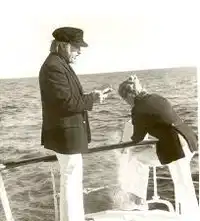
The American Way of Death
Jessica Mitford (1963)
Author of the groundbreaking exposé The American Way of Death, which critically examined the funeral industry’s practices and pricing.


28
History and Background of Cremation
The book raised public awareness about unethical practices and the need for regulatory oversight.
Impact on Regulation
Helped spur the creation of the Federal Trade Commission’s (FTC) Funeral Rule, which established consumer protections and transparency in funeral services.
29
History and Background of Cremation
Cremation Societies & Industry Pioneers
Telophase, founded by Thomas Webber in 1986, became a significant player in the cremation services sector.
Neptune Society, established by Charles Denning in 1973, is one of the earliest and most well-known cremation organizations in the U.S.
30
31
32
33
History and Background of Cremation
Simplification in Funeral Practices
Over time, public attitudes toward cremation and burial have shifted significantly.
In the 1960s, Jessica Mitford’s influential book The American Way of Death served as a major turning point.
The book sparked both regulatory reforms and sociological change within the funeral industry.
In response, cremation societies began to emerge, promoting simple, affordable cremation—often without ceremony or traditional memorialization.
34
History and Background of Cremation
As cremation became more accepted, the demand for simplified services grew.
This trend toward simplicity has also extended to burial practices, with more families choosing minimal or non-traditional arrangements.
35
36
History and Background of Cremation
Contemporary Cremation Practices: A Focus on Personalization
While honoring the wishes of the deceased has always been a guiding principle, today’s cremation practices have become more personalized and people-centered than ever before.
The method of disposition is no longer the central focus—what truly matters is how the individual is remembered and celebrated.
37
History and Background of Cremation
Modern Personalization Options Include:
Keepsakes and memorial jewelry containing cremated remains
Customized urns that reflect the personality or interests of the loved one
Digital tributes such as video montages or online memorials
Personalized ceremonies held in meaningful or unconventional locations
Inclusion of significant personal items in services or urns
Scattering or placement of remains in a location that held special meaning to the deceased
38
History and Background of Cremation
The Expanding Role of the Funeral Professional
When it comes to personalization, the possibilities are endless—truly, the sky’s the limit.
For today’s funeral professionals, this shift represents a profound change in our role and responsibilities.
39
History and Background of Cremation
What Does This Mean for Us?
The modern funeral director is more than a coordinator—we are trusted guides in life celebration planning.
Families look to us not just for logistics, but for emotional support and creative direction in crafting meaningful, personalized farewells.
We help honor legacies, tell stories, and create healing spaces through personalized services.
Personally, this is what I love most about being a funeral director—helping families create a send-off that’s as unique as the life it honors.
40
History and Background of Cremation
Opposition to Cremation: Religious Perspectives
While many religions have grown more accepting of cremation, some faith traditions continue to strongly oppose it based on theological and cultural beliefs.
Faiths with Significant Objections:
Islam – Prohibits cremation as it is seen as a violation of the sacredness of the body
Orthodox Judaism – Maintains burial as a religious obligation based on scripture and tradition
Russian & Greek Orthodox Churches – View cremation as inconsistent with teachings on the sanctity of the body and resurrection
41
History and Background of Cremation
For a more in-depth look at how various religions view cremation, visit:
everplans.com: Religious Perspectives on Cremation▶️ Be sure to watch the accompanying videos for detailed explanations of each faith’s stance.
42
43
44
45
History and Background of Cremation
Roman Catholic Perspective on Cremation (Canon Law)
Under the former Code of Canon Law (#1203), cremation was strictly prohibited, and burial was required for all faithful.
Exceptions were only made in cases of mass death or public health concerns.
Those who chose cremation without such justification were denied ecclesiastical burial.
46
History and Background of Cremation
The revised Code of Canon Law (1983) reflects a more flexible stance:
“The Church earnestly recommends that the pious custom of burying the bodies of the dead be observed; it does not, however, forbid cremation unless it has been chosen for reasons which are contrary to Christian teaching” (#1176).
Cremation is now permitted, provided it is chosen for reasons aligned with Church values.
Cremated remains must be treated with reverence and should be interred in a grave or columbarium, not scattered or kept at home.
▶️ For a full explanation of Canon Law and its evolution, watch the video on the next slide.
47
48
History and Background of Cremation
Proponents of Cremation: Religious Traditions That Embrace It
Several traditional religions have long supported cremation as a meaningful and spiritually significant practice.
Hinduism
Cremation is the preferred and customary method of disposition.
Believed to aid the soul's journey to the next life and release it from attachment to the physical body.
49
History and Background of Cremation
Buddhism
Cremation is commonly practiced, though burial is also accepted depending on regional and sectarian traditions.
Main Branches of Buddhism:
Theravāda Buddhism – prevalent in Southeast Asia
East Asian Mahāyāna Buddhism – includes Chinese, Korean, and Japanese traditions
Tibetan Mahāyāna Buddhism – may include other forms of body disposition such as sky burial, though cremation remains common
▶️ Watch the videos on Hindu and Buddhist cremation practices to explore their beliefs in greater depth.
50
51
52
Cremation Liability
Cremation is an Irreversible Act; therefore, it is important to double check and document all steps of the the cremation process, and adhere to the strict code of identification

53
Cremation Liability
Cremation Verification Protocol: 10-Point Identity Check
The funeral provider holds the responsibility for ensuring the accurate identification of remains at every stage of the cremation process.
10-Point Identification & Verification Procedure:
At the place of death – Confirm identity before removal.
At the funeral home – Family verifies remains prior to final arrangements.
54
Cremation Liability
Before transport – Verify identity prior to leaving for the crematory.
Upon arrival at crematory – Confirm delivery and documentation.
Before cremation – Final identity check before placing remains in the chamber.
During clean-out – Confirm identity at the start of chamber clean-out.
Before processing – Double-check remains before processing begins.
Before urn placement – Verify remains before transferring to the final container.
55
Cremation Liability
When urn is returned to funeral home – Confirm with documentation and tags.
When urn is released to family – Final verification with authorized recipient.
This process ensures dignity, accuracy, and accountability at every step.step.
56
Cremation Liability
What Does Due Diligence Mean?
Due diligence refers to the **reasonable and necessary steps taken to meet legal and ethical obligations.
In Practice at the Crematory:
Internal Tracking & Verification:
Consistent use of identification tags, labels, and secure handling protocols
57
Cremation Liability
Documentation:
Accurate cremation authorizations, required permits, and detailed entries in crematory logs
Regulatory Compliance:
Adherence to FTC regulations and industry standards for consumer protection and transparency
58
Cremation Liability
Crematory Records Requirement (Per K.A.R. 63-7-2 – Kansas Law)
Kansas crematories are legally required to maintain detailed records for each cremation on-site for a minimum of five years.
Required Information Includes:
Name of the person, funeral establishment, or branch that delivered the body for cremation
Name of the deceased and assigned identification number
Time and date the remains were accepted at the crematory
Date the body was placed into the cremation chamber
Date and name of the individual who received the cremated remains
59
Cremation Liability
Name and address of the person who signed the cremation authorization
Coroner’s permit to cremate (if applicable) and signed authorization from the authorizing agent
Maintaining accurate records supports compliance, transparency, and legal protection for crematory operators.
History and Background of Cremation & Cremation Liability
Week 9
Show answer
Auto Play
Slide 1 / 59
SLIDE
Similar Resources on Wayground

50 questions
บทที่ 10 climate change
Presentation
•
University
55 questions
EV3U12
Presentation
•
University
55 questions
Bahasa Inggris 1 Week 12
Presentation
•
University
58 questions
ENG 410 Week 3
Presentation
•
University
54 questions
3rd Grade, Unit 4, Lesson 1
Presentation
•
KG
54 questions
RAD 281 Lecture 6
Presentation
•
University
52 questions
Crisis and Suicide
Presentation
•
University
Popular Resources on Wayground
10 questions
Safety Day 2026 – Student Review

Quiz
•
9th Grade
21 questions
Continents and Oceans
Quiz
•
6th Grade
20 questions
Parts of Speech
Quiz
•
5th Grade
16 questions
Subject & Predicate
Quiz
•
5th Grade
25 questions
Multiplication Facts
Quiz
•
5th Grade
12 questions
Map Skills
Quiz
•
3rd Grade
22 questions
Continents and Oceans
Quiz
•
5th Grade
15 questions
Rounding Decimals
Quiz
•
5th Grade
Discover more resources for Other
20 questions
Disney Trivia
Quiz
•
University
10 questions
Spanish Greetings and Goodbyes!
Presentation
•
6th Grade - University
20 questions
Physical or Chemical Change/Phases
Quiz
•
8th Grade - University
39 questions
Unit 7 Key Terms
Quiz
•
11th Grade - University
25 questions
SER and Subject Pronouns
Quiz
•
8th Grade - University
38 questions
Unit 6 Key Terms
Quiz
•
11th Grade - University
19 questions
Key Concepts in Buddhism
Quiz
•
University
0 questions
Cell Domain Basic Review (Biology)
Quiz
•
University