Search Header Logo
Module 6 Review Lesson

Module 6 Review Lesson

Assessment

Presentation

Science

9th - 12th Grade

Medium

NGSS
MS-ESS2-6, MS-ESS2-5, MS-ESS1-1

+7

Standards-aligned

Created by

Rachel Roland

Used 3+ times

FREE Resource

8 Slides • 47 Questions

1

media
media
media
media

Module 6 Review

🔇

Mute your mic.

📷

Turn on your camera

🧠

Get ready to learn!

2

Draw

Draw your favorite video game or animated character.

3

media
media

6.01 Atmosphere

  • Layers of the Atmosphere

  • Temperature changes with increase in altitude

  • How the sun drives atmospheric processes

  • How atmospheric currents transport matter and transfer energy

    • Conduction, convection, and radiation

4

Multiple Choice

Question image

What layer of the atmosphere is layer #1?

1

Thermosphere

2

Troposphere

3

Mesosphere

4

Stratosphere

5

Multiple Choice

Question image

What layer of the atmosphere is layer #2?

1

Thermosphere

2

Troposphere

3

Mesosphere

4

Stratosphere

6

Multiple Choice

Question image

What layer of the atmosphere is where weather occurs?

1

Thermosphere

2

Troposphere

3

Mesosphere

4

Stratosphere

7

Multiple Choice

In our atmosphere as altitude increases, density will ____________.

1

Increase

2

Decrease

8

Multiple Choice

Question image

What layer protects us from the harmful ultraviolet (UV) rays from the sun?

1

Troposphere

2

Greenhouse Gases

3

Ionosphere

4

Ozone Layer

9

Multiple Choice

Question image

Movement of heat from one material to another through direct contact.

1

Radiation

2

Conduction

3

Convection

10

Multiple Choice

Question image

Movement of heat through the movement of warming or cooling liquids or gases.

1

Radiation

2

Conduction

3

Convection

11

Multiple Choice

Question image

Which point on Earth will get the most heat from the sun due to solar radiation?

1

A

2

B

12

media
media

6.02 Weather

  • Factors that influence weather

    • Temperature

    • Pressure

    • Humidity

    • Wind

    • Clouds

    • Precipitation

  • Examine patterns in data to determine which factors influence weather at locations around Earth

    • Air masses, fronts, and pressure systems

13

Multiple Choice

At warmer temperatures, liquid water molecules move faster and turn into water vapor that stays in the air. This moisture in the air is called ___.

1

precipitation

2

humidity

3

air mass

4

front

14

Multiple Choice

What weather instrument is used to measure air pressure in a weather event like a hurricane?

1

anemometer

2

sling psychrometer

3

barometer

4

thermometer

15

Multiple Choice

What causes warm air to rise? 
1

The fact that it's less dense than cold air

2

The fact that it weighs more than cold air

3

The fact that it has higher pressure than cold air

4

The fact that it's more dense than cold air

16

Multiple Select

Check all weather associated with a high pressure system.

1

sunny

2

clear skies

3

calm winds

4

warm, moist air

17

Multiple Select

Check all weather associated with a low pressure system.

1

warm, humid air

2

strong winds

3

cloudy, stormy skies

4

sunny, clear skies

18

Multiple Choice

Question image

What kind of pressure system is South of Panama City Beach?

1

high

2

low

3

warm front

4

cold front

19

Multiple Select

What are the three things that describe a high pressure system? Check all that apply.

1

air cools

2

air becomes more dense

3

air sinks

4

air rises

5

air warms

20

Multiple Choice

Question image

What type of pressure system is modeled in the picture?

1

high

2

low

21

Multiple Choice

Question image

What does this weather map symbol represent?

1

warm front

2

cold front

3

stationary front

4

occluded front

22

Multiple Choice

What kind of weather is generally associated with a cold front?

1

heavy rain possible thunderstorms

2

sunny skies

3

warmer air temperature

4

no wind

23

Multiple Choice

The short term state of the atmosphere including temperature, humidity and wind.

1

thunderstorm

2

climate

3

weather

4

hurricane

24

Multiple Choice

Question image

What type of pressure system does the model represent?

1

low pressure system

2

high pressure system

25

Multiple Choice

Question image

River of air that moves weather systems.

1

local winds

2

continental winds

3

jet stream

4

equatorial winds

26

Multiple Choice

What causes wind to blow?
1

Differences in longitude

2

Shock waves from clouds

3

Differences in air temperature and pressure

4

The rotation of earth

27

Open Ended

Question image

What type of front?

28

Explanation Slide...

This is a warm front. The warm air mass is moving into the cold air mass, rising above it due to its lower density.

29

media
media

6.03 Oceans and Weather Patterns

  • Examine models of ocean circulation.

  • Describe how energy and water move throughout the oceans.

    • Surface currents

    • Deep ocean currents - thermocline circulation

  • Explain the relationship between ocean circulation and weather patterns.

    • Current's connection to weather

    • El Nino, La Nina

30

Multiple Choice

Question image
Currents that occur at or near the surface of the ocean are called 
1

Deep Currents

2

Convection Currents

3

Surface Currents

4

Wave Currents

31

Multiple Choice

Question image
Surface currents are mainly caused by
1

The Coriolis Effect

2

Cold and Warm Water

3

Convection

4

Wind

32

Multiple Choice

Question image
The Coriolis Effect changes a currents path due to Earth's
1
Winds
2
Cooling
3
Heating
4
Rotation

33

Multiple Choice

Question image
Regular movements of water far below the oceans surface are called
1

Warm Currents

2

Deep Currents

3

Shallow Currents

4

Surface Currents

34

Multiple Choice

Question image
Currents release heat energy and this can affect an area's
1

Oxygen

2

Climate

3

Upwelling

4

Sunlight

35

Multiple Choice

Question image
Warm water is ________ dense and _________ than cold water
1

More, Heavier

2

Less, Heavier

3

Less, Lighter

4

More, Lighter

36

Multiple Select

Which of the following will decrease ocean salinity:

1

Evaporation

2

Sea ice formation

3

Precipitation (Rain)

4

Runoff

5

Icebergs melting

37

Multiple Choice

______ causes deep ocean currents

1

The Coriolis Effect

2

gravity

3

wind

4

density differences

38

Multiple Choice

Gyres in the southern hemisphere are surface currents that turn _________ due to the Coriolis Effect.

1

clockwise

2

counterclockwise

3

toward the right

4

toward the bottom of the ocean

39

Multiple Choice

The large, circular surface-current pattern found in each ocean produced by wind and the Coriolis effect

1

California Current

2

Upwelling

3

Gyre

4

Global Conveyor Belt

40

Multiple Select

Which factors cause gyres?

1

prevailing winds

2

salinity

3

shape of the ocean basin

4

Coriolis effect

41

Multiple Choice

What does El Niño and La Niña's effect on ocean circulation heavily depend on?

1

Salt

2

Humans

3

Marine life

4

Wind Patterns

42

Multiple Choice

What does ENSO stand for?

1

Emergency National Security Organization

2

El Niño Southern Oscillation

3

El Niño Southbound Oscillation

4

El Niño Silver Oyster

43

Multiple Choice

What are the conditions for El Niño and La Niña?

1

El Niño has colder waters and La Niña has warmer waters

2

El Niño and La Niña both have warmer waters

3

El Niño has warmer waters and La Niña has colder waters

4

El Niño and La Niña both have cooler waters

44

Multiple Choice

An El Niño occurs when trade winds drop or even reverse

1

True

2

False

45

media
media

6.04 Severe Weather

  • Examine severe weather phenomena that result from specific atmospheric conditions.

    • Characteristics of thunderstorms, tornadoes, hurricanes, and tsunamis.

  • Explore how Earth's interior processes impact surface processes and severe weather.

46

Multiple Choice

Question image

Thunderstorm clouds are known as _____.

1

cirrus clouds

2

stratus clouds

3

cumulonimbus clouds

4

cumulus clouds

47

Multiple Choice

Question image

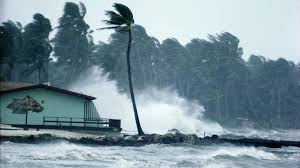
The most dangerous aspect of a hurricane that comes ashore is the ________.

1

storm surge

2

eye wall

3

wind speed

4

rainfall

48

Multiple Choice

Question image

About 75% of the world's tornadoes happen in the United States during Springs and early Summer when cold, dry from Canada meets warm, moist air from the Gulf of Mexico. This relatively flat part of the country is known as ________________.

1

Tornado Paradise

2

Thunderstorm Lane

3

Tornado Alley

4

Hurricane Row

49

Multiple Choice

What are large thunderstorms that have winds already in rotation called?

1

supercells

2

blizzards

3

hurricanes

4

tornadoes

50

Multiple Choice

Question image
What fuels a hurricane's strength?
1

Wind

2

Sunlight

3

Warm Water

4

Cold Water

51

Multiple Choice

How do the conditions for a tornado differ from the conditions for a hurricane?
1

Tornadoes never form when there is rain, while hurricanes always form with rain.

2

Tornadoes form under low pressure, while hurricanes form under high pressure

3

Tornadoes form in a stable atmosphere, while hurricanes form in an unstable atmosphere 

4

Tornadoes form over land, while hurricanes form over bodies of water

52

Multiple Choice

Question image
What happens if a hurricane moves over land or cold ocean water?
1

it will get stronger

2

it will get weaker

3

it will upgrade its category

4

it will morph into a typhoon

53

media
media

6.05 Living with Weather

  • Examine the cause and effect relationships between weather and features of human societies.

  • Describe how natural hazards have altered human activity.

  • Describe how evidence allows for distinction between causal and correlational relationships between environmental factors and human activity.

  • Early warning systems and how they have saved lives.

54

Multiple Choice

Question image
Which natural disaster is a long high sea wave caused by an earthquake, submarine landslide, or other disturbance?
1

Hurricane

2

Flood

3

Wildfire 

4

Tsunami 

55

media
media
media

Rachel Roland

Science Teacher
ASU Prep Digital
Arizona State University
phone: 480-863-5195
email: rsroland@asu.edu
web: http://www.asuprepdigital.org/

What questions do you have?

media
media
media
media

Module 6 Review

🔇

Mute your mic.

📷

Turn on your camera

🧠

Get ready to learn!

Show answer

Auto Play

Slide 1 / 55

SLIDE