Search Header Logo
Magistra fīliārum II, RTL XI

Magistra fīliārum II, RTL XI

Assessment

Presentation

World Languages

9th - 12th Grade

Practice Problem

Medium

Created by

Joan Crist

Used 3+ times

FREE Resource

10 Slides • 46 Questions

1

This Quizizz lesson will review the part of the story we talked through together, and take you through the rest, with new verb forms. It is long, but easy, all multiple choice.

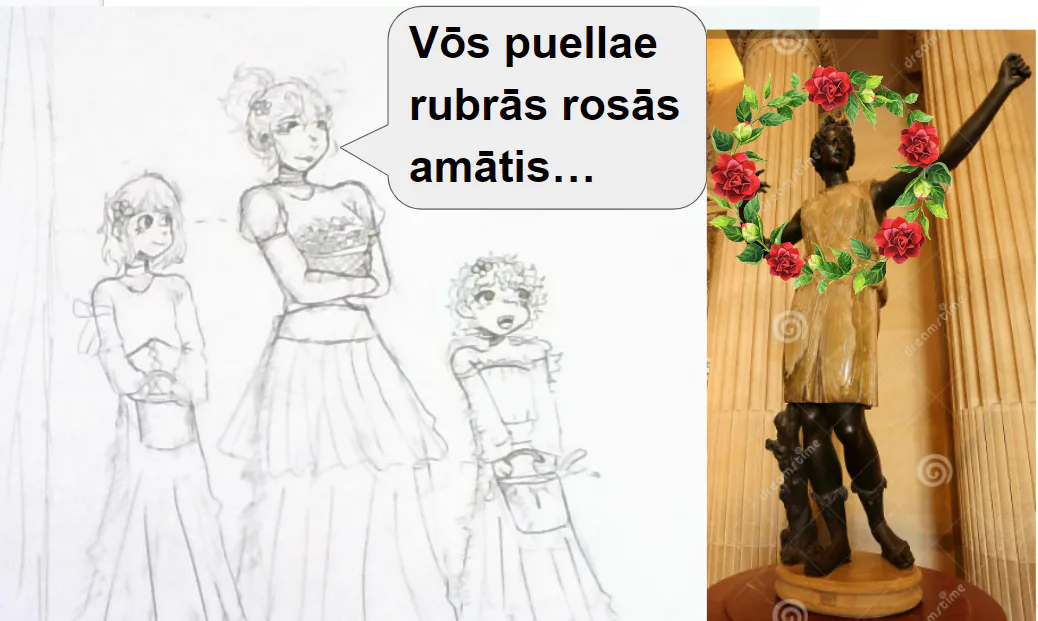
--art by D.R.

​magistra fīliārum II

media

2

media

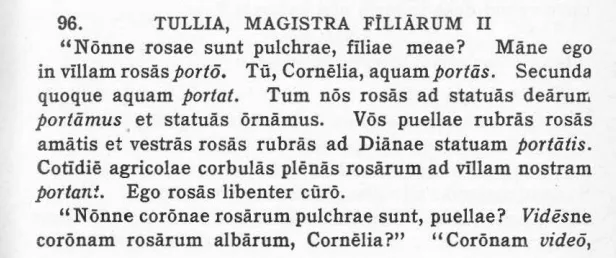
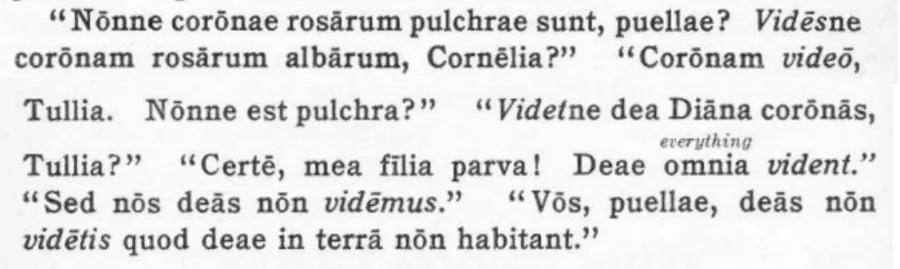
​Here is the first part of the story for your reference.

3

Multiple Choice

Question image

quī sunt (Who are) the "fīliae meae"?

1

"my daughters"

2

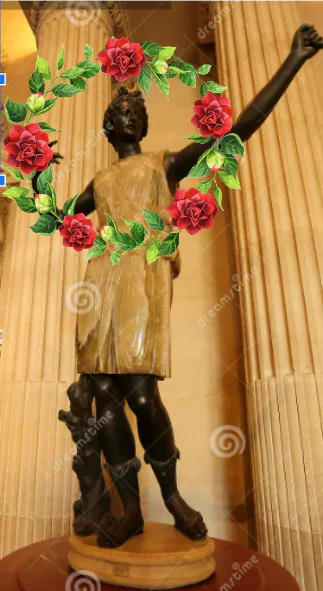
students

3

women

4

farmers

4

Multiple Choice

Question image

In the sentence, "Māne ego in vīllam rosās portō," who is the do-er of the action (subject)? Remember that Tullia, the mom, is speaking to her daughters.

1

vīllam

2

ego (I)

3

rosās

4

portō

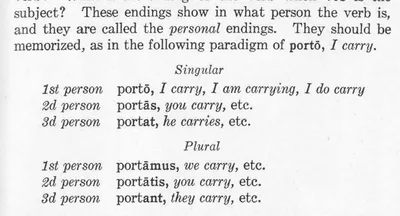
5

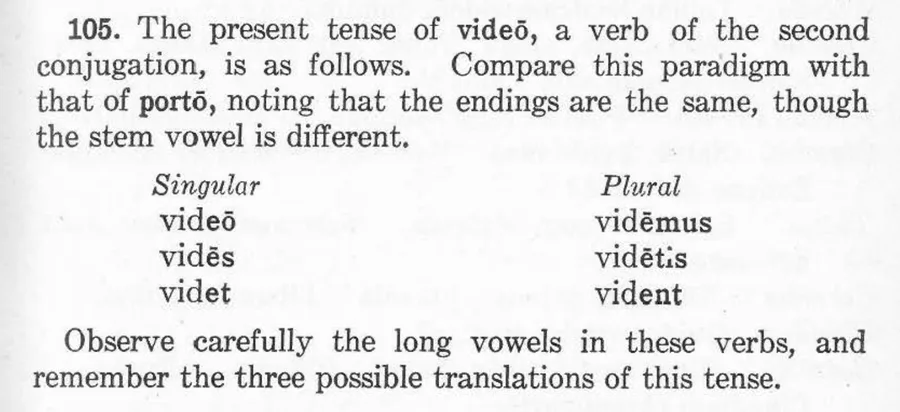
Multiple Choice

Question image

In the sentence, "Māne ego in vīllam rosās portō," which word tells the action (verb)?

1

vīllam

2

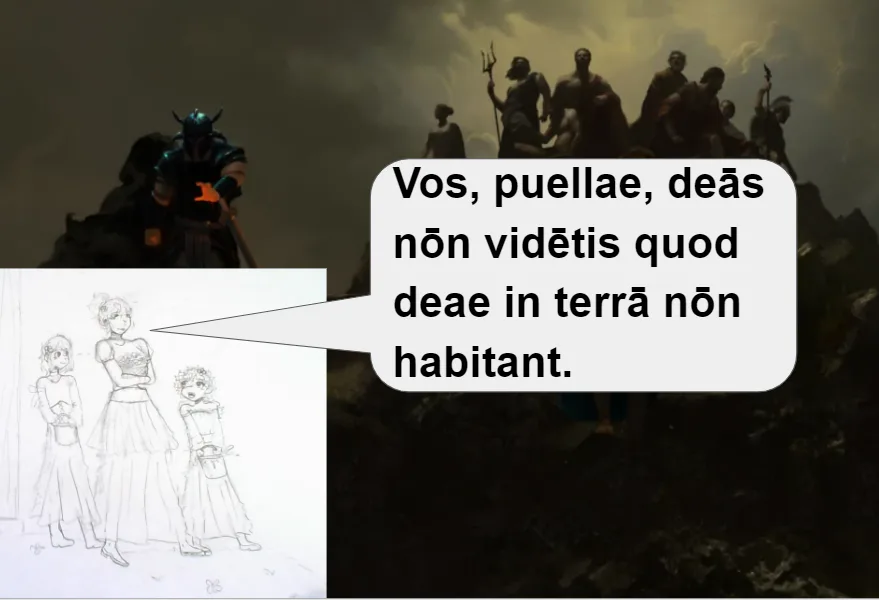
ego (I)

3

rosās

4

portō

6

Multiple Choice

Question image

In the sentence, "Māne ego in vīllam rosās portō," what is the ending of this action word?

1

-am

2

-ne

3

-ās

4

7

Multiple Choice

So what does the -ō ending mean when we hear or see it on a verb?

1

I am doing the action.

2

We are doing the action.

3

Someone else is doing the action.

4

Multiple other people are doing the action.

5

You are doing the action.

8

Multiple Choice

Question image

bene! So in English what is Tullia saying? (Hint: Google translate is wrong:)

1

Therefore the table in the house has roses.

2

Early in the morning, I carry roses into the mansion.

3

In the morning I will bring roses to the village.

4

Early in the morning, you girls carry roses into the mansion.

5

Early in the morning, she carries roses into the mansion.

9

Multiple Choice

Question image

In the sentence, "Tū, Cornēlia, aquam portās," who is the do-er of the action (subject)?

1

You, Cornelia

2

aquam

3

portās

10

Please notice that "Cornelia" is just restating or explaining the nominative "You." This is called "apposition," when one noun restates another.

bene!

media

11

Multiple Choice

Question image

In the sentence, "Tū, Cornēlia, aquam portās," what is the action (verb)?

1

You, Cornelia

2

aquam

3

portās

12

Multiple Choice

Question image

What is the ending of this action word (verb)?

1

-t

2

-am

3

-s

4

-nt

13

Multiple Choice

So what does the -s ending mean when we hear or see it on a verb?

1

I am doing the action.

2

We are doing the action.

3

Someone else is doing the action.

4

Multiple other people are doing the action.

5

You are doing the action.

14

Multiple Choice

Question image

bene! So in English what is Tullia saying?

1

You, Cornelia, are carrying water.

2

I am carrying you, Cornelia.

3

Cornelia is carrying water.

4

You, Cornelia, are carrying roses.

15

Multiple Choice

Question image

"Secunda quoque aquam portat."

In this sentence, who is doing the action?

1

Secunda, the younger girl.

2

quoque

3

aquam

4

portat.

16

Multiple Choice

Question image

Which word is the action (verb)?

1

Secunda, the younger girl.

2

quoque

3

aquam

4

portat.

17

Multiple Choice

Question image

What is the ending of this action word?

1

-a

2

-que

3

-m

4

-t

18

Multiple Choice

So what does the -t ending mean when we hear or see it on a verb?

1

I am doing the action.

2

We are doing the action.

3

Someone else is doing the action.

4

Multiple other people are doing the action.

5

You are doing the action.

19

Multiple Choice

Question image

bene! So in English what is Tullia saying?

1

Secunda also carries water.

2

Secunda, you also carry water.

3

Cornelia and Secunda are carrying water.

4

We are all carrying water.

20

bene! These are the three verb persons in the singular:

= I am doing

-s = you are doing

-t = he/she/it is doing.

​The first person singular ending changes in the imperfect tense, but we will get to that later:)

media

21

Multiple Choice

Question image

For review, remember that when the preposition "in" is followed by the ____ case, it means "into."

1

accusative

2

ablative

22

Multiple Choice

Question image

If we wanted to say "I am in the house,"

-- in vīllā sum" --

we would use the ____ case.

1

accusative

2

ablative

23

bene! On the NLE, you may see words or prepositional phrases for rooms of a Roman house, such as:

in ātriō: in a formal reception room;

in tablīnō: in the study or office;

in cubiculō: in a bedroom;

in culīnā: in the kitchen.

media

​-ō is the singular ablative of second declension nouns.

24

Multiple Choice

Question image

"Tum nōs rosās ad statuās deārum portāmus et statuās ōrnāmus."

Who is doing the action in this sentence (the subject)?

1

portāmus

2

nōs

3

rosās

4

statuās

5

deārum

25

Multiple Select

Question image

"Tum nōs rosās ad statuās deārum portāmus et statuās ōrnāmus."

What are the TWO action words (verbs)? Choose DUO (II) answers, quaesō.

1

portāmus

2

ōrnāmus

3

rosās

4

statuās

5

deārum

26

Multiple Select

Question image

"Tum nōs rosās ad statuās deārum portāmus et statuās ōrnāmus."

What is the ending of these action words (verbs)?

1

-mus

2

-ās

3

-ant

4

-ārum

27

Multiple Choice

So what does the -mus ending mean when we hear or see it on a verb?

(Hint: all three of them are involved in the actions.)

1

I am doing the action.

2

We are doing the action.

3

Someone else is doing the action.

4

Multiple other people are doing the action.

5

You are doing the action.

28

Multiple Choice

Question image

So in English what is Tullia saying in this part of the sentence?

1

I carry roses to the statues of the gods.

2

We carry roses to the statues of the gods.

3

They are carrying roses to the statues of the gods.

4

We carry the roses to the statues of the goddesses.

29

Notice that "deārum" means female goddesses,

while "deōrum" would mean male gods.

-ōrum is the second declension plural genitive ending.

bene!

media
media

30

Multiple Select

Question image

Which of the following are ROMAN goddesses?

Choose TRĒS (III) answers, quaesō. (UNUS of the answers is a god, deus, not a goddess, dea.)

1

Diana

2

Minerva

3

Venus

4

Hades

31

Multiple Choice

Question image

nunc quid agitur?

1

"We are decorating the statues."

2

The daughters are watering the flowers.

3

Tullia is reading a story to her daughters.

4

The farmers are carrying baskets full of roses into the house.

32

Multiple Select

Question image

What are the number and case of the noun, "statuās"?

Choose DUO answers, quaesō

1

plural

2

nominative

3

genitive

4

accusative

5

singular

33

Multiple Choice

Question image

Vōs puellae rubrās rosās amātis et vestrās rosās rubrās ad Dianae statuam portātis.

Who are the do-ers of the action in this sentence? (The subject)

1

amātis

2

vestrās rosās

3

Vōs puellae (You all, girls)

4

rubrās rosās

34

Multiple Select

Question image

Vōs puellae rubrās rosās amātis et vestrās rosās rubrās ad Dianae statuam portātis.

What are the action words (verbs) in this sentence? Choose DUO, quaesō.

1

amātis

2

ad

3

portātis

4

rubrās rosās

5

et

35

Multiple Select

Question image

Vōs puellae rubrās rosās amātis et vestrās rosās rubrās ad Dianae statuam portātis.

What ending do these verbs have?

(Choose UNUM answer.)

1

-ae

2

ad

3

-tis

4

-ās

5

-t

36

Multiple Choice

bene! What does the ending -tis mean when it is on a verb?

1

We are doing something.

2

You all (plural) are doing something.

3

They are doing something.

4

You (singular) are doing something.

37

Multiple Choice

Question image

So in English what is Tullia saying?

1

"You are giving red roses to the girls."

2

"Girls love red roses."

3

"I love you girls."

4

"You girls love red roses."

38

Multiple Choice

Question image

How would you say "I love you" to one person?

1

tē amō

2

tu corazon

3

Ez hej te dikim

4

nakupenda

5

cintamu

39

Multiple Choice

Question image

quō puellae rosās portant?

(To where are the girls carrying roses?)

1

ad Dianae statuam.

2

in silvam

3

in terram

4

in viam

40

Multiple Choice

bene! The preposition "ad" means "to/toward" and always takes the ____ case.

1

nominative

2

genitive

3

dative

4

accusative

5

ablative

41

Multiple Choice

Question image

Cotīdiē agricolae corbulās plēnās rosārum ad vīllam nostram portant.

quid agricolae portant?

1

agricolae casās portant.

2

agricolae corbulās portant.

3

agricolae amphorās portant.

4

agricolae sellās portant.

42

Multiple Choice

Question image

Cotīdiē agricolae corbulās plēnās rosārum ad vīllam nostram portant.

Where do the farmworkers carry the baskets?

1

ad vīllam

2

plēnās rosārum

3

Cotīdiē

4

sellās

43

Multiple Choice

Question image

Cotīdiē agricolae corbulās plēnās rosārum ad vīllam nostram portant.

What is the action word (verb) in this sentence?

1

Cotīdiē

2

plēnās

3

ad

4

nostram

5

portant

44

Multiple Choice

Question image

Cotīdiē agricolae corbulās plēnās rosārum ad vīllam nostram portant.

What is the ending of this verb?

1

-tis

2

-t

3

4

-s

5

-nt

45

Multiple Choice

bene! So when we see or hear the ending -nt on a verb, we know it means that...

1

I am doing something.

2

You are doing something.

3

He, she, or it is doing something.

4

They (plural) are doing something.

46

Please put them in your phone, and copy them into your notebook for extra points. Recite them in your down time until they stick in your mind.

bene! Please memorize these verb forms.

media

47

The next part of the story will offer us the second conjugation present tense forms of the verb "videō," - see.

These endings are called "first conjugation."

media

48

media

​Here is the rest of the story for your reference.

49

Multiple Choice

Question image

quid Tullia dīcit Anglicē?

1

I see the crown of white roses, Mom.

2

Cornelia sees the crown of red roses.

3

Do you see the crown of white roses, Cornelia?

4

They bring the crown of white roses to the Diana statue.

50

Multiple Choice

Question image

quid Cornēlia, puella magna, dīcit Anglicē?

1

I see the crown, Mom.

2

Cornelia sees the crown of red roses.

3

Do you see the crown of white roses, Cornelia?

4

They bring the crown of white roses to the Diana statue.

51

Multiple Choice

Question image

quid Secunda, fīlia parva, dīcit Anglicē?

1

I see the crown of white roses, Mom.

2

Diana sees the crown of red roses.

3

Does the goddess Diana see the crowns, Mom?

4

Do you see the crowns, Mom?

52

Multiple Choice

Question image

quomodō respondet māter?

1

Certainly, my little daughter! Goddesses see everything!

2

No, my daughter, the gods don't really exist.

3

Certainly, Secunda, the statue sees everything.

4

No, my little daughter, the gods don't really care about humans.

53

Multiple Choice

Question image
1

Do people see the gods?

2

But you don't see the gods.

3

Do you see the goddesses?

4

But we don't see the goddesses.

54

Multiple Choice

Question image

Why don't people see the gods, according to Tullia?

1

because they do not like mortals.

2

because they don't live on the earth.

3

because they don't really exist.

55

Multiple Choice

Question image

What prepositional phrase means "on the earth"?

1

"in" plus "terrā" in the ablative case.

2

nōn vidētis

3

quod deae

56

Please memorize these verb forms: the present tense of the second conjugation.

optimē! confectum est. Gratiās!

media

This Quizizz lesson will review the part of the story we talked through together, and take you through the rest, with new verb forms. It is long, but easy, all multiple choice.

--art by D.R.

​magistra fīliārum II

media

Show answer

Auto Play

Slide 1 / 56

SLIDE