Unit 4 LC3 Summative Day
Presentation
•
Biology
•
9th Grade
•
Medium
Dan Schenning
Used 3+ times
FREE Resource
6 Slides • 6 Questions
1
March 7, 2023
Objective: SWBAT
●
Describe the evolutionary changes within the human population over
time in order to explain the role of natural selection in the
population.
Do Now
Create a cladogram using the following organisms: Shark, Lizard, Wolf,
Human.
Use these traits to separate the organisms: Hair, Backbone, Bipedal
(walking on two legs), lungs
2
3
Multiple Choice
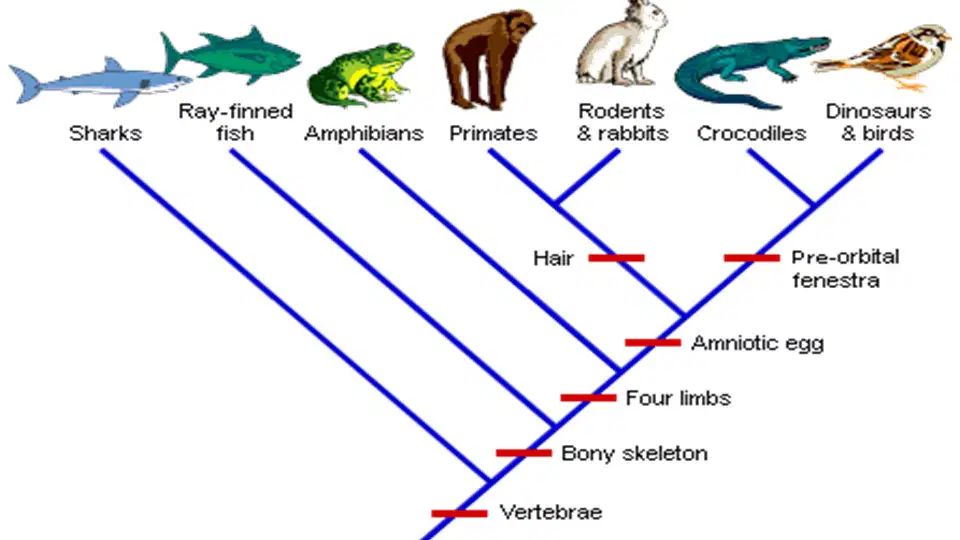
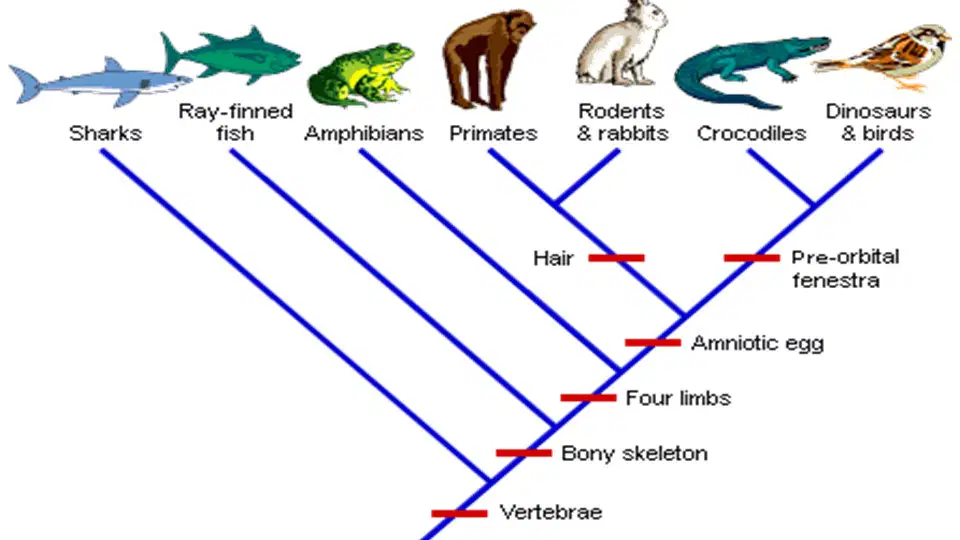
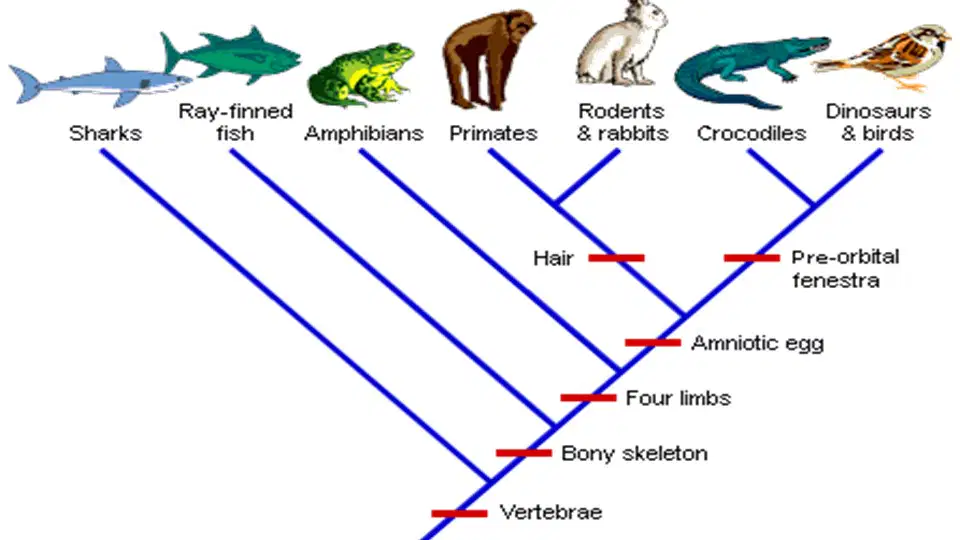
Which organism is most closely related to amphibians?
Sharks
Ray-finned fish
Crocodiles
Birds
4
Multiple Choice
Which organism is formed from an amniotic egg?
Sharks
Ray-finned fish
Amphibians
Primates
5
Multiple Choice
A new organism has vertebrae and a bony skeleton, but lacks four limbs, where does it belong?
On a branch off of the sharks line
On a branch off of the ray-finned fish line
On a branch off of the amphibians line
On a branch off of the crocodiles line
6
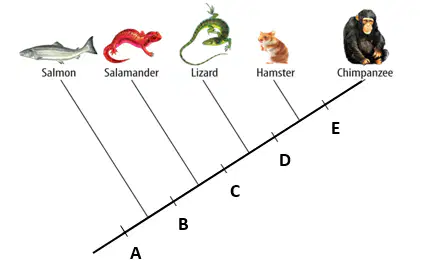
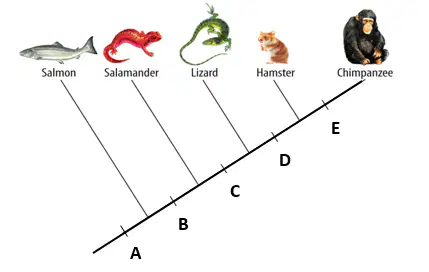
Multiple Choice
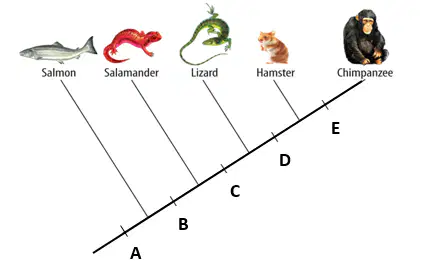
At what letter should the derived character of "tail" be found?
A
B
C
D
7
Multiple Choice
At what letter should the derived character of "opposable thumbs" be found?
B
C
D
E
8
Multiple Choice
Which species are more closely related, the lizard and salamander, or the lizard and hamster?
The lizard and salamander
The lizard and hamster
9
Create a visual model, using multiple types of evidence for evolution, to demonstrate the
relatedness between humans and several organisms.
●Arrange organisms to indicate which organisms are most-closely related versus
least-closely related.
●In addition to humans, include at least five of the following organisms in your final model.
o Cattle
o Chicken
o Chimpanzee
o Dog
o Mouse
o Rat
o Rhesus monkey
o Zebrafish
10
11
Part 2 – Justify the arrangement and relatedness of
your organisms in your model. 5 points
● Describe how the provided biochemical data supports
the relatedness and arrangement of your organisms.
● Explain how the anatomical, embryological, and
additional genetic evidence you gathered justifies the
relatedness and arrangement of your organisms.
12
Part 3 – Evaluate which type of evidence for evolution you think
is the most effective at demonstrating evolutionary
relationships and common ancestry. 5 points
● Which type of evidence do you think is most effective to
demonstrate evolutionary relationships and common
ancestry?
● Should we use just one, several, or all of the types of
evidence to determine relatedness? Why?
March 7, 2023
Objective: SWBAT
●
Describe the evolutionary changes within the human population over
time in order to explain the role of natural selection in the
population.
Do Now
Create a cladogram using the following organisms: Shark, Lizard, Wolf,
Human.
Use these traits to separate the organisms: Hair, Backbone, Bipedal
(walking on two legs), lungs
Show answer
Auto Play
Slide 1 / 12
SLIDE

Similar Resources on Wayground
9 questions
Asexual Reproduction Strategies
Presentation
•
9th Grade
7 questions
3a1.Prokaryote vs Eukaryote
Presentation
•
9th - 10th Grade
11 questions
8.4 Homeostasis and Cells
Presentation
•
9th Grade
9 questions
Half Life
Presentation
•
9th Grade
9 questions
Formation of Fossil Fuel
Presentation
•
9th Grade
10 questions
Cancer Lesson
Presentation
•
9th Grade
13 questions
Dominance & Punnett Squares
Presentation
•
9th Grade
10 questions
Leaf structure and function
Presentation
•
9th - 10th Grade
Popular Resources on Wayground
15 questions
Grade 3 Simulation Assessment 1
Quiz
•
3rd Grade
22 questions
HCS Grade 4 Simulation Assessment_1 2526sy
Quiz
•
4th Grade
16 questions
Grade 3 Simulation Assessment 2
Quiz
•
3rd Grade
19 questions
HCS Grade 5 Simulation Assessment_1 2526sy
Quiz
•
5th Grade
17 questions
HCS Grade 4 Simulation Assessment_2 2526sy
Quiz
•
4th Grade
20 questions
Equivalent Fractions
Quiz
•
3rd Grade
24 questions
HCS Grade 5 Simulation Assessment_2 2526sy
Quiz
•
5th Grade
20 questions
Math Review
Quiz
•
3rd Grade
Discover more resources for Biology
35 questions
Biology EOC Review
Quiz
•
9th Grade
16 questions
AP Biology: Unit 1 Review (CED)
Quiz
•
9th - 12th Grade
50 questions
Biology EOC Review
Quiz
•
9th Grade
20 questions
AP Biology: Unit 3 Review (CED)
Quiz
•
9th - 12th Grade
21 questions
AP Biology: Unit 6 Review (CED)
Quiz
•
9th - 12th Grade
14 questions
AP Biology: Unit 4 Review (CED)
Quiz
•
9th - 12th Grade
20 questions
Food Chains and Food Webs
Quiz
•
7th - 12th Grade
20 questions
Transcription and Translation (Protein Synthesis)
Quiz
•
9th Grade