
Chemical Bonding

Presentation
•
Science
•
University
•
Hard
+1
Standards-aligned

Luis Bello
Used 14+ times
FREE Resource
18 Slides • 21 Questions
1
Presenter: Dr. Luis Bello
2
Chemical bonding refers to the forces that hold atoms together in a molecule or compound.
Atoms combine with each other to form molecules because of the attractive forces between their nuclei and electrons.
3
4
5
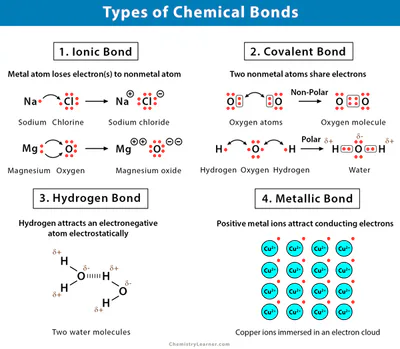
Ionic bonding occurs when one or more electrons are transferred from one atom to another, resulting in ions with opposite charges that attract each other. For example, sodium (Na) has one valence electron, while chlorine (Cl) has seven.
When sodium and chlorine react, sodium donates its valence electron to chlorine, resulting in a positively charged sodium ion (Na+) and a negatively charged chloride ion (Cl-).
The electrostatic attraction between the oppositely charged ions forms an ionic bond, as in the compound sodium chloride (NaCl).
Ionic bonding
6
Multiple Choice

This image shows the bonding between Lithium and Fluorine. What does the red arrow show?
electrons being shared
electrons being transferred to Fluorine
electrons being transferred to Lithium
electrons being destroyed
7
Multiple Choice
Which of the following is NOT a step in forming an ionic bond?
One atom shares its electrons with another one
Opposite charged ions form due to the transfer of electrons
One atom gives electrons to another one
Oppositely charged ions attract
8
Multiple Select
An ionic bond is the attraction between: (Select ALL that apply)
oppositely charged ions
similarly charged ions
metals and nonmetals
neutral atoms
cations and anions
9
Multiple Select
Which of the following could NOT form an ionic compound? Check all that apply.
Li+ and Cl-
F- and O2-
Ba2+ and Ag+
Mg2+ and S2-
10
Multiple Select
Which of the following could form an ionic compound? Check all that apply.
Na+ and F-
S2- and O2-
Ca2+ and Fe3+
Mg2+ and Cl-
11
Covalent bonding occurs when atoms share electrons in order to achieve a stable electron configuration.
This can occur between two atoms of the same element, such as in the diatomic molecule hydrogen gas (H2), where each hydrogen atom shares its single electron with the other. It can also occur between different elements, as in the compound water (H2O), where each hydrogen atom shares one of its electrons with the oxygen atom. In a covalent bond, the shared electrons are attracted to both nuclei, resulting in a strong bond.
12
Multiple Choice
Has an electronegativity difference greater than 0.7
Has an electronegativity difference greater than 0.5
Has an electronegativity difference less that 0.5
Has an electronegativity difference less than 0.7
13
Multiple Choice
Fr and K
Sc and O
F and Cl
He and Pt
14
Multiple Choice
When one atom takes the other atom's electron
When the atom shares an electron with an another atom
When the two nucleus merge
When the neutrons leave the nucleus
15
Multiple Choice
What two types of atoms make a covalent bond?
2 non-metals
1 metal and 1 non-metal
2 metals
16
Metallic bonding occurs in metals, where the valence electrons are free to move throughout the entire metal lattice, rather than being confined to individual atoms.
This results in a "sea" of electrons that is attracted to the positively charged metal ions.
This attraction results in a strong metallic bond, which gives metals their characteristic properties such as high conductivity and malleability.
17
Multiple Choice
Metallic bonds form because metals
"want" to give up valence electrons
always share valence electrons
have many valence electrons
always gain valence electrons
18
Multiple Choice
In metallic bonds, the force of attraction is between
positive and negative ions
cations and electrons
two different metals
neutrons and electrons
19
Multiple Select
Metals are used to make electric wires because metals (choose all that apply)
are ductile
are shiny
have free moving electrons
form a lattice
20
Multiple Choice
Metals have positive ions in a ‘sea of electrons’. Which metal atom provides the most electrons for the sea?
Aluminium
Sodium
Calcium
Magnesium
21
Multiple Choice
Which statement describes the structure of copper?
It has a lattice of negative ions in a ‘sea of electrons’.
It has a lattice of negative ions in a ‘sea of protons’.
It has a lattice of positive ions in a ‘sea of electrons’.
It has a lattice of positive ions in a ‘sea of protons’
22
23
Molecular geometry refers to the three-dimensional arrangement of atoms in a molecule.
It is determined by the number and type of atoms in a molecule, as well as the bonding and lone pair electrons around each atom.
24
25
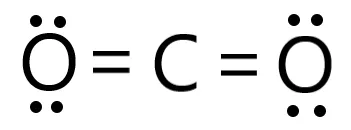
Linear: In a linear geometry, two atoms are connected by a bond and are arranged in a straight line.
Examples include CO2 and BeCl2.
26
Trigonal planar: In a trigonal planar geometry, three atoms are bonded in a flat triangle, with an angle of 120 degrees between them. For example, boron trifluoride (BF3) has a trigonal planar geometry.

27
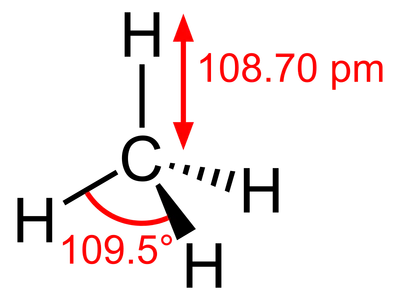
Tetrahedral: In a tetrahedral geometry, four atoms are bonded in a pyramid shape, with an angle of 109.5 degrees between them. For example, methane (CH4) has a tetrahedral geometry.
28
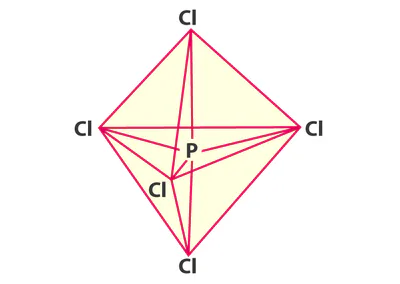
Trigonal bipyramidal: In a trigonal bipyramidal geometry, five atoms are bonded in a shape that looks like two pyramids joined at their bases, with angles of 90 and 120 degrees between the atoms. For example, phosphorus pentachloride (PCl5) has a trigonal bipyramidal geometry.
29
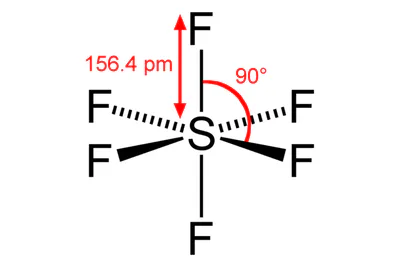
Octahedral: In an octahedral geometry, six atoms are bonded in a shape that looks like two square pyramids joined at their bases, with angles of 90 degrees between the atoms. For example, sulfur hexafluoride (SF6) has an octahedral geometry.
30
Bent structure is a type of molecular geometry in which a molecule has a bent or V-shaped structure.
This geometry is typically observed in molecules with a central atom that has three or four electron pairs, including one or two lone pairs.
In a bent structure, the two bond angles between the central atom and the two adjacent atoms are less than 180 degrees, resulting in a bent or V-shaped appearance. The exact bond angle depends on the number of lone pairs present on the central atom.
31
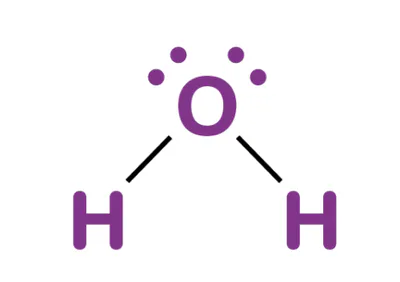
For example, water (H2O) has a bent structure with a bond angle of approximately 104.5 degrees.
This is because oxygen, the central atom in water, has two lone pairs of electrons that repel the bonding pairs of electrons, causing the H-O-H bond angle to be less than 180 degrees.

32
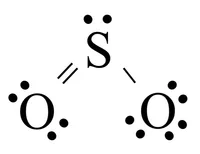
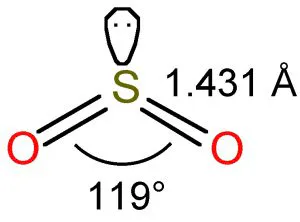
Another example of a molecule with a bent structure is sulfur dioxide (SO2), which has a bond angle of approximately 119 degrees.
In SO2, sulfur has one lone pair of electrons that cause the SO2 molecule to have a bent shape.
33
Multiple Choice

bent
tetrahedral
linear
trigonal pyramidal
34
Multiple Choice

Trigonal planar
Trigonal pyramidal
Tetrahedral
Linear
35
Multiple Choice

Trigonal planar
Trigonal pyramidal
Bent
Linear
36
Multiple Choice

Bent
Trigonal pyramidal
Trigonal planar
Linear
37
Multiple Choice

Trigonal planar
Trigonal pyramidal
Bent
Tetrahedral
38
Multiple Choice

Tetrahedral
Trigonal pyramidal
Bent
Trigonal planar
39
Multiple Choice

Bent
Linear
Tetrahedral
Trigonal pyramidal
Presenter: Dr. Luis Bello
Show answer
Auto Play
Slide 1 / 39
SLIDE
Similar Resources on Wayground

36 questions
Teori Atom
Presentation
•
University
27 questions
Math-Science MoD Foundation Course Orientation + Quiz
Presentation
•
KG - University
30 questions
Chlorophyll
Presentation
•
12th Grade
29 questions
Global Warming vs. Ozone Depletion
Presentation
•
12th Grade
37 questions
Frame of Reference Physics
Presentation
•
12th Grade - University
31 questions
Polyatomic Naming & Writing
Presentation
•
12th Grade
30 questions
Untitled Lesson
Presentation
•
KG - University
29 questions
Bonding Lesson with Reading
Presentation
•
KG - University
Popular Resources on Wayground
10 questions
Safety Day 2026 – Student Review

Quiz
•
9th Grade
21 questions
Continents and Oceans
Quiz
•
6th Grade
20 questions
Parts of Speech
Quiz
•
5th Grade
16 questions
Subject & Predicate
Quiz
•
5th Grade
25 questions
Multiplication Facts
Quiz
•
5th Grade
12 questions
Map Skills
Quiz
•
3rd Grade
22 questions
Continents and Oceans
Quiz
•
5th Grade
15 questions
Rounding Decimals
Quiz
•
5th Grade
Discover more resources for Science
20 questions
Disney Trivia
Quiz
•
University
10 questions
Spanish Greetings and Goodbyes!
Presentation
•
6th Grade - University
20 questions
Physical or Chemical Change/Phases
Quiz
•
8th Grade - University
39 questions
Unit 7 Key Terms
Quiz
•
11th Grade - University
25 questions
SER and Subject Pronouns
Quiz
•
8th Grade - University
38 questions
Unit 6 Key Terms
Quiz
•
11th Grade - University
19 questions
Key Concepts in Buddhism
Quiz
•
University
0 questions
Cell Domain Basic Review (Biology)
Quiz
•
University