

Respiratory Physiology Lecture

Presentation
•
Science
•
9th - 12th Grade
•
Practice Problem
•
Medium

Paula Rodgers
Used 4+ times
FREE Resource
25 Slides • 15 Questions
1

Chapter 23
Respiratory Physiology 830-850
Pulmonary Ventilation
Mechanics of Breathing
Respiratory Rates and Volumes
2
Four Events of Respiration
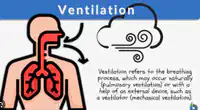
Pulmonary Ventilation
External Respiration
Internal Respiration
Cellular Respiration

Lung Cells
External Respiration. Internal Respiration
3
Match
Match the following four Events of Respiration
Pulmonary Ventilation
External Respiration
Internal Respiration
Cellular Respiration
The movement of air into and out of the lungs
The movement of gases from the lungs into the blood stream
The movement of gases from the blood stream into the cells
The use of oxygen to produce energy for the cell
The movement of air into and out of the lungs
The movement of gases from the lungs into the blood stream
The movement of gases from the blood stream into the cells
The use of oxygen to produce energy for the cell
4
Pressures and Membranes
5
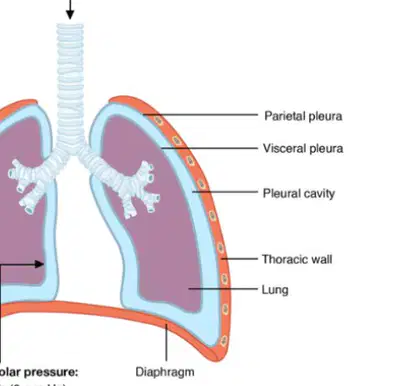
Membranes

6

We first have to learn a little bit
about Pressures!!!
7

8
Drag and Drop
9


3 Important Pressures
• Atmospheric
pressure
• Alveolar
pressure
(intrapulmonary
pressure)
• Intrapleural
pressure
10
Labelling
Label the lungs and their pressure.
Name the pressure in the red zone
11
Labelling
Label the lungs and their pressure.
Name the pressure in the blue zone
12
Labelling
Label the lungs and their pressure.
Name the pressure in the white zone
13


3 Important Pressures
• Atmospheric
pressure
• Alveolar
pressure
(intrapulmonary
pressure)
• Intrapleural
pressure
14
Drag and Drop
15
Multiple Choice
Which of the following pressures must always be negative?
atmospheric
intraplueral
intrapulmonary
alveolar
16


17

Thoracic Volume and Inspiration
18


19
Reorder
Reorder the following Inspiratory events
inspiratory muscles contract diaphragm descends, rib cage rises
thoracic cavity volume increases
lungs are stretched intrapulmonary volume increases
intrapulmonary pressure drops
air flows into lungs down pressure gradient until pulmonary pressure is equal to atmospheric
20


21


Thoracic Volume and Expiration
22
Reorder
Reorder the following Expiratory Events
inspiratory muscles relax diaphragm rises, rib cage descends
thoracic cavity volume decreases
elastic lungs recoil, intrapulmonary volume decreases
intrapulmonary pressure rises
air flows out of lungs down pressure gradient until pulmonary pressure is equal to atmospheric
23


Changes in Thoracic Volumes
24


25


Pneumothorax and Atelectasis
26


27


Compliance
Compliance is an indication of lung
expandability, how easily the lungs expand and
contract.
–
Lower the compliance—harder to expand
- Greater the compliance- easier to fill
Factors that affect Compliance.
1. Loss of Supporting Tissue-
2. Surfactant production
3. Mobility of the Rib Cage
28


Surfactant
Pulmonary surfactant thus greatly reduces surface tension,
increasing compliance allowing the lung to inflate much more
easily, thereby reducing the work of breathing.
29
Multiple Choice
Premature babies....
Have high amounts of surfactant therefore low compliance
Have high amounts of surfactant therefore high compliance
Low amounts of surfactant therefore high compliance
Low amounts of surfactant therefore low compliance
30
Multiple Choice
Adding surfactant to the lung does what?
Increases Compliance
Decreases Compliance
Increases Elasticity
Decreases Elasticity
31

Elasticity
• Elasticity: tendency to return to
initial structure after being
distended
• What keeps the lungs from recoil?
Interpleural pressure

32

Remember!
33


Physical Properties of the Lungs
• Compliance
• Elasticy
34
Multiple Choice
Compliance is ___________ proportional to lung recoil.
Inversely
Directly
35
Multiple Choice
Lung Compliance
Ease which the lung expands or stretches
The ease which the lungs recoil
36
Multiple Choice
As compliance increases
harder for lung to expand & stretch
easier the lung stretches & expands
37


38
Multiple Choice
In what instance would you find someone with lungs that have high compliance?
someone with pulmonary fibrosis
someone with emphysema.
39


40

Chapter 23
Respiratory Physiology 830-850
Pulmonary Ventilation
Mechanics of Breathing
Respiratory Rates and Volumes
Show answer
Auto Play
Slide 1 / 40
SLIDE
Similar Resources on Wayground

32 questions
HS ES Land Use and Its Effects 6.3
Presentation
•
9th - 12th Grade
34 questions
Circulatory System
Presentation
•
9th - 11th Grade
35 questions
17.1 Atmosphere Characteristics
Presentation
•
8th - 12th Grade
31 questions
CH10 Slides Urbanization
Presentation
•
9th - 12th Grade
35 questions
Alg2 Lesson 3.7: Rational Function
Presentation
•
9th - 12th Grade
34 questions
Unit 1 Review
Presentation
•
9th - 12th Grade
36 questions
13 Unit Notes Part 1
Presentation
•
9th - 12th Grade
32 questions
Waves Part 2
Presentation
•
9th - 11th Grade
Popular Resources on Wayground
5 questions
A Home on the Shore

Quiz
•
3rd Grade
28 questions
US History Regents Review
Quiz
•
11th Grade
6 questions
A Horse Tale
Quiz
•
3rd Grade
20 questions
Math Review
Quiz
•
3rd Grade
10 questions
Juneteenth History and Significance

Interactive video
•
5th - 8th Grade
20 questions
Dividing Fractions
Quiz
•
5th Grade
55 questions
A Long Walk to Water Final Review
Quiz
•
6th - 8th Grade
10 questions
Equation Word Problems
Quiz
•
7th Grade
Discover more resources for Science
28 questions
US History Regents Review
Quiz
•
11th Grade
20 questions
Insurance
Quiz
•
9th - 12th Grade
10 questions
Juneteenth: History and Significance
Interactive video
•
7th - 12th Grade
10 questions
7.3-7.4 Quiz
Quiz
•
11th Grade
20 questions
Summer Geometry QUIZ (Week 2)
Quiz
•
9th Grade
6 questions
Mayan Mathematics part 1
Presentation
•
9th - 12th Grade
25 questions
Biology Regents Review
Quiz
•
9th Grade
40 questions
Flags of the World
Quiz
•
KG - Professional Dev...