
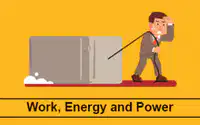
EF CH 13: Energy and Power01

Presentation
•
Other
•
12th Grade
•
Practice Problem
•
Easy

Jennifer Bertke
Used 3+ times
FREE Resource
11 Slides • 11 Questions
1
2
Open Ended

Why do we care about energy in engineering?
3
We need energy to
build shelters and other structures
make products
process and cultivate food
heat or cool buildings and other things
move or lift objects
4
-Tesla didn't deliver

5
Energy is the ability to do work.
available in various forms:
kinetic
potential
elastic
thermal

6
Energy of motion
Kinetic Energy = 1/2 mass x velocity 2
7
Mechanical work performed on an object changes its kinetic energy.
Work = 1/2 mass x velocity2 - 1/2 mass x velocity2
at the end initially
8
Multiple Choice

Based on what we have discussed so far, larger objects going at the same speed will
be easier to stop
have higher kinetic energy
have lower kinetic energy
9
Multiple Choice
Smaller changes in velocity (with the same object) will result in
larger amounts of work
smaller amounts of work
no work
snails
10
Multiple Choice
To minimize the work required, which of the following should you do?
keep the change in velocity as small as possible for similarly weighing objects
grow the change in velocity as much as possible for similarly weighing objects
use as heavy an object as you can find
Increase the number of objects being weighed
11
Energy of position, work required
to lift an object, it's the energy to overcome gravity
change in potential energy = mass x gravity x change in height

12
Multiple Choice

How does a greater change in height affect potential energy?
it increases the potential energy
it decreases the potential energy
it is unrelated
13
Multiple Choice
Based on our formula for potential energy, to increase the potential energy of a situation, you should always
minimize the change in height
minimize the mass of the object lifted
maximize the change in height
Increase the force applied to the object
14
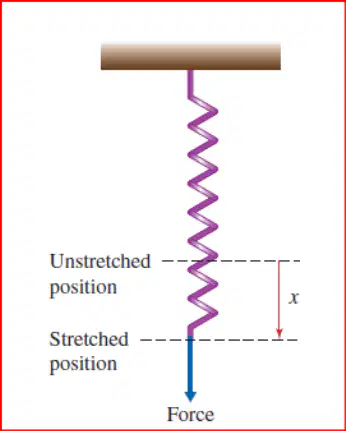
When a spring is stretched or compressed from its unstretched position, elastic energy is stored in the spring
Energy will be released when the spring is allowed to return to its unstretched position
15
Elastic energy =
1/2 spring constant x distance stretched2
the spring constant for a specific spring is based
on a comparison of how force causes the
spring to move, or how stiff it is
16
Multiple Choice
The spring constant
is 9.81 m/s2
varies depending on the stiffness of the spring
does not affect elastic energy of a spring
is equal to the speed of light
17
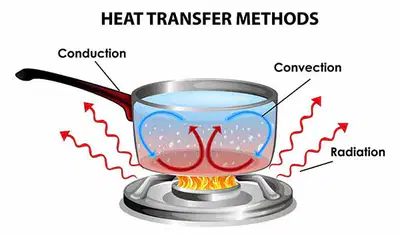
is transferred whenever there exists a temperature difference within an object, between two bodies, or between a body and its surroundings
heat flows from high to low temperature
18
Three modes of heat transfer
Conduction
Convection
Radiation
19
Multiple Choice
Thermal energy transfer occurs when
When two objects come into contact and exchange backwards momentum
cold transfers from a low temperature region to a high temperature region
heat transfers from a high temperature region to a lowtemperature region
When an object is exposed to a magnetic field
20
Multiple Choice
Thermal energy along the handle of a pot on a burner is most like
conduction
convection
reflection
radiation
21
Multiple Choice
Thermal energy inside a boiling pot of water on a burner is most like
conduction
convection
reflection
radiation
22
Match
Match the following equations to their type of energy:
kinetic energy
change in potential energy
elastic energy
1/2 mass x velocity2
mass x gravity x change in height
1/2 spring constant x distance stretched 2
1/2 mass x velocity2
mass x gravity x change in height
1/2 spring constant x distance stretched 2
Show answer
Auto Play
Slide 1 / 22
SLIDE
Similar Resources on Wayground

15 questions
economic sectors
Presentation
•
12th Grade
16 questions
Latin abbreviations in pharmacy
Presentation
•
12th Grade
18 questions
Relative Pronouns
Presentation
•
12th Grade
18 questions
The Hero's Journey
Presentation
•
12th Grade
18 questions
Plants
Presentation
•
6th - 8th Grade
17 questions
Punctuation
Presentation
•
12th Grade
17 questions
Adjectives/ Verbs
Presentation
•
12th Grade
17 questions
ACT Math Prep
Presentation
•
12th Grade
Popular Resources on Wayground
10 questions
Safety Day 2026 – Student Review

Quiz
•
9th Grade
21 questions
Continents and Oceans
Quiz
•
6th Grade
20 questions
Parts of Speech
Quiz
•
5th Grade
16 questions
Subject & Predicate
Quiz
•
5th Grade
25 questions
Multiplication Facts
Quiz
•
5th Grade
12 questions
Map Skills
Quiz
•
3rd Grade
22 questions
Continents and Oceans
Quiz
•
5th Grade
15 questions
Rounding Decimals
Quiz
•
5th Grade
Discover more resources for Other
26 questions
SLIME!!!!!
Quiz
•
KG - 12th Grade
21 questions
Los paises hispanohablantes y sus capitales
Quiz
•
12th Grade
20 questions
Cell Transport
Quiz
•
9th - 12th Grade
20 questions
Budgeting
Quiz
•
9th - 12th Grade
20 questions
Investing
Quiz
•
9th - 12th Grade
8 questions
DNA vs. RNA
Presentation
•
9th - 12th Grade
12 questions
Identify Rigid Transformations
Quiz
•
8th - 12th Grade
10 questions
Complementary, Supplementary, Vertical, and Linear Pairs
Quiz
•
9th - 12th Grade