Search Header Logo
Atoms, Tek 8.5B, and 8.5C

Atoms, Tek 8.5B, and 8.5C

Assessment

Presentation

•

Science

•

•

Practice Problem

•

Medium

•
NGSS
MS-PS1-1, MS-PS2-3, MS-PS4-2

+2

Standards-aligned

Created by

Alex Davila

Used 15+ times

FREE Resource

18 Slides • 28 Questions

1

Atoms

Review

media

2

Poll

How comfortable are you with understanding what atoms are made of and how the atom is structured?

VERY COMFORTABLE!!!

Eh, pretty comfortable

I get it a little...

What are atoms?

3

What are atoms made of?

Atoms are made of Protons and Neutrons, located in the Nucleus, and Electrons around the outside of the nucleus.

media

4

Multiple Select

What particles are atoms made of? (Check ALL that apply:)

1

Protons

2

Neutrons

3

Electrons

4

Nucleus

5

Multiple Select

What particles are in the nucleus?

1

Protons

2

Neutrons

3

Electrons

4

Nucleus

6

Multiple Select

Which particle is outside the nucleus?

1

Protons

2

Neutrons

3

Electrons

4

Nucleus

7

Protons, Neutrons, and Electrons:

  • Protons and neutrons have mass.

  • Electrons don't have mass.

media

8

Multiple Select

Which two particles have mass?

1

Protons

2

Neutrons

3

Electrons

4

Nucleus

9

Particle Charges:

Protons are positively charged.

Neutrons are neutrally charged.

Electrons are negatively charged.

media

10

Multiple Choice

Protons are:

1

Positive

2

Neutral

3

Negative

11

Multiple Choice

Neutrons are:

1

Positive

2

Neutral

3

Negative

12

Multiple Choice

Electrons are:

1

Positive

2

Neutral

3

Negative

13

WORK ON REVIEW UNTIL YOU GET TO VALNENCE ELECTRONS
4MIN

14

Valence Electrons

Electrons on the outter shell are called "valence electrons."

The first shell can hold 2 electrons.

The 2nd shell can hold 8 electrons.

The 3rd shell can hold 8 electrons.

media

15

Multiple Choice

Question image

How many valence electrons in this diagram:

1

1

2

3

3

5

4

7

16

Multiple Choice

Question image

How many valence electrons in this diagram:

1

1

2

3

3

5

4

7

17

Multiple Choice

Question image

How many valence electrons in this diagram:

1

1

2

3

3

5

4

7

18

Reactivity

  • The noble gasses (group 18) are non-reactive.

  • Group 1 and 17 are the most reactive.

  • If the atom has 1 valence electron it is easily lost and reacts easily (group 1)

  • If the atom has 7 valence electrons it wants to grab 1 more and reacts easily (group 17)

media

19

Multiple Choice

Which atom is the most reactive?

1
2

20

Multiple Choice

Which atom is the most reactive?

1
2

21

Multiple Choice

Which atom is the least reactive?

1
2
3

22

Periodic Table

  • Groups & Periods

  • Metals, Metalloids, Nonmetals

media

23

Groups

  • Up and down

  • Group numbers tell us the number of valence electrons (Group 17 = 7 valence electrons)

  • Elements in the same group have similar reactivities

media

24

Reactive Groups

  • Group 1: most reactive metals (1 valence electron)

  • Group 17 (7A): most reactive nonmetals (7 valence electrons)

  • Group 18 (8A): Nobel Gases--- least reactive, most stable, inert (8 valence electrons)

media

25

Periods

  • Horizontal (side-to-side)

  • Period number tells us the number of energy levels (rings) in an atom

media

26

Multiple Choice

Question image

Of the following atomic models, which represents the most reactive atom?

1

A

2

B

3

C

4

D

27

Multiple Choice

Which two elements have the same number of energy levels?

1

S and Se

2

Si and Sb

3

Cu and Zn

4

Ar and Kr

28

Metals

  • Luster (shiny)

  • Malleable (bends)

  • Good conductor (moves heat & electricity)

media

29

Metalloids

  • Luster (shiny)

  • Brittle (breaks)

  • Semi-conductor (kind of moves heat & electricity)

media

30

Nonmetals

  • Dull (not shiny)

  • Brittle (breaks)

  • Insulators (does not move heat & electricity)

media

31

media

32

Multiple Choice

Question image

The periodic table is organized into groups and periods of elements. The characteristics of a certain group of elements are listed below. Which of these elements is in this group?

1

Lithium

2

Strontium

3

Aluminum

4

Silicon

33

Multiple Choice

Groups run:

1

up and down

2

left to right

34

Multiple Choice

Periods run:

1

up and down

2

left to right

35

Multiple Choice

Question image

Which two elements share common characteristics based on the periodic table?

1

Sodium and Magnesium

2

Chlorine and Sulfur

3

Argon and Neon

4

Calcium and Bromine

36

Multiple Choice

Question image

How are the 3 elements in the picture organized on the periodic table?

1

Niobium and cobalt have the same energy levels.

2

Cobalt and scandium have the same energy levels.

3

Cobalt and scandium have the same characteristics.

4

Niobium and cobalt have the same characteristics.

37

Multiple Choice

Metals are on the:

1

Left side

2

Right Side

3

Stairstep

38

Multiple Choice

Nonmetals are on the:

1

Left side

2

Right Side

3

Stairstep

39

media

40

Multiple Choice

Question image

The vertical (up and down) columns in the Periodic Table are called

1

groups

2

towers

3

periods

4

atomic numbers

41

media

42

Multiple Choice

Question image

How many valence electrons are found in atoms of group 1?

1

7

2

6

3

4

4

1

43

Multiple Choice

Question image

USE THE PERIODIC TABLE

How many valence electrons does Phosphorus have?

1

31

2

5

3

15

4

4

44

Multiple Choice

Question image

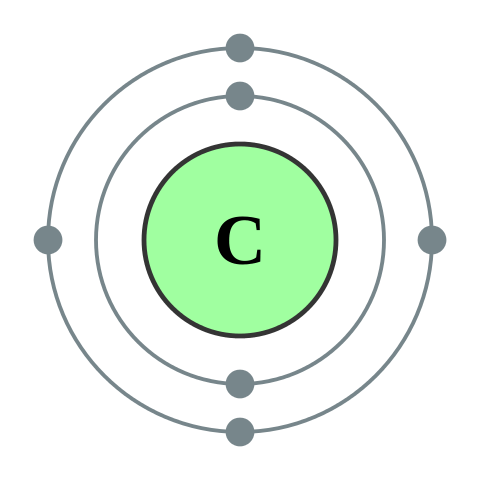
How many valence electrons does carbon have?

1

4

2

5

3

6

4

7

45

REMEMBER

​VALENCE ELECTRONS - Determine REACTIVITY for elements

PROTONS- Determine the IDENTITY of ELEMENT

46

Match

Match the following

Protons

Valence Electrons

Neutrons

Determine Identity of element

Determine reactivity of element

NO CHARGE,

M-A=N

Atoms

Review

media

Show answer

Auto Play

Slide 1 / 46

SLIDE