Atomic Structure Notes- TN 7.PS1.1
Presentation
•
Science
•
7th Grade
•
Practice Problem
•
Medium
+10
Standards-aligned
BETHANY SAUNDERS
Used 6+ times
FREE Resource
19 Slides • 15 Questions
1
2
Draw
What is a pattern?
3
Observed patterns in nature guide organization and classification and prompt questions about relationships and causes underlying them.
4
LET’S LOOK FOR MORE PATTERNS
5
Object
Location
Mass
Charge
(amu)
Role in
Atom
Proton
Nucleus
Heavy
+1
Identifier
Neutron
Nucleus
Heavy
0
Holds
Nucleus
Together
Electron
Cloud
Virtually 0
-1
Bonding
Notes Page:
6
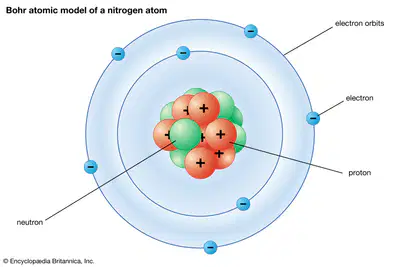
Protons and Neutrons= Located in the center of
an atom and account for all of an atom’s mass!
Remember, they are the two heaviest subatomic
particles
Electrons: Located on the outside of the nucleus
and are constantly moving around- they weigh
virtually nothing!!
Location is important because it helps us
remember the ROLE of each subatomic
particle
7
Protons:
IDENTIFY
THE
ATOM
8
Balance out the pull of attraction between protons and electrons
Its like putting something between 2 magnets!
Neutrons
9
Electrons: Keep
the atom STABLE
(nonreactive) by
filling their
outermost shell.
Remember
-2
-8
-8
10
Stable Atoms
Unstable Atoms
Helium is a stable atom because it has 2
valence electrons in its outer shell. It does
not bond with other elements because it is
already stable.
Hydrogen and Oxygen have unstable outer
shells. Hydrogen has 1 Valence Electron. It
needs one more to become stable. Oxygen
has 6 Valence electrons, it needs 2 more to
become stable.
11
12
Labeling
Label the parts of an atom (one space will not be used):
13
Match
Proton
Electron
Neutron
Positive Charge
Negative Charge
Neutral/No Charge
Positive Charge
Negative Charge
Neutral/No Charge
14
Multiple Choice
Which of the following subatomic particle stabilizes the atom?
Proton
Neutron
Electron
15
Multiple Choice
Which of the following subatomic particle identifies the atom?
Proton
Neutron
Electron
16
Multiple Choice
Which of the following subatomic particle helps an atom bond with other atoms?
Proton
Neutron
Electron
17
Multiple Choice
Which two subatomic particles are always equal to each other?
Protons and Neutrons
Neutrons and Electrons
Electrons and Protons
Neutrons and Protons
18
Multiple Choice
Which subatomic particles make up an atom's mass?
Protons and Neutrons
Neutrons and Electrons
Protons and Electrons
Electrons and Neutrons
19
20
21
On the next slide we
will find out what the
numbers and symbols
mean
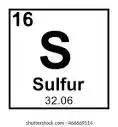
All 118 Elements are found on the
periodic table of elements. Each
element square has important info
unique to that element
22
NOTES PAGE:
In your notebook, on the
same page that you
took your “Atomic Model
Notes” Draw the
periodic table square for
Beryllium. Using
Arrows, label each part
and write the definition
23
24
25
26
27
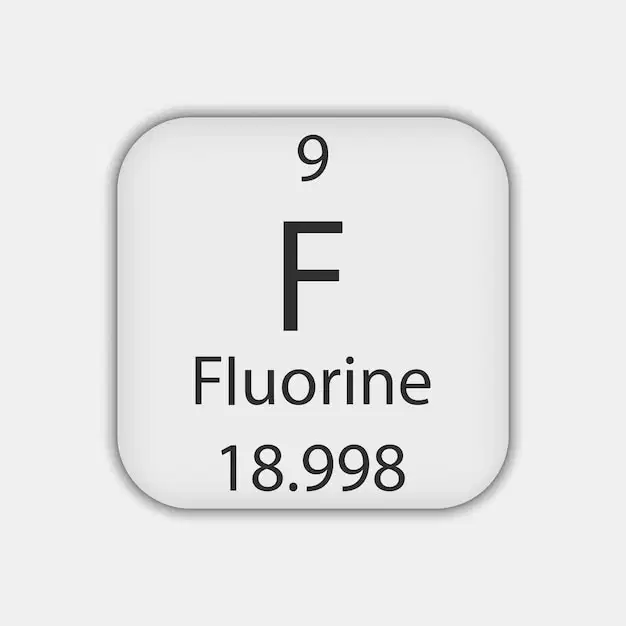
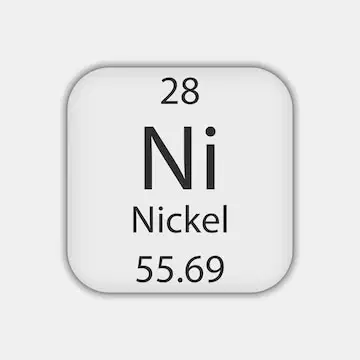
Think about what each part of the square mean:
1. Atomic number= # of Protons and Electrons
2. Atomic mass = Protons + Neutrons
3. Neutrons = AM - A#
28
Multiple Choice
What is the atomic number?
F
9
18
18.9
29
Multiple Choice
What is the atomic mass?
10
9
19
18.998
30
Multiple Choice
What is the number of protons??
10
9
19
18.998
31
Multiple Choice
What is the number of neutrons??
10
9
19
18.998
32
Multiple Choice
How many electrons does Nickel have?
28
55.69
56
27
33
Multiple Choice
How many protons does Nickel have?
28
55.69
56
27
34
Multiple Choice
How many neutrons does Nickel have?
28
55.69
56
27
Show answer
Auto Play
Slide 1 / 34
SLIDE

Similar Resources on Wayground
25 questions
Physical and Chemical Changes Review
Presentation
•
8th Grade
25 questions
Biodiversity
Presentation
•
7th Grade
27 questions
Cell Division
Presentation
•
7th Grade
28 questions
Scientific Variables
Presentation
•
7th Grade
26 questions
Catastrophic Events
Presentation
•
7th Grade
26 questions
Ecological Succession
Presentation
•
7th Grade
25 questions
Classification
Presentation
•
7th Grade
25 questions
Natural Resources
Presentation
•
7th Grade
Popular Resources on Wayground
10 questions
How much do you know about our Portrait of an Eagle?
Quiz
•
10th Grade
10 questions
Fast Food Slogans
Quiz
•
6th - 8th Grade
21 questions
Continents and Oceans
Quiz
•
6th Grade
20 questions
Parts of Speech
Quiz
•
5th Grade
16 questions
Subject & Predicate
Quiz
•
5th Grade
25 questions
Multiplication Facts
Quiz
•
5th Grade
12 questions
Map Skills
Quiz
•
3rd Grade
22 questions
Continents and Oceans
Quiz
•
5th Grade
Discover more resources for Science
17 questions
7.6D Aqueous Solutions
Quiz
•
7th Grade
20 questions
Claim, Evidence and Reasoning (CER)
Quiz
•
6th - 8th Grade
18 questions
Counting Atoms
Quiz
•
7th - 8th Grade
10 questions
Exploring Chemical and Physical Changes
Interactive video
•
6th - 10th Grade
20 questions
Food Chains & Food Webs
Quiz
•
5th - 7th Grade
10 questions
Decoding the Periodic Table of Elements
Interactive video
•
6th - 10th Grade
16 questions
Photosynthesis and Cellular Respiration Review
Quiz
•
7th Grade
10 questions
Exploring the Periodic Table
Interactive video
•
6th - 10th Grade