Search Header Logo
Physical Geography Summer Packet Material

Physical Geography Summer Packet Material

Assessment

Presentation

Social Studies

5th Grade

Hard

Created by

Andy Ballantine

FREE Resource

67 Slides • 86 Questions

1

What is Geography?

media

2

Landforms

4th Grade

media

3

Earth/Sun System: Seasons

MS.ESS.1.1: Students can identify the impact of the Earth and Sun relationship.

media

4

Atmosphere

Layer of the Atmosphere Activity

media

5

Weather vs. Climate

media

6

Theory of Plate Tectonics

media

7

8

Continents and Oceans

media

9

Cities, States

Countries, Continents

media

Mr Sutton

10

Asia:

Geography

media

11

Open Ended

Predict: What is geography?

12

​With a landmass of 17.21 MILLION miles, Asia is bigger than all other continents!

Asia is the largest continent!

media

13

​Continent

​ A continent is a large continuous mass of land. There are 7 Continents in the world. The 7 continents are Africa, Asia, Australia (Oceania), Europe, North America, South America, and Antarctica

media

14

Multiple Choice

How many miles large is Asia?

1

12.45 million

2

17.21 million

3

9.52 million

4

15.97 million

15

media

16

media

There are 48 different countries found in Asia!

.

Can you name any?

Asian Countries!

17

Countries

A country is a nation with its own government, occupying a particular territory within a continent

media

18

Multiple Select

Which countries are in Asia?

1

China

2

Japan

3

France

4

India

5

Russia

19

Multiple Choice

Question image

Which continent is labeled in purple (#2)?

1

Asia

2

North America

3

South America

4

Australia

20

media

Asia has the highest population out of all the continents.

​.

As of 2018, there are 4.6 billion people living in Asia!

Population

21

State

A state is an organized political community within a country

media

22

Multiple Choice

Which continent has the highest population?

1

South America

2

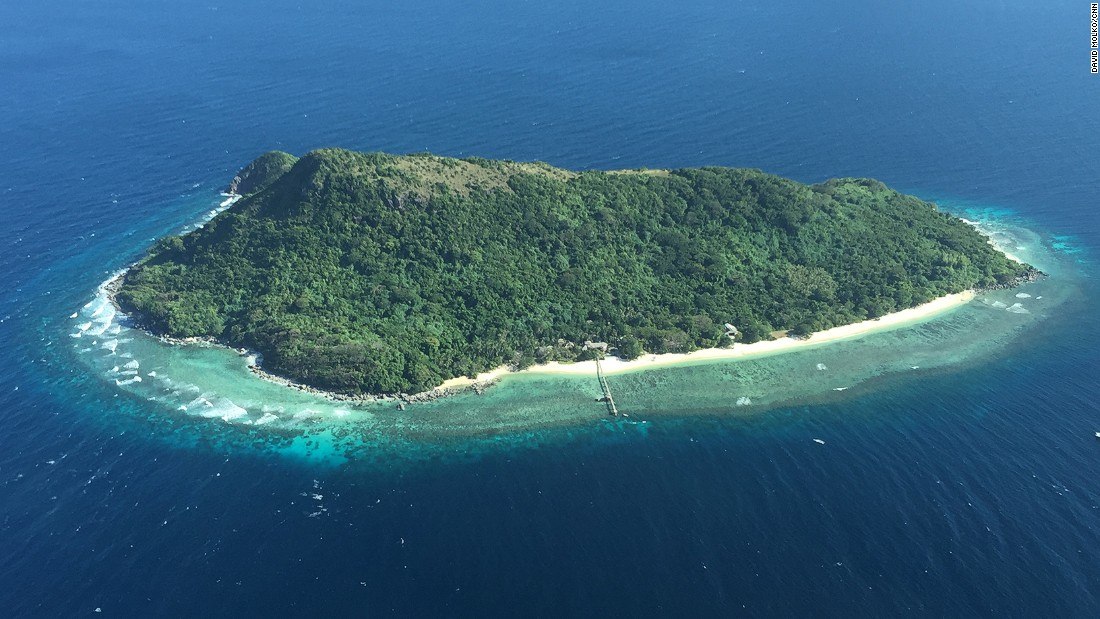
Australia

3

Europe

4

Asia

23

media

24

media
media

​Mount Everest is the highest point on Earth at 29,032 miles above sea level. It is located in the Himalayan Mountains in Nepal.

​​Highest: Mount Everest

​The Dead Sea is the lowest point on land at 420 meters (1385 feet) below sea level. It is located on the border between Israel and Jordan.

​​Lowest: Dead Sea

Asia has the highest and lowest points on Earth!

25

City

A defined area within a state or country with people living closely together

media

26

media

The pacific ocean is the body of water to the east of Asia. This is the largest ocean on the planet!

Pacific Ocean

27

The lithosphere is broken into Tectonic Plates

  • The lithosphere is made from the crust and the uppermost part of the mantle

  • The lithosphere is rigid, brittle rock

  • These plates float on the asthenosphere

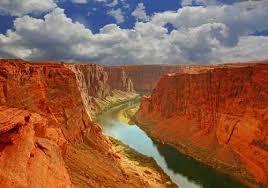
media

28

Multiple Choice

The Pacific Ocean is to the ____ of Asia.

1

North

2

South

3

East

4

West

29

Multiple Choice

Question image

Europe

1

Continent

2

City

3

State

4

Country

30

media
media
media
media

Giant Pandas live in forests in Southwest China and are herbivores. They love bamboo!

​​Giant Panda

​Bengal Tigers live in India and are carnivores!

​​Bengal Tiger

​Asian Elephants live in Southeast Asia and are herbivores!

Asian Elephant

​Red Pandas live in the Eastern Himalaya Mountains and are herbivores. They also love bamboo!

​​Red Panda

media

31

Multiple Choice

Question image

How many continents are there in the world?

1

5

2

7

3

9

4

6

32

Multiple Choice

What food do Giant and Red Pandas like to eat?

1

Fruit

2

Bamboo

3

Meat

4

Lettuce

33

Multiple Choice

Question image

Chicago

1

Continent

2

Country

3

State

4

City

34

media

There are over 20 different languages spoken across Asia! The 3 most common languages in Asia are:

  1. Mandarin (China)

  2. Hindi (India)

  3. Indonesian (Indonesia)

What do they speak?

35

Multiple Choice

Question image

Which continent is labeled in blue (#4)?

1

Europe

2

North America

3

Australia

4

Africa

36

Multiple Select

Select all languages that are spoken in Asia.

1

Mandarin

2

Spanish

3

Indonesian

4

Hindi

37

Multiple Choice

Question image

Africa

1

Continent

2

Country

3

State

4

City

38

Open Ended

What is one fact you learned during this presentation?

39

media

40

Multiple Choice

Question image

Antarctica

1

Continent

2

Country

3

City

4

State

41

media

42

Multiple Choice

Question image

Germany

1

Continent

2

Country

3

State

4

City

43

Multiple Choice

Are countries the same thing as continents?

1

Yes

2

No

44

Multiple Choice

Question image

Oregon

1

Continent

2

Country

3

State

4

City

45

Multiple Choice

Question image

Which continent is labeled in green (#3)?

1

Africa

2

Europe

3

North America

4

South America

46

Multiple Choice

Question image

Canada

1

Continent

2

Country

3

State

4

City

47

media

48

Multiple Choice

Question image

China

1

Continent

2

Country

3

State

4

City

49

media

50

Multiple Choice

Question image

Michigan

1

Continent

2

Country

3

State

4

City

51

media

52

Multiple Choice

Question image

Paris

1

Continent

2

Country

3

State

4

City

53

Multiple Choice

Question image

Which continent is labeled in orange (#5)?

1

North America

2

South America

3

Europe

4

Africa

54

Multiple Choice

Question image

London

1

Continent

2

Country

3

State

4

City

55

media

56

Multiple Choice

Question image

Florida

1

Continent

2

Country

3

State

4

City

57

media

58

Multiple Choice

Which continent is the largest?

1

Africa

2

Asia

3

North America

59

Multiple Choice

Question image

Which continent is labeled in light blue (#1)?

1

Africa

2

Europe

3

Antarctica

4

Arctica

60

media

61

Pangea

  • The super continent that Alfred Wegener described in his theory of Continental Drift

media

62

media

63

Multiple Choice

Question image

Which continent is labeled yellow (#7)?

1

Europe

2

Asia

3

Africa

4

North America

64

media

65

Write in science journal.

media

66

Multiple Choice

Which continent has no countries and no population?

1

North America

2

Antarctica

3

South America

4

Europe

67

Multiple Choice

Question image

Which continent is labeled in brown (#6)

1

North America

2

Australia

3

South America

4

Europe

68

media

69

How do the plates ACTUALLY MOVE?

  • Convection currents in the asthenosphere drive the movement of lithospheric plates

media

70

Multiple Choice

The only continent that is a country is...

1

Australia

2

Asia

3

Africa

4

Europe

71

72

Poll

Question image

Which Season is your favorite?

Winter

Spring

Summer

Fall

73

Multiple Choice

Question image

Ocean labeled #11

1

Atlantic Ocean

2

Pacific Ocean

3

Indian Ocean

4

Arctic Ocean

74

media

75

Multiple Choice

Question image

Ocean labeled #9

1

Southern Ocean

2

Arctic Ocean

3

Atlantic Ocean

4

Pacific Ocean

76

media

77

Multiple Choice

Question image

Ocean labeled #10

1

Pacific Ocean

2

Atlantic Ocean

3

Southern Ocean

4

Indian Ocean

78

How does a convection cell occur?

  • Hot magma in the asthenosphere begins to rise, similar to the way hot air rises.

  • As it rises to the top of the asthenosphere, it cools and becomes more dense.

  • This cooler, dense magma then sinks again. As it sinks, it gets warmer, until the process begins again

  • This movement of magma is what drives the plates to move.

media

79

Multiple Choice

Question image

Ocean labeled #12

1

Southern Ocean

2

Northern Ocean

3

Atlantic Ocean

4

Pacific Ocean

80

media

81

Multiple Choice

Question image

Ocean labeled #8

1

Pacific Ocean

2

Arctic Ocean

3

Antarctic Ocean

4

Indian Ocean

82

Multiple Choice

Tectonic plates consist of

1

continental crust

2

mesospheric crust

3

both continental and oceanic crust

4

oceanic crust

83

​Compass Rose

A compass rose is a figure on a compass, map, or nautical chart used to display the orientation of the directions North, East, South and West.

media

84

media

85

Multiple Choice

Question image

Which ocean lies East of North America and West of Africa?

1

Atlantic

2

Pacific

3

Indian

4

Southern

86

Multiple Choice

The idea that the continents were once part of a single landmass that broke apart and

moved is

1

Continental Drift

2

Tectonic Plates

3

Transform

87

Multiple Choice

Question image

Which ocean lies North of Europe and Asia?

1

Atlantic

2

Pacific

3

Arctic

4

Southern

88

Watch the video on the next slide.

Take notes on your worksheet

89

Multiple Choice

Question image

Which ocean lies East of Asia and West of North America?

1

Atlantic

2

Pacific

3

Arctic

4

Southern

90

Multiple Choice

The region where two lithospheric plates meet

1

Continental Drift

2

Plate tectonics

3

Plate Boundaries

91

Multiple Choice

Question image

Which ocean lies South of Africa and North of Antarctica?

1

Atlantic

2

Pacific

3

Arctic

4

Southern

92

Write definition in science journal.

media

93

Multiple Choice

Question image

Which ocean lies South of Asia, East of Africa and West of Australia?

1

Indian

2

Pacific

3

Arctic

4

Southern

94

Multiple Choice

The scientist who developed the big idea called "sea-floor spreading"

1

Alfred Wedgener

2

Harry Hess

3

Edward Dutton

4

Ortelius

95

We live in the Troposphere, here at the bottom of the diagram.

media

96

Multiple Choice

Pangaea was an ancient supercontinent made up of...

1

America, Greenland, and Europe

2

Antarctica, India, and America

3

all of Earth’s continents

4

South Africa, India, Australia, and South America

97

media

98

Multiple Choice

Why did no one believe Wegener's thoery that the continents were once together?

1

He could not explain HOW the continents moved

2

He didn't have evidence

3

His data was wrong

4

He didn't use the right technology to gather data

99

Direct vs. Indirect Light

  • The way light travel and how it hits the surface of our planet impacts the seasons.

  • LIght travels in straight lines and it is more radiant and its effects stronger when the line hits a surface in a straight angle.

  • Also, the effects of the radiation from the sunlight diminish when it hits the surface in an angle.  

media

100

Multiple Choice

The movement of the tectonic plates is caused by

1

the rotation of the Earth

2

convection currents in the Asthenosphere

3

the gravity of the iron-nickel core

4

the Moho discontinuity

101

Multiple Choice

Question image

1

F

2

G

3

H

4

J

102

Multiple Choice

Which layer of the Earth consists of tectonic plates?

1

asthenosphere

2

mantle

3

mesosphere

4

lithosphere

103

Multiple Choice

Question image

Which layer of the atmosphere do we live in? (click to enlarge picture)

1

Thermosphere

2

Mesosphere

3

Stratosphere

4

Troposphere

104

Multiple Choice

Tectonic plates “float” on

1

the lithosphere

2

the mantle

3

the ocean

4

the asthenosphere

105

Multiple Choice

Question image

1

A

2

B

3

C

4

D

106

Multiple Choice

The fact that similar fossils are found on both sides of the ocean is evidence of

1

magnetic reversal

2

global positioning

3

continental drift

4

oceanic drift

107

What is Geography

Geography is the study of the the earth, the parts of the earth, and the people that are found in the earth. There are two types of geography that we study.

media

108

Multiple Choice

Question image

1

F

2

G

3

H

4

J

109

Multiple Choice

Question image

Which layer of the atmosphere contains clouds and weather? (click to enlarge picture)

1

Therosphere

2

Mesosphere

3

Stratosphere

4

Troposphere

110

Multiple Choice

Question image

1

A

2

B

3

C

4

D

111

media

112

79% of the air in the atmosphere is NITROGEN, is it is most abundant.

media

113

114

Multiple Choice

Question image

Which gas is most abundant in the atmosphere? (click to enlarge picture)

1

oxygen

2

nitrogen

3

water vapor

4

argon

115

Multiple Choice

Question image

What is the elliptical line circling the Sun represent?

1

Rotation

2

Revolution

3

Orbit of the Earth

4

Orbit of the Sun

116

0.40 is the largest number (0.40 is like fourty cents compared to 0.08 which would be eight cents.), so the TROPOSPHERE has the most water vapor.

media

117

Physical Geography

Physical geography is the study of the earth, the parts of the earth, and how they interact with each other.

For example:

Landforms-mountains, valleys, hills, oceans

Weather-thunderstorms, hurricanes, droughts

Climates


118

Multiple Choice

Which layer of the atmosphere has the most water vapor?

1

Thermosphere

2

Mesosphere

3

Stratosphere

4

Troposphere

119

Seasons: How does the Earth-Sun System affect seasons?

  • The distance between Earth and the sun stays relatively constant throughout the Earth’s orbit. 

  • Solar energy travels in a straight line from the sun and hits different parts of the curved Earth at different angles — more directly at the equator and less directly at the poles. 

  • The Earth’s rotation axis is tilted with respect to its orbital plane around the sun. Earth maintains the same relative orientation in space, with its North Pole pointed toward the North Star throughout its orbit.

120

0.002 is the smallest number, so the Thermosphere has the lowest air pressure.

media

121

Multiple Choice

Question image
Name this landform
1
volcano
2
hill
3
river
4
island

122

Multiple Choice

Which layer has the lowest air pressure?

1

Thermosphere

2

Mesosphere

3

Stratosphere

4

Troposphere

123

Multiple Choice

Question image

Refer to the diagram. Why are our (Norther Hemisphere) summer months the warmest?

1

Closer to the Sun

2

Further from the Sun

3

Tilted toward the Sun

4

Tilted away from the sun

124

Layers of the Atmosphere are divided by temperature.

media

125

Open Ended

What else (outside of my examples) would be considered physical geography?

126

Multiple Choice

Question image

What property is used to divide the layers of the atmosphere? (click to enlarge picture)

1

Air pressure

2

Temperature

3

Type of gas

127

media

128

Multiple Choice

What happens to the temperature at the "pause" between layers?

1

it increases

2

it decreases

3

it stays the same

129

Multiple Choice

Question image
Name this body of water
1
peninsula
2
ocean
3
hill
4
volcano

130

The temperature decreases as you go up in the Troposphere.

media

131

Multiple Choice

Question image

1. What angle is Earth’s axis tilted at?

1

20 degrees

2

21.5 degrees

3

23 degrees

4

23.5 degrees

132

Multiple Choice

Question image

How does temperature in the Troposphere change as the altitude increases? (click to enlarge picture)

1

temperature increases

2

temperature decreases

3

temperature stays the same

133

Human Geography

Human geography is how human activity affects or is influenced by the earth.

Examples:

Weather affects what we use/wear

Raining we use umbrella

Snow means a heavy jacket and boots


Climate dictates how our houses are designed

Europeans don't use air conditioners

134

The percentage of Nitrogen, Oxyen, and Argon remain the same in EVERY layer of the atmosphere. Even though the total amount of air decreases as you travel up and away from the earth, the amount of each kind of gas in the air stays the same.

media

135

How does the tilt of the Earth impact our seasons?

  • Because the Earth’s axis is tilted, the most direct and intense solar energy occurs over the summer months, and the least direct and intense solar energy occurs over the winter months. 

  • The change in season at a given place on Earth is directly related to the orientation of the tilted Earth and the position of Earth in its orbit around the sun because of the change in the directness and intensity of the solar energy at that place over the course of the year. 

136

Multiple Choice

What remains the same in each layer?

1

temperature

2

air pressure

3

percentage of gases

137

Multiple Choice

Question image
1
A. Hills
2
B. River
3
C. Desert
4
D. Mountains

138

Multiple Choice

Question image

According to the diagram, when does fall officially begin?

1

June 22

2

Sept. 23

3

Dec. 22

4

March 21

139

Open Ended

What else (outside of my examples) would be considered human geography?

140

Multiple Choice

Question image

Refer to the diagram: When is the Earth the furthest from the Sun and what is the distance?

1

January, 147 million km

2

July, 152 million km

141

Multiple Choice

Question image
1
A. Desert
2
B. Lake
3
C. Plains
4
D. River

142

Seasons Overview: Note taking

  • Get your Science NB out! Date and topic on the page.

  • Take notes during the following video.

  • 3 to 5 facts, 2-4 big ideas, and at least 2 questions.

143

Try your knowledge

144

Open Ended

3-2-1 Response: 3 facts, 2 big ideas, 1 question

145

Multiple Choice

Land formation that is flat on top with steep walls. Usually in a dry area

1

Hill

2

Plateau

3

Basin

146

Multiple Choice

A town builds a levee (a dam) on a river to help prevent a flood.

1

Human Geography

2

Physical Geography

147

Multiple Choice

Question image
What land form is this?
1
island
2
valley
3
plain
4
mountain

148

Multiple Choice

The lava that erupted from the volcano created a new landmass.

1

Human Geography

2

Physical Geography

149

Multiple Choice

Question image
What land form is this?
1
valley
2
canyon
3
plain
4
mountain

150

Multiple Choice

Question image
What land form is this?
1
plain
2
valley
3
mountain
4
canyon

151

Multiple Choice

Question image
What land form is this?
1
valley
2
plain
3
volcano
4
canyon

152

Multiple Choice

Question image
What land form is this?
1
valley
2
canyon
3
mountain
4
plain

153

Great Job!

Make sure to turn in your notes

The End

What is Geography?

media

Show answer

Auto Play

Slide 1 / 153

SLIDE