untitled
Presentation
•
•
Practice Problem
•
Hard
Carl Hughes
FREE Resource
41 Slides • 67 Questions
1
States of Matter
Let's review what we learned about the states of matter.
2
Multiple Select
Can you remember the three states of matter? Select all three:
Solid
Air
Gas
Water
Liquid
3
The three states of matter are:
Solid
Liquid
Gas
4
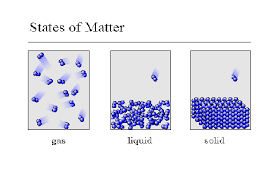
Solids
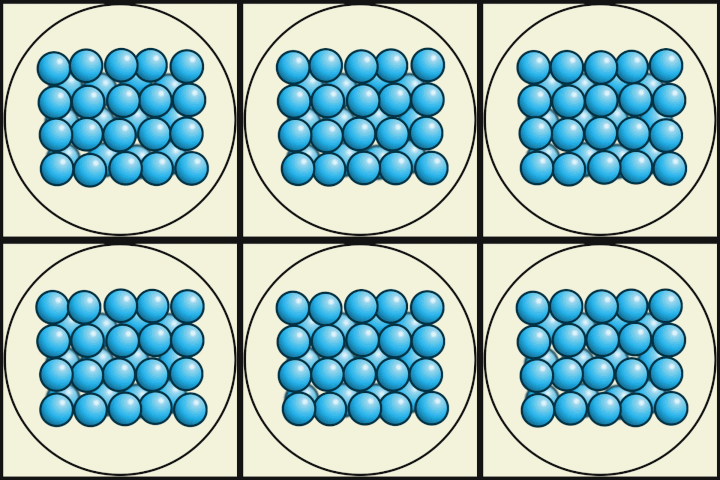
Are characterized by molecules that are so close together, barely any movement is possible.
5
Liquids
Have molecules that are flowing freely, far enough away from each other to allow some movement.
6
Gases
A characterized by molecules that far apart from each other, making it easy for them to move around
7
Multiple Choice
What causes a change in the states of matter?
Light
Heat
Pressure
8
Multiple Choice
Is a change in a substances states of matter a physical change or chemical change?
Chemical
Physical
9
Open Ended
In your own words, describe the difference between a chemical change and a physical change.
10
Remember:
A physical change alters the shape of an object without changing the chemical composition. A change in an object's chemical make-up that cannot be reversed is a chemical change.
11
Multiple Select
Select all of the following images that show a physical change:
12
Open Ended
In your own words explain the difference between a solution and a mixture.
13
A solution
Is when two or more substances are combined and cannot be separated.
14
A mixture
Is a combination or two or more substances that can be mixed together and then separated again
15
Multiple Choice
Which of the following is the word for something that is pure, and only made up of one thing?
Solution
Substance
Mixture
Compound
16
Great Job! Don't forget:
The three states of matter are solid, liquid and gas.
A substance is something that is pure.
A mixture is something that can be combined and then separated.
A physical change is a change that changes an objects shape, but not the chemical make-up.
17
Multiple Choice
Which of the following is the word for something that is pure, and only made up of one thing?
Solution
Substance
Mixture
Compound
18
States of Matter
19
20
21
22
23
24
25
26
Multiple Choice
A ___________ substance has a definite volume but not a definite shape.
gas
liquid
solid
27
Multiple Choice
The particles in a _____________ vibrate, are close together, and do not move freely.
liquid
gas
solid
28
Multiple Choice
29
30
31
Multiple Choice
32
Multiple Choice
33
Multiple Choice
34
Changing States of Matter
​
35
36
Multiple Choice
Celina walks outside one morning and notices that her mother’s car is covered with ice. What change has water gone through to become ice?
boiling
freeezing
melting
evaporation
37
38
Multiple Choice
Parker's mom brought a glass of cold water outside. After a few minutes, drops began to form on the outside of the glass. Which process does the water on the outside of the glass demonstrate?
boiling
freezing
condensation
evaporation
39
40
Multiple Choice
Water can change forms from solid to liquid to gas.
When water changes from liquid to gas, what is this called?
melting
freezing
evaporation
condensation
41
42
Multiple Choice
Nathan builds a snow person. As the sun comes out, he notices the snow person begins to get smaller and a puddle of water forms on the ground under the snow person. What type of change is taking place?
liquid melting to become gas
liquid freezing to become solid
solid freezing to become liquid
solid melting to become liquid
43
44
Multiple Choice
Cecilia placed a pot of water on a stove for 15 minutes. She observed that the water began to bubble and that the water level dropped. Which explanation below describes what is happening to the water?
The water is cooling.
The water is freezing.
The water is boiling and is evaporating.
The water is melting and is disappearing.
45
Multiple Choice
Kylie had an empty beaker. She quickly put a balloon over the top of the beaker and placed the beaker on a hot plate. Kylie illustrated her results.
Which of the following shown by the investigation?
Heating the gas inside the beaker inflated the balloon.
Heating the gas inside the beaker made the balloon shrink.
Heating the gas inside the beaker added water to the balloon.
Heating the gas inside the beaker causes no change to the balloon.
46
Multiple Choice
The three states of matter are solid, liquid, and gas.
How is a solid different from a liquid?
A solid has a definite shape. A liquid takes the shape of its container.
A solid takes the shape of its container. A liquid has a definite shape.
A solid has a definite volume. A liquid does not have a definite volume.
A solid does not have a definite volume. A liquid has a definite volume.
47
Multiple Choice
You want to observe a change in state. What could you do to change liquid water to water vapor?
48
Multiple Choice
Freezing and melting are opposite processes. Which process is the opposite of condensing?
cooling
evaporating
freezing
melting
49
50
Multiple Choice
Jocelyn wanted to learn how water changes state. Her investigation is shown in the picture.
It will melt.
It will freeze.
It will condense.
It will evaporate.
51
States of Matter
What are the similarities between solids, liquids and gases?
How does particle motion affect the state of matter.
52
Multiple Choice
Matter that has its own shape and definite volume.
solid
liquid
gas
plasma
53
Multiple Choice
solid
liquid
gas
54
Multiple Choice
solid
liquid
gas
55
Multiple Choice
Solid
Liquid
Gas
plasma
56
Multiple Choice
Which state of matter does not have a definite shape but does have a definite volume?
Solid
Liquid
Gas
57
Multiple Choice
has a definite shape but no definite volume
has a definite volume but no definite shape
has fast-moving particles
58
Multiple Choice
___________ is anything that has mass and takes up space.
Molecules
Matter
Volume
59
Multiple Choice
Viscosity is defined as a liquids...
Ability to flow
Eagerness to flow
Resistance to flow
60
Multiple Choice
Honey has a _____________ viscosity
High
Low
negative
61
Multiple Choice
If I HEAT up maple syrup, then the viscosity of the syrup will....
Increase
Decrease
Stay the same
62
Fill in the Blanks
Type answer...
63
Each State of Matter is defined by how their particles behave.
1How close the molecules are to one another, and 2how quickly they move determine what state of matter a substance is in.
64
Draw
Draw an example of a solid.
65
Solid
In a solid, particles are packed tightly together so they don't move much, but are dense. The electrons of each particle are constantly in motion, giving the atoms a small vibration, but they are fixed in their position.
Solids have a definite shape, as well as mass and volume, and do not conform to the shape of the container in which they are placed.
66
Draw
Circle the solid.
67
Liquid
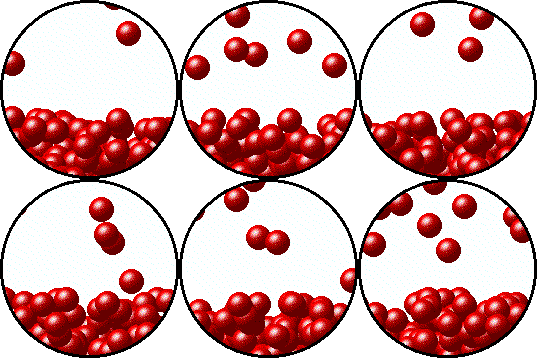
In a liquid, the particles are more loosely packed than in a solid, but closely enough that it is not easily compressible.
The particles are able to flow around each other, giving the liquid an indefinite shape. Therefore, the liquid will conform to the shape of its container.
68
Draw
Circle the liquid.
69
Gas
In a gas, the particles have a great deal of space between them, so they move easily, and have high kinetic energy (energy of movement).
70
Draw
Circle the gas.
71
Gas
When a gas is put under pressure by reducing the volume of the container, the space between particles is reduced and the gas is compressed.
72
Liquid on the other hand...
In a liquid, the particles are already close together, so it is not easily compressed.
73
Gas
A gas has no definite shape or volume. If unconfined, the particles of a gas will spread out indefinitely (forever). However, if confined, the gas will expand to fill its container.
74
Multiple Choice
Which state of matter contains particles that flow freely past one another?
Solid
Liquid
Gas
Plasma
75
Multiple Choice
Which state of matter has a fixed volume and mass?
Solid
Liquid
Gas
Plasma
76
Multiple Choice
Which state of matter fills a container?
Solid
Liquid
Gas
Plasma
77
Multiple Choice
Which state of matter contains particles that slowly vibrate, but in a fixed position?
Solid
Liquid
Gas
Plasma
78
Multiple Choice
Which state of matter has a definite shape?
Solid
Liquid
Gas
Plasma
79
Reorder
Reorder the following in order from MOST energy to LEAST energy.
80
Multiple Choice
Particles are widely spaced except when they collide.
solid
liquid
gas
81
Multiple Choice
Particles vibrate in place and do not change relative positions.
solid
liquid
gas
82
Multiple Choice
What happens to particles when their temperature increases?
The particles move slower
The particles move faster
The particles lose mass
The particles gain mass
83
Multiple Choice
Basic state of matter with the least amount of energy.
solid
liquid
gas
84
Multiple Choice
When water sits in the freezer and freezes into ice, it is because the water has...
gained mass
gained energy
lost mass
lost energy
85
Multiple Choice
The AVERAGE kinetic energy of particles in a substance is its...
Mass
Volume
Thermal Energy
Temperature
86
Multiple Choice
87
Multiple Choice
88
Multiple Choice
89
Multiple Choice
90
Multiple Choice
91
Multiple Choice
92
Bill Nye - Seasons
Watch the video and answer the Checkpoint questions.
93
94
Let's stop for a moment to check for understanding.
​
95
Multiple Choice
The axis of the earth is tilted _________ degrees.
25.3
45
23
23.5
96
Multiple Choice
The southern hemisphere is another name for the southern____________________of the earth.
part
half
end
continent
97
Fill in the Blanks
Type answer...
98
99
Let's stop for a moment to check for understanding.
​
100
Multiple Choice
A pendulum can be used to show the ____________________of the earth.
gravity
rotation
revolution
101
Open Ended
A____________________is almost 365 and 1/4 days long.
102
Multiple Choice
The tilt of the ____________________ causes the sun to appear in the sky at a slightly different spot every day.
earth
sun
axis
sky
103
104
Final Checkpoint!
​
105
Fill in the Blanks
Type answer...
106
Multiple Choice
The____________________are the longest days of the year.
solstices
equinoxes
107
Multiple Select
____________________has seasons because it’s axis tilted, much like the earth.
Mars
Earth
Venus
Sun
Both Earth and Mars
108
Open Ended
Three things I learned watching this video:
1)
2)
3)
States of Matter
Let's review what we learned about the states of matter.
Show answer
Auto Play
Slide 1 / 108
SLIDE

Similar Resources on Wayground
102 questions
Maya
Presentation
•
6th Grade
103 questions
4E - Trastornos y enfermedades de la piel I PARTE CLASE
Presentation
•
Professional Development
102 questions
G.8.TRANSPORT IN PLANTS..(2021)
Presentation
•
8th - 9th Grade
102 questions
Chimie UAA2 : La réaction chimique approche qualitative
Presentation
•
3rd Grade
104 questions
MERCADOTECNIA EGEL
Presentation
•
University
98 questions
2.2 Un mundo plano
Presentation
•
6th Grade
104 questions
MYP1 What Do Scientists Do?
Presentation
•
5th - 7th Grade
Popular Resources on Wayground
20 questions
Math Review
Quiz
•
3rd Grade
15 questions
Fast food
Quiz
•
7th Grade
20 questions
Context Clues
Quiz
•
6th Grade
20 questions
Inferences
Quiz
•
4th Grade
19 questions
Classifying Quadrilaterals
Quiz
•
3rd Grade
20 questions
Figurative Language Review
Quiz
•
6th Grade
20 questions
Equivalent Fractions
Quiz
•
3rd Grade
10 questions
Identify Fractions, Mixed Numbers & Improper Fractions
Quiz
•
3rd - 4th Grade
Discover more resources for
20 questions
Cartoon Characters!
Quiz
•
KG - 5th Grade
10 questions
Movie Trivia
Quiz
•
KG - 2nd Grade
15 questions
Memorial Day Trivia
Quiz
•
KG - 12th Grade
12 questions
Name that Candy
Quiz
•
KG - 12th Grade
20 questions
Guess The App
Quiz
•
KG - Professional Dev...
20 questions
Guess that Disney
Quiz
•
KG - 5th Grade
16 questions
cartoons
Quiz
•
KG - 6th Grade
16 questions
Fun Fun Fun Fun!!!!!!!!!!!!!!
Quiz
•
KG - 5th Grade