Heat Energy Transfer
Presentation
•
Physics
•
6th - 8th Grade
•
Medium

Janice Taylor
Used 2+ times
FREE Resource
17 Slides • 73 Questions
1
Methods of Heat
Transfer
2
Heat Transfer
Heat always moves from a warmer
place to a cooler place.
Hot objects in a cooler room will
cool to room temperature.
Cold objects in a warmer room will
heat up to room temperature.
3
Question
If a cup of coffee and an ice lolly were left
on the table in this room what would
happen to them? Why?
4
Question
The cup of coffee will cool until it reaches
room temperature. The ice lolly will melt
and then the liquid will warm to room
temperature.
5
Multiple Choice
Identify the energies associated with the sun.
Sound and chemical
light and heat
Mechanical and electrical
6
Multiple Choice
Mrs. Tully's class was investigating the heat flow with warmer objects and colder objects. Sawyer and Brody decided to observe what happened when ice cubes were placed in the palm of their hands. After a few minutes of holding the ice cubes in their hands, the ice cubes began to melt. Then the boys began to complain that their palms were freezing. Mrs. Tully told Sawyer and Brody to put their ice cubes away and write a conclusion based on their observations. Using what you know about heat transfer, choose the BEST conclusion statement for their investigation.
The heat from the palms of their hands transferred to the ice cubes.
The ice cubes evaporated, changing from a liquid to a gas.
There was no change in the ice cubes - they remained solids.
The cold from the ice cubes turned the palms of their hands red.
7
Multiple Choice
Heat always passes from a _____________________ object to a __________________ object until all objects are the same temperature.
positive, negative
lower, higher
warmer, cooler
Celsius to Fahrenheit
8
Methods of Heat Transfer
Heat energy is transferred in
three ways:
Conduction
Convection
Radiation
9
CONDUCTION
Heat is transferred from one particle of matter to
another in an object without the movement of the
object.
Conduction = CONTACT
10
Metals are different
The outer e______ of metal atoms
drift, and are free to move.
When the metal is
heated, this ‘sea of
electrons’ gain k_____
energy and transfer it
throughout the metal.
Insulators, such as w___ and p____, do not
have this ‘sea of electrons’ which is why they
do not conduct heat as well as metals.
lectrons
inetic
ood
lastic
11
Why does metal feel colder than wood, if they
are both at the same temperature?
Metal is a conductor, wood is an insulator. Metal
conducts the heat away from your hands. Wood
does not conduct the heat away from your hands as
well as the metal, so the wood feels warmer than
the metal.
12
EXAMPLE OF CONDUCTION
A piece of cheese melts as heat is transferred from
the meat to the cheese (Contact)
13
Multiple Choice
_____________________ is how heat transfers through direct contact with objects that are touching.
conduction
convection
radiation
14
Multiple Choice
How does heat energy move through solids?
Conduction
Convection
Insulation
15
Multiple Choice
Fill in the blank.
A good conductor is something that heat can move through __________.
Easily
Hard
16
Multiple Choice
Fill in the blank.
A good ________ is something that heat cannot move through easily.
insulator
conductor
17
Multiple Choice
Heat always moves from the ________ object.
lighter to the heavier
smaller to the larger
darker to the lighter-colored
warmer to the cooler
18
Convection
What happens to the particles in a liquid or a
gas when you heat them?
The particles spread out and
become less dense.
19
CONVECTION
• Convection is the movement that transfers heat within
fluids and air (gas)
• Heat is transferred by currents within the fluid or gas
• Convection = VENTS (through air and liquid particles)
• Convection moves in
a circular pattern
20
Fluid movement
Cooler, more d____, fluids
sink through w_____, less
dense fluids.
In effect, warmer liquids and
gases r___ up.
Cooler liquids and gases s___.
ense
armer
ise
ink
21
Water movement
Hot water
rises
Cooler
water sinks
Convection
current
Cools at the
surface
22
Why is it windy at the seaside?
23
Cold air sinks
Where is the
freezer
compartment
put in a fridge?
Freezer
compartment
It is put at the
top, because
cool air sinks,
so it cools the
food on the
way down.
It is warmer
at the
bottom, so
this warmer
air rises and
a convection
current is
set up.
24
Multiple Choice
________________ is the transfer of thermal energy by particles moving through fluids; liquids and gases are fluids. One natural example of ______________ currents is wind.
radiation
conduction
convection
25
Multiple Choice
Choose the example that BEST represents CONVECTION.
Getting a sunburn
Inflating a hot air balloon
A microwave oven
Grilling hamburgers over a charcoal flame
26
Multiple Choice
How does heat move through a liquid or gases?
conduction
convection
insulation
27
Multiple Choice
Even though the bottom of a boiling pot gets hot first, all of the water in the pot will soon be the same temperature because of:
conduction
convection
radiation
thermal expansion
28
Multiple Choice
the energy transferred between objects
anything hot
an object that is warm
only radiation
29
Multiple Choice
rises
sinks
smells like sulphur
stays motionless
30
Multiple Choice
rises
sinks
smells like ice cream
stays motionless
31
Multiple Choice
radiation
convection
conduction
the theory of flatus
32
Multiple Choice
the motion of a solid
the motion of a liquid or gas
two objects touching
electromagnetic waves
33
Multiple Choice
solids
liquids
gases
plasma
34
Multiple Choice
gases
solids
liquids
gases or liquids
35
Multiple Choice
heat energy
nuclear energy
abiotic energy
massive energy
36
RADIATION
Radiation is the transfer of energy by
electromagnetic waves
Radiation does NOT require matter to transfer
thermal energy
Radiation = Radiates (heat escaping the sun)
37
Examples of RADIATION
1.
Fire
2.
Heat Lamps
3.
Sun
38
Multiple Choice
Identify the energies associated with the sun.
Sound and chemical
light and heat
Mechanical and electrical
39
Multiple Choice
________________ is how heat travels through empty space and does not require molecules to travel through. Any time you can feel heat without touching it, you are experiencing _____________.
radiation
conduction
convection
40
Multiple Choice
You and your family are sitting around a campfire. You can feel the heat on your face, even when you back your seat away from the fire. The heat energy from the fire warms your face through:
conduction
convection
radiation
41
Multiple Choice
During Spring Break, at Mexico Beach, I also got a terrible sunburn! Ouch! This is an example of ________________.
conduction
convection
radiation
42
Multiple Choice
Heat always passes from a _____________________ object to a __________________ object until all objects are the same temperature.
positive, negative
lower, higher
warmer, cooler
Celsius to Fahrenheit
43
Multiple Select
A measure of the kinetic energy of particles is called:
temperature
radiation
heat
convection
44
Multiple Choice
The total kinetic energy of particles is:
conduction
radiation
thermal energy
specific heat
45
Multiple Choice
The energy that is tranferred between the objects of different temperatures.
kinectic
radiation
heat
thermal
46
Multiple Choice
The transfer of energy as electromagnetic waves is called:
conduction
radiation
convection
thermal
47
Multiple Choice
Transfer of energy due to the movement of matter.
heat
convection
radiation
conduction
48
Multiple Choice
The transfer of energy from one object to another object through direct contect.
conduction
convection
radiation
thermal
49
Multiple Choice
Heat from a space heater is:
radiation
conduction
convection
thermal
50
Multiple Choice
Toasting marshmellows on a twig is:
thermal
conduction
convection
radiation
51
Multiple Choice
Without a potholder, a pot with steel handles will burn us quicker than a pot with rubber handles because of:
kinectic energy
thermal energy
conduction
convection
52
Multiple Choice
Even though the bottom of a boiling pot gets hot first, all of the water in the pot will soon be the same temperature because of:
conduction
convection
radiation
thermal expansion
53
Multiple Choice
Heat always moves from the ________ object.
lighter to the heavier
smaller to the larger
darker to the lighter-colored
warmer to the cooler
54
Multiple Choice
convolution, conduction, precipitation
conduction, radiation, convection
conduction, rapidation, convection
convection, protection, conduction
55
Multiple Choice
touching a hot stove
hot air in motion
the sun's rays
cold air sinking
56
Multiple Choice
the movement of a liquid
electromagnetic waves
touching a hot object
rubbing your hands together
57
Multiple Choice
conduction
convection
radiation
radiation and convection
58
Multiple Choice
radiation
convection
conduction
the foreman grill
59
Multiple Choice
touch or direct contact
the motion of a solid
electromagnetic waves
flatulence
60
Multiple Choice
the sun
the moon
volcanoes
cows
61
Multiple Choice
Radiation
Convection
Conduction
Heat
62
Multiple Choice
Conductor
Insulator
Convector
Radiator
63
Multiple Choice
Conductor
Insulator
Convector
Radiator
64
Multiple Choice
Convection
Electromagnetic waves
Radiation
Conduction
65
Multiple Choice
Radiation
Convection
Conduction
Heat
66
Multiple Choice
Thermal energy being transferred from a hot mug of cocoa to the table it is sitting on is an example of __________.
convection
conduction
radiation
chemistry
67
Multiple Choice
Ironing a shirt is an example of:
condensation
evaporation
conduction
convection
68
Multiple Choice
You and your friends are gathered around a campfire to keep warm. How is heat being transferred to you?
conduction
convection
radiation
69
Multiple Choice
Conduction
Convection
Radiation
70
Multiple Choice
The condition where two substances in physical contact with each other exchange no heat energy. They are said to be the same temperature.
Thermal Energy
Cooler to Warmer
Energy Transfer
Thermal Equilibrium
71
Multiple Choice
hot to cold
cold to hot
cold to cold
hot to hot
72
Multiple Choice
What happens to the temperature if I add ice cubes to a glass of soda
The heat transfers from the coke to the ice
The heat transfers from the ice to the coke
73
Multiple Choice
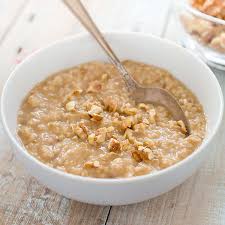
You leave your cold spoon in a hot bowl of oatmeal. What happens after an hour?
The temperature of both the oatmeal and the spoon stay the same
The spoon and the oatmeal become the same temperature
Only the temperature of the oatmeal will change
Only the temperature of the spoon will change
74
Multiple Choice
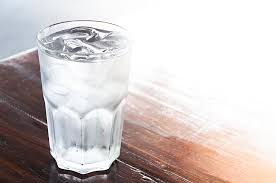
Johnny put ice in his water. Which idea do you think best explains why the water got cold?
The coldness from the ice moved into the water
The coldness and the heat moved back and forth until the water cooled off.
The heat from the water moved into the ice.
The water does not cool of
75
Multiple Choice
Heat always moves from _____________ to ______________.
cold; hot
cold; cold
hot; cold
hot; hot
76
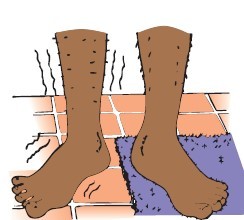
Multiple Choice
Heat from his feet is transferred to the tile floor
Heat from the tile floor is transferred to his feet
Cold from the tile floor is transferred to his feet
Cold from his feet is transferred to the tile floor
77
Multiple Choice
From the cold cup to your hand
From the cold cup to the warm air
From the ice to your hand
From your warm hand to the cold cup.
78
Multiple Choice
Heat transfer by convection happens when:
there is a circulation of hot air/water rising and cold air/water sinking
there is space that heat travels through in waves outwardly
two objects are touching and heat moves from one object into the next object.
79
Multiple Choice
All metals are examples of good:
insulators of thermal energy
conductors of thermal energy
80
Multiple Choice
What is the original source of the most of the energy that people use?
By radiation from the sun.
By convection from the sun.
By radiation from the Earth's core.
Conduction from Earth's core.
81
Multiple Choice
Which best explains how this roasting marshmallows happens?
Heat from the fire is conducted into the marshmallow.
Heat from the fire is radiated into the marshmallow.
The coolness of the marshmallow is conducted into the fire.
The coolness of the marshmallow is radiated into the fire.
82
Multiple Choice
Which best describes heat transfer by radiation?
A slice of bacon frying in a pan.
A pot on a stove boiling water.
Cooking a hotdog in a microwave.
A hot air balloon.
83
Multiple Choice
When choosing materials to build a fireplace, why is brick a better choice than metal?
Brick is a conductor.
Brick is heat resistant.
Metal is a conductor.
Meat is heat resistant.
84
Multiple Choice
Which of the following best describes CONVECTION?
When heat is transferred through waves.
When heat is transferred through objects that are touching.
The movement of gas or liquid in which warmer parts move up and the colder parts moves down.
85
Multiple Choice
What kind of heat transfer is occurring when the sun warms the sand?
Conduction
Convection
Radiation
All of them
86
Multiple Choice
Which of the following is an example of convection?
Hair dryer is drying up your hair
When a car engine turns hot after being turned on.
A spoon placed in the cup filled with cold coffee.
Boiling spaghetti noodles in water.
87
Multiple Choice
What heat transfer happens when you put the pan in the open stove?
Conduction
Convection
Radiation
None
88
Multiple Choice
Warm air rises and the cool air sinks demonstrates this type of heat transfer.
Conduction
Convection
Radiation
89
Multiple Choice
heat
temperature
radiation
potential
90
Multiple Choice
Thermal Energy is
the energy of electrons moving through a circuit
the energy stored due to its position
the energy of particles in motion which can be described as heat
the energy of moving downhill
Methods of Heat
Transfer
Show answer
Auto Play
Slide 1 / 90
SLIDE

Similar Resources on Wayground
85 questions
Foundations of Georgia Government
Presentation
•
8th Grade
84 questions
Mexico
Presentation
•
6th Grade
80 questions
Ecosystems and Food Chains
Presentation
•
6th - 8th Grade
86 questions
review
Presentation
•
8th Grade
88 questions
Light
Presentation
•
7th Grade
87 questions
ESOL Semester One
Presentation
•
6th - 8th Grade
81 questions
Cells review for Partial Exam
Presentation
•
6th - 8th Grade
81 questions
Unit 3 Introduction and Vocabulary
Presentation
•
6th - 8th Grade
Popular Resources on Wayground
16 questions
Grade 3 Simulation Assessment 2
Quiz
•
3rd Grade
19 questions
HCS Grade 5 Simulation Assessment_1 2526sy
Quiz
•
5th Grade
10 questions
Cinco de Mayo Trivia Questions
Interactive video
•
3rd - 5th Grade
17 questions
HCS Grade 4 Simulation Assessment_2 2526sy
Quiz
•
4th Grade
24 questions
HCS Grade 5 Simulation Assessment_2 2526sy
Quiz
•
5th Grade
13 questions
Cinco de mayo
Interactive video
•
6th - 8th Grade
20 questions
Math Review
Quiz
•
3rd Grade
30 questions
GVMS House Trivia 2026
Quiz
•
6th - 8th Grade