Search Header Logo
GEO Unit 1: Wind, Storms, and Cyclones

GEO Unit 1: Wind, Storms, and Cyclones

Assessment

Presentation

Social Studies

6th - 8th Grade

Practice Problem

Medium

Created by

Javon Bellecoeur

Used 51+ times

FREE Resource

66 Slides • 53 Questions

1

Hurricanes

media

2

media

3

Multiple Choice

How fast must the winds be, in order for a storm to be classified as a hurricane?

1

50 mph

2

74 mph

3

100 mph

4

150 mph

4

Multiple Choice

When is peak hurricane season?

1

May 1 until June 1

2

June 1 until November 30

3

June 1 until September 1

4

December 1 until January 30

5

media

6

Multiple Choice

Japan in is located in the West Pacific. What term do they use for hurricanes?

1

Typhoons

2

Cyclones

3

Tornadoes

7

Multiple Choice

Australia is located between the Indian Ocean and the South Pacific Ocean. What term do they use for hurricanes?

1

Typhoons

2

Cyclones

3

Tornadoes

8

media

9

Multiple Choice

How warm must the ocean water be in order for a hurricane to form?

1

60 degrees F

2

80 degrees F

3

100 degrees F

10

Multiple Choice

Where do the winds that create the hurricanes in the Atlantic Ocean originate from?

1

Africa

2

Antarctica

3

Alaska

11

media

12

Multiple Choice

What creates the low pressure system at the surface?

1

Cool, dry air sinking.

2

Warm, moist air sinking

3

Warm moist air rising

13

media

14

Multiple Choice

What causes the air to begin circulating, higher in the atmosphere?

1

Gravity

2

The Tyndall Effect

3

The Coriolis Effect

15

media

16

Multiple Choice

What term is used to describe the center of a hurricane?

1

Heart

2

Head

3

Eye

17

Multiple Choice

What type of weather is associated with the eye of the hurricane?

1

Calm, dry weather

2

Stormy, windy weather

18

media

19

Multiple Choice

Why do hurricanes in the Atlantic Ocean move in a westward direction?

1

Prevailing Westerlies

2

Trade Winds

3

Polar Easterlies

20

media

21

Multiple Choice

What causes a storm surge?

1

Pressure and wind

2

Tides and wind

3

Rain and pressure

22

media

23

Multiple Choice

When are storm surges the most dangerous?

1

During low tide

2

During high tide

3

During the spring

24

media

25

Multiple Choice

Why do inland areas also need to be careful of storm surges?

1

Because the storm surge can blow winds up rivers

2

Because storm surges can travel up the river and cause flooding

3

Because storm surges can cause tidal waves up the river

26

media

27

media

28

Multiple Choice

Which category hurricanes can cause damage to homes and threaten lives?

1

Category 2

2

Category 3

3

Category 5

4

All Categories

29

media

30

media

31

media

32

media

33

media

34

Multiple Choice

Which of the following hazards can hurricanes produce?

1

High winds

2

Storm surges

3

Flooding

4

Tornadoes

5

All of the previous

35

media

36

Multiple Choice

When do hurricanes weaken?

1

When they travel over land or cool waters

2

When they travel over warm waters

3

All of the previous

37

media

38

media

39

media

40

media

41

media

42

Multiple Choice

Based on historical hurricanes in NC, is Randolph county safe from hurricane damage or fatalities?

1

Yes

2

No

43

media

44

Multiple Choice

What is the most important thing you can do to avoid fatalities, before a hurricane hits?

1

Secure windows and doors

2

Stock up on supplies

3

Evacuate if told to do so.

45

media

46

Multiple Choice

Where in your house should you go during a hurricane?

1

Beneath a window,, so you can watch the wind.

2

Inside an interior, windowless room

3

Into the garage, so you drive away if it gets really bad.

47

media

48

Multiple Choice

What should you look out for, after a hurricane?

1

Downed power lines

2

Gas leaks

3

Snakes

4

All of the previous

49

Multiple Choice

What should you look out for, after a hurricane?

1

Downed power lines

2

Gas leaks

3

Snakes

4

All of the previous

50

media

51

Weather Disturbances

And Their Effects on the Environment

media

52

Open Ended

Question image

In 2005, Serbia, people reported frogs falling from the sky while it rained. How do you think this happened?

53

It occurs when energy moves through the atmosphere, and turns into storms, low-pressure areas, or prevailing winds.

They may be called natural disasters.

Weather Disturbance

media

54

It refers to the changing conditions of the atmosphere at a particular time.

It includes temperature, air pressure, wind, humidity, precipitation, and cloudiness.

Weather disturbances produce extreme weather conditions.

Weather

media

55

Multiple Choice

Question image

Which component is NOT included in determining the weather?

1

temperature

2

wind

3

salinity

4

humidity

56

Types of Weather Disturbances

The most frequently occurring weather disturbances in the world are thunderstorms, tornadoes, and tropical cyclones.

57

It is formed when warm air rises up to the cooler regions of the atmosphere.

It is accompanied by lightning, thunder, and heavy rains.

They mostly occur in the afternoon or evenings.

Thunderstorms

media

58

Multiple Choice

Question image

Why are thunderstorms more likely to form after warm weather?

1

Clouds always form outside of hot places.

2

Heat makes more water evaporate into thunderclouds.

3

The cool air from the sea moves to the land when it is hot.

59

media

60

It is also called "twister .

It is a vertical funnel of rotating air.

They develop in cumulonimbus clouds and make contact with the ground.

The strength of a tornado is rated through the Fujita Scale.

The Fujita scale shows how much damage a tornado can do.

Tornado

media

61

media

62

Multiple Choice

Question image

From which kind of cloud do twisters form?

1

cumulonimbus clouds

2

cirrus clouds

3

nimbus clouds

63

It is the generic term for an intense circulating weather system over oceans or seas.

Their winds circulate in opposite directions depending on which hemisphere they form in.

Tropical Cyclone

media

64

Every year, around 100 tropical cyclones form in the world.

Almost 70% of tropical storms become typhoons and hurricanes.

Many cyclones form in the Pacific Ocean.

Tropical Cyclone

media

65

When ocean water becomes warm, it evaporates into the air.

This is a low pressure area.

The warm air keeps rising and condenses into clouds.

Air pressure makes the winds move in a circular motion.

Tropical Cyclone

media

66

Multiple Choice

Question image

What is the specific classification for circulating weather systems which form around the Philippines, Japan, and China?

1

cyclone

2

hurricane

3

typhoon

67

media

68

Meteorologists can predict the occurence of tropical cyclones unlike other natural disturbances.

High clouds, dry and cold air, high humidity, strong winds, and scattered rain are signs of a coming storm.

Weather Prediction

media

69

Effects of Weather Disturbances

Storms help to regulate temperature, brings freshwater, and removes pollutants. However, storms also have adverse effects.

70

Damage to Life and Property

  • death through drowning or being crushed by debris

  • spread of infectious diseases

  • damage to structures

  • animal deaths and habitat destruction

Adverse Effects

media

71

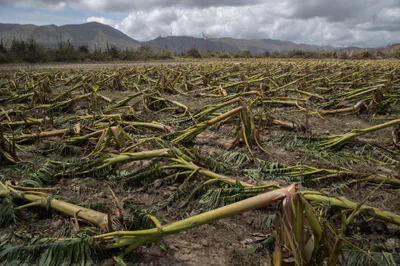
Destruction of Crops

  • destroyed crops result in loss of income and food shortage

  • plants are uprooted and die

Adverse Effects

media

72

Flashfloods and Landslides

  • flashfloods appear without warning; families need to evacuate before the storm

  • landslides destroy properties and delay recovery

Adverse Effects

media

73

Class Suspensions

  • Lost school days add burden to teachers and students.

Adverse Effects

media

74

Wind

media

75

Why is there wind?

  • Differences in air pressure

  • Differences in air temperature (UNEVEN HEATING

76

Multiple Choice

What direction does wind move?

1

From high pressure to low pressure

2

From low pressure to high pressure

3

Whatever direction is going to mess up my hair the most

77

Open Ended

Why is there wind?

78

Wind Direction

  • Air moves away from high pressure areas

  • Air moves toward low pressure areas

79

Multiple Select

Which are true?

1

Cold air has higher pressure

2

Cold air has lower pressure

3

Cold air is more dense

4

Cold air is less dense

80

Air Pressure 

  • Cold air has more pressure

  • Cold air is more dense and has more molecules. It will sink.

  • Warm air has less pressure

  • Warm air is less dense and has less molecules. It will rise.

  • High to Low is the only way to go!  (air moves from high pressure to low pressure)

81

Multiple Choice

Why do winds curve?

1

Uneven heating

2

The earth rotates

3

Weather

82

Coriolis Effect

  • Why do global winds curve?

  • The Earth rotates

  • Think about what you saw happen with the balloon.

83

Multiple Select

Which are true

1

Land warms faster

2

Land cools faster

3

Water warms faster

4

Water cools faster

84

Land always wins

  • Land warms up faster than water

  • Land cools off faster than water

  • Temperature differences make pressure differences and wind

media

85

Sea Breezes

  • Warm air rises from the land

  • As it goes over the water it cools and sinks

  • The colder air over the sea moves toward the land

media

86

Daytime: Sea Breeze

  • Land is warmer and has low pressure

  • Water is colder and has high pressure

  • Air moves from high pressure to low pressure

  • Wind moves from Sea to Land

media

87

Multiple Choice

In the daytime, the high pressure is over the...

1

land

2

sea

88

Land Breezes

  • Warm air rises from over the water

  • As it goes over the land it cools and sinks

  • The colder air over the land moves toward the sea

media

89

Nighttime: Land Breeze

  • The land cooled faster than the sea

  • The land is cooler and has higher pressure

  • The sea is warmer and has less pressure

  • Wind flows from high pressure of the land to the low pressure over the water

media

90

Multiple Choice

At night the high pressure is over the ...

1

sea

2

land

91

Easterlies

  • Air at the poles is cold

  • Cold air has high pressure

  • The air moves away from high pressure areas

  • The air moves from east to west

media

92

Multiple Choice

Easterlies are found

1

Near the poles

2

At the equator

3

Between 30-60 degrees

93

Westerlies

  • Move from west to east

  • Found between 30-60 degrees

  • Affects the US - carries moist air and produces rain and snow

media

94

Trade Winds

  • Air moves toward the Equator

  • Air moves from east to west

media

95

Multiple Choice

For trade winds, the air moves ...

1

towards the equator

2

away from the equator

96

Videos

  • https://youtu.be/vN3f7pGeLmQ

  •  https://youtu.be/-s7zOubwXmc

  • https://youtu.be/UV8A-fKB0RQ

97

Severe Weather

media

98

What causes severe weather?

Fronts, Warm Fronts, Cold Fronts

media

99

media

100

Multiple Choice

Question image

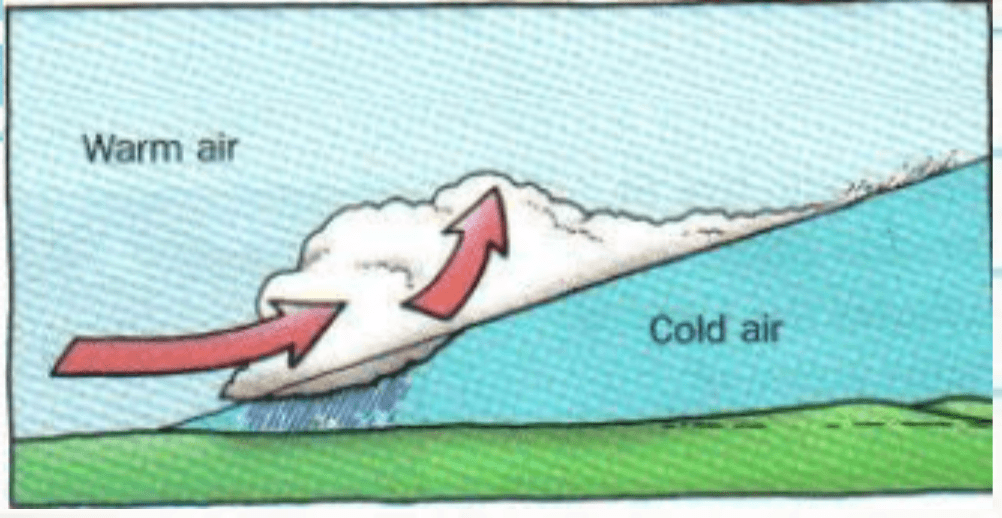
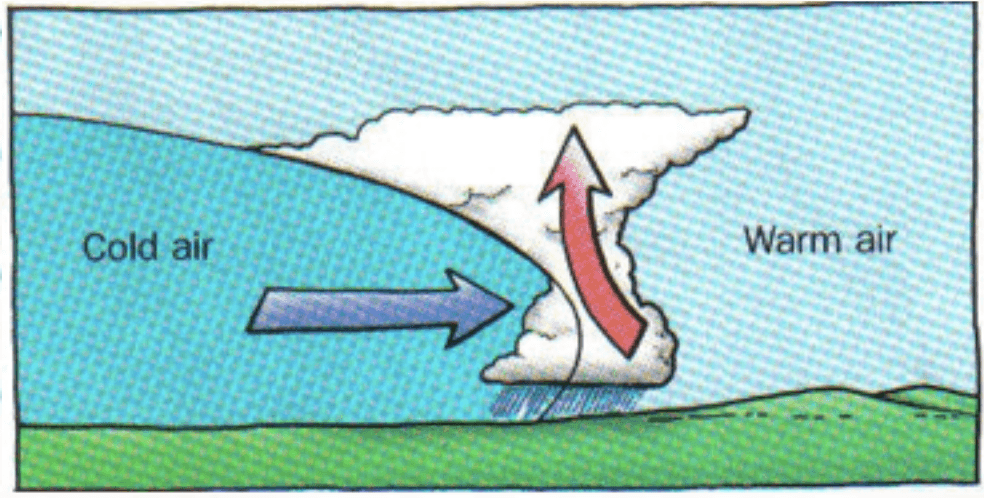
Cold dense air slides underneath warm air. The warm air is forced up, cools, and condenses.

1

Cold Front

2

Warm Front

3

Stationary Front

4

Occluded Front

101

Multiple Choice

Question image

Brings some clouds and gentle rains.

1

Cold Front

2

Warm Front

3

Stationary Front

4

Occluded Front

102

Multiple Choice

Question image

Name that front.

1

Cold Front

2

Warm Front

3

Stationary Front

4

Occluded Front

103

Multiple Choice

Question image

Name that front.

1

Cold Front

2

Warm Front

3

Stationary Front

4

Occluded Front

104

media

105

Multiple Choice

What should you do during a thunderstorm?

1

look for shelter

2

stand under a tree

3

carry metal objects

4

play in the water

106

Multiple Choice

True or False, Lightening is hotter than the surface of the sun.

1

False

2

True

107

Multiple Choice

How did thunderstorms get their name?

1

hard rain

2

from the lightning and thunder they produce

3

dark clouds

4

strong strong winds

108

Multiple Choice

What type of storm shoots fire from the clouds?

1

hurricane

2

lightening storm

3

blizzard

4

tornado

109

media

110

Multiple Choice

A rapidly whirling, funnel-shaped cloud that moves across the ground in a narrow path

1

Tornado

2

Hurricane

3

Thunderhead

4

Cyclone

111

Multiple Choice

a rounded, projecting head of a cumulus cloud, in which thunderstorms form

1

Hurricane

2

Tornado

3

Thunderhead

4

Cumulonimbus cloud

112

media

113

Multiple Choice

Where do hurricanes happen?

1

The South Pacific

2

The Indian Ocean

3

The Antarctic

4

The Atlantic Ocean

114

Multiple Choice

Why does a hurricane slow down when it hits land?

1

The wind stops it

2

It stops raining

3

It loses its energy source

4

The air is different

115

Multiple Choice

What is the calmest part of a hurricane?

1

Eye

2

Eye Wall

3

Storm surge

4

Edge

116

Multiple Choice

What is the most powerful part of a hurricane?

1

Eye

2

Eye Wall

3

Storm surge

4

Edge

117

Multiple Choice

Question image

Strong, often violent winds that change direction with the season. The winter is dry and the summer is wet.

1

Hurricanes

2

Typhoons

3

Tsunamis

4

Monsoons

118

Multiple Choice

Question image

All of the following are physical processes EXCEPT

1

Monsoons

2

Earthquakes

3

tsunamis

4

pollution

119

Multiple Choice

What is monsoon?

1

It is a seasonal wind which lasts for several months.

2

It is a simple wind which lasts for several months.

Hurricanes

media

Show answer

Auto Play

Slide 1 / 119

SLIDE