

ecology

Presentation
•
Science
•
9th - 12th Grade
•
Practice Problem
•
Medium
+9
Standards-aligned

Candace Litz
Used 3+ times
FREE Resource
29 Slides • 1 Question
1


Ecology
Unit 8
2
Multiple Choice
what is ecology?
study of the Earth
study of living things
study of living and nonliving
how organisms interact with living and nonliving
3


What is Ecology?
01
4


Ecology
Scientific discipline in which the
relationship between the living
and nonliving factors of the
environment.
5


Explain the Difference between
Biotic and Abiotic Factors.
01
6


Biotic Factors
Abiotic Factors
Living or once living factors
within the ecosystem.
Example:
Trees, birds, humans
Nonliving factors within the
ecosystem. Examples:
Rocks, climate, pH, sunlight
7


Biotic Factors Abiotic Factors
8


Directions: in this picture, place a circle around things that are living and an “X”
over the things that are non-living. You may resize the shapes as needed.
9


What are the levels of
Organization that Ecologist
might Study?
01
10


Organisms
An individual animal, plant
or single celled life form
Population
Individual organisms of the
same species that share
the same geographic
location
Ecosystem
All the biological
communities and all of the
abiotic factors
Biome
A large group of
ecosystems that share the
same climate and have
similar communities
Levels of Organization for Ecology
Community
A group of interacting
populations that occupy
same geographic area
Biosphere
Consist of the atmosphere,
hydrosphere and
geosphere
11


What is the difference between a
Habitat and Niche?
01
12

Habitat vs Niche
Where the organism lives
Ex. a bird in a tree or a bear in the cave
The role or position that the organism has
in its environment.
Ex. how the organism interacts with other
organisms or other non living factors.
Habitat
Niche
13


Name the major Biogeochemical
Cycles?
Make a Mnemonic device to
remember the cycles
01
14

Cycling of Matter
Matter- anything that takes up space and has mass
Nutrients- chemical substances that an organism must obtain from its
environment to sustain life and life processes.
Major elements needed to survive:
Carbon, Hydrogen, Oxygen, Sulfur, Nitrogen, Phosphorus
Some of these elements form compounds that are also vital for
organism like:
Water, Carbon Dioxide, Phosphates
15


Water Cycle
In your notebook draw the Water Cycle and
define the following term as you watch the
video on the Water Cycle:
Evaporation
Precipitation
Transpiration
Run off
Percolation
Ground water
16


17


18


Carbon Cycle
In your notebook draw the Carbon Cycle and
Explain the following:
1.How is CO2 exchanged between plant
and animals?
2.
How is CO2 absorbed into the
hydrosphere?
3.
How do fossil fuels play a role in in the
Carbon Cycle?
4.
What is the negative effect of to much
Carbon Dioxide in the atmosphere?
19


20


21

Nitrogen Cycle
In your notebook draw the Nitrogen Cycle and
Explain the following:
How much of atmosphere is Nitrogen?
What does our bodies use Nitrogen for?
Which organism play a role in the process of
turning nitrogen in the atmosphere into useful
nitrogen?
Define the following:
Nitrogen fixation
Assimilation
Denitrification
22


23


24

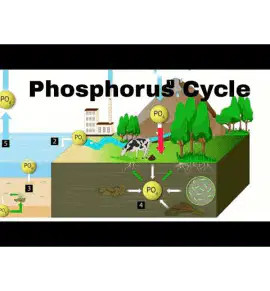
Phosphorus Cycle
In your notebook draw the Phosphorus Cycle and
Explain the following:
What is the purpose of of Phosphorus in
organisms?
What form does Phosphorus take?
Name some places where phosphorus is found.
What is a negative effect of too much
phosphorus?
25


26


27

Symbiotic
Relationships
Symbiosis- relationship or interaction
between two different organism.
What are they types of symbiotic
relationships and give an example of
each?
28


Symbiotic Relationships
Predation- act of one organism
consuming another organism for
food
a. predator- one who peruses.
b. prey- one being pursued
Predation
Mutualism
mutualism- the relationship between
2 or more organisms that live
together and benefit from one
another.
Commensalism
commensalism- relationship in which
one organism is neither helped nor
harmed
Parasitism
parasitism- relationship in which one
organism benefits at the expense of
another organism
01
02
29


M
M
M
M
M
M
M
M
M
M
C
C
C
C
C
C
C
C
C
C
C
P
P
P
P
P
P
P
P
P
P
P
30

ICON PACK: RAINFOREST
Ecology
Unit 8
Show answer
Auto Play
Slide 1 / 30
SLIDE
Similar Resources on Wayground

22 questions
Fossils
Presentation
•
9th - 11th Grade
24 questions
Food Label questions
Presentation
•
9th - 12th Grade
23 questions
3.3 Fluids
Presentation
•
9th - 12th Grade
23 questions
Forensics: Observation pt 2
Presentation
•
9th - 12th Grade
25 questions
Physical and Chemical Changes Review
Presentation
•
8th Grade
26 questions
Introduction to Matter
Presentation
•
9th - 12th Grade
23 questions
Water Resources
Presentation
•
10th - 12th Grade
24 questions
Earth's Resources
Presentation
•
9th - 11th Grade
Popular Resources on Wayground
10 questions
How much do you know about our Portrait of an Eagle?

Quiz
•
10th Grade
10 questions
Fast Food Slogans
Quiz
•
6th - 8th Grade
21 questions
Continents and Oceans
Quiz
•
6th Grade
20 questions
Parts of Speech
Quiz
•
5th Grade
16 questions
Subject & Predicate
Quiz
•
5th Grade
25 questions
Multiplication Facts
Quiz
•
5th Grade
12 questions
Map Skills
Quiz
•
3rd Grade
22 questions
Continents and Oceans
Quiz
•
5th Grade
Discover more resources for Science
10 questions
Exploring Chemical and Physical Changes

Interactive video
•
6th - 10th Grade
20 questions
Atomic Structure
Quiz
•
9th Grade
10 questions
Decoding the Periodic Table of Elements
Interactive video
•
6th - 10th Grade
10 questions
Exploring the Periodic Table
Interactive video
•
6th - 10th Grade
14 questions
Physical and Chemical Changes
Quiz
•
10th Grade
22 questions
Periodic Table Review
Quiz
•
9th - 12th Grade
20 questions
Observation vs. Inference
Quiz
•
7th - 9th Grade
14 questions
Periodic Trends
Interactive video
•
11th Grade