
Q1W3 EALS Types of Rocks & Weathering

Presentation
•
Science
•
11th Grade
•
Practice Problem
•
Easy
+16
Standards-aligned

MERLIE WASAWAS
Used 7+ times
FREE Resource
50 Slides • 22 Questions
1
2
3
4
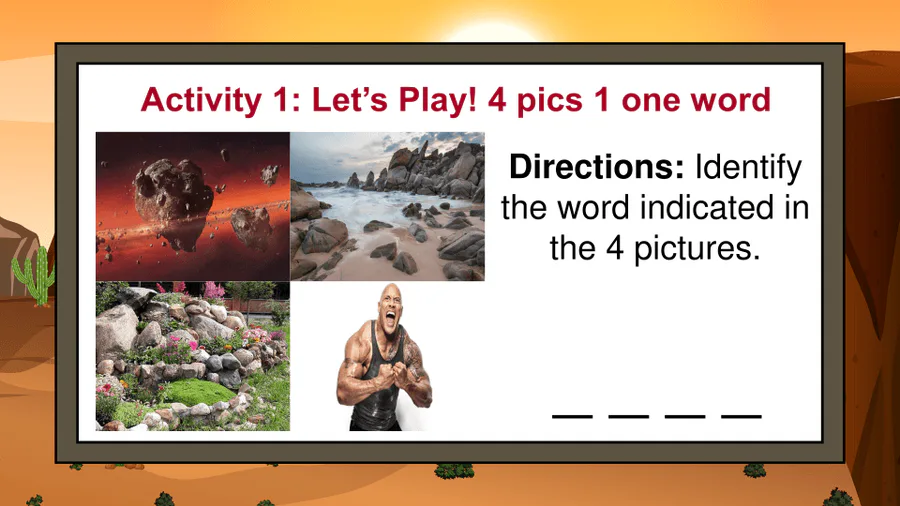
5
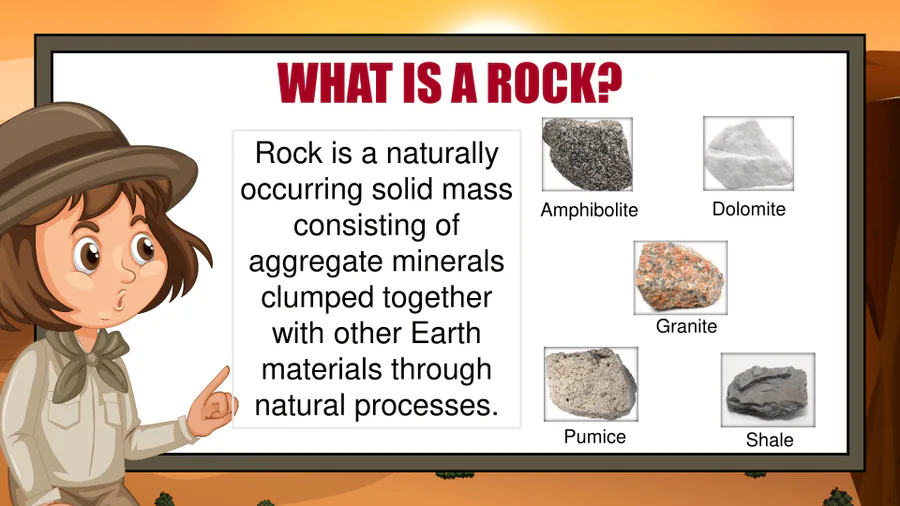
6
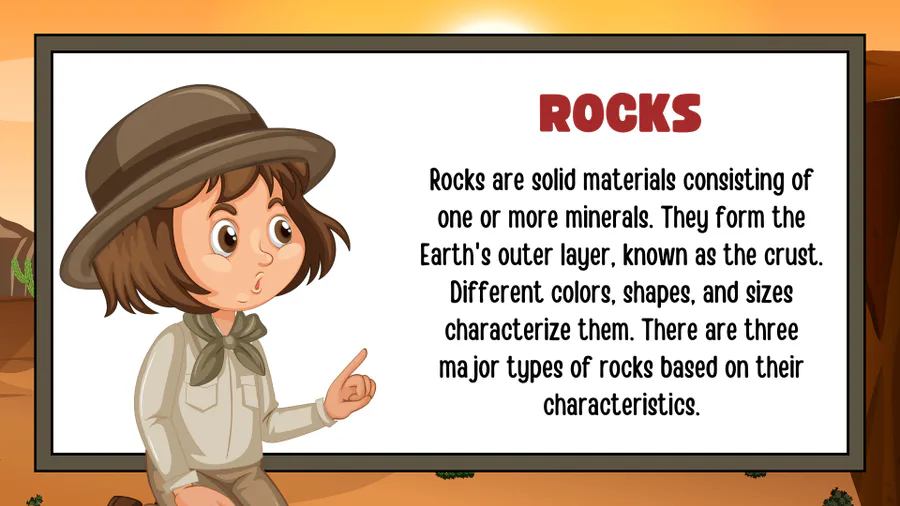
7
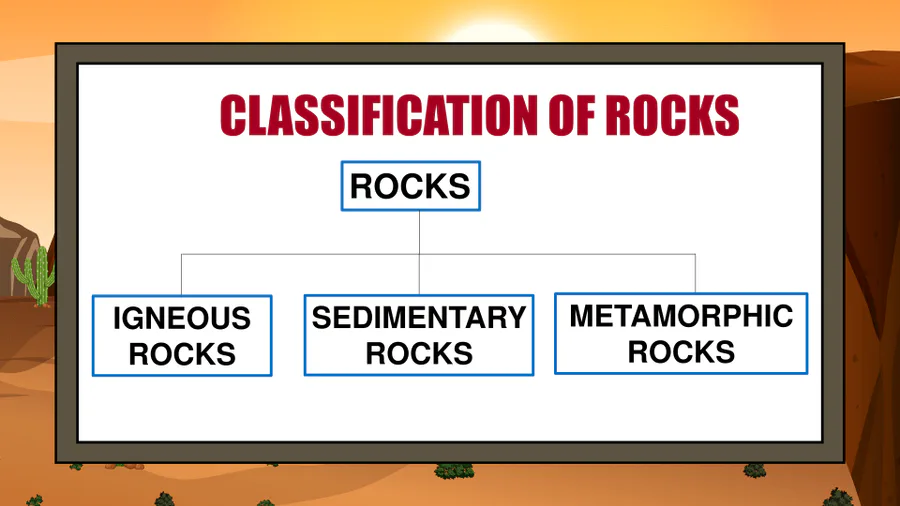
8
Multiple Choice
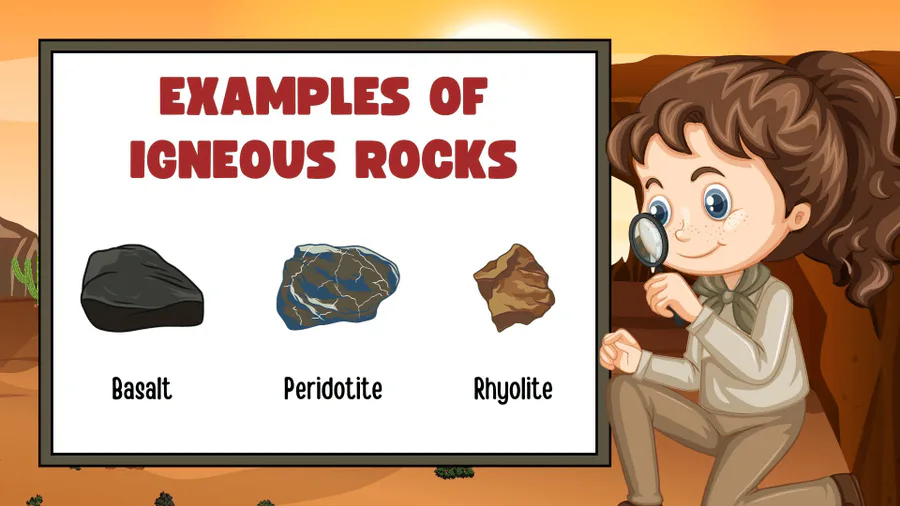
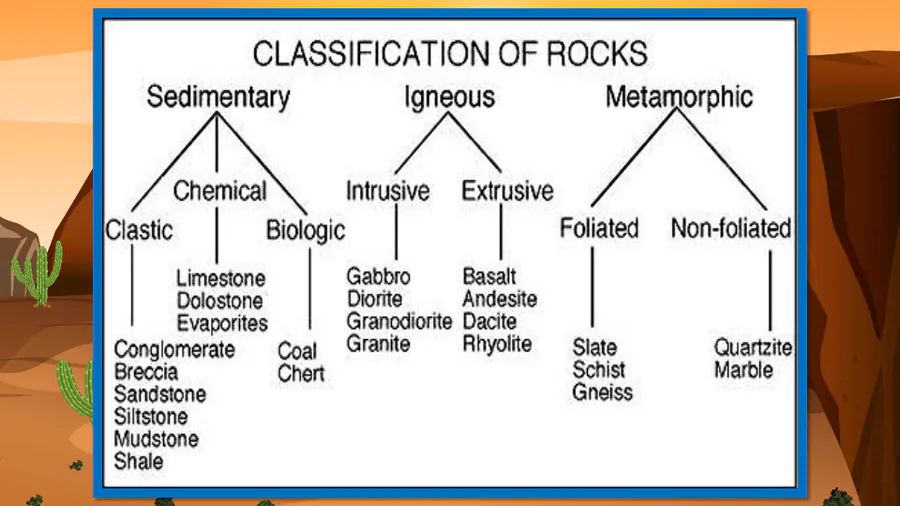
The following are classification of rocks except…
Crystals
Igneous
Metamorphic
Sedimentary
9
10
11
12
Multiple Choice
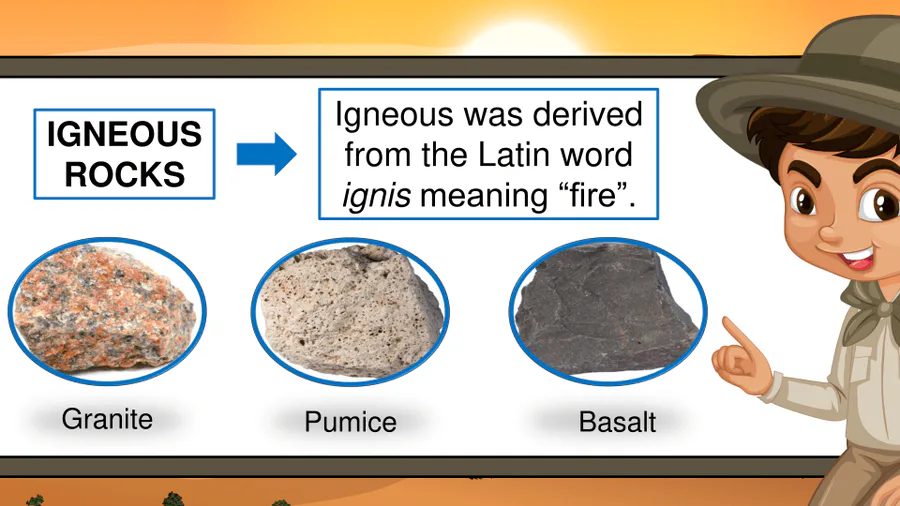
Igneous comes from the word
fire
change
form
remaining particles
13
Multiple Choice
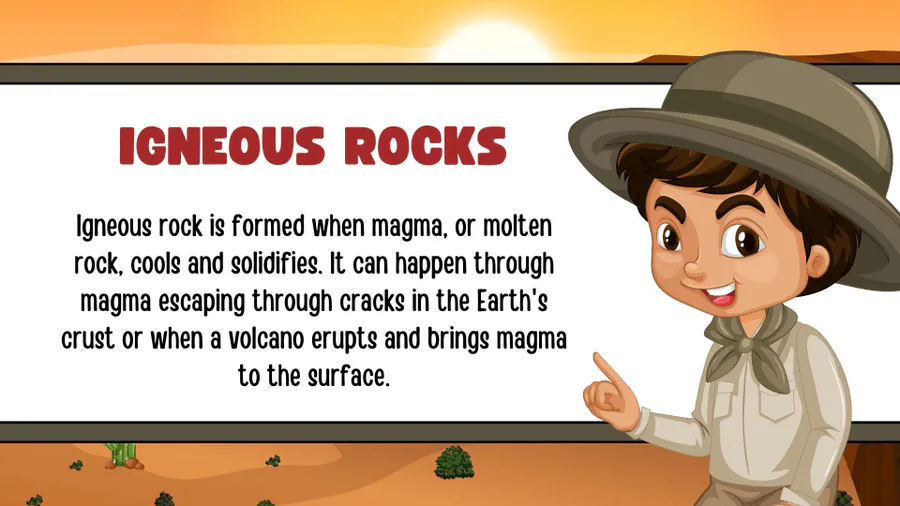
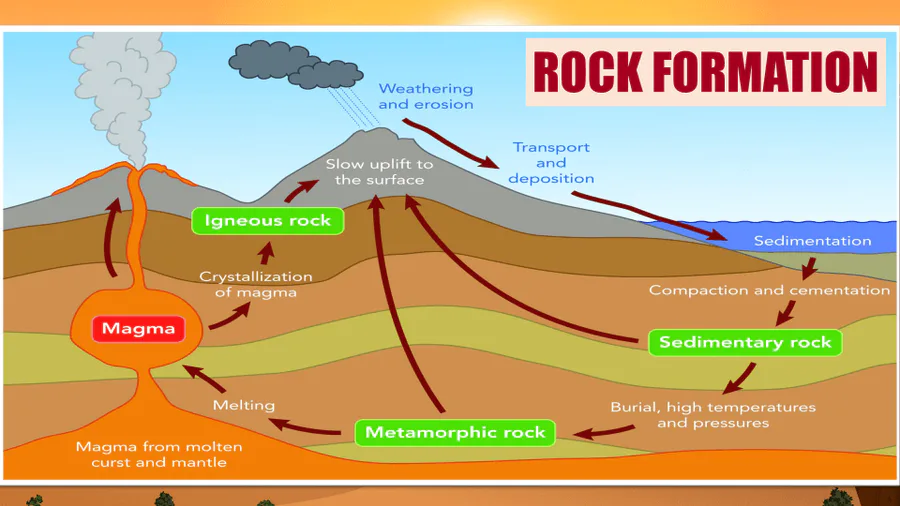
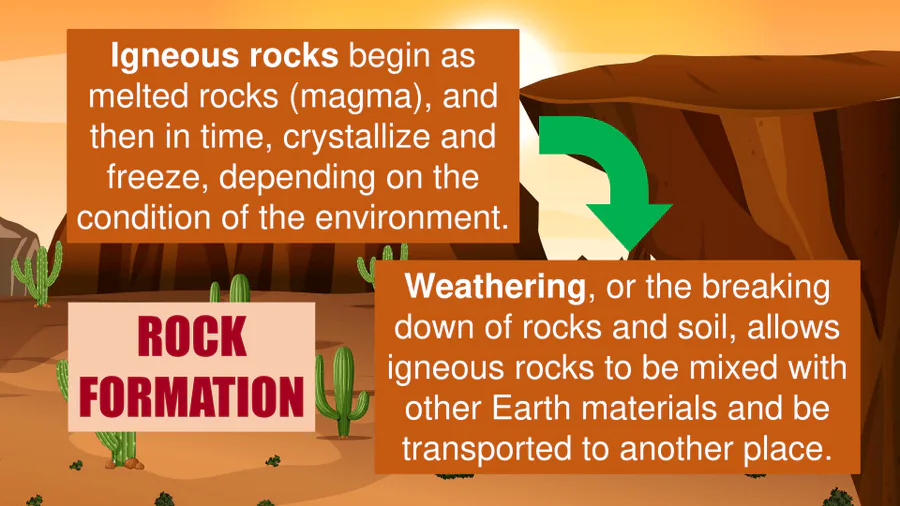
Igneous rocks are formed through
Subduction
Cementation and compaction
Solidification of magma and lava
Melting rock at high pressure and temperature
14
15
16
17
18
Multiple Choice
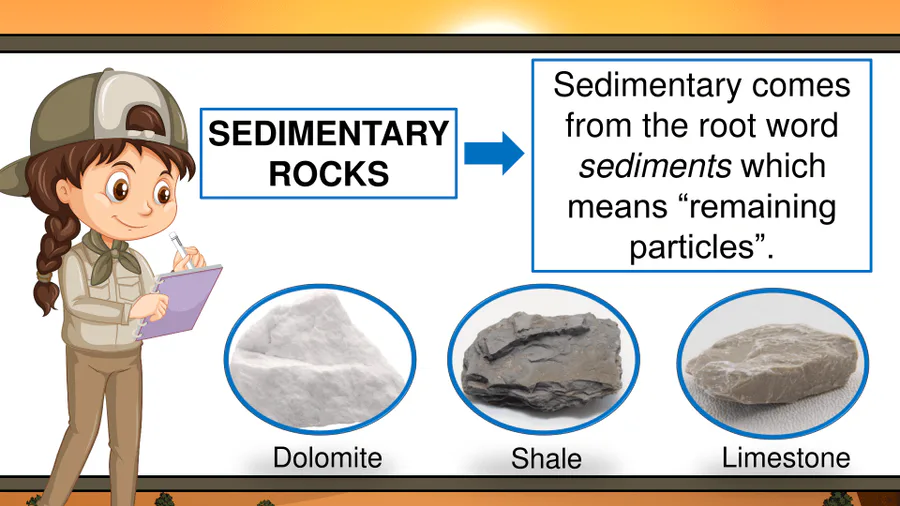
Sedimentary comes from the word sediments whi
fire
change
form
remaining particles
19
20
21
Multiple Choice
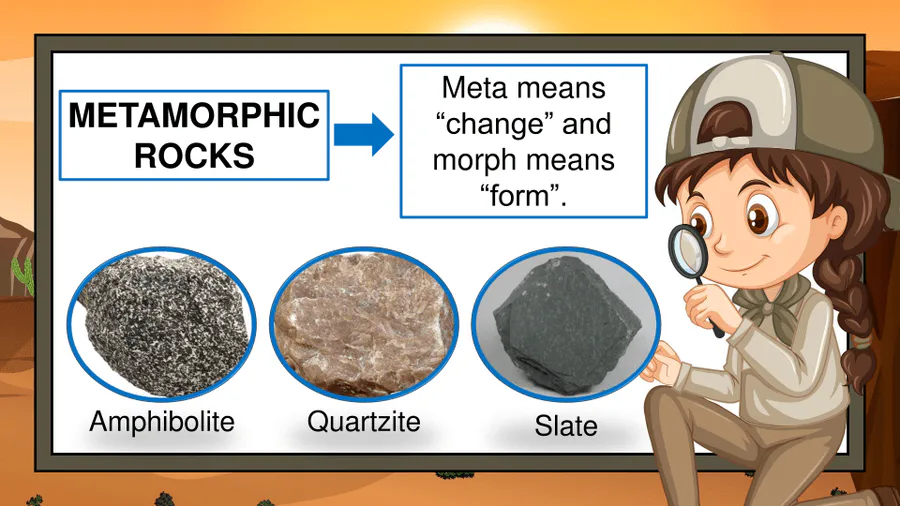
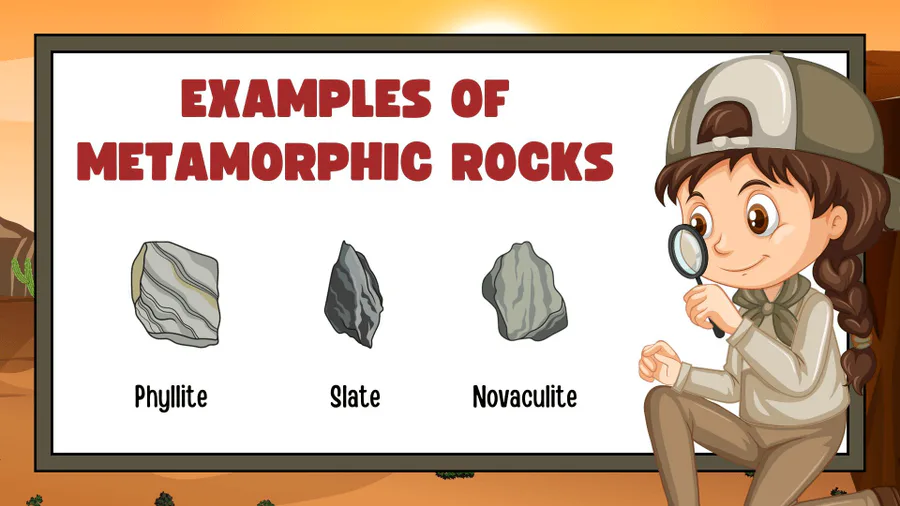
Meta means...
fire
change
form
remaining particles
22
Multiple Choice
Morph means...
fire
change
form
remaining particles
23
Multiple Select
Metamorphic means...
fire
change
form
remaining particles
24
25
26
27
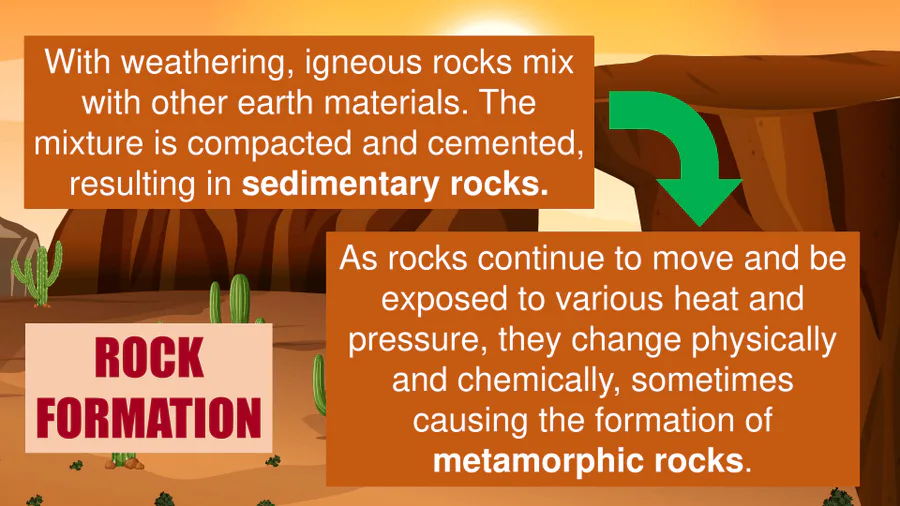
28
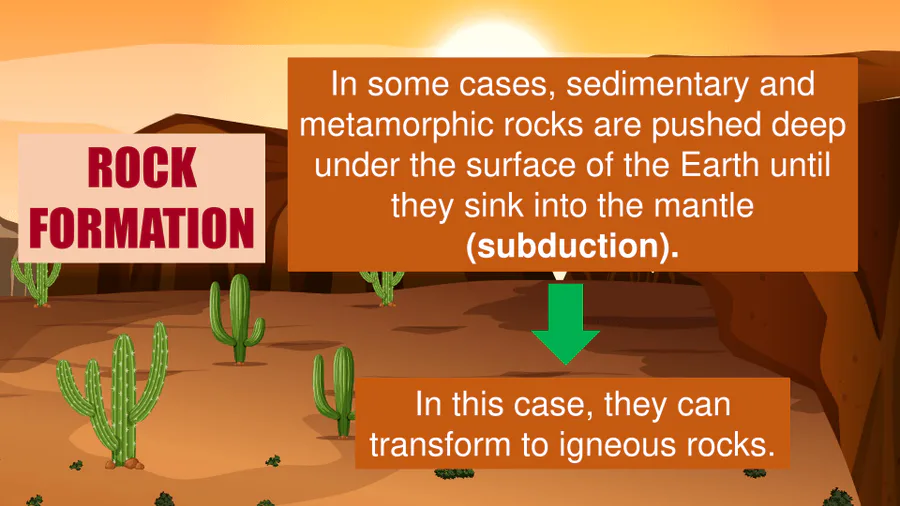
29
Multiple Choice
You found a rock by the beach. It is light colored and floats in water. Evaluate what type of rock it is.
Igneous rock
Sedimentary rock
Metamorphic rock
Not enough details to classify
30
31
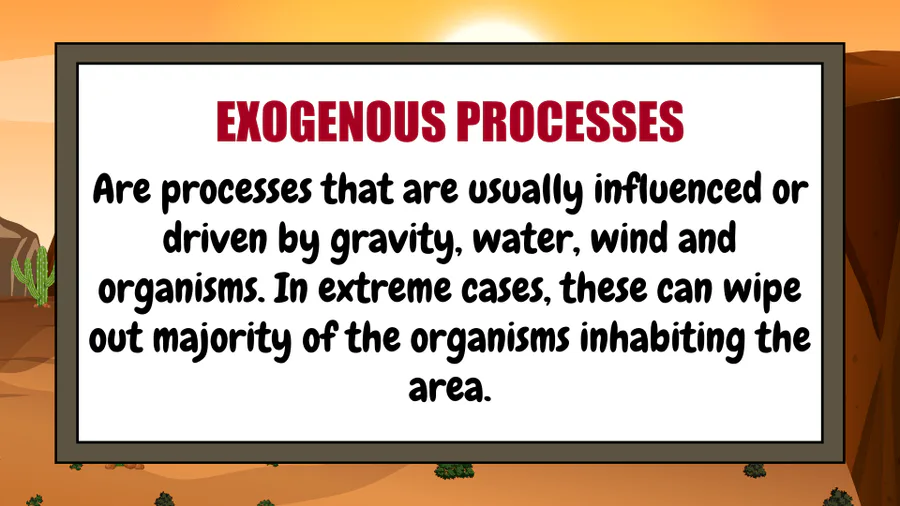
32
Multiple Choice
Which of the following scenario is caused by exogenous process?
A.
B.
C.
D.
Earthquakes
Ice melting
Rocks melting
Volcanic eruption
33
34
35
36
Multiple Choice
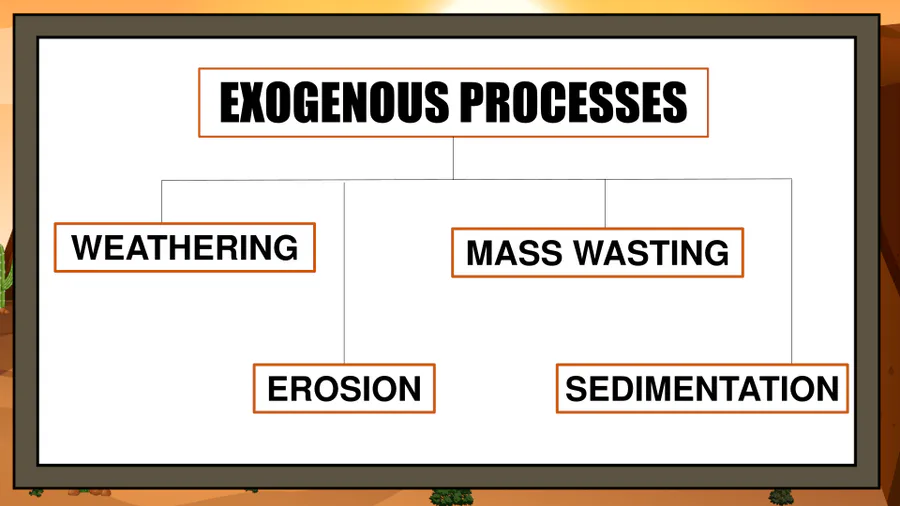
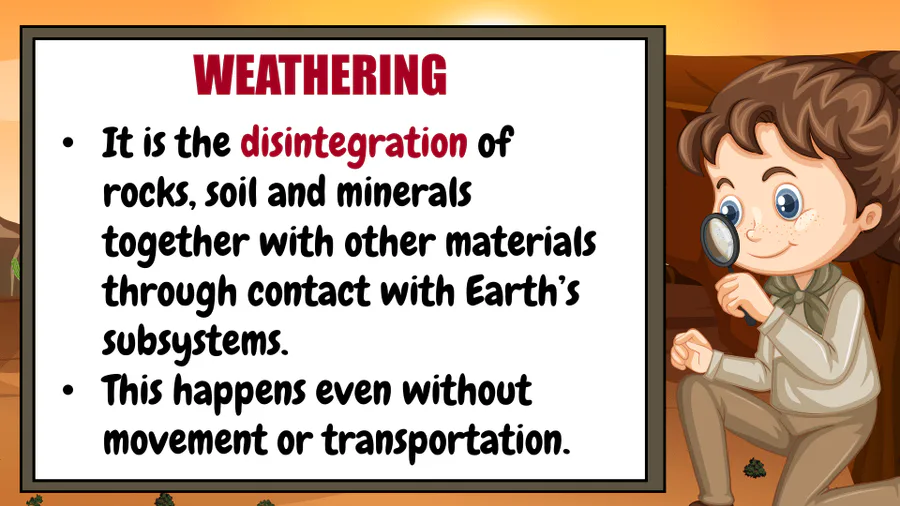
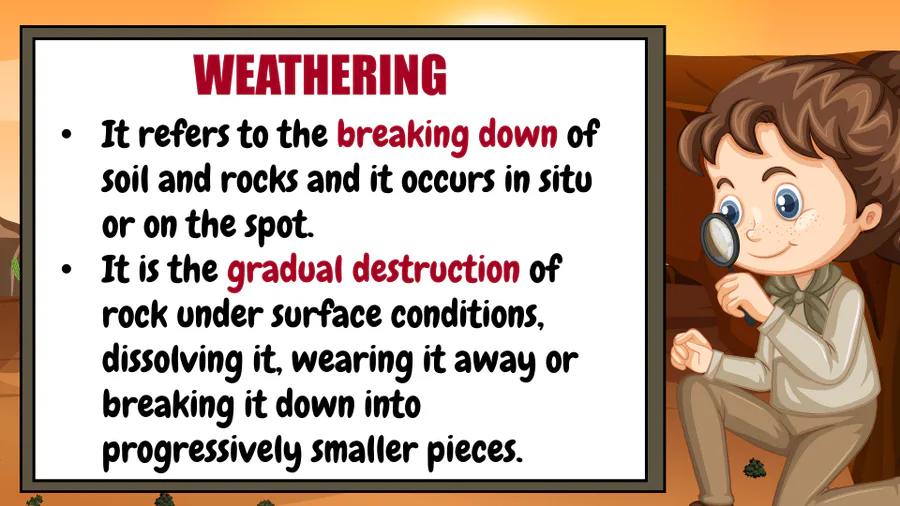
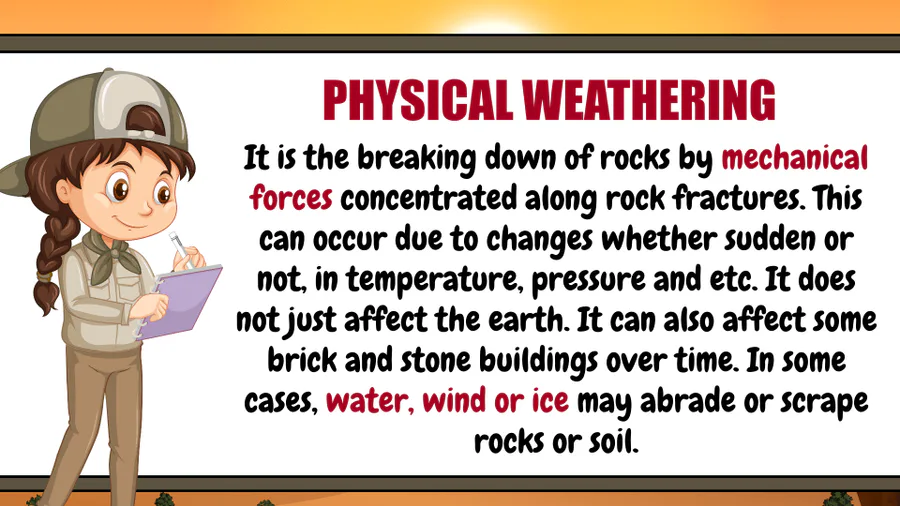
What is weathering?
The breaking down of rocks and soil into smaller particles
The movement of rocks and soil due to water, wind, and ice.
The movement of large masses of land due to gravity
The accumulation of sediments on riverbeds and ocean floor.
37
38
39
40
41
Multiple Choice
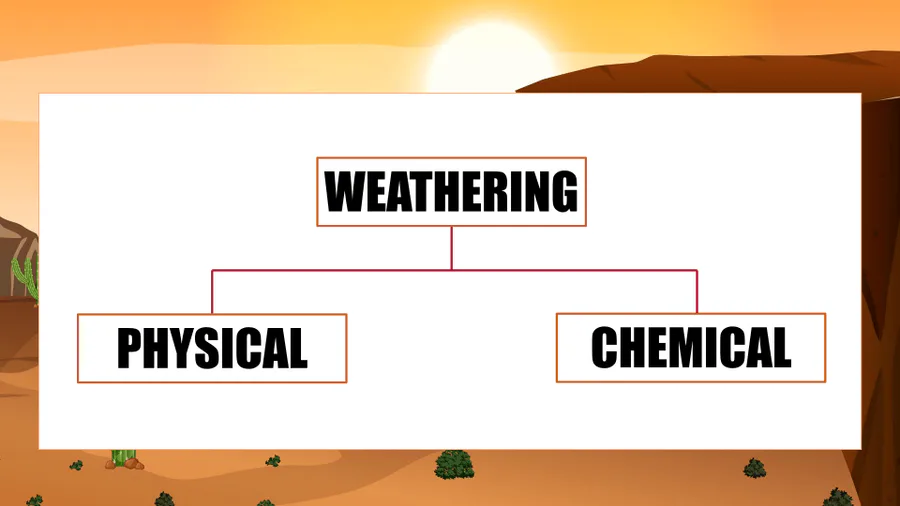
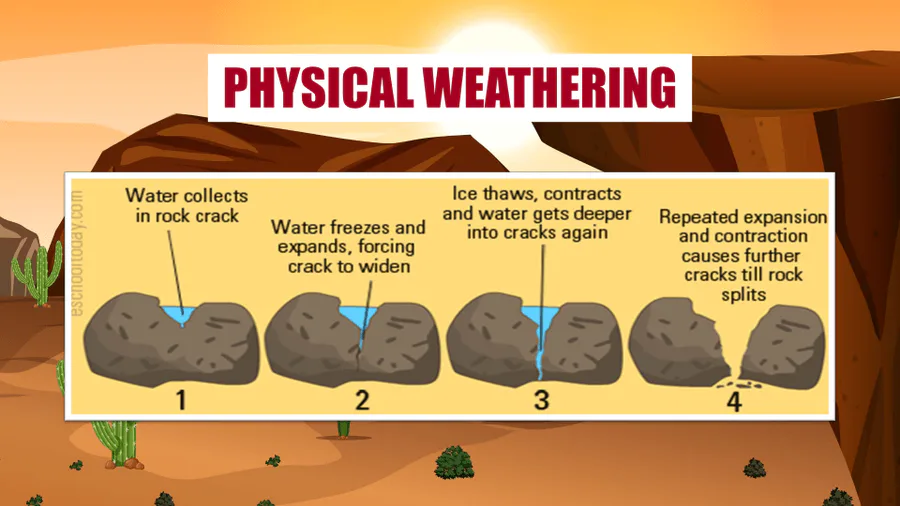
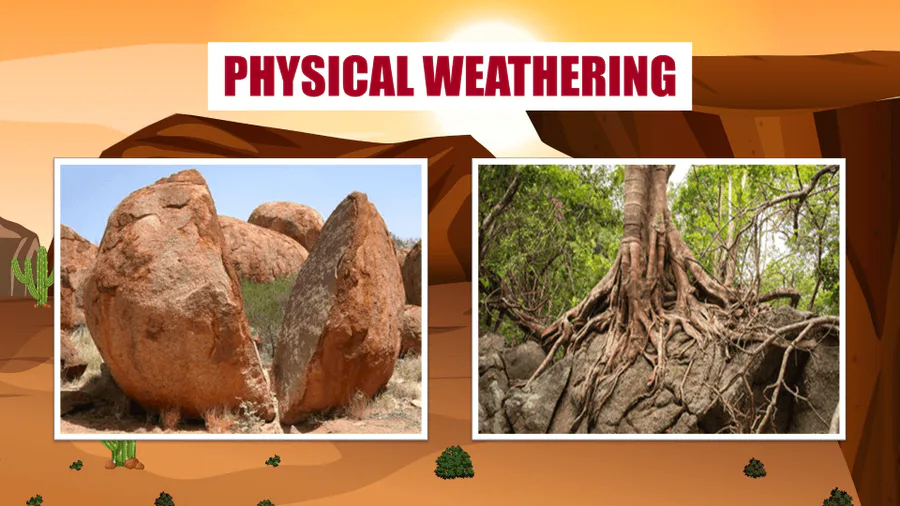
Which of the following situation is an example of physical weathering?
A metal rusting
A volcano exploding
Rock debris falling down a mountain
Tree roots breaking down a large rock
42
43
44
45
Multiple Choice
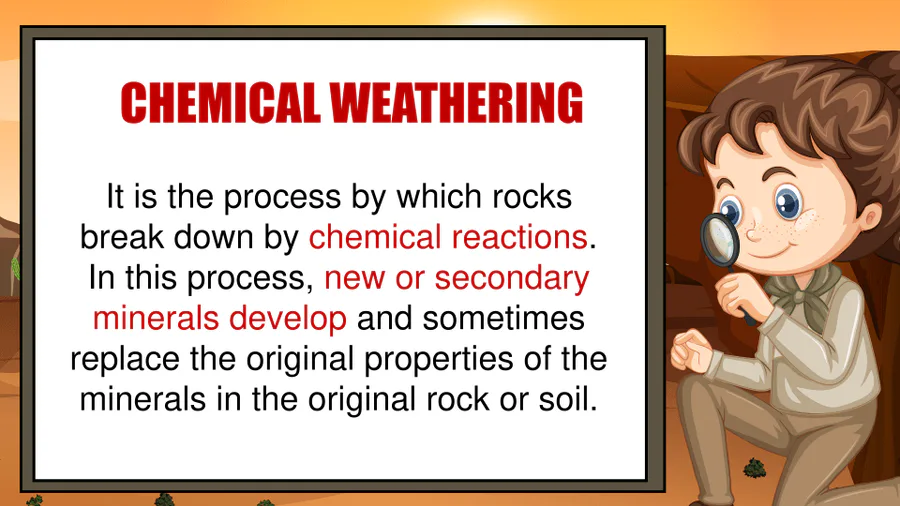
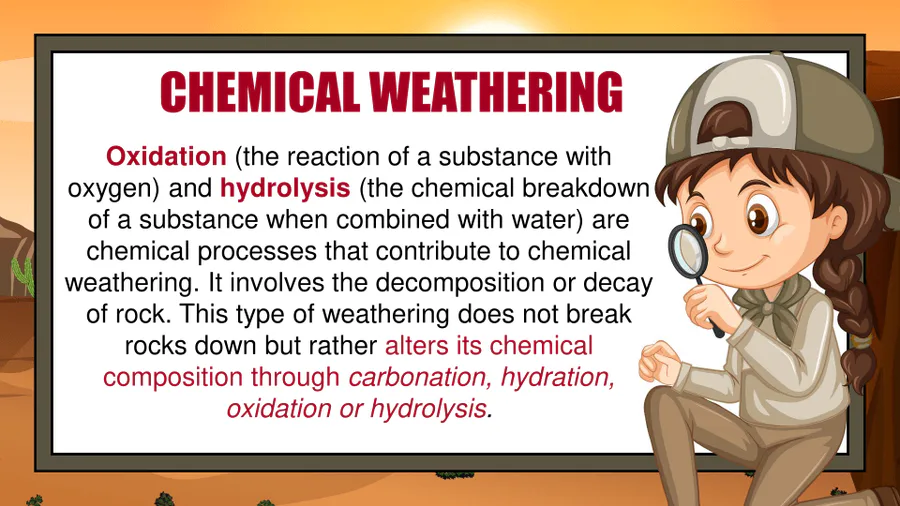
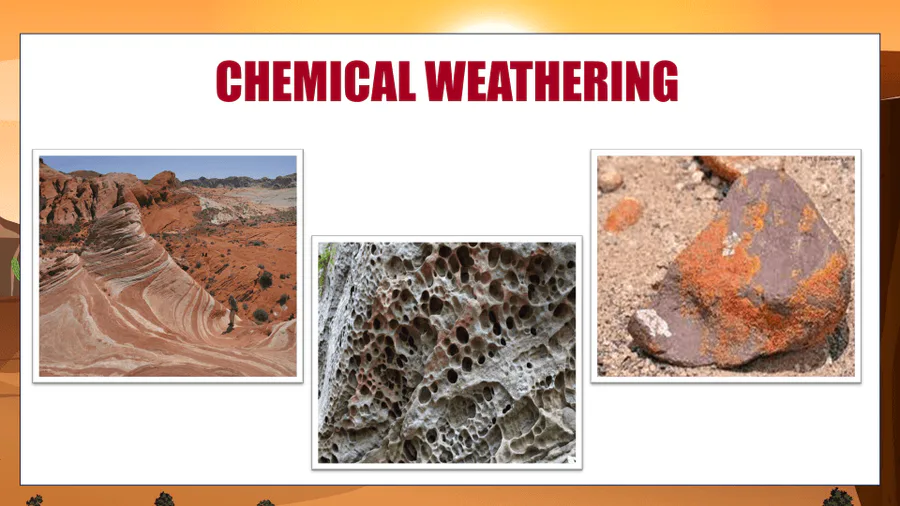
Oxidation and hydrolysis of rocks are examples of which exogenous process?
Chemical Weathering
Erosion
Sedimentation
Mass wasting
46
47
48
Multiple Choice
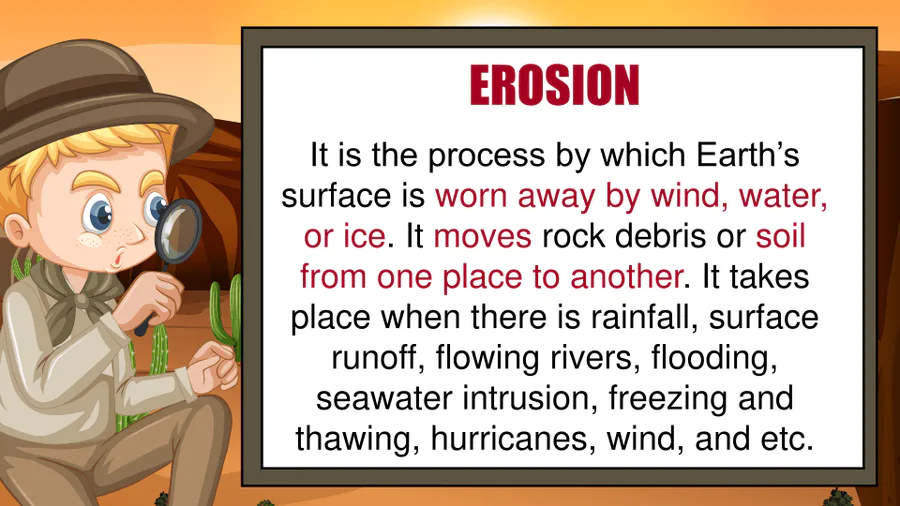
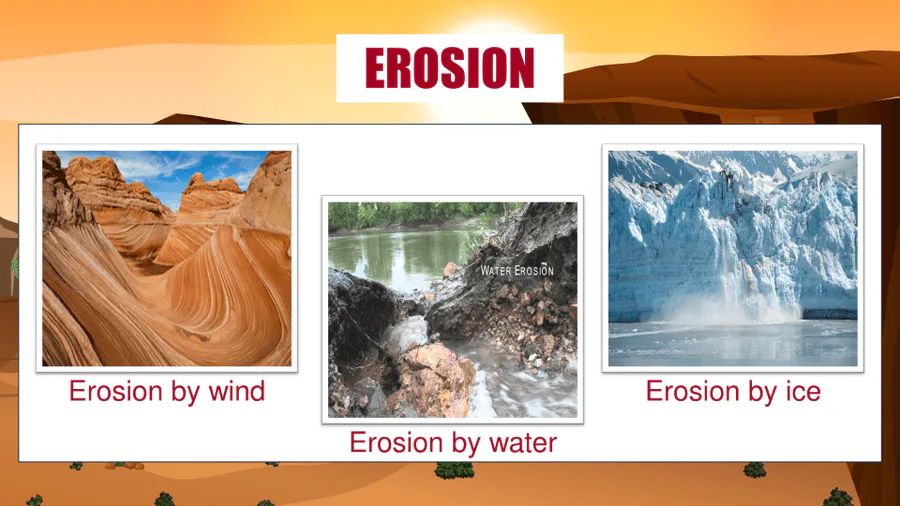
What is erosion?
The breaking down of rocks and soil into smaller particles
The movement of rocks and soil due to water, wind, and ice.
The movement of large masses of land due to gravity
The accumulation of sediments on riverbeds and ocean floor.
49
50
Multiple Choice
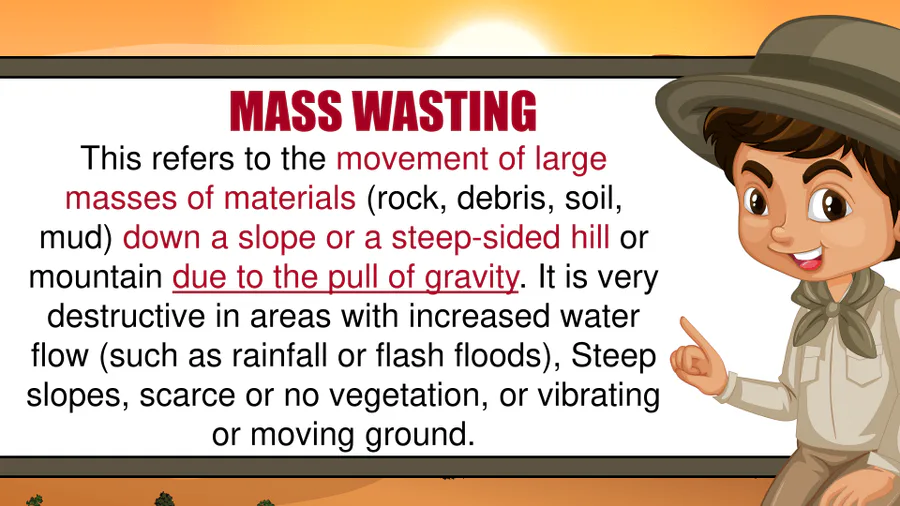
What is mass wasting?
The breaking down of rocks and soil into smaller particles
The movement of rocks and soil due to water, wind, and ice.
The movement of large masses of land due to gravity
The accumulation of sediments on riverbeds and ocean floor.
51
Multiple Choice
Mass wasting is the movement of large masses of materials down a <blank> due to <blank>.
river, rain
slope, gravity
slope, rain
valley, wind
52
53
54
55
56
Multiple Choice
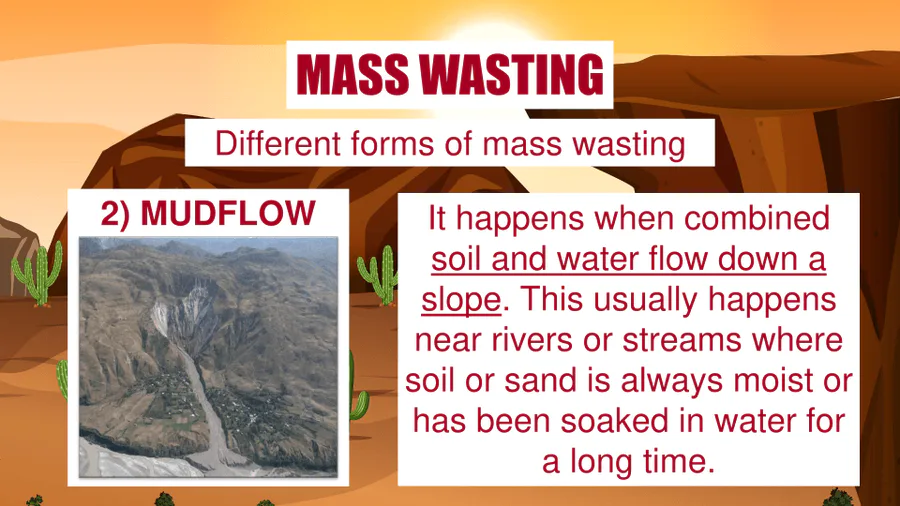
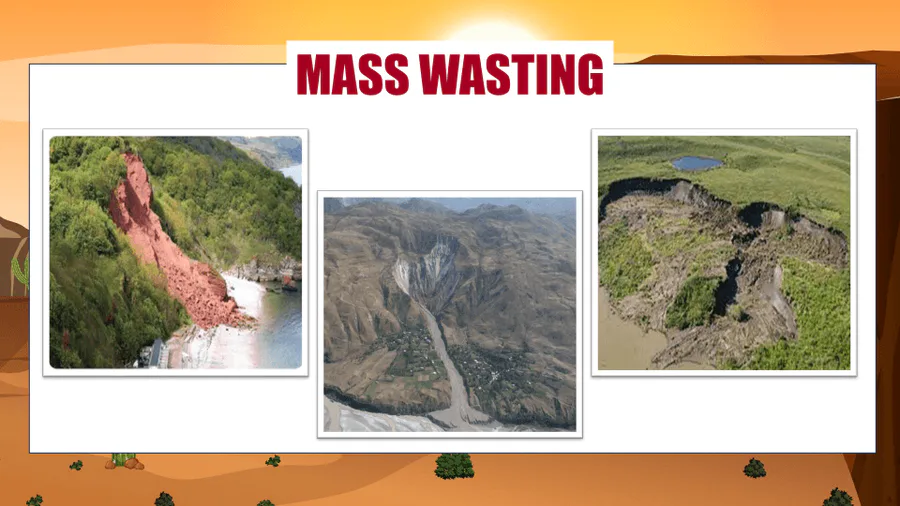
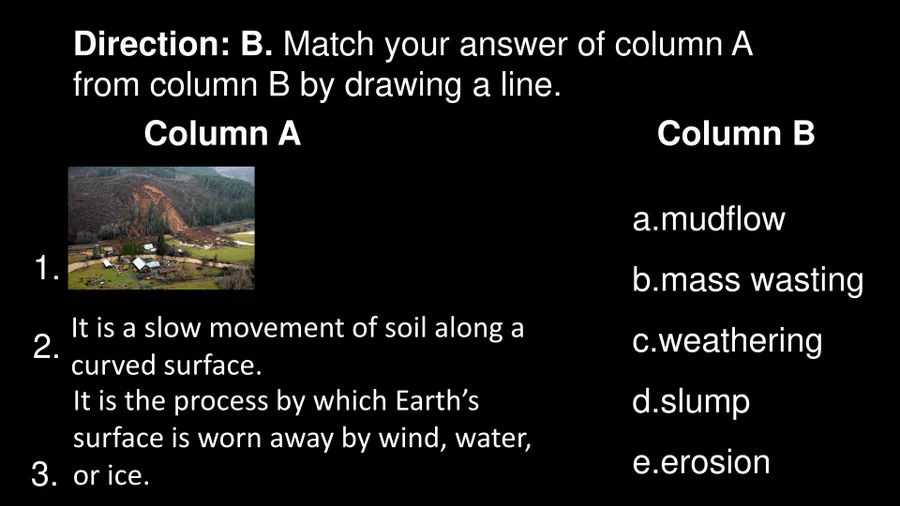
A type of mass wasting that happens when combined soil and water flow down a slope.
slump
mudflow
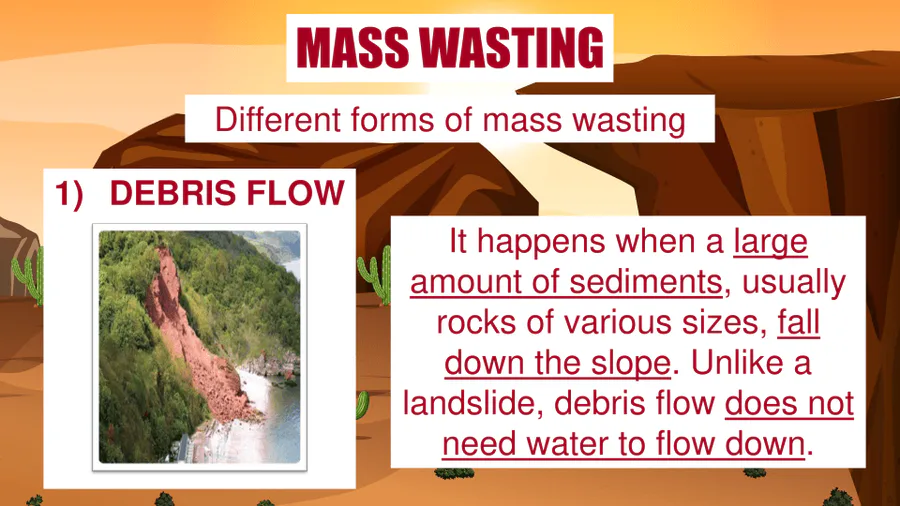
debris flow
landslide
57
Multiple Choice
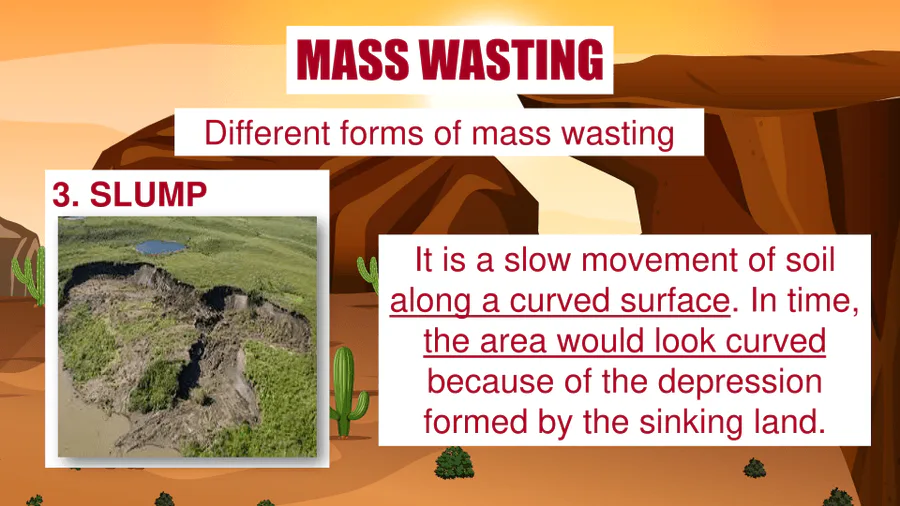
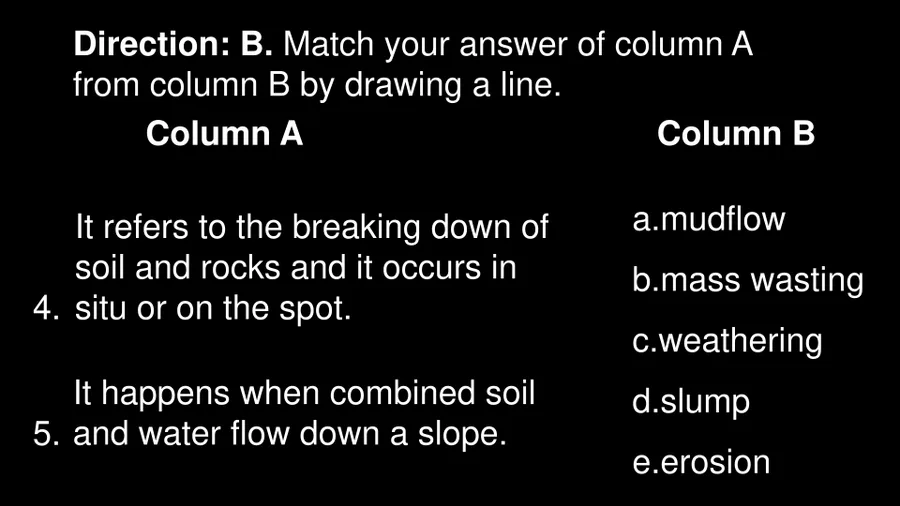
A type of mass wasting that involves slow movement of soil along a curved surface.
slump
mudflow
debris flow
landslide
58
59
Multiple Choice
What is sedimentation?
The breaking down of rocks and soil into smaller particles
The movement of rocks and soil due to water, wind, and ice.
The movement of large masses of land due to gravity
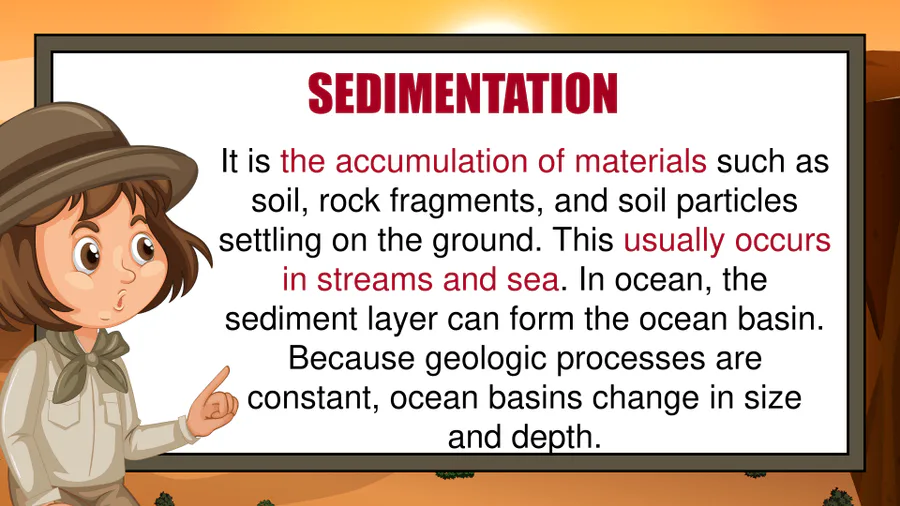
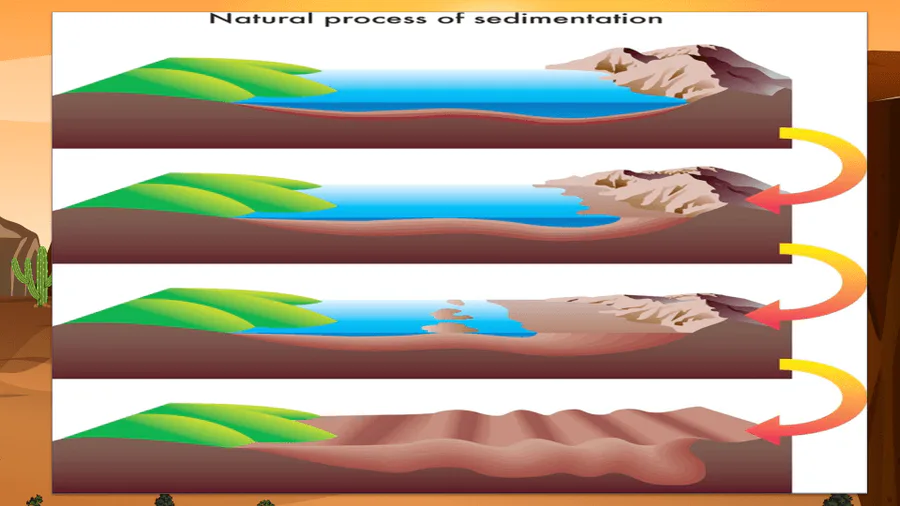
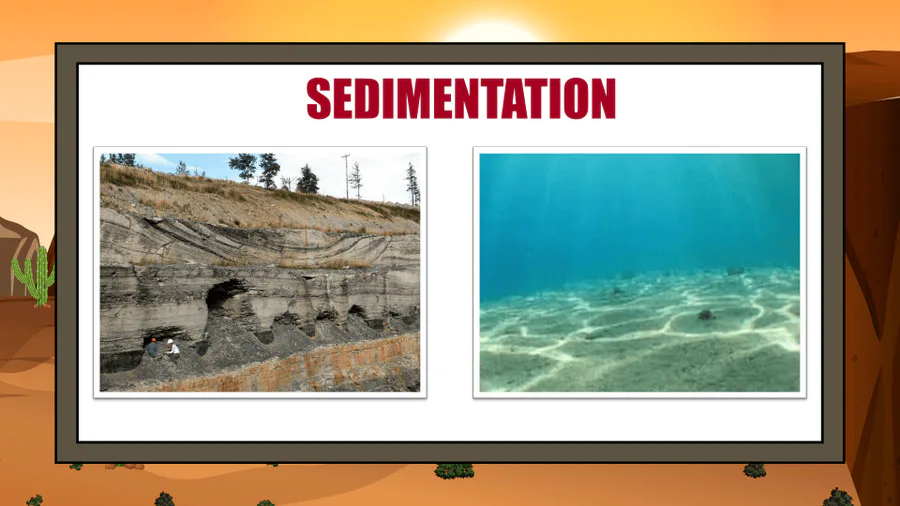
The accumulation of sediments on riverbeds and ocean floor.
60
61
Multiple Choice
Sedimentation and erosion can be prevented by
Deforestation
Human activity
Surface mining
Tree planting
62
63
Multiple Choice
What is described as the process of breaking down rocks into smaller pieces?
Erosion
Mass wasting
Sedimentation
Weathering
64
Match
Match the meaning of the following exogenous processes.
The movement of soil and rock due to wind, water, and ice.
The disintegration of rocks into smaller particles.
The accumulation of sediments in riverbeds and ocean floor.
The movement of large masses of material due to gravity.
Erosion
Weathering
Sedimentation
Mass wasting
Erosion
Weathering
Sedimentation
Mass wasting
65
Match
Match the following types of mass wasting
large amount of sediments fall down a slope
soil and water flow down a slope
movement of soil along a curved surface
Debris Flow
Mudflow
Slump
Debris Flow
Mudflow
Slump
66
67
68
69
70
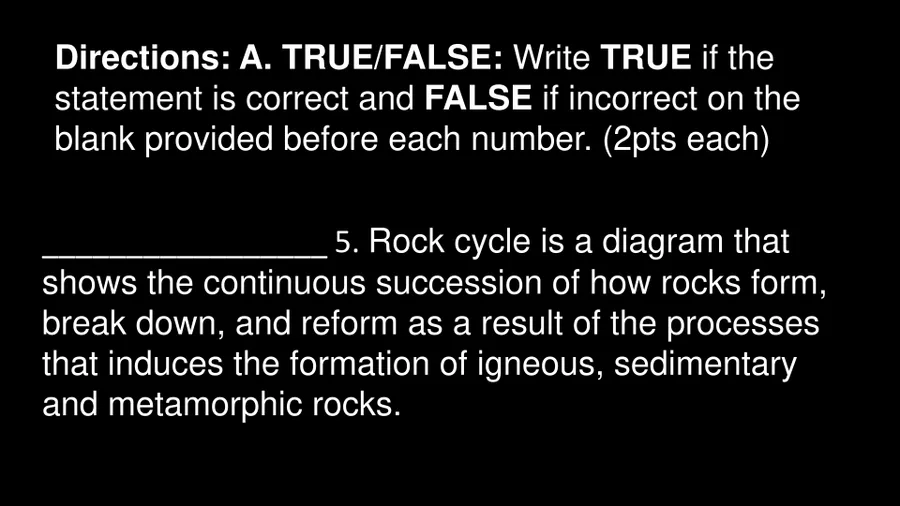
71
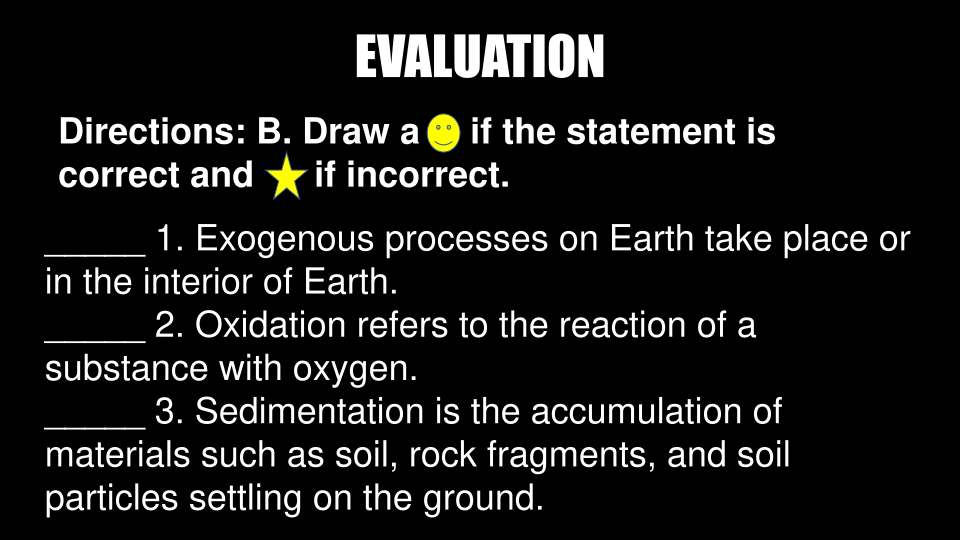
72
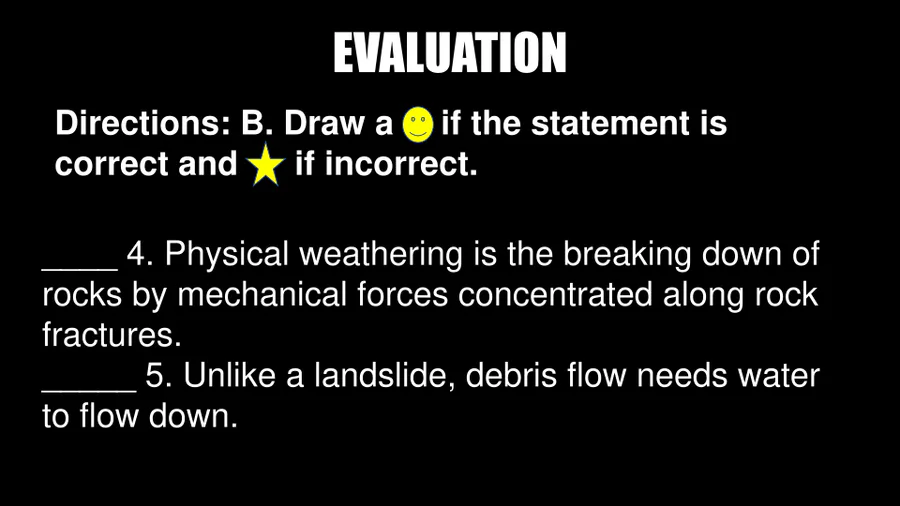
Show answer
Auto Play
Slide 1 / 72
SLIDE
Similar Resources on Wayground

69 questions
Muscle Terminology
Presentation
•
11th - 12th Grade
66 questions
Blood
Presentation
•
12th Grade
67 questions
E1-E6 Energy Systems
Presentation
•
11th Grade
69 questions
Anatomy & Physiology: Muscular System Review
Presentation
•
11th - 12th Grade
70 questions
SSUSH8: Sectionalism & Westward Expansion
Presentation
•
11th Grade
67 questions
Magnetism Review
Presentation
•
11th - 12th Grade
64 questions
Chemistry Semester Review
Presentation
•
11th Grade
69 questions
Physiology
Presentation
•
11th - 12th Grade
Popular Resources on Wayground
10 questions
How much do you know about our Portrait of an Eagle?

Quiz
•
10th Grade
10 questions
Fast Food Slogans
Quiz
•
6th - 8th Grade
21 questions
Continents and Oceans
Quiz
•
6th Grade
20 questions
Parts of Speech
Quiz
•
5th Grade
16 questions
Subject & Predicate
Quiz
•
5th Grade
25 questions
Multiplication Facts
Quiz
•
5th Grade
12 questions
Map Skills
Quiz
•
3rd Grade
22 questions
Continents and Oceans
Quiz
•
5th Grade
Discover more resources for Science
22 questions
Periodic Table Review
Quiz
•
9th - 12th Grade
14 questions
Periodic Trends

Interactive video
•
11th Grade
7 questions
Newton's Laws Video Quiz
Interactive video
•
9th - 12th Grade
10 questions
Electron configuration and Orbital Notation
Quiz
•
11th Grade
17 questions
Unit 3A: Cells Vocab
Quiz
•
9th - 12th Grade
89 questions
Unit 1 (Ch 2 & 3) Test Review - Water/Ocean Currents
Quiz
•
9th - 12th Grade
58 questions
Biomolecule Test Corrections
Quiz
•
9th - 12th Grade
20 questions
Unit 2: Cell Energy Review
Quiz
•
9th - 12th Grade