Search Header Logo
Glaciation

Glaciation

Assessment

Presentation

•

Science, Social Studies, Geography

•

KG

•

Medium

Created by

Rhema-Theophorusa Chelule

Used 4+ times

FREE Resource

4 Slides • 27 Questions

1

​How Does Ice Shape the Earth?
  • ​Glacier= mass of moving ice formed by compacted snow

  • ​Large glaciers slowly move downhill.

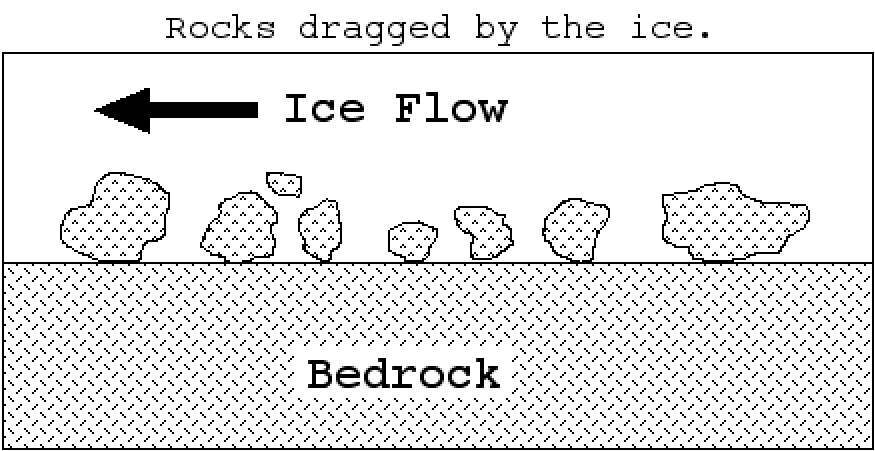
    • ​They pick up materials as they move, which they later drop as they melt

      • ​Glacial drift= movement of materials by glaciers

  • ​They also cause scratches and abrasions on the rocks they pass.

media
media

2

​Types of Glaciers
  • ​Alpine glacier-forms in a mountainous area.

    • Often form in a V-shaped valley.

    • ​Widen it into a U-shape.

  • ​Alpine landforms:

    • ​Cirque= bowl-shaped depression

    • ​Arete= ridge between 2 cirques

    • ​Horn= 3 or more aretes joined together

media
media

3

​Continental Glaciers
  • ​Form over a large, mostly flat area

  • ​Flatten and smooth the land as they move

  • ​Continental landforms:

    • ​Erratics= large boulders deposited by a glacier

    • ​Kettle lakes= lakes formed by chunks of ice left behind by a glacier

media
media
media

4

Multiple Choice

Question image

What is another name for the bowl shape left behind by an alpine glacier?

1

Arete

2

Horn

3

Cirque

4

Sand dune

5

Multiple Choice

Question image

When you combine 3 or more aretes, you get what?

1

Horn

2

Cirque

3

U-shaped valley

4

Alpine glacier

6

Multiple Choice

Question image

Which type of glacier causes flatter, less rugged landforms?

1

Continental

2

Alpine

7

media

8

Multiple Choice

Question image

What type of glacier forms in a mountainous area?

1

alpine

2

continental

3

till

4

moraine

9

Multiple Choice

Question image

What type of glacier covers huge areas of land?

1

alpine

2

continental

3

till

4

moraine

10

Multiple Choice

ALPINE GLACIERS erode mountainous regions, then melt.


What are the shapes of the valleys that remain behind after the ice melts?

1
2
3
4

11

Multiple Choice

Question image

Look at the picture. Which feature is C?

1

Cirque glacier

2

Valley glacier

3

Continental glacier

4

Piedmont glacier

12

Multiple Choice

Question image

Look at the picture. Which feature is D?

1

Cirque glacier

2

Valley glacier

3

Continental glacier

4

Piedmont glacier

13

Multiple Choice

Question image

What is a very jagged and thin ridge of rock?


This forms when two valley glaciers or two cirque glaciers grind and erode the valley walls between them.

1

Arete

2

Col

3

Horn

4

Cirque

14

Multiple Choice

Question image

What is a very pointy and slender mountain peak?


This forms when two or more circque galciers or niche glaciers erode from different sides of mountain peak?

1

Arete

2

Col

3

Horn

4

Cirque

15

Multiple Choice

Question image

What is the bowl-shaped depressions that form near the summits of mountains?


They often contain the sources of glaciers. These are the zones of accumulation in alpine glacier systems?

1

Arete

2

Col

3

Horn

4

Cirque

16

Multiple Choice

Question image

The glacier inside the cirque melts.


What are the small shallow lakes that remain inside the cirques after the glaciers melted?

1

Tarn lakes

2

Paternoster lakes

3

Kettle lakes

4

Meltwater lakes

17

Multiple Choice

Question image

The photograph shows a valley. Which agent of erosion most likely produced this valley's shape?

1

blowing wind

2

ocean waves

3

moving ice

4

running water

18

Multiple Choice

Question image

What are jagged ridges that form on mountains called?

1

U-shaped valleys

2

cirques

3

aretes

4

horns

19

Multiple Choice

Question image

A _____ is a glacially carved valley flooded by the sea. This is mentioned in the movie frozen!

1

volcano

2

moraine

3

out-wash bason

4

fjiord

20

Multiple Choice

What is plucking?

1

When rocks become frozen into the glacier and are 'plucked' out when the glacier moves

2

When rocks scrape the bottom of the corrie

3

When cracks in rocks fill with water and freeze when it is colder

21

Multiple Choice

Question image

A sharp, pyramid shaped peak formed by glacial erosion

1

Horn

2

Arete

3

Cirque

4

Erratic

22

Multiple Choice

Question image

Identify the landform in the picture created by a glacier.

1

arete

2

cirque

3

kettle lake

4

moraine

23

Multiple Choice

Question image

_____ the process in which a glacier scrapes underlying rock. The sediments and rocks frozen in the ice at the bottom and sides of a glacier act like sandpaper. They wear away rock..

1

Plucking

2

Abrasion

3

Weathering

4

Erosion

24

Multiple Choice

What is a tarn?

1

A ridge of high land

2

A wide valley

3

A lake within a corrie

25

Multiple Choice

What is a truncated spur?

1

A feature of a ribbon lake

2

An interlocking spur that has been cut by a glacier

3

A feature of a valley created by a river bursting its banks due to a glacier melting rapidly

26

Multiple Choice

Which is larger?

1

Alpine Glacier

2

Ice Sheet

27

Multiple Choice

When an ice shelf has a large chunk of ice break apart and drift out into the ocean, the large chunk is called a(n)

1

ice sheet

2

iceberg

3

firn

4

continental glacier

28

Multiple Choice

When snow melts and refreezes, a grainy ice is formed called a(n)

1

ice sheet

2

iceberg

3

firn

4

continental glacier

29

Multiple Choice

The process that causes ice at the base of the glacier to melt and the glacier to then slide downhill is called

1

snowline

2

firn

3

internal plastic flow

4

basal slip

30

Multiple Choice

The process that causes glaciers to flow slowly as grains of ice deform under pressure and slide over each other is called

1

snowline

2

firn

3

internal plastic flow

4

basal slip

31

Multiple Choice

Greenland and Antarctica are the only two

1

snowfields

2

ice shlefs

3

continental glaciers

4

alpine glaciers

pattern-tertiary
​How Does Ice Shape the Earth?
  • ​Glacier= mass of moving ice formed by compacted snow

  • ​Large glaciers slowly move downhill.

    • ​They pick up materials as they move, which they later drop as they melt

      • ​Glacial drift= movement of materials by glaciers

  • ​They also cause scratches and abrasions on the rocks they pass.

media
media

Show answer

Auto Play

Slide 1 / 31

SLIDE