

Chapter 6 Nervous Pathology

Presentation
•
Other
•
University
•
Hard

Dawn Dann
FREE Resource
39 Slides • 0 Questions
1

Chapter 6
Nervous System
Pathology
1
2

Diseases
and
Disorders
of the
Nervous
System
2
Common signs and symptoms
• Neuralgia, paresthesia
• Lack of coordination
• Muscle rigidity, spasms
• Seizures
• Tremors
• Recurrent headache
• Amnesia
• Difficulty speaking or finding the right
word
• Loss of sight, double vision
• Confusion, disorientation, loss of
consciousness
Neuro exam
• May include lumbar puncture (LP)
3

Groups of
Neurological
Diseases and
Disorders
3
Neurodegenerative
Functional
Infections
Structural disorders & Congenital
Injuries
Vascular
4

Amyotrophic Lateral Sclerosis (ALS)
4
Definition
• Progressive neurodegenerative disorder that
attacks motor neurons in the brain and
spinal cord
Etiology
• Unknown, but up to10% of cases have
genetic component
Signs and symptoms
• Initially mild, progressive muscle weakness,
typically starting in hands and feet,
eventually spreading to entire body
5

5
Alzheimer’s
Disease
(AD)
►
Definition
►Progressive neurodegenerative
brain disease characterized by
disorientation, memory failure,
speech disturbance, loss of
mental capacity
►
Etiology
►Combination of lifestyle, genetic,
and environmental factors
►Risk factors include age, herpes
simplex virus I
►
Signs and symptoms
►Gradual difficulty with recall of
recent activities, names; difficulty
reasoning, thinking, judging,
deciding, remembering,
performing familiar tasks;
personality and behavior changes
6

Huntington’s
Disease (HD)
6
• Progressive neurodegenerative
disorder
• Two types
• Early-onset
• Adult-onset
Definition
• Genetic defect
Etiology
• Initially, behavioral disturbances,
hallucinations, moodiness,
irritability, restlessness, psychosis,
and paranoia; facial grimacing, jerky
movements, slow and uncontrolled
movements, prancing gait;
dementia, memory, and speech
issues
Signs and symptoms
7

•Multiple
Sclerosis
(MS)
Signs and
symptoms
• Tingling,
numbness,
weakness in
extremities;
partial or
complete vision
loss or double
vision; slurred
speech;
fatigue; lack of
coordination
7
• Autoimmune neurodegenerative
disorder in which myelin sheath is
damaged, leading to slowed or
blocked messages to the brain
• Four types
• Clinically isolated syndrome (CIS)
• Relapsing-remitting MS (RRMS)
• Secondary progressive MS
(SPMS)
• Primary progressive MS (PPMS)
Definition
• Unknown, but risk factors include
family history of MS, Epstein-Barr
infection, thyroid disease, type 1
DM, IBS
Etiology
8

8
Parkinson’s Disease (PD)
► Definition
► Progressive neurodegenerative disorder in which
dopamine-producing neurons of the brain die off,
leading to symptoms
► Etiology
► Unknown; risk factors include genetics and
environment
9

Parkinson’s
Disease
(PD)
►
Signs and symptoms
► Tremors (especially
pill-rolling-type), bradykinesia,
shuffling gait, rigid muscles,
impaired balance and posture,
stooping, writing changes, loss
of automatic movements (e.g.,
blinking, smiling), facial
appearance of depression or
anger (masked face), speech
changes (e.g., slurring, soft
voice), loss of sense of smell,
trouble sleeping, dizziness,
constipation, excessive or
minimal sweating, drooling
9
10

10
Restless Legs Syndrome (RLS)
►
Definition
► Disorder in which abnormal sensation is experienced in the legs
when sitting or lying down, often comorbid with periodic limb
movement disorder
►
Etiology
► Unknown, but may be genetic if occurring before age 40. Risk
factors include peripheral neuropathy, iron deficiency, kidney
failure, spinal lesions, pregnancy, some medications. Often
worsened by caffeine, alcohol, and tobacco.
►
Signs and symptoms
► Abnormal sensations, such as itching, electric, aching, throbbing,
pulling, crawling, creeping, tingling, and burning, felt in legs and
feet after rest and that lessen with movement
11

Other
Neurodegene
rative
Disorders
11
Friedreich’s ataxia- damage to spinal
cord & nerves
Frontotemporal dementia- Pick
disease, abnormal protein in
damaged neurons
Lewy body disease- dementia
Tay-Sachs disease-progressive
destruction of neurons
Vascular dementia- mini strokes over
time
12

Cluster Headaches
12
Definition
A functional disorder in
which headaches occur in
cyclical patterns or clusters
Etiology
Unknown, but may be
related to increased release
of histamine or serotonin
Signs and symptoms
Sudden, severe, one-sided
headache with tearing eyes,
droopy eyelid, stuffy nose;
most commonly occurs 2-3
hours after falling asleep;
may be episodic
13

Tension
Headaches
13
• A functional disorder in which
headaches occur due to tense
scalp and neck muscles; the
most common type of headache
Definition
• Tense neck and scalp muscles,
possibly due to stress,
depression, anxiety, and/or head
injury
Etiology
• Dull, aching head; feelings of
tightness and pressure in
forehead to back of head
Signs and symptoms
14

Migraine
14
Definition
A functional disorder in
which headaches recur
Etiology
Stress, anxiety, hormone
changes, strong smells,
bright lights
Signs and
symptoms
Often, four stages
Prodrome (1-2 days before)
Aura (before or during)
Attack (lasting up to 72 hours)
Post-drome (up to 24 hours after)
15

Seizure Disorders
15
Definition
• Functional disorder in which
a sudden increase of
electrical activity in one or
more parts of the brain
occurs
• Classified based on origin
• Generalized onset
• Focal onset
• Unknown onset
Etiology
• Medications, high fevers,
head injuries, diseases,
illegal drugs
16

Seizure
Disorders
16
• Motor
• Jerking, twitching,
rigid/weak muscles,
spasms, automatic
movements, loss of
muscle tone
• Nonmotor
• Staring, heart palpitations,
goose bumps, stillness,
changes in emotions and
thinking
Signs and symptoms
17

Epilepsy
17
Definition
• Functional disorder that
causes recurring seizures
Etiology
• Genetics, brain injury,
abnormal development, illness;
but most often unknown
Signs and symptoms
• Vary according to type; can
include confusion, staring,
uncontrolled jerking, loss of
consciousness
18

Other Functional Disorders
►
Functional neurological disorder (FND)
►
Narcolepsy
►
Sciatica
►
Tourette syndrome (TS)
18
19

QUESTIONS?
19
20

Encephalitis
20
• Inflammation of the brain
• Several types, including
• Japanese encephalitis
• La Crosse encephalitis
• Saint Louis encephalitis
Definition
• Bacterial or viral infection
Etiology
• Flu-like symptoms in mild case;
severe headache, drowsiness,
confusion, seizures, sudden fever in
severe case
• Infants have body stiffness, bulging
fontanels, poor appetite, constant
cry
Signs and symptoms
21

Meningitis
► Definition
► Inflammation of the meninges
► Etiology
► can be a viral, bacterial, or fungal
infection; or noninfectious and
cancer-related forms
► Signs and symptoms
► Sudden high fever, severe headache,
stiff neck, nausea, vomiting; bacterial
can cause hearing loss, brain damage,
stroke
21
22
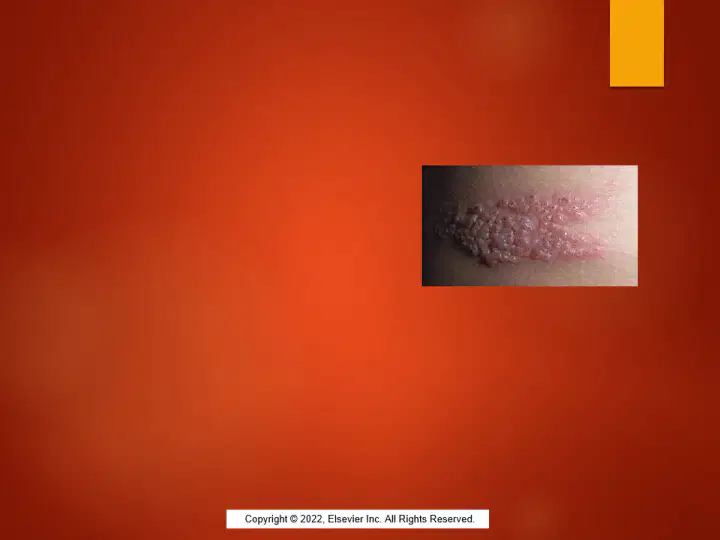
Shingles
► Definition
► A viral illness that causes a painful rash
► Etiology
► Varicella zoster virus
► Signs and symptoms
► Initially, tingling, pain, or itching on one
side of the face or body, then the
development of fluid-filled blisters; fever,
chills, headache, nausea, postherpetic
neuralgia, vision loss, encephalitis, facial
paralysis may also occur
22
23

Bell’s Palsy
► Definition
► Structural disorder in which the facial nerve
becomes swollen and inflamed, causing
facial paralysis
► Etiology
► Unknown; risk increases with pregnancy, DM,
viral URI
► Signs and symptoms
► Facial twitching, weakness, paralysis;
drooping eyelid, mouth corner; dry eyes or
excessive tearing; drooling or dry mouth;
decreased sense of taste
23
24

Guillain-BarréSyndrome
► Definition
► Rare structural autoimmune disorder in which
the immune system attacks the PNS
► Etiology
► Unknown; may be triggered by surgery,
infection, vaccination
► Signs and symptoms
► Weakness and tingling starting in legs and
spreading, causing near-paralysis; can be
life-threatening
24
25

Trigeminal Neuralgia
► Definition
► Structural disorder in which a blood vessel or
tumor presses on the trigeminal nerve, causing
chronic pain
► Etiology
► Pressure on trigeminal nerve
► Signs and symptoms
► Vary; sudden, severe, stabbing pain to
constant, aching, burning pain; can be
widespread or focal; often episodic, with
worsening subsequent pain
25
26

Other Structural Disorders
► Astrocytoma- malignant tumor made of
astrocytes
► Medulloblastoma- tumor made of medullablasts
► Meningioma-malignant tumor of meninges
► Neuroblastoma- malignant tumor of sympathetic
nervous system
► WHAT IS THE COMMON SUFFIX?
26
27

Traumatic Brain Injury (TBI)
► Definition
► An acquired brain injury
► Concussion
► Contusion
► Etiology
► Injury as a result of falls, MVAs, violence,
sports, military service, etc.
27
28

Traumatic Brain Injury (TBI)
(2 of 3)► Mild
► Headache, neck pain, nausea, ringing in
the ear, dizziness, lightheadedness, blurred
vision, tiredness, dazed feeling, mood
changes, trouble concentrating or
remembering. Children experience
irritability and changes in eating.
► Moderate or severe
► Similar to mild, but headache is constant
and worsens; repeated vomiting, seizures,
inability to awaken, dilated pupil(s), slurred
speech, agitation, loss of coordination,
extremity weakness. Children become
inconsolable and refuse to eat.
28
29

Spinal Cord Injury
►
Definition
►Dislocation of vertebrae in which the bone cuts into or presses
on the nerves
►Types
► Complete
► Incomplete
►
Etiology
► Common causes are MVAs, falls, violence,
diseases, sports injuries
► Risk increases with use of alcohol
29
30

Spinal Cord Injury
► Signs and symptoms
► Initially, extreme back or neck pain,
incontinence, difficulty breathing,
paralysis
► Quadriplegia
► Affects arms, hands, trunk, legs,
pelvic organs
► Paraplegia
► Affects some or all of the trunk, legs,
pelvic organs
30
31

Peripheral Neuropathy
(1 of 2)
►
Definition
►A disorder in which damage to the PNS causes varied
symptoms; over 100 types
►
Etiology
►Inherited, unknown
►Acquired
► Physical injury, diseases, toxin exposure
►
Signs and symptoms
►Tingling, numbness, paresthesia, weakness, increased
sensitivity to stimuli, burning pain, muscle wasting, paralysis,
organ dysfunction
31
32

Fetal Alcohol Spectrum
Disorders
►
Signs and symptoms
►Dependent on trimester of consumption, amount consumed
►Include poor memory, hyperactivity, attention and math
difficulty, speech and language delays, learning and
intellectual disabilities, poor reasoning and judgment, vision
and/or hearing problems, heart, kidney, and/or bone
problems, poor coordination, small head, short stature,
abnormal facial features
►In babies
► Low birth weight, sleeping and sucking problems
32
33
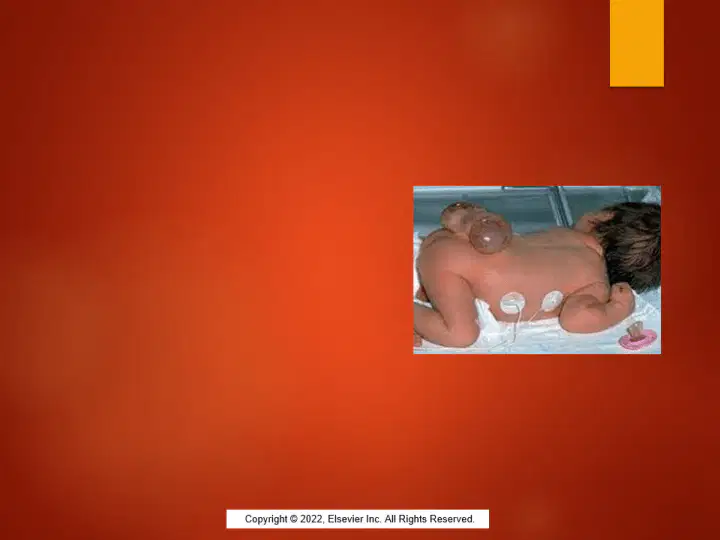
Spina Bifida
► Definition
► Neural tube defect in which the spinal
column doesn’t close during fetal
development
► Etiology
► Unknown
► Signs and symptoms
► Spina bifida occulta or
Closed neural tube defect
33
34

Other
Congenital
Disorders
34
Cerebral palsy (CP)
• Group of nonprogressive disorders caused
by abnormal brain development or injury
• Classified by main type of movement
disorder
• Spasticity (stiff muscles)
• Dyskinesia (uncontrolled movements)
• Ataxia (discoordinated gait)
Down syndrome
Tuberculosis sclerosis- syndrome of
benign tumors in major organs
35

Cerebro-
vascular
Accident
CVA
35
Definition
• Condition in which a blood vessel in the
brain is either blocked or ruptures
Etiology
• Ischemic
• Arterial blood flow to part of brain is
blocked
• Thrombotic
• Embolic
• Hemorrhagic
• Brain artery leaks or ruptures
• Intracerebral
• Subarachnoid
• Transient ischemic
• Brief disruption of blood to part of the
brain
36

Cerebrovascular
Accident
►
Signs and symptoms
►Related to part of brain affected
►Confusion or mental changes; speech difficulty; unilateral
facial, arm, or leg numbness; visual disturbances; movement
and coordination difficulties; arm weakness; sudden, severe
headache; facial drooping; hemiparesis or hemiplegia
►
F-A-S-T
►
Face drooping
►
Arm weakness
►
Speech difficulty
►
Time call 9-1-1
36
37

Hematoma
► Definition
► Blood leakage into the brain
► Common types
►Epidural
►Subdural
►Intraparenchymal
► Etiology
► Head trauma (most common), leaking aneurysm,
HTN, tumor
► Signs and symptoms
► Epidural: confusion, dizziness, altered level of
alertness/drowsiness; enlarged pupil; severe
headache; loss of consciousness, then alertness,
then deterioration of alertness; nausea and
vomiting; weakness in part of the body
37
38

Life Span Changes
►
Infants
►Immature nervous system
►
First years of life
►Increased brain size
►
Childhood
►Learning and thinking increase in complexity
►
Adulthood
►Stable brain functioning
►
Aging
►Loss of brain and spinal cord cells, accumulation of waste
products, decreased brain functioning
38
39

Questions?
39
Chapter 6
Nervous System
Pathology
1
Show answer
Auto Play
Slide 1 / 39
SLIDE
Similar Resources on Wayground

34 questions
A DEEP DIVE : GRAMMAR COVERED
Presentation
•
University
35 questions
Chaney Lesson
Presentation
•
KG
33 questions
COSAS EN LA COCINA
Presentation
•
KG
34 questions
SAD TUTORIAL 3
Presentation
•
University
32 questions
Gepro 2022 Tut 2
Presentation
•
University
31 questions
Abd Trauma
Presentation
•
University
37 questions
Topic 1
Presentation
•
University
Popular Resources on Wayground
10 questions
Safety Day 2026 – Student Review

Quiz
•
9th Grade
21 questions
Continents and Oceans
Quiz
•
6th Grade
20 questions
Parts of Speech
Quiz
•
5th Grade
16 questions
Subject & Predicate
Quiz
•
5th Grade
25 questions
Multiplication Facts
Quiz
•
5th Grade
12 questions
Map Skills
Quiz
•
3rd Grade
22 questions
Continents and Oceans
Quiz
•
5th Grade
15 questions
Rounding Decimals
Quiz
•
5th Grade
Discover more resources for Other
20 questions
Disney Trivia
Quiz
•
University
10 questions
Spanish Greetings and Goodbyes!
Presentation
•
6th Grade - University
20 questions
Physical or Chemical Change/Phases
Quiz
•
8th Grade - University
39 questions
Unit 7 Key Terms
Quiz
•
11th Grade - University
25 questions
SER and Subject Pronouns
Quiz
•
8th Grade - University
38 questions
Unit 6 Key Terms
Quiz
•
11th Grade - University
19 questions
Key Concepts in Buddhism
Quiz
•
University
0 questions
Cell Domain Basic Review (Biology)
Quiz
•
University