
Unit 1 Reassessment Review
Presentation
•
Science
•
9th - 12th Grade
•
Hard
+24
Standards-aligned
Kurt Trout
FREE Resource
29 Slides • 29 Questions
1
2
Macromolecules are also called Biomolecules
They are small molecules that are necessary for life! Cells need them to work!
3
Carbohydrates
Used for short-term energy
Labeled as "sugars" in nutrition facts
Foods with a lot of carbohydrates include bread and pasta
4
Carbohydrates
Monomer or "building block" is called a monosaccharide
Polymer is called a polysaccharide
Key examples: glucose (monomer), starch (polymer)
5
Mono - means ONE
It is a singular component that makes up the larger structures of macromolecules. Each macromolecule has its own monomers.
Monomer
Poly - means MULTIPLE
A polymer is when two or more monomers bond together to make a larger, more complex macromolecule
Polymer
6
SUGARS
Monomer - monosaccharide
Polymer - Polysaccharide; Disaccharide (TWO monomers)
Sugar's monomers are:
Glucose
Fructose
Galactose
Carbohydrates
7
Function of Carbohydrates
Energy and Structure
The primary functions of carbohydrates is energy storage. Carbohydrates are types of sugars. Outside of energy storage, they can provide structure like the carbohydrate cellulose, which is the indigestible portion of plants.
---words that end in -ose are often sugars
8
Polysaccharides= many sugars
Starch =how plants store their extra sugar
Glycogen= how animals store their extra sugar
Cellulose=builds plant cell walls
Chitin=builds the exoskeletons of crabs and insects
Made by the process of dehydration synthesis
9
Multiple Choice
What is the monomer of carbohydrates
disaccharides
monosaccharides
amino acids
fatty acids
10
Multiple Choice
11
Multiple Choice
12
13
14
Lipids
Lipids are used for long term energy storage
Lipids include fats, oils, and waxes
Foods that include a lot of lipids are oils and butter, some fish, nuts,and avocados
15
Lipids
Lipids are made of fatty acids
There are two types: saturated and unsaturated
16
Multiple Select
Example(s) of Lipids are...
Sugar
Olive Oil
Butter
Bread
17
Multiple Select
A lipid is a macromolecule that is used to...
give cells/systems energy.
build cell parts.
give cells/systems long term energy storage.
help cells with chemical processes.
18
Multiple Choice
The main job of lipids is
Short term energy storage
Long term energy storage
Genetic material
DNA
19
Multiple Choice
Fats and oils: a major source of food providing long term energy and other functions.
Sugars
Carbohydrates
Lipids
Proteins
20
21
22
23
24
25
26
27
28
Multiple Choice
29
Multiple Choice
The combination of chemical reactions through
which an organism builds up or breaks down
materials as it carries out its life processes is called ...
absorption
metabolism
digestion
consumption
30
Multiple Choice
Maintaining a stable internal
environment is called
homeostasis
equilibrium
balance
evenness
31
Multiple Choice
32
Multiple Choice
Living things are based on a universal genetic
code. What molecule is responsible for that code?
RNA
Lipid
Protein
DNA
33
Multiple Choice
The combination of chemical reactions through
which an organism builds up or breaks down
materials as it carries out its life processes is called ...
absorption
metabolism
digestion
consumption
34
Multiple Choice
35
Multiple Choice
What characteristic is shown: A bacteria cell divides itself in two.
Reproduce
Respond to a Stimulus
Homeostasis
Grow and Develop
36
Multiple Choice
Which characteristic is shown: An American alligator kills and eats a fish.
Change Over Time
Acquire and Use Energy
Grow and Develop
Made of Cells
37
Levels of Organization
Non-living
Living
Simple
Complex
Biomolecule
Life begins! →
INCREASING COMPLEXITY
DECREASING COMPLEXITY
38
ATOM
A basic unit of matter consisting of protons, neutrons, and
electrons.
Example: Carbon, Hydrogen, Oxygen, Nitrogen, Phosphorus, Sulfur
39
BIOMOLECULES
These are molecules composed of protons neutrons and electrons
that are made for living organism.Organisms are made up of organic
and inorganic molecules.
Examples:
Organic molecules: Carbohydrates, Proteins, Lipids, and Nucleic Acid
Inorganic molecules: Carbon dioxide and water
CARBOHYDRATES
PROTEINS
LIPIDS
NUCLEIC ACIDS
40
ORGANELLES
Any number of organized structures within a living cell.
Ex. mitochondria, chloroplast and nucleus
41
The basic unit of life.
CELL
42
TISSUE
Specialized cells working together to perform a specific function.
Animal Tissue
Plant Tissue
43
ORGAN
A group of tissues working together to perform a specific
function.
PLANT ORGANS
44
A group of organs working together to perform a specific
function.
ORGAN SYSTEM
45
ORGANISM
An individual animal, plant, or single-celled life form.
46
Multiple Choice
Which is the simplest level of organization within the environment?
cell
organism
population
community
47
Multiple Choice
A structure made up of different types of tissue and performs a specific job.
cells
tissue
organ
organ system
48
Multiple Choice
49
Multiple Choice
50
Multiple Choice
51
Multiple Choice
52
Multiple Choice
53
Multiple Choice
54
Multiple Choice
55
Multiple Choice
56
Multiple Choice
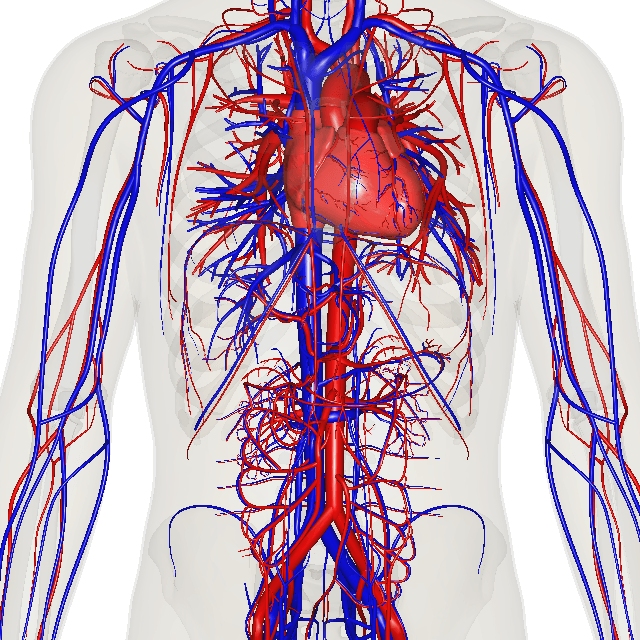
57
Multiple Choice
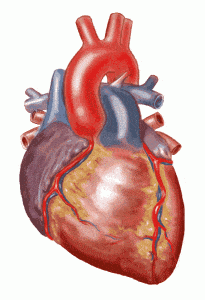
58
Multiple Choice
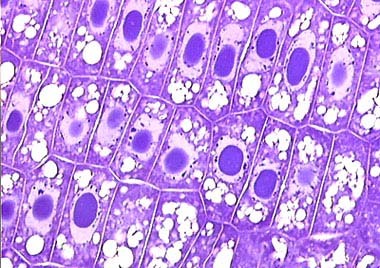
Show answer
Auto Play
Slide 1 / 58
SLIDE

Similar Resources on Wayground
50 questions
Transformations in the Coordinate Plane: Parent Functions
Presentation
•
9th - 12th Grade
53 questions
iPad Basecamp 2025-2026
Presentation
•
9th - 12th Grade
52 questions
Properties of Water
Presentation
•
9th - 12th Grade
52 questions
AKS 10a/10b CIA Review
Presentation
•
9th - 12th Grade
52 questions
Biodiversity Biology
Presentation
•
9th - 12th Grade
52 questions
Population Ecology
Presentation
•
9th - 12th Grade
50 questions
Web Development Review
Presentation
•
9th - 12th Grade
50 questions
SOL Review - Day 1: Scientific Investigation
Presentation
•
9th - 12th Grade
Popular Resources on Wayground
20 questions
STAAR Review Quiz #3
Quiz
•
8th Grade
20 questions
Equivalent Fractions
Quiz
•
3rd Grade
6 questions
Marshmallow Farm Quiz
Quiz
•
2nd - 5th Grade
20 questions
Main Idea and Details
Quiz
•
5th Grade
20 questions
Context Clues
Quiz
•
6th Grade
20 questions
Inferences
Quiz
•
4th Grade
19 questions
Classifying Quadrilaterals
Quiz
•
3rd Grade
12 questions
What makes Nebraska's government unique?
Quiz
•
4th - 5th Grade
Discover more resources for Science
46 questions
Unit 4 Geosphere Test Review
Quiz
•
9th - 12th Grade
25 questions
Naming Ionic and Covalent Compounds
Quiz
•
9th Grade
20 questions
Human Impact on the Environment Review #2
Quiz
•
9th Grade
16 questions
Ecosystem Stability
Quiz
•
9th Grade
20 questions
Mendelian Genetics Review
Quiz
•
9th Grade
12 questions
Unit 6 Quiz #3 (Life Cycles of Stars)
Quiz
•
9th Grade
34 questions
Human Impact on Ecosystems Quiz
Quiz
•
9th Grade
10 questions
Exploring Alfred Wegener's Continental Drift Theory
Interactive video
•
6th - 10th Grade