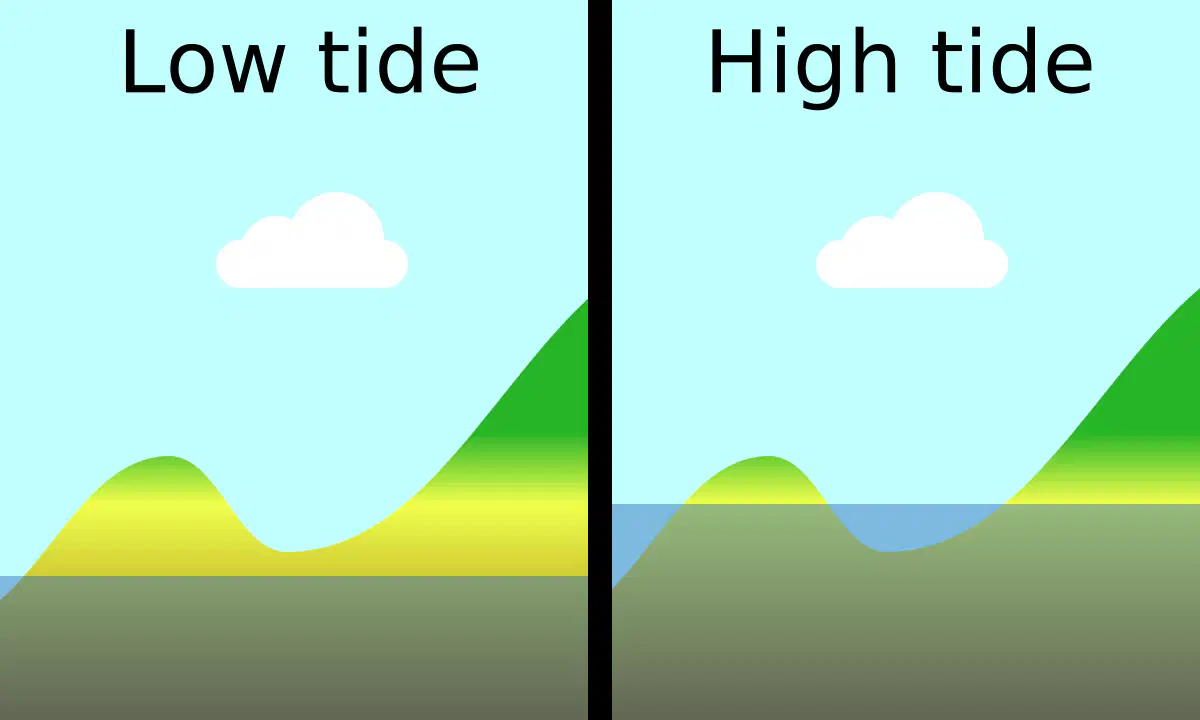
Science DCP#1 Review Lesson
Presentation
•
Science
•
8th Grade
•
Practice Problem
•
Hard
+17
Standards-aligned
Dani Boepple
FREE Resource
22 Slides • 45 Questions
1
DCP#1 Review
The Universe
Sun, Earth & Moon Systems
2
Fold your paper so that you have four boxes
3
Braindump!
4
Components of the Universe
8.8(A) describe components of the universe, including stars, nebulae, and galaxies...
6.11(B) understand that gravity is the force that governs the motion of our solar system
5
6
Multiple Choice
What keeps planets in the solar system from moving in straight lights through the galaxy?
Light energy
Gravity
Inertia
Potential energy
7
Multiple Choice
The moon remains in orbit around Earth because of the force of -
Earth's rotation
the moon's rotation
Earth's gravity
the sun's gravity
8
Multiple Choice
The Earth remains in orbit around the sun because of the force of -
Earth's rotation
the moon's rotation
Earth's gravity
the sun's gravity
9
Multiple Choice
What force causes Venus to travel along a curved path instead of moving in a straight line as indicated by the dashed line in the diagram?
Electromagnetic attraction between the sun and Venus
Gravitational attraction between the sun and Venus
Electromagnetic attraction between Mercury and Venus
Gravitational attraction between Mercury and Venus
10
Multiple Choice
Which statement best describes a galaxy?
A cloud of gas that is the birthplace of stars
A system of billions of stars, gas, and dust held together by gravity
A ball of plasma that experiences nuclear fusion at its core
A mass of dust and ice that orbits a star in an elliptical pattern
11
Multiple Choice
Which statement best describes a star?
A cloud of gas that is the birthplace of stars
A system of billions of stars, gas, and dust held together by gravity
A ball of plasma that experiences nuclear fusion at its core
A mass of dust and ice that orbits a star in an elliptical pattern
12
Multiple Choice
Which statement best describes a nebula?
A cloud of gas that is the birthplace of stars
A system of billions of stars, gas, and dust held together by gravity
A ball of plasma that experiences nuclear fusion at its core
A mass of dust and ice that orbits a star in an elliptical pattern
13
Multiple Choice
Which statement about stars is correct?
Star formation begins in a nebula
White dwarfs become main-sequence stars when they gain mass
Supergiants are stars that can absorb black holes
Main-sequence stars are formed by comets
14
Reorder
Reorder the following in order from SMALLEST to LARGEST
Moons
Planets
Stars
Nebulae
Galaxies
15
Multiple Choice
The Milky Way galaxy is described as a disk of stars orbiting a central point on the disk.
Which of these best explains why people on Earth cannot see the entire shape of the Milky Way?
Earth is a part of this galaxy
Many more stars exist outside the galaxy
The stars in the center of the galaxy are extremely small
The center of the galaxy consists of a dense cluster of stars
16
HR Diagrams
8.8(A) ...use models such as the Hertzsprung-Russell diagram for classification
17
18
Multiple Choice
Which section of the diagram includes the coolest, brightest stars?
Section 1
Section 2
Section 3
Section 4
19
Multiple Choice
Based on the information in the picture, which star is most like our sun?
Star 1
Star 2
Star 3
Star 4
20
Multiple Choice
Which area of the diagram represents the white dwarfs?
Area M
Area X
Area P
Area Z
21
Multiple Choice
Which area of the diagram represents the supergiant stars?
Area M
Area X
Area P
Area Z
22
Multiple Choice
Which area of the diagram represents the giant stars?
Area M
Area X
Area P
Area Z
23
Multiple Choice
Which area of the diagram represents the main sequence stars?
Area M
Area X
Area P
Area Z
24
Multiple Choice
A star has a luminosity of 10-2 and a temperature of 20,000 K is most likely a -
Main sequence star
White dwarf star
Blue giant star
Red giant star
25
Multiple Choice
A star that is several thousand times brighter than the sun with a temperature lower than 4,000 K would be classified as a -
main-sequence star in spectral class B
supergiant in spectral class K
main-sequence star in spectral class K or M
white dwarf in spectral class B
26
Multiple Choice
Based on this diagram, how do the characteristics of Star 1 and Star 2 compare?
Star 1 is cooler and less bright than Star 2
Star 1 is hotter and brighter than Star 2
Star 1 is coolest and brighter than Star 2
Star 1 is hotter and less bright than Star 2
27
Multiple Choice
Based on this diagram, which type of stars would belong to spectral class M and have the highest luminosity?
Main-sequence stars
Giants
White dwarfs
Supergiants
28
Our Sun
8.8(B) recognize that the Sun is a medium-sized star located in a spiral arm of the Milky Way galaxy and that the Sun is many thousands of times closer to Earth than any other star
29
30
Multiple Choice
Why does Earth get more energy from the sun than from all the other stars in the universe combined?
The sun is larger
The sun is hotter
The sun is denser
The sun is closer
31
Multiple Choice
Which statement best describes the location of the sun in the Milky Way galaxy?
The sun is located in the center of a spiral-shaped galaxy
The sun is located off the center of an elliptical-shaped galaxy
The sun is located on an arm of a spiral-shaped galaxy
The sun is located on an arm of an elliptical-shaped galaxy
32
Multiple Choice
Which statement best explains why the sun appears brighter to people on Earth than any other star?
Sunlight reaches Earth's atmosphere at an angle that causes the sun's light rays to intesify
Unique chemical reactions in the sun's core produce a high-energy wavelength of light
The sun burns at a higher temperature than any other star
The sun is closer to Earth than any other star
33
Multiple Choice
A student learns that the sun is classified as a medium-size star and that many stars are much bigger and brighter. However, the student observes that other stars look very dim, even through a telescope.
Why do other stars look much dimmer than the sun?
The sun appears yellow, which is more visible than other colors
The sun is much closer to Earth than other stars are
Other stars are made up of different gases than the sun is
As light from other stars travels through space, it gets reflected
34
Multiple Choice
Why does the sun appear brighter than any other star when viewed from Earth?
The sun is a different color
The sun is older
The sun is closer
The sun is brighter
35
EM Spectrum
8.8(C) identify how different wavelengths of the electromagnetic spectrum such as visible light and radio waves are used to gain information about components in the universe
36
37
Multiple Choice
Stars with the highest temperatures will emit most of their light at wavelengths that are near -
blue light
green light
orange light
red light
38
Multiple Choice
Earth's atmosphere blocks short wavelengths of the electromagnetic spectrum.
Which telescopes must be placed in orbit around Earth in order to observe short-wavelength radiation?
Gamma-ray telescopes
Visible-light telescopes
Infrared telescopes
Radio telescopes
39
Multiple Choice
If they detected a signal of 1.41 x 10⁹, the investigators were most likely using a telescope that detects -
microwaves
visible light
x-rays
gamma rays
40
Braindump!
41
Length of Day & Seasons
8.7(A) model and illustrate how the tilted Earth rotates on its axis, causing day and night, and revolves around the Sun causing changes in seasons
42
43
Multiple Choice
Which diagram shows the relative position of Earth's axis at the beginning of summer in Texas?
44
Multiple Choice
Which of these statement best compares the locations of Point A and Point B?
Point A is experiencing day while point B is experiencing night
Point A is experiencing night while point B is experiencing day
Point A is experiencing summer while point B is experiencing winter
Point A is experiencing winter while point B is experiencing summer
45
Multiple Choice
Which statement correctly explains which position of Earth represents summer in the United States?
Position 1
because the Western Hemisphere is facing the sun
Position 2
because the Northern Hemisphere tilts toward the sun
Position 3
because Earth is at its closest point to the sun in its orbit
Position 4
because Earth is traveling at its fastest rate in its orbit
46
Multiple Choice
Which answer choice best explains the change from daytime to nighttime on Earth?
The sun stops sending light to Earth at night
Earth moves farther away from the sun at night
The tilt of Earth causes less light to reach Earth at night
Earth rotates and causes different parts of Earth to experience night
47
Multiple Choice
Which of these changes would likely occur if the rate of Earth's rotation on its axis increased?
The length of the seasons would be longer
The length of the seasons would be shorter
The length of a day would be shorter
The length of a day would be longer
48
Multiple Choice
In which position is it winter in North America?
Position 1
because North America receives the most direct sun
Position 2
because North America is tilted toward the sun
Position 3
because North America is parallel to the sun
Position 4
because North America is tilted away from the sun
49
Multiple Choice
Which diagram shows the position of Earth when it is summer in South America?
50
Multiple Choice
Earth would not have seasons if it -
no longer tilted on its axis
stopped rotating on its axis
took an additional month to orbit the sun
revolved around the sun in the opposite direction
51
Lunar Phases
8.7(B) demonstrate and predict the sequence of events in the lunar cycle
52
53
Multiple Choice
Which diagram correctly models the sun, Earth, and the moon during the third quarter of the lunar cycle?
54
Multiple Choice
Which moon phase was most likely present on September 9th?
Waning crescent
Waning gibbous
New moon
First quarter moon
55
Multiple Choice
On which dates will they most likely be able to observe a new moon?
May 13th
May 18th
May 25th
May 31st
56
Multiple Choice
Which moon would you see in the sky ONE WEEK AFTER a new moon?
57
Reorder
You notice a full moon in the sky.
Which sequence of moon phases will the student observe next? (in order)
Waning Gibbous
Last Quarter
Waning Crescent
New Moon
Waxing Crescent
58
Multiple Choice
Which picture shows how the moon appears from Earth when it is in the position shown in this model?
59
Multiple Choice
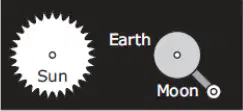
Which diagram shows the sun, Earth, and Moon arranged so that a new moon would be visible from Earth?
60
Tides
8.7(C) relate the positions of the Moon and Sun to their effect on ocean tides
61
62
Multiple Choice
Which model shows the positions of the sun, the moon, and Earth that have the greatest effect on ocean tides?
63
Multiple Choice
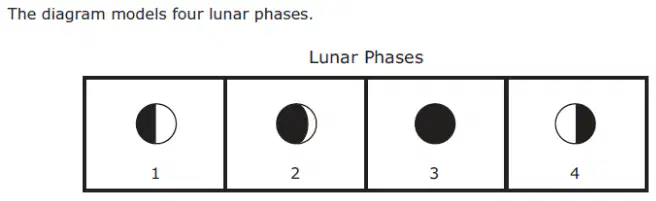
During which lunar phase is the tide the highest?
Phase 1
Phase 2
Phase 3
Phase 4
64
Weather
8.10(B) identify how global patterns of atmospheric movement influence local weather using weather maps that show high and low pressures and fronts
8.10(C) identify the role of the oceans in the formation of weather systems such as hurricanes
65
66
Plate Tectonics
8.9(A) describe the historical development of evidence that supports plate tectonic theory
8.9(B) relate plate tectonics to the formation of crustal features
67
DCP#1 Review
The Universe
Sun, Earth & Moon Systems
Show answer
Auto Play
Slide 1 / 67
SLIDE

Similar Resources on Wayground
60 questions
EMS Waves
Presentation
•
8th Grade
64 questions
Newton's Second Law of Motion
Presentation
•
7th - 8th Grade
67 questions
Stratigraphy and Dating Rocks
Presentation
•
8th Grade
61 questions
Ecological Relationships
Presentation
•
8th Grade
62 questions
Drones Lesson Activity
Presentation
•
8th Grade
60 questions
WEATHER UNIT SUMMARY
Presentation
•
8th Grade
61 questions
Galaxies and the Milky Way
Presentation
•
8th Grade
63 questions
Biogeochemical Cycles Review
Presentation
•
9th Grade
Popular Resources on Wayground
16 questions
Grade 3 Simulation Assessment 2
Quiz
•
3rd Grade
19 questions
HCS Grade 5 Simulation Assessment_1 2526sy
Quiz
•
5th Grade
10 questions
Cinco de Mayo Trivia Questions
Interactive video
•
3rd - 5th Grade
17 questions
HCS Grade 4 Simulation Assessment_2 2526sy
Quiz
•
4th Grade
24 questions
HCS Grade 5 Simulation Assessment_2 2526sy
Quiz
•
5th Grade
13 questions
Cinco de mayo
Interactive video
•
6th - 8th Grade
20 questions
Math Review
Quiz
•
3rd Grade
30 questions
GVMS House Trivia 2026
Quiz
•
6th - 8th Grade
Discover more resources for Science
16 questions
Interactions within Ecosystems
Presentation
•
6th - 8th Grade
30 questions
GMAS Physical Science Review
Quiz
•
8th Grade
10 questions
Exploring the Rock Cycle
Interactive video
•
6th - 8th Grade
18 questions
Carbon Cycle
Quiz
•
8th Grade
10 questions
Exploring Earth's Seasons and Their Causes
Interactive video
•
6th - 8th Grade
26 questions
Amplify Chemical Reactions
Quiz
•
6th - 8th Grade
10 questions
Evidence of Evolution
Presentation
•
6th - 8th Grade
20 questions
8th Grade Science NC EOG Review
Quiz
•
8th Grade