

The Rise of Big Business

Presentation
•
History
•
12th Grade
•
Practice Problem
•
Easy

Nadine Breece
Used 8+ times
FREE Resource
21 Slides • 4 Questions
1
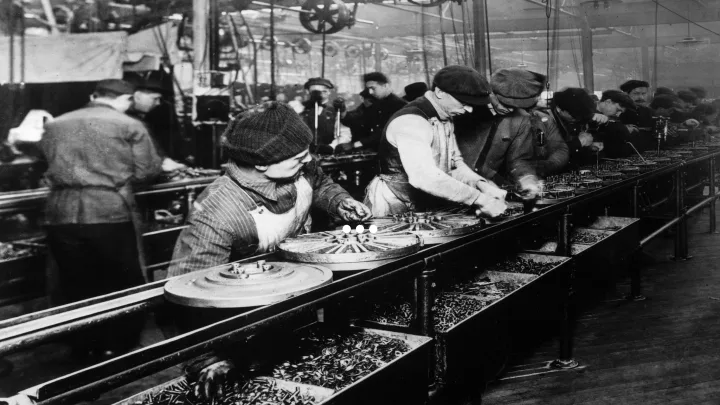
The Rise of Big Business
2
Multiple Choice
Which president signed the Homestead Act and the Pacific Railroad Act?
Lyndon Johnson
Franklin Pierce
Abraham Lincoln
James K. Polk
3

Lesson Objectives
● Analyze different management innovations that
businesses used to increase their profits.
● Describe the public debate over the pros and cons of
big business.
● Explain how the government took steps to block
abuses of corporate power.
4
5
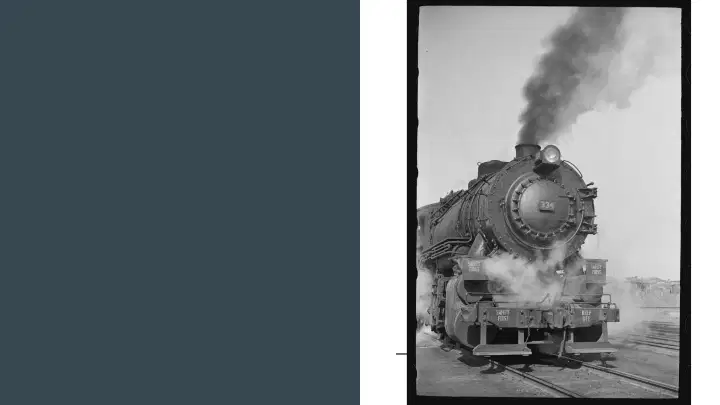
Corporations Find
New Ways of Doing
Business
6

The Corporation Meets New Needs
●
To take advantage of
expanding markets, investors
developed a form of group
ownership known as a
corporation.
●
A number of people share the
ownership of a business.
●
If it experiences economic
problems, the investors lose no
more than they invested.
7

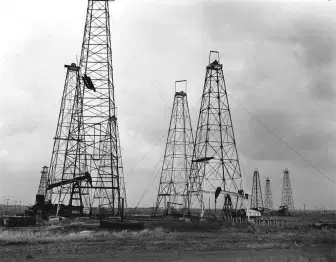
The Corporation Meets New Needs
●
A corporation had the same
rights as an individual
○
It could buy and sell
property and sue in the
courts.
●
They were perfect for the new
expanding markets.
●
They had access to huge
amounts of capital that allowed
them to fund a variety of new
projects.
8

Finding New Ways to Gain Advantage
●
Corporations worked to maximize profits in several ways.
●
They advertised their products widely, which allowed them to reach more
potential customers.
●
They paid low wages to workers and tried to obtain raw materials as
cheaply as possible.
●
They adopted new business forms like horizontal or vertical integration,
and applied other innovations in production management that would
help decrease their cost of producing goods or services.
●
J.P. Morgan and others supported research labs where inventors could
experiment on new ways of production.
9
Poll
Do you think that they cared about those who worked for them?
Yes
No
They are there only to make a product
10

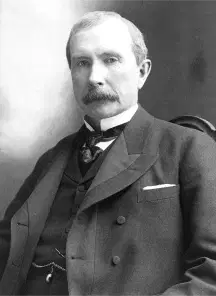
Finding New Ways to Gain Advantage
●
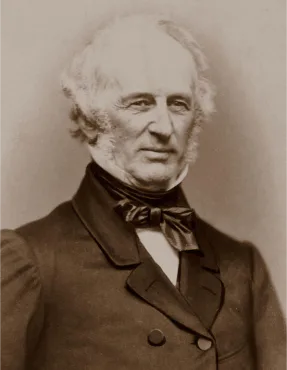
Cornelius Vanderbilt, bought out his rivals or made it that they couldn't get enough goods to keep the rail lines going.
●
John D. Rockefeller, an Ohio
oil tycoon, made agreements
with railroads that made it
difficult for his competitors
to ship their products.
11

“[Rockefeller’s company] killed its rivals, in brief, by getting the great trunk lines to refuse to give them transportation. Vanderbilt is reported to have said that there was but one man –Rockefeller–who could dictate to him.”
–H.D. Lloyd, The Atlantic, 1881
12

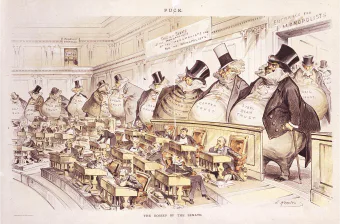
Business Management Innovations
●
Business leaders continued to
develop ever more effective
ways to decrease costs and
increase profits.
●
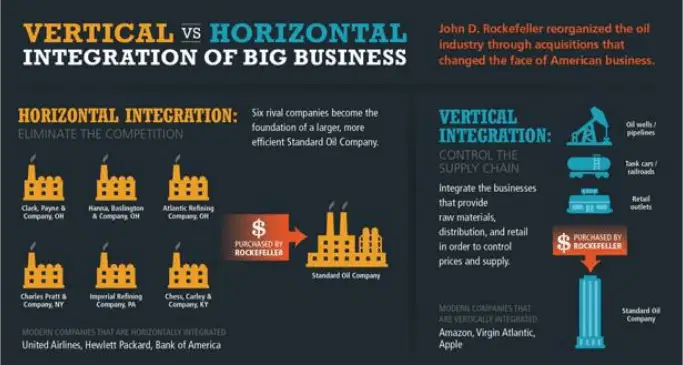
A system of consolidating
many firms in the same
business is called horizontal
integration.
●
Some used horizontal
integration to create a
monopoly or complete control
of a product or service.
13

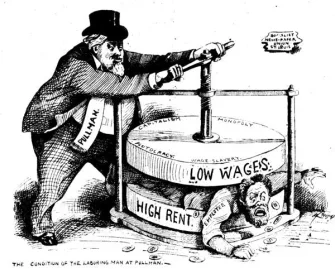
Business Management Innovations
●
In a monopoly a company
either bought its competitors
or drove them out of business.
●
The management innovation of
horizontal integration made
business more efficient but
could have a negative effect on
labor.
●
Business owners constantly
worried on labor costs and
worker productivity.
14

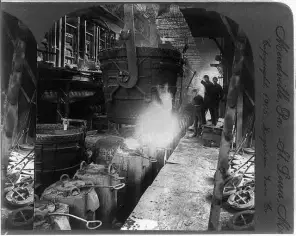
Business Management Innovations
●
Rockefeller, Andrew Carnegie,
and others strengthened their
companies and the workplace
more efficient by gaining
control of different businesses
that were involved in all stages
of manufacturing their
products.
●
Carnegie used this model which
is known as vertical integration.
15

16
Open Ended
What do you think about Horizontal Integration and Vertical Integration?
17
The Pros and Cons
of Big Business
18

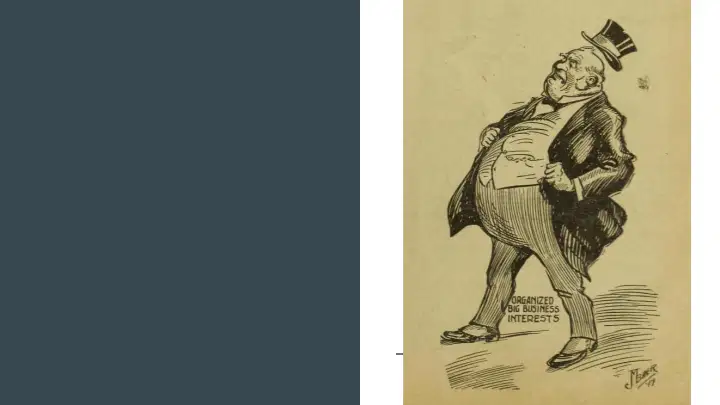
“Robber Barons” or “Captains of Industry”
●
Throughout the 1880s, business mergers created powerful empires.
●
Many smaller companies and consumers began to question the goals and
tactics of those who led these businesses.
●
Those who had joined trusts often found themselves getting very little of the
profits.
●
Some consumers were alarmed by the high prices that monopolies and
cartels sometimes set on their products.
●
Gradually, many consumers, workers, and the federal government came
to believe that these systems gave powerful business leaders an unfair
advantage.
19

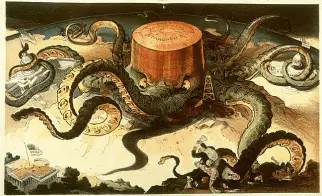
“Robber Barons” or “Captains of Industry”
●
People started to believe
that the government’s
laissez-faire policies had
hurt workers and
consumers.
●
People who held these views
began to refer to these
leaders as “robber barons.”
20

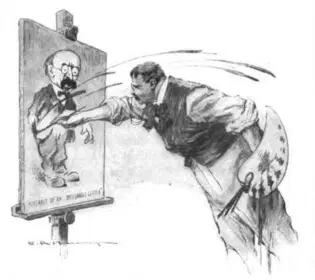
The Changing Relationship Between Government and Business
21

Attempts to Regulate Business
● Many Americans felt that price fixing and pooling drove up
rates and were unfair to consumers.
● They also thought that unfair business practices and poor wages
and working conditions for the labor force had made the costs
of the government’s laissez-faire policies too high.
● They wanted the federal government to take action.
22

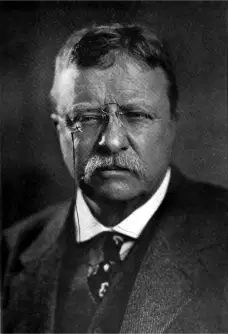
Attempts to Regulate Business
●
Finally, in 1887, Congress responded
by creating the Interstate Commerce
Commision (ICC) to monitor railroad
shipping rates.
●
It could only keep watch on railroads
that crossed state lines. It also couldn’t
control railroad transactions.
●
Though it had few powers it was the
first to monitor business practices.
●
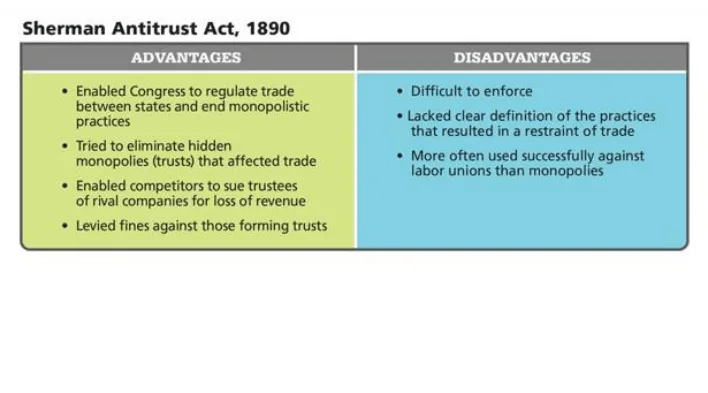
In 1890, Sherman Antitrust Act was
passed.
23

24

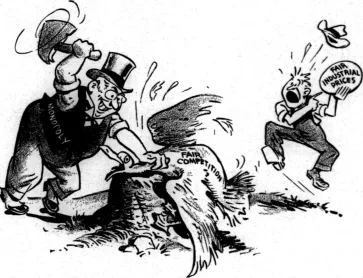
Attempts to Regulate Business
Though these new
regulations didn’t stop big
business from continuing
these practices, the ICC and
the Sherman Antitrust Act
began a trend toward federal
limitations on corporations’
power.
25
Open Ended
What do you think about big business and how they ran things?
The Rise of Big Business
Show answer
Auto Play
Slide 1 / 25
SLIDE
Similar Resources on Wayground

18 questions
PPC - 6.0 Right Triangle Trigonometry Lesson
Presentation
•
12th Grade
21 questions
COMPOUND WORDS
Presentation
•
12th Grade
19 questions
Section 6.4: Foreign Policy Overview
Presentation
•
12th Grade
21 questions
Loans Credit cards Debt Investments Big purchases
Presentation
•
12th Grade
20 questions
US History II Ch4 L1
Presentation
•
12th Grade
20 questions
D20: The Mongol Empire & The Yuan and Ming Dynasty
Presentation
•
12th Grade
20 questions
4.2 Basic Probability Rules
Presentation
•
12th Grade
20 questions
CAUSATIVE FORM
Presentation
•
12th Grade
Popular Resources on Wayground
20 questions
Math Review

Quiz
•
3rd Grade
15 questions
Fast food
Quiz
•
7th Grade
20 questions
Context Clues
Quiz
•
6th Grade
20 questions
Inferences
Quiz
•
4th Grade
19 questions
Classifying Quadrilaterals
Quiz
•
3rd Grade
20 questions
Figurative Language Review
Quiz
•
6th Grade
20 questions
Equivalent Fractions
Quiz
•
3rd Grade
10 questions
Identify Fractions, Mixed Numbers & Improper Fractions
Quiz
•
3rd - 4th Grade