

Reproductive System

Presentation
•
Biology
•
12th Grade
•
Easy

Alejandra Mendoza
Used 2+ times
FREE Resource
35 Slides • 14 Questions
1


Reproductive System
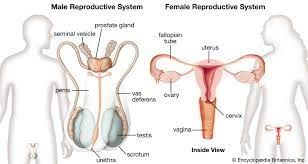
2

Objective:
Students will be able
to list 3 important
organs of this body
system and 1 way to
keep this system
healthy.

3


Male Reproductive Systems Hormones released by the pituitary gland during the early
teen years make the testes begin
producing the male sex hormone
testosterone.


4


This hormone causes some
physical changes. They are:
broadening of the shoulders
development of muscles
facial and other body hair
deepening of the voice

5
Multiple Choice
Which gland releases the testosterone hormone?
Salivary Gland
Sweat Gland
Pituitary Gland
Tear Gland
6

turn to your partner and discuss the physical changes testosterone causes
Be ready to get called on...
7
Multiple Choice
Which of these is not an effect of testosterone?
Clear Skin
Developed Muscles
Deeper Voice
Broader shoulders
8


Testosterone also causes the
production of sperm, the male
reproductive cell.

9


Main Functions of the Male
Reproductive System
Production of sperm
Transfer of sperm to the
female’s egg cell


10
turn to your partner and discuss the main functions of the male reproductive system
Be ready to get called on...
11
Multiple Choice
The main function of the male reproductive system is to produce sperm
True
False
12

Main Structures of the Male Reproductive System
The main external structures of the male reproductive system are:
the testicles or testes - two small
glands that produce sperm at the rate of 100million per day.
the penis, a tube-shaped
organ Attached to the trunk
of the body just above the testes.

13
Multiple Select
Which TWO of these are part of the external male system?
Vas deferns
Penis
Testicles
Prostate
14


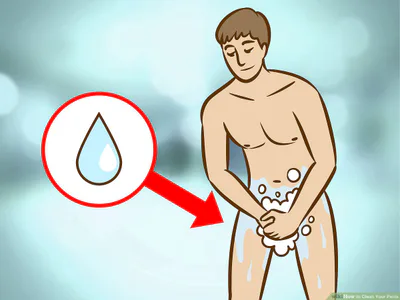
Care of the Male Reproductive System
Caring of the male reproductive system involves cleanliness, protection, and
physical examinations.
15


Males should avoid clothing that is
too tight . They should also wear
a protector or supporter during
strenuous activity to help shield
the groin area and external
reproductive organs.

16
turn to your partner and discuss the different ways to keep the male reproductive system healthy
Be ready to get called on...
17
Multiple Choice
Males should avoid...
getting physical exams
wearing tight clothes
cleaning themselves often
wear protection when active
18


Also, once a male is physically
mature, any lumps , thickenings, or
changes in texture or size of the
testes should be reported to a
doctor.

19


Problems of the Male Reproductive System
1. Hernia - a hernia occurs when part of an organ pushes through an opening of a membrane or muscle that usually contains the organ.
2. Sterility - a condition in which a person is unable to reproduce. In a male, this can be the result of producing too few sperm - less than 20 million sperm per milliliter is considered sterile.


20


Sterility can be caused by:
a) environmental hazards (x-rays, radiation, and lead from motor exhaust).
b) rises in temperature of testes
c) exposure to certain chemicals
d) smoking
e) malfunction of one of the internal male reproductive organs
f) sexually transmitted infections
g) having mumps as an adult


21
turn to your partner and discuss the different things that can cause men could be sterile
Be ready to get called on...
22
3. Enlarged Prostate Gland - this could be due to infection or
old age.
4. Cancer of the Prostate Gland or the Testes - only a doctor
can diagnose prostate or testicular cancer.


23
Multiple Choice
Which of these is NOT a problem of the male reproductive system?
Sterility
Hernia
Prostate Cancer
Bladder Cancer
24

Female Reproductive Systems
Hormones released by the pituitary gland make the ovaries begin producing the female sex hormones - estrogen and progesterone.

25


This hormone causes some
physical changes. They are:
enlargement of the
mammary tissue (breasts)
widening of the hips
body hair
menstrual cycle
Estrogen
Progesterone

26
turn to your partner and discuss the different changes female experience with hormone changes
Be ready to get called on...
27
Multiple Choice
Which of these is not an effect of hormonal changes in females?
widened hips
happier mood
enlarged breasts
body hair
28


The female reproductive system stores the female reproductive cells, or ova. They are stored in the ovaries.
At birth, a female has over 400,000 immature ova in her ovaries. When a female begins going through puberty,
hormones cause the immature ova to mature.
The ovaries begin the process of releasing one mature
ovum each month. This process is called ovulation.
29


Usually one ovary releases an ovum one month, and the other ovary releases an ovum
the next month.
When a mature ovum is released, it moves into one of
the fallopian tubes.

30
Multiple Choice
How many ovums a month does the body release?
5
4
3
1
31


When a mature ovum is released, it moves into one of the fallopian tubes.
These are a pair of tubes with finger-like projections that draw the ovum in. Each tube is about 4 inches long and about
1/3 inch in diameter.

32


If a sperm cell is present in the fallopian tubes, it may unite with the ovum and fertilization
occurs.
The cell that results from the
union of the sperm and ovum
is called a zygote.

33
Multiple Choice
The cell that results from a sperm uniting with an ovum is called..
egg
cell
zygote
sperm
34


Once a zygote has been
formed, it leaves the fallopian
tube, travels to the uterus, and
attaches itself to the uterine
wall.
The uterus is a small, muscular,
pear-shaped organ about the
size of a fist.

35
Multiple Choice
Which part of the reproductive system does the zygote attach itself to?
fallopian tubes
uterus
ovaries
vaginal canal
36

Here the baby will grow until it
is time for birth.
How long is a ____ pregnant?
a human
a dog
an elephant
a kangaroo
a frilled shark
a bird
9 months
2 months
21 months
1 month
3 ½ years
They lay eggs!!

37
Multiple Choice
How long is an elephants pregnancy?
50
30
21
15
38


Menstruation
If the ovum does not become
fertilized, the lining of the
uterus breaks down into blood,
tissue, and fluids, which pass
through the cervix and out
of the vagina.

39


This flow usually lasts about 4-7 days. Although there can be great variations, most females menstruate every 28 days.
Most girls begin this process
between the ages of 10 and 15.
It will continue into their 40’s,
or 60’s.

40
Multiple Choice
How many days does the menstruation cycle last?
5-10
2-3
4-7
10-13
41

Care of the Female Reproductive System
Cleanliness is an important part of keeping the reproductive system healthy.
This is especially important
during the menstrual period,
when menstrual flow may
cause a slight odor.

42


Problems of the Female Reproductive System
1. Menstrual cramps - these are usually mild, lasting several hours. Light exercise may help relieve cramps.
A heating pad may also help. If cramps are severe, a doctor may recommend an over-the-
counter medication. If they still persist, seek medical attention.
43


2. Premenstrual Syndrome (PMS) - Although many
females do not experience PMS, others may have a
variety of symptoms they experience for
several days up to 2 weeks.

44
Multiple Choice
What is PMS stand for?
premenstrual syndrome
premonthly syndrome
premanly syndrom
premisery syndrome
45


PMS can cause
a. nervous tension E. WEIGHT GAIN
b. anxiety f. dEPRESSION
c. irritability g. mOOD SWINGS
d. bloating H. FATIGUE
g.
46


3. Infertility - this can affect as
many as 8% of women of
childbearing age. Some of
the causes are:
A. blocked fallopian tubes -
some of the causes of a
blocked tube include pelvic
inflammatory disease or
abdominal surgery.

47


b. endometriosis - this is the 2nd leading cause of infertility. In this disease,
uterine tissue grows outside the uterus, often appearing on the ovaries or
fallopian tubes.

48
C. pelvic inflammatory disease - this is an infection of the fallopian tubes, ovaries, and surrounding areas. It can damage the reproductive organs and is usually caused by sexually transmitted diseases.
oTHER REPORDUCTIVE DISORDERS INCLUDE CYSTS AND CANCERS OF THE REPRODUCTIVE SYSTEM. eARLY DETECTION CONTRIBUTESTO SUCCESSFUL TREATMENT.
49
Multiple Choice
What is the percent of woman that are affected by infertility?
16
8
21
10
Reproductive System
Show answer
Auto Play
Slide 1 / 49
SLIDE
Similar Resources on Wayground

44 questions
SKP M5 อัตราเร็วแสง ดวงตาและการผสมสีแสง
Presentation
•
12th Grade
46 questions
Financial Aid
Presentation
•
12th Grade
48 questions
Respiratory, Circulatory and Immune Systems
Presentation
•
12th Grade
46 questions
Budidaya Satwa Harapan
Presentation
•
12th Grade
42 questions
Introduction to Medical Terminology
Presentation
•
12th Grade
46 questions
Digestive system
Presentation
•
11th - 12th Grade
44 questions
Feedback Loop & the Endocrine System
Presentation
•
11th - 12th Grade
44 questions
Topics (4.6 & 4.7) Cell Cycle & Regulation
Presentation
•
11th Grade - University
Popular Resources on Wayground
20 questions
STAAR Review Quiz #3

Quiz
•
8th Grade
20 questions
Equivalent Fractions
Quiz
•
3rd Grade
6 questions
Marshmallow Farm Quiz
Quiz
•
2nd - 5th Grade
20 questions
Main Idea and Details
Quiz
•
5th Grade
20 questions
Context Clues
Quiz
•
6th Grade
20 questions
Inferences
Quiz
•
4th Grade
19 questions
Classifying Quadrilaterals
Quiz
•
3rd Grade
12 questions
What makes Nebraska's government unique?
Quiz
•
4th - 5th Grade
Discover more resources for Biology
20 questions
Food Chains and Food Webs
Quiz
•
7th - 12th Grade
16 questions
AP Biology: Unit 2 Review (CED)
Quiz
•
9th - 12th Grade
43 questions
Human Body Systems
Quiz
•
9th - 12th Grade
14 questions
Food Irradiation Quiz
Quiz
•
12th Grade
20 questions
BIOLOGY EOC REVIEW: Biomolecules
Quiz
•
9th - 12th Grade
12 questions
NEW Genetics Vocab Quiz
Quiz
•
9th - 12th Grade
7 questions
BR Day 3 STAAR Review
Quiz
•
9th - 12th Grade
60 questions
Unit 8: Ecological Concepts
Quiz
•
9th - 12th Grade