

3.11 Ecosystems Lesson

Presentation
•
Science
•
1st - 5th Grade
•
Easy
Standards-aligned

Jeffrey Reed
Used 12+ times
FREE Resource
29 Slides • 6 Questions
1
Ecosystems
We will learn all about how organisms interact in the place where they live!

2

3
Multiple Choice
What is an ecosystem?
All of the living things in area
All of the living and nonliving things in an area and their interactions
All of the non-living things in an area
Only one specific type of organism in an area
4
Multiple Choice
Which of the following is not a living thing that can be found in an ecosystem?
Plants
Animals
Air
People
5
6

7
Multiple Choice
Which of the following is not an ecosystem?
Savanna
Rain Forest
Land
Polar
8

9

10
11
Population
A group of organisms of the same species that live in a specific area.

12
Community
All the populations of species that live in the same area and interact with each other.
Interact: affect each other

13
Living Things
plants
people
bacteria
animals

14
Nonliving Things
rocks
soil
sunlight
water
air

15
Multiple Choice

In the photo, what is an example of a living thing?
air
plant
sunlight
16
Producers
Producers are living organisms that use sunlight to make their own food.

17
Consumers
Consumers are living organisms that can not produce their own food. They consume, or eat, plants or animals as their food.

18
Consumers
There are three types of consumers: - herbivores
- carnivores
- omnivores

19
Decomposer
A decomposer is an organism like bacteria or fungus that breaks down dead things like leaves that have fallen or dead animals.

20
21

22
Multiple Select

Check all of the things that are living.
Coral
Water
Plankton
Sea Turtle
Sunlight
23
Multiple Select

Check all of the things that are nonliving.
Coral
Air
Water
Plankton
Rock
24
What is a habitat?
It's a place where animals live!
It is made up of these things: food, water, and shelter.
25
Types of Habitats (For Today)
Rain Forest
Desert
Oceans
Grasslands
26
Rain Forest
Mostly found in South America, Africa, and Southern Asia near the equator. Very hot, wet, and humid! Plants are dense, tall, leafy, green, and grow in layers called a canopy. Rainfall occurs often, usually daily.
ANIMALS: Cougars, pumas, snakes, exotic birds, gorillas, tigers, and more.
Rainforests are home to HALF of the Earth’s plant and animal species.
27
Ocean
WHERE:
All over the world, salt water
WEATHER:
Water near equator is warmer than poles
Plants include kelp, seaweed, algae, etc.
ANIMALS: Whales, dolphins, sharks, shrimp, fish, lobster, crab, plankton, and coral.
28
Grasslands
WHERE:
Everywhere except Antartica
ANIMALS:: Antelope, elephants, rhinoceros, zebra, giraffe, bison, prairie dog Plants: grasses, flowers, some bushes and trees
29

30


Fun Facts About Marine Iguanas
1. Marine iguanas are endemic to the Galapagos Islands and are the only marine lizard species in the world.
2. Marine iguanas can dive more than 20 m underwater.
3. Unlike land lizards, marine iguanas have blunt snouts that help them feed on algae underwater. They also have flattened tails that help them swim efficiently.
4. Marine iguanas typically spend only a few minutes underwater eating but can spend up to 30 minutes at a time submerged.
5. Male marine iguanas can grow to 1.3 m long, while females are generally about 0.6 m long.
6. Marine iguanas “sneeze out” excess salt their body collects while underwater through a nasal gland.
7. It is believed that around 4.5 million years ago, marine iguanas evolved from land iguanas that were brought to the Galapagos and adapted to a sea-faring life in order to survive on the islands.
31
Meet The 'King' of a Toxic Underground Ecosystem Unlike Anywhere Else on Earth.
The Movile cave in southeast Romania wouldn't be top of your holiday destination list: no light gets down to it, the air is thick with poisonous gases, and it was cut off from the outside world for around 5.5 million years before its accidental discovery in 1986.


32
Voracious water-scorpions, leeches, and planarians form the peak of the aquatic food web in Movile Cave.
The terrestrial community is even more diverse.
It is composed of various species of worms, isopods, pseudoscorpions, spiders, centipedes, millipedes, springtails, diplurans, and beetles.


33
OPen the external video on the Movile Cave
34

Titicaca Water Frog (Telmatobius culeus) ...
Andean Flicker (Colaptes rupicola) ...
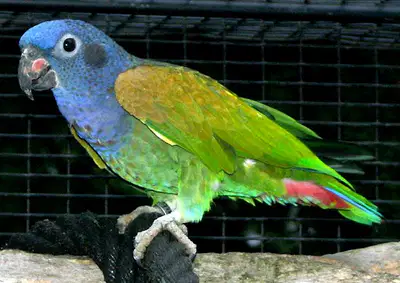
Blue-headed Parrot (Pionus menstruus) ...
Burrowing Owl (Athene cunicularia) ...
Short-eared Owl (Asio flammeus) ...
Ornate Tinamou (Nothoprocta ornata) ...
Rock Pigeon (Columba livia) ...
Spot-winged Pigeon (Patagioenas maculosa)
Lake Titicaca life and facts
sits 3,800 meters above sea level.
Highest navigable lake in the world.
35


Ecosystems
We will learn all about how organisms interact in the place where they live!
Show answer
Auto Play
Slide 1 / 35
SLIDE
Similar Resources on Wayground

25 questions
Planets in our Solar System
Presentation
•
1st - 5th Grade
32 questions
Mercury and Venus Lesson
Presentation
•
1st - 5th Grade
28 questions
Exploring Conservation of Matter
Presentation
•
2nd - 5th Grade
29 questions
Electricity
Presentation
•
2nd - 5th Grade
28 questions
GR7_W4_L7_FAT
Presentation
•
KG
27 questions
Comandos
Presentation
•
1st - 5th Grade
31 questions
Gravity in the Solar System
Presentation
•
1st - 5th Grade
26 questions
Planet Neptune
Presentation
•
1st - 5th Grade
Popular Resources on Wayground
6 questions
PRIDE Always and Everywhere
Presentation
•
12th Grade
20 questions
Lab Safety Quiz

Quiz
•
6th Grade
26 questions
KOR Review Kahoot Questions
Quiz
•
8th Grade
21 questions
Continents and Oceans
Quiz
•
6th Grade
12 questions
Unit Zero lesson 2 cafeteria
Presentation
•
9th - 12th Grade
20 questions
Parts of Speech
Quiz
•
5th Grade
10 questions
Riddles Riddles fun Riddles
Quiz
•
6th - 12th Grade
16 questions
Subject & Predicate
Quiz
•
5th Grade
Discover more resources for Science
20 questions
Lab Safety
Quiz
•
5th - 8th Grade
20 questions
Mixtures and Solutions Practice
Quiz
•
5th Grade
10 questions
Mixtures and Solutions
Quiz
•
4th Grade
10 questions
States and Properties of Matter

Interactive video
•
3rd - 5th Grade
20 questions
SOL 4.1 and 5.1 Scientific Investigation
Quiz
•
4th - 5th Grade
20 questions
Scientific Method
Quiz
•
5th Grade
14 questions
Soil Progress Grade 1 Review
Quiz
•
3rd Grade
23 questions
Comparing and Ordering Decimals
Quiz
•
5th Grade