Search Header Logo
Unit 4- Preview

Unit 4- Preview

Assessment

Presentation

Mathematics

9th Grade

Practice Problem

Medium

CCSS
HSF.BF.B.3, HSF-IF.C.7A, HSF-IF.C.7C

+5

Standards-aligned

Created by

Nathaeli Alicea

Used 3+ times

FREE Resource

9 Slides • 18 Questions

1

media

Unit 4-Polynomial Functions

-Preview-

media
media
media

2

  1. To identify whether a function is even,odd, or neither using a graph.

  2. To determine if a function is even, odd, or neither using a table and equation.

  3. To describe the end behavior of a polynomial function of degree 3 or higher by using its degree and leading coefficient.

  4. To sketch a rough graph of a polynomial function using zeros, multiplicity, and knowledge of end behavior.

  5. To find the real and complex zeros of a polynomial equation of degree 3 or higher in factored form.

  6. To find the real and complex zeros by factoring polynomial equations of degree 3 or higher.

  7. To solve one-variable polynomial equations with suitable factorization within a real-world context.

We Will Learn

3

  1. To identify whether a function is even,odd, or neither using a graph.

What Should We Already Know?

  • Given a graph, what is the axis of symmetry and end behaviors.

What we will learn?

  • Using what we know about the line of symmetry and end behaviors of graphs, we will be able to identify whether a function is even, odd, or neither.

What we will learn:

media

4

Multiple Choice

Question image

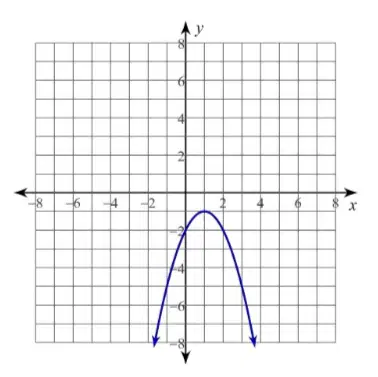
What is the axis of symmetry of the graph presented?

1

x=-3

2

x=1

3

x=2

4

x=-4

5

Multiple Choice

Question image

What are the end behaviors?

1

As x+, yx\rightarrow+\infty,\ y\rightarrow-\infty

As x, yx\rightarrow-\infty,\ y\rightarrow-\infty

2

As x+, y+x\rightarrow+\infty,\ y\rightarrow+\infty

As x, yx\rightarrow-\infty,\ y\rightarrow-\infty

3

As x, y+x\rightarrow-\infty,\ y\rightarrow+\infty

As x, yx\rightarrow-\infty,\ y\rightarrow-\infty

4

As x+, yx\rightarrow+\infty,\ y\rightarrow-\infty

As x+, yx\rightarrow+\infty,\ y\rightarrow-\infty

6

Drag and Drop

Question image
The axis of symmetry is​
. The left end behavior is ​​
​​ , and the right end behavior is​
​ . The function is ​​
.
Drag these tiles and drop them in the correct blank above
x=0
origin
even
odd

7

Drag and Drop

Question image
The axis of symmetry is ​
. The left end behavior is​
​ ​​ , and the right end behavior is ​
. The function is ​ ​
.
Drag these tiles and drop them in the correct blank above
origin
odd
x=0
even

8

  1. To determine if a function is even, odd, or neither using a table and equation.

What Should We Already Know?

  • Given a table, recognize axis of symmetry.

  • Given a function, solve by substituting.

What will we learn?

  • Using what we know about axis of symmetry on a table, we can determine if the function is even, odd, or neither.

  • Using what we know about solving by substituting, we can solve to determine if a function is even, odd, or neither.

What we will learn:

media
media
media
media
media
media
media
media
media

9

Dropdown

Question image
The function is (even/odd/neither)​
because the table (shows/ does not show) ​
symmetry about ​(y-axis/origin/ either one)
.

10

Dropdown

Question image
The function is (even/odd/neither) ​ ​
because the table (shows/ does not show) ​
symmetry about ( origin/ y-axis/ either one)​
.

11

Dropdown

Question image
The function is (even/ odd/ neither) ​ ​
because the table (shows/ does not show) ​​
symmetry about (y-axis/ origin/ either one) ​​
.

12

Multiple Choice

f(x)=x2+1f\left(x\right)=x^2+1

g(x)=9g\left(x\right)=9

What is f(g(x))f\left(g\left(x\right)\right) ?

1

81

2

82

3

19

4

10

13

Multiple Choice

Determine whether each function is even, odd, or neither using the equation.

f(x)=x32xf\left(x\right)=x^3-2x

1

even

2

odd

3

neither

14

Multiple Choice

Determine whether each function is even, odd, or neither using the equation.

f(x)=7x41f\left(x\right)=7x^4-1

1

even

2

odd

3

neither

15

  1. To describe the end behavior of a polynomial function of degree 3 or higher by using its degree and leading coefficient.

What Should We Already Know?

  • Identify an exponent.

  • Identify a coefficient.

  • Identify x- intercepts and zeros.

What will we learn?

  • How identifying the degree and leading coefficient of a polynomial function will help describe the end behavior of function.

  • How to describe the relationship between number of zeros and their multiplicity and degree of a polynomial function.

What we will learn:

Degree of polynomial: The degree of a polynomial in one variable is the greatest exponent of its variable.

Leading Coefficient: The coefficient of the term with the highest term.


Ex:

media


Multiplicity: Number of times a factor repeats in a polynomial.

media
media
media
media

16

Multiple Select

y=x(x+2)(x2)y=x\left(x+2\right)\left(x-2\right)

What are the zeros?

1

x=0

2

x=2

3

x=-2

4

x=1

17

Dropdown


f(x)=4x216x+16f\left(x\right)=4x^2-16x+16


The leading coefficient of the function is ​
​ ​ and the degree is ​
​ .

18

Multiple Select

f(x)=4x216x+16f\left(x\right)=4x^2-16x+16

What are the zero (s)?

1

x=0

2

x=4

3

x=2

4

x=1

19

  1. To sketch a rough graph of a polynomial function using zeros, multiplicity, and knowledge of end behavior.

What Should We Already Know?

  • Identify end behavior.

  • Find zeros of function.

What will we learn?

  • Using what we know about degree, zeros, and leading coefficient, how to sketch a polynomial function on a graph.

What we will learn:

Ex:

media

20

Match

Match each graph with its equation.

2(x+2)22\left(x+2\right)^2

2(x2)(x+2)2\left(x-2\right)\left(x+2\right)

2(x2)22\left(x-2\right)^2

21

  1. To find the real and complex zeros of a polynomial equation of degree 3 or higher in factored form.

What Should We Already Know?

  • Given factored form, solve for zeros.

What will we learn?

  • Find real and complex zeros of a polynomial equation.

What we will learn:

Complex zeros: solutions of a graph that are not visible on a graph. They are imaginary.

22

Multiple Choice

(4x216)(x2+9)\left(4x^2-16\right)\left(x^2+9\right)

How many complex zeros are there?

1

2

2

3

3

1

4

4

23

  1. To find the real and complex zeros by factoring polynomial equations of degree 3 or higher.

What Should We Already Know?

  • Factor by grouping.

  • Identify perfect sum/ difference of cubes and squares and factor them.

What will we learn?

  • Through factoring find real and complex zeros of a polynomial equation.

What we will learn:

Factor to solve. (Grouping)

Ex:

24

Multiple Choice

Factored form of:

16x425=016x^4-25=0

1

(4x25)2\left(4x^2-5\right)^2

2

(4x+5)(4x5)\left(4x+5\right)\left(4x-5\right)

3

(4x2+5)(4x25)\left(4x^2+5\right)\left(4x^2-5\right)

4

(4x2+5)2\left(4x^2+5\right)^2

25

Multiple Choice

Factored form of:

x3+2x24x8=0x^3+2x^2-4x-8=0

1

(x24)(x+2)\left(x^2-4\right)\left(x+2\right)

2

(x+2)(x+2)(x2)\left(x+2\right)\left(x+2\right)\left(x-2\right)

3

(x+2)(x2)\left(x+2\right)\left(x-2\right)

4

(x4)(x+2)\left(x-4\right)\left(x+2\right)

26

Multiple Choice

Factor polynomial to solve.

x3+x29x9=0x^3+x^2-9x-9=0

1

x=3, -3, -1

2

x=-3i, 3i, -1

3

x=-3, 3, 3i, -3i, -1

4

x=-1, 3, -3i

27

  1. To solve one-variable polynomial equations with suitable factorization within a real-world context.

What Should We Already Know?

  • Identify and interpret parts of an equation in terms of real-world context.

What will we learn?

  • Solve one-variable polynomial equations in a real-world context.

What to look for in a real-world context...

  • The function (Normally given)

  • The zeros (Would solve for by factoring)

  • Representation of zeros context (Based on the zeros)

What we will learn:

media

Unit 4-Polynomial Functions

-Preview-

media
media
media

Show answer

Auto Play

Slide 1 / 27

SLIDE