

Exploring the Wonders of the Solar System

Presentation
•
Science
•
9th Grade
•
Practice Problem
•
Easy
+4
Standards-aligned

Laura Geilhard
Used 1+ times
FREE Resource
11 Slides • 4 Questions
1
A fascinating journey through the mysteries and marvels of our celestial neighborhood. Discover planets, moons, and stars that captivate our imagination. Join us as we explore the vastness of space and unlock the secrets of the universe.
2
Exploring the Solar System
Solar System: A gravitationally bound system consisting of a sun and the objects that orbit it.
Galaxies: Huge collections of gas, dust, and billions of stars held together by gravity.
Scale Model: A three-dimensional representation of an object or system that maintains accurate relationships between components.
Planet: An astronomical body that orbits a star, is spherical in shape, and has cleared its orbit of similar-sized objects.
Orbit: A regular, repeating path that one object in space takes around another.
Gravity: An attractive force between two masses that draws objects toward its center.
Habitable: The orbital region around a star where an Earth-like planet can possess liquid water on its surface.
3
Exploring the Solar System
Scale Model: Helps understand distances and sizes of planets
The Sun: Only star in our solar system, contains 99.8% of mass
Planet Classification: Orbits the Sun, round due to gravity, cleared orbit
Kuiper Belt: Region beyond Neptune with comets and dwarf planets
Habitable Zone: Region where life can exist around the Sun
Gravity: Keeps planets in orbit, forms asteroid belt and Saturn's rings
4
5
Gravity in Our Solar System
Gravity is the attractive force that keeps planets and moons in orbit around the Sun.
The Sun's massive size compared to the planets creates a strong gravitational force.
Moons can orbit planets or even large asteroids due to gravity.
Gravity also holds Saturn's rings in orbit.

6
Multiple Choice

What is gravity responsible for?
Keeping planets and moons in orbit around the Sun
Creating Saturn's rings
Causing the Sun's massive size
Forming large asteroids
7
Gravity:
Keeping planets and moons in orbit around the Sun. Gravity is the force that holds celestial bodies in their orbits. Without it, planets and moons would drift off into space. It is the reason why we have stable solar systems and why we stay grounded on Earth. Gravity is truly a fundamental force of nature.
8
Wonders of the Solar System
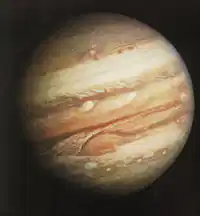
Gas Giants: Jupiter, Saturn, Uranus, Neptune
Dwarf Planets: Pluto (in Kuiper Belt)
Kuiper Belt: Donut-shaped region beyond Neptune
Moons: Over 200 in our solar system
9
Multiple Choice
Which region is known for having a donut shape beyond Neptune?
Gas Giants
Dwarf Planets
Kuiper Belt
Moons
10
Kuiper Belt
The Kuiper Belt is a region beyond Neptune that is known for having a donut shape. It is filled with icy objects, including dwarf planets like Pluto. The Kuiper Belt is also home to many comets, which are remnants from the early solar system. Exploring the Kuiper Belt provides valuable insights into the formation and evolution of our solar system.

11
What is a Planet?
An astronomical body that orbits a star, is spherical in shape, and has cleared its orbit of similar-sized objects. Did you know that there are currently 8 planets in our solar system? They are Mercury, Venus, Earth, Mars, Jupiter, Saturn, Uranus, and Neptune. Pluto used to be considered a planet but was reclassified as a dwarf planet in 2006.
12
Multiple Choice
What is a planet?
A three-dimensional representation of an object or system that maintains accurate relationships between components.
An attractive force between two masses that draws objects toward its center.
The orbital region around a star where an Earth-like planet can possess liquid water on its surface.
An astronomical body that orbits a star, is spherical in shape, and has cleared its orbit of similar-sized objects.
13
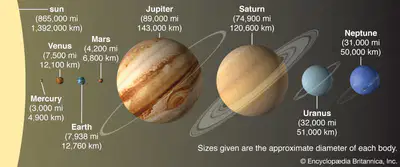
Scale Model of Solar System
Trivia: Scale models help classify planets based on their size. Did you know that if the Sun was the size of a basketball, Earth would be the size of a peppercorn? Explore the vastness of our solar system through scale models and be amazed by the size differences!
14

15
Multiple Choice
What is the purpose of a scale model in understanding the solar system?
To determine the mass of the Sun
To classify planets based on their size
To explore the Kuiper Belt
To study the habitable zone
A fascinating journey through the mysteries and marvels of our celestial neighborhood. Discover planets, moons, and stars that captivate our imagination. Join us as we explore the vastness of space and unlock the secrets of the universe.
Show answer
Auto Play
Slide 1 / 15
SLIDE
Similar Resources on Wayground

14 questions
The Language of Algebra
Presentation
•
9th Grade
10 questions
Big Bang Theory
Presentation
•
8th - 9th Grade
13 questions
Lesson 2.5.2 - Life During the Civil War
Presentation
•
8th - 9th Grade
12 questions
Ch. 26.2 - Stars
Presentation
•
9th Grade
13 questions
The Impact of Human Activities on the Environment
Presentation
•
9th Grade
11 questions
Formation of the Solar System 1
Presentation
•
9th Grade
13 questions
Day 7 STAAR Review
Presentation
•
8th Grade
10 questions
AKS 1 - Matter and the Periodic Table
Presentation
•
8th - 9th Grade
Popular Resources on Wayground
10 questions
How much do you know about our Portrait of an Eagle?

Quiz
•
10th Grade
10 questions
Fast Food Slogans
Quiz
•
6th - 8th Grade
21 questions
Continents and Oceans
Quiz
•
6th Grade
20 questions
Parts of Speech
Quiz
•
5th Grade
16 questions
Subject & Predicate
Quiz
•
5th Grade
25 questions
Multiplication Facts
Quiz
•
5th Grade
12 questions
Map Skills
Quiz
•
3rd Grade
22 questions
Continents and Oceans
Quiz
•
5th Grade
Discover more resources for Science
10 questions
Exploring Chemical and Physical Changes

Interactive video
•
6th - 10th Grade
20 questions
Atomic Structure
Quiz
•
9th Grade
10 questions
Decoding the Periodic Table of Elements
Interactive video
•
6th - 10th Grade
10 questions
Exploring the Periodic Table
Interactive video
•
6th - 10th Grade
22 questions
Periodic Table Review
Quiz
•
9th - 12th Grade
20 questions
Observation vs. Inference
Quiz
•
7th - 9th Grade
10 questions
Exploring the States of Matter
Interactive video
•
6th - 10th Grade
10 questions
Exploring Physical and Chemical Changes
Interactive video
•
6th - 10th Grade