Search Header Logo
  1. Resource Library
  2. Science
  3. Biology
  4. ...
  5. Fossils As Evidence Of Evolution
Fossils as Evidence of Evolution

Fossils as Evidence of Evolution

Assessment

Presentation

Science

8th Grade

Medium

NGSS
MS-LS4-1, MS-ESS1-4, MS-LS4-2

+4

Standards-aligned

Created by

Melissa Miranda

Used 23+ times

FREE Resource

1 Slide • 19 Questions

1

2

Multiple Choice

Remains of animals can be preserved by preventing them from decaying. What substances might help preserve parts or a whole animal
1
tar, amber, ice
2
ice, carbonization, trace
3
rock, amber, ice
4
tar, carbonization, rock

3

Multiple Choice

A geologist finds a series of footprints of a Stegosaurus (Dinosaur) in a sedimentary rock layer.  Which fossil best describes what was found?

1

Cast Fossils

2

Trace Fossils

3

Petrified Wood

4

Carbon Film

4

Multiple Choice

Question image
This type of fossil forms when entire organisms or parts of organisms are prevented from decaying by being trapped in rock, ice, tar, or amber.
1
trace
2
preserved or original remains
3
carbonized or carbon film
4
index

5

Multiple Choice

How do fossils provide evidence that evolution has happened on Earth?
1
Fossils show how the sizes of certain animals has changed drastically over millions of years
2
Fossils show that some species have gone extinct
3
Fossils show how life forms present today are different than those from the past
4
Different sedimentary rock layers provide evidence for how the environment has changed over time

6

Multiple Choice

Question image
This type of fossil forms when organisms or parts, like leaves, stems, flowers, fish, are pressed between layers of soft mud or clay that hardens squeezing almost all the decaying organism away leaving the carbon imprint in the rock.
1
trace
2
preserved or original remains
3
carbonized or carbon film
4
permineralized or petrified

7

Multiple Choice

What type of rock would you most likely find a fossil in?


1

Any Type of Rock

2

Sedimentary Rocks

3

Igneous Rocks

4

Metamorphic Rocks

8

Multiple Choice

As time progresses organisms become more ______________.

1

simple

2

Complex

3

devolved

4

unrecognizable

9

Multiple Choice

Question image

What type of fossil is a footprint?

1

Trace

2

inclusion

3

mold

4

cast

10

Multiple Choice

How do most fossils form?

1

An insect becomes trapped in amber.

2

An entire organism becomes frozen in ice.

3

A dead organism becomes buried in sediment.

4

A dead organism becomes buried in tar.

11

Multiple Choice

Index fossils must meet two criteria, they must have existed for a short period of time and ...

1

be few in numbers

2

lived for a long time

3

be widely distributed

4

be really old in age

12

Multiple Choice

What can scientists learn from studying the relationships between fossils?

1

how old all rock layers are

2

how life changed over time

3

how many relatives fossils had

13

Multiple Choice

Question image

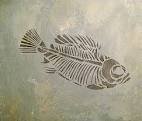
If scientists found this fossil, what could they infer?

1

what fish are like today

2

that this fish lacked oxygen

3

that water once covered the area where this fossil was found

14

Multiple Choice

The millions of fossils that scientists have collected are called
1
The Geologic Time Scale
2
The Origin of Species
3
The Fossil Record
4
A really neat fossil collection

15

Multiple Choice

What type of fossils proved evidence of the ACTIVITIES of ancient organisms?

1

Trace Fossils

2

Mold Fossils

3

Cast Fossils

4

Inclusion Fossils

16

Multiple Choice

Which types of structures are most likely to be fossilized?

1

Soft-bodied structures, such as jellyfish or skin & hair.

2

Hard-bodied structure, such as teeth and bones

3

Both hard and soft bodied structures.

17

Multiple Choice

Question image
Which layer formed first?
1
Rock Layer W
2
Rock Layer X
3
Rock Layer Y
4
Rock Layer Z

18

Multiple Choice

Question image

Which type of fossil is this?

1

Mold

2

Cast

3

Preserved original remains

4

Trace

19

Multiple Choice

If you know the age of a fossil, you know the relative age of the ________________ it was found inside.

1

sticky tar

2

rock

3

amber

4

ice

20

Multiple Choice

Question image
According to the law of superposition, which layer is the youngest?
1
A
2
B
3
C

Show answer

Auto Play

Slide 1 / 20

SLIDE