

5.2 Purity

Presentation
•
Chemistry
•
7th Grade
•
Practice Problem
•
Easy

Jake Villagonzalo
Used 47+ times
FREE Resource
11 Slides • 19 Questions
1
5.2 PURITY
LEARNING OBJECTIVES
Know that purity is a way to describe how much of a specific chemical is in a mixture
Use word equations to describe reactions
Know that reactions that do not always lead to a single pure product and that sometimes a reaction will produce an impure mixture of products
2
5.2 PURITY
SUCCESS CRITERIA
I can explain what is meant by purity
I can calculate percentage purity
I can explain why it is difficult to obtain a pure product
3
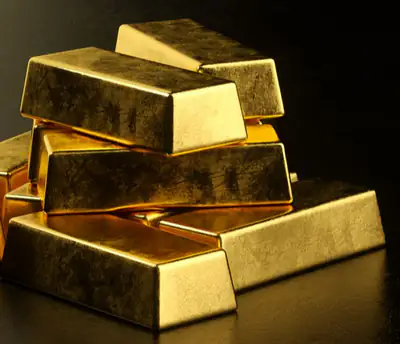
If an element is pure, it means that every one of its atoms is exactly the same and made of just one type of atom.
For example, pure gold is made of gold atoms.
Pure elements
4
When you buy gold it is usually marked to state if it is pure gold (24 carat) or an alloy such as 18 carat or 9 carat. This is a measure of its purity. The more gold it has, the higher its purity. 18 carat gold has 18 parts out of 24 that are gold; the rest (6 parts out of the 24) is made up of other metals such as silver or copper. 18 carat gold has a purity of 75%. To calculate this:
18 / 24 × 100 = 75%
5
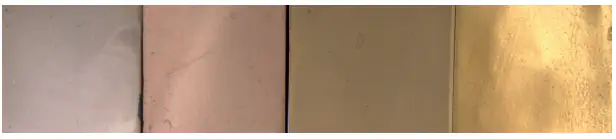
The photograph above shows samples of 8 carat, 14 carat, 18 carat and 24 carat gold.
You can see that the colour changes from slightly copper to yellow-gold.
6
Multiple Choice
Which one best desribes PURITY?
it is a substance that is made of the same and different types of atoms
it is a substance that is made of same and one type of atoms
it is a substance that is a mixture of same and different type of atoms
it is a substance that is chemically combined with different type of atoms
7
Multiple Choice
Gold is divided into 24 parts, with each single unit called a karat. The higher the karat, the purer the gold. How much is the concentration of gold in a 10 K neclace?
99.5 %
50 %
75 %
41.7 %
8
Multiple Choice
if 24 carat gold is considered as pure gold, what is the percentage or purity of the gold you received from your parents a christmass gift having 16 carat gold?
50 %
66 %
75 %
80 %
9
Multiple Choice
What is the purity of 24 carat gold?
25 %
50 %
75 %
100 %
10
Multiple Choice
What percentage of 9 carat gold is gold?
37.50 %
47.50 %
57.50 %
67.50 %
11
Multiple Choice
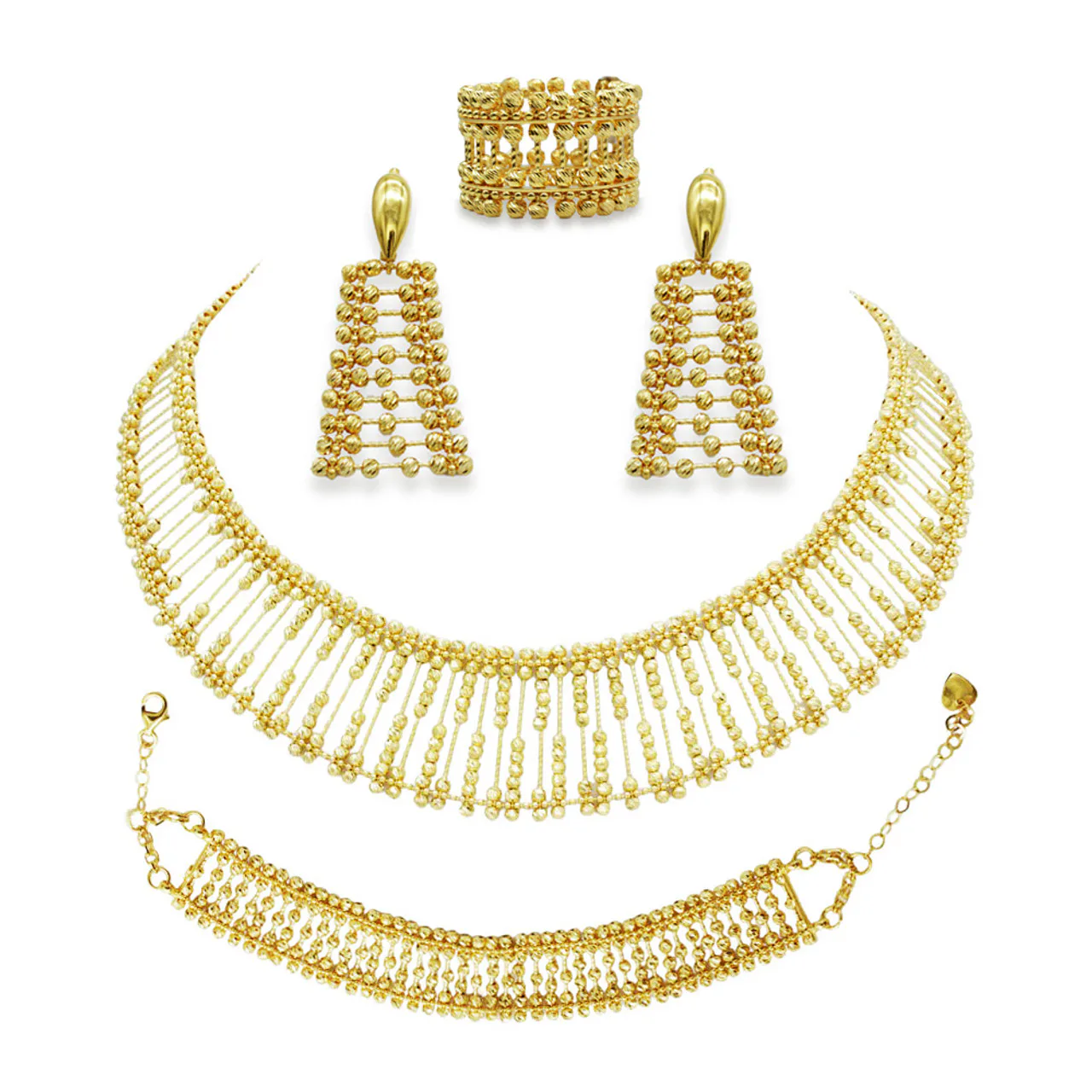
Gold is divided into 24 parts, with each single unit called a karat. The higher the karat, the purer the gold. How much is the concentration of gold in a 14 K neclace?
99.5 %
75 %
58.3 %
41.7 %
12
Multiple Choice
Gold is divided into 24 parts, with each single unit called a karat. The higher the karat, the purer the gold. How much is the concentration of gold in a 10 K neclace?
99.5 %
75 %
58.3 %
41.7 %
13
Multiple Choice
If a diamond has 1000 parts, it is said to be pure diamond. If the diamond is mixed with parts of other atoms, what is the concentration of a diamond if it has at least 700 parts?
50 %
70 %
90 %
100 %
14
Multiple Choice
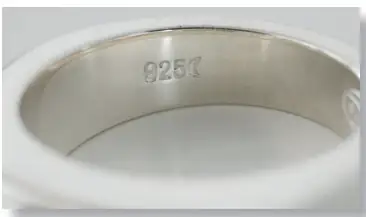
A silver is marked by its purity with the number of parts per thousand. So, the silver that is marked 925 has 92.5 % purity of silver and the rest is made of other metallic elements.
If you got yourself an 800 parts of a silver necklace, what is the concentration of the silver in your necklace?
20 %
40 %
60 %
80 %
15
Diamonds
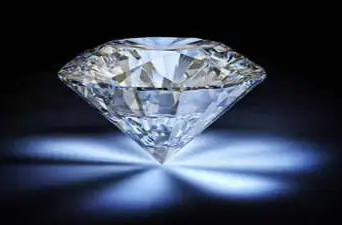
Diamonds are made from the element carbon. The carbon atoms are arranged in a particular way. If they are pure, diamonds contain no other elements. Pure diamonds are colourless and translucent (lets the light through).
16
Diamonds
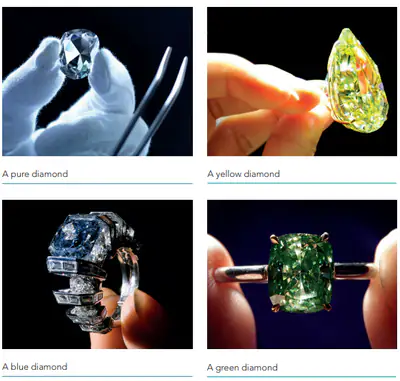
If diamonds have other elements mixed in with the carbon atoms, they can be different colours.
For example:
a. if a few carbon atoms per million are replaced with nitrogen, the diamond will be yellow.
b. If some carbon atoms are replaced by atoms of the element boron, then the diamond will be blue.
c. The rarest of all is a green diamond, formed when one atom per 1000 of carbon atoms is replaced by nitrogen, nickel or hydrogen.
17
Multiple Select
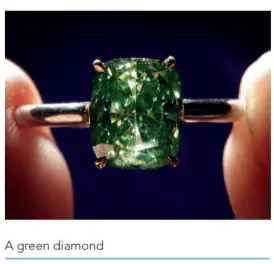
Which elements may cause a diamond to be green?
Select all that applies
carbon
nitrogen
nickel
hydrogen
18
Diamonds
In the next questions of the slides, fill in the statement with the correct word to complete the thought of the information or the text. You need to fill in the correct word as the number showed in each slide. The correct answer will be showed in the next slide after each correct answer.
19
Multiple Choice
Diamonds are made of______(1) atoms. When diamonds are coloured they have______of different______ mixed in with the carbon atoms. When they have______atoms the diamonds will be a blue colour. If diamonds have nitrogen atoms mixed with the carbon atoms, the diamond will be a______ colour. The______colour of diamond is green. Green diamonds have nitrogen, ______or hydrogen mixed in with the carbon atoms.
carbon
elements
boron
nickel
20
Multiple Choice
Diamonds are made of CARBON atoms. When diamonds are coloured they have ______(2) of different_____ mixed in with the carbon atoms. When they have______ atoms the diamonds will be a blue colour. If diamonds have nitrogen atoms mixed with the carbon atoms, the diamond will be a______ colour. The______ colour of diamond is green. Green diamonds have nitrogen, ______or hydrogen mixed in with the carbon atoms.
nickel
atoms
elements
boron
21
Multiple Choice
Diamonds are made of CARBON atoms. When diamonds are coloured they have ATOMS of different______(3) mixed in with the carbon atoms. When they have______ atoms the diamonds will be a blue colour. If diamonds have nitrogen atoms mixed with the carbon atoms, the diamond will be a______ colour. The______ colour of diamond is green. Green diamonds have nitrogen, ______or hydrogen mixed in with the carbon atoms.
elements
atoms
rarest
carbon
22
Multiple Choice
Diamonds are made of CARBON atoms. When diamonds are coloured they have ATOMS of different ELEMENTS mixed in with the carbon atoms. When they have______(4) atoms the diamonds will be a blue colour. If diamonds have nitrogen atoms mixed with the carbon atoms, the diamond will be a______ colour. The______ colour of diamond is green. Green diamonds have nitrogen, ______or hydrogen mixed in with the carbon atoms.
elements
atoms
boron
carbon
23
Multiple Choice
Diamonds are made of CARBON atoms. When diamonds are coloured they have ATOMS of different ELEMENTS mixed in with the carbon atoms. When they have BORON atoms the diamonds will be a blue colour. If diamonds have nitrogen atoms mixed with the carbon atoms, the diamond will be a______(5) colour. The______ colour of diamond is green. Green diamonds have nitrogen, ______or hydrogen mixed in with the carbon atoms.
green
blue
red
yellow
24
Multiple Choice
Diamonds are made of CARBON atoms. When diamonds are coloured they have ATOMS of different ELEMENTS mixed in with the carbon atoms. When they have BORON atoms the diamonds will be a blue colour. If diamonds have nitrogen atoms mixed with the carbon atoms, the diamond will be a YELLOW colour. The______(6) colour of diamond is green. Green diamonds have nitrogen, ______or hydrogen mixed in with the carbon atoms.
colourless
rarest
most common
famous
25
Multiple Choice
Diamonds are made of CARBON atoms. When diamonds are coloured they have ATOMS of different ELEMENTS mixed in with the carbon atoms. When they have BORON atoms the diamonds will be a blue colour. If diamonds have nitrogen atoms mixed with the carbon atoms, the diamond will be a YELLOW colour. The RAREST colour of diamond is green. Green diamonds have nitrogen, ______ (7)or hydrogen mixed in with the carbon atoms.
carbon
boron
hydrogen
nickel
26
PURE PRODUCTS
Often, when scientists carry out a chemical reaction, it is important that they obtain a pure product.
For example, if they are carrying out a chemical reaction to make a medicine, impurities in the product could stop the medicine from working, or it could harm the patient. In some simple reactions there is only one product.
27
PURE PRODUCTS
For example:
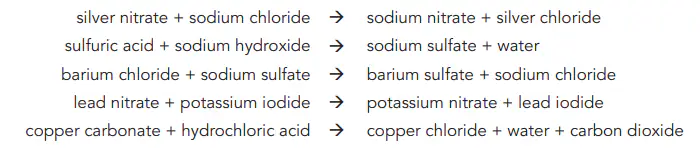
magnesium + oxygen ---> magnesium oxide
In other reactions, there may be more than one product. For example:
28
PURE PRODUCTS
When there is more than one product they are mixed up together. These products need to be separated and purified to produce whichever pure product you want. The products may also be mixed up with some of the reactants if they have not all been used up in the reaction.
29
Multiple Choice
When there is more than one product they are mixed up together, this means that the product produced is ______.
pured
compound
impured
atom
30
Multiple Select
Some reactions would lead to impurity because it has two or more products during the reaction. Why do you think it is hard to produce pure product?
Select two correct responses.
because some different types of atoms of compounds are mixed up
atoms do not react each chemically
atoms are attracted to each other
because reactants are made up of two different compounds reacting together
5.2 PURITY
LEARNING OBJECTIVES
Know that purity is a way to describe how much of a specific chemical is in a mixture
Use word equations to describe reactions
Know that reactions that do not always lead to a single pure product and that sometimes a reaction will produce an impure mixture of products
Show answer
Auto Play
Slide 1 / 30
SLIDE
Similar Resources on Wayground

23 questions
Mitosis Review
Presentation
•
7th Grade
23 questions
Olmec Civilization
Presentation
•
7th Grade
23 questions
Unit 6: Texas Colonization & Empresarios
Presentation
•
7th Grade
23 questions
Graphing One Variable Two Step Inequalities
Presentation
•
7th Grade
23 questions
Body Systems: The Muscular System
Presentation
•
7th Grade
23 questions
Multiplying and Dividing Rational Numbers
Presentation
•
7th Grade
23 questions
Circulatory system
Presentation
•
7th Grade
23 questions
Percent Error
Presentation
•
7th Grade
Popular Resources on Wayground
6 questions
PRIDE Always and Everywhere
Presentation
•
12th Grade
20 questions
Lab Safety Quiz

Quiz
•
6th Grade
26 questions
KOR Review Kahoot Questions
Quiz
•
8th Grade
21 questions
Continents and Oceans
Quiz
•
6th Grade
12 questions
Unit Zero lesson 2 cafeteria
Presentation
•
9th - 12th Grade
20 questions
Parts of Speech
Quiz
•
5th Grade
10 questions
Riddles Riddles fun Riddles
Quiz
•
6th - 12th Grade
16 questions
Subject & Predicate
Quiz
•
5th Grade