Magnetism and Electricity
Presentation
•
Chemistry
•
8th Grade
•
Hard
+7
Standards-aligned
DIon Dubois
FREE Resource
3 Slides • 112 Questions
1
Multiple Choice
Opposite charges
attract
repel
become neutral
do nothing
2
Multiple Choice
Mr. Anady rubbed two balloons against his wool sweater for 30 seconds each. What will happen when the balloons are brought near each other?
The balloons will repel each other.
The balloons will attract each other.
The balloons will become positively (+) charged.
The balloons will pop.
3
Multiple Choice
The accumulation of excess electric charge on an object is called
Static electricity
Electric discharge
Resistance
Current electricity
4
Multiple Choice
5
Multiple Choice
6
Multiple Choice
7
Multiple Choice
8
Multiple Choice
What can happen when you touch a metal doorknob after rubbing your shoes on the carpet?
The doorknob sends a burst of electric current into your body
Millions of electrons go from your finger into the doorknob
Our negatively charged body becomes positively charged
Our finger becomes negatively charged
9
Multiple Choice
10
How Does Charge Build Up?
Most atoms are uncharged, or neutral because the protons equal the electrons.
Uncharged objects become charged by gaining or losing electrons
Static electricity is the buildup of charges on an object
In static electricity, charges build up on an object, but they do not flow in a current
11
Charging Objects
Charges are neither created nor destroyed. This is known as the law of conservation of charge.
If one object loses electrons, another object must pick them up
There are four methods by which charges can redistribute themselves: Friction, conduction, induction, polarization
12
Charging by Friction
Charging by friction is the transfer of electrons from one uncharged object to another by rubbing objects together
13
Multiple Choice
In static electricity, charges build up on an object, but they do not flow continuously.
14
Multiple Choice
15
Multiple Choice
16
Multiple Choice
17
Multiple Choice
18
Multiple Choice
What is static electricity caused by?
A balance of power
A balance of positive and negative charges
An imbalance of positive and negative charges
An imbalance of protons and neutrons
19
Multiple Choice
20
Multiple Choice
21
Multiple Choice
The center of an atom is known as the
nucleus
electron cloud
neutron cloud
mass circle
22
Multiple Choice
23
Multiple Choice
24
Multiple Choice
25
Multiple Choice
26
Multiple Choice
27
Multiple Choice
28
Multiple Choice
29
Multiple Choice
A material that allows energy to flow through easily
Conductor
Insulator
30
Multiple Choice
A material that does not allow energy to flow through easily
Conductor
Insulator
31
Multiple Choice
Which of the following is a conductor?
Paper straw
Aluminum can
Log
32
Multiple Choice
Which of the following is an insulator?
Glass
Copper
Human body
33
Multiple Choice
Water is an insulator.
True
False
34
Multiple Choice
The human body is a conductor.
True
False
35
Multiple Choice
Rubber
Conductor
Insulator
36
Multiple Choice
Metal pan
Conductor
Insulator
37
Multiple Choice
The transfer of heat always goes from hot to cold.
True
False
38
Multiple Choice
Your coat is an insulator.
True
False
39
Multiple Choice
Conductor
Insulator
40
Multiple Choice
Conductor
Insulator
41
Multiple Choice
Conductor
Insulator
42
Multiple Choice
Conductor
Insulator
43
Multiple Choice
Conductor
Insulator
44
Multiple Choice
What supplies energy in an electric
circuit?
conductor
light bulb
battery
45
Multiple Choice
Which material is a conductor?
plastic
silver
glass
46
Multiple Choice
Which switch or switches must be closed to make the lamps light?
only switch 1
only switch 2
switches 1 and 2
47
Multiple Choice
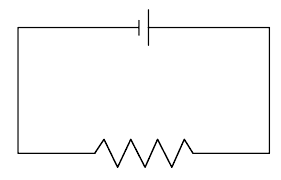
Is this an open circuit or a closed circuit?
open
closed
48
Multiple Choice
In a complete circuit, the wire is the_____________.
load
conductor
power source
49
Multiple Choice
Is this an open circuit or closed circuit?
open
closed
50
Multiple Choice
In the diagram below, describe the energy transformations that occur in the circuit, starting with the battery, when the light is on.
Chemical to Electric to Light
Chemical to Mechanical to Light
Electrical to Chemical to Light
Light to Chemical to Electrical
51
Multiple Choice
What is a wet cell battery?
one that uses water to make electricity
one that uses a liquid electrolyte solution
one that uses a powdered electrolyte solution
52
Multiple Choice
What is a dry cell battery
one that uses water to make electricity
one that uses a liquid electrolyte solution
one that uses a paste electrolyte
53
Multiple Choice
What is a storage cell?
a one-use source of electrical energy
a re-chargeable source of electrical energy
a one-use source of solar electricity
54
Multiple Choice
what is an electric cell?
a device that converts mechanical energy into electrical energy
a device that turns stored chemical energy into electrical energy
a device that devours electrical energy
a device that converts static electricity into mechanical energy
55
Multiple Choice
Conventionally, current is described as flowing from the ................ terminal of a battery to the ................ terminal.
Negative.....negative
Negative....positive
Positive......negative
Positive....positive
56
Multiple Choice
In the circuit, the bulb lights up because there is ............... flowing in the closed circuit.
battery
current
resistance
voltage
57
Multiple Choice
What is the unit of Resistance?
Ohm, Ω
Amp, A
Volt, V
Joule, J
58
Multiple Choice
What is the unit of Potential Difference?
Ohm, Ω
Amp, A
Volt, V
Joule, J
59
Multiple Choice
60
Multiple Choice
61
Multiple Choice
62
Multiple Choice
63
Multiple Choice
64
Fill in the Blanks
Type answer...
65
Fill in the Blanks
Type answer...
66
Fill in the Blanks
67
Multiple Choice
68
Multiple Choice
69
Multiple Choice
70
Multiple Choice
71
Multiple Choice
What is the unit for resistance?
volts
amps
coulombs
ohms
72
Multiple Choice
Simple, Series, or Parallel?
Simple
Series Circuit
Parallel Circuit
73
Multiple Choice
74
Multiple Choice
75
Multiple Choice
What is the name of this component?
battery
cell
open switch
lamp
76
Multiple Choice
What is the name of this component?
closed switch
cell
open switch
wire
77
Multiple Choice
What is the name of this component?
fuse
cell
bell
lamp
78
Multiple Choice
What is the name of this component?
fuse
cell
wire
bell
79
Multiple Choice
Is this an example of a series circuit?
yes
no
It is a parallel circuit
80
Multiple Choice
An electric current is the flow of ..............in a circuit?
Protons
Electrons
Maltesers
bulbs
81
Multiple Choice
What type of circuit is shown in the picture?
open
parallel
series
double
82
Multiple Choice
Why type of circuit is shown in the picture below?
megnetic
open
parallel
closed
83
Multiple Choice
what type of circuit is shown in the picture below?
magnetic
double
parallel
series
84
Multiple Choice
What type of material allows current to easily pass?
magnets
inductors
conductors
insulators
85
Multiple Choice
How could you make the bulb brighter in this circuit?
adding another light bulb
removing the switch
adding another battery in series
adding another battery in parallel
86
Multiple Choice
87
Multiple Choice
88
Multiple Choice
89
Multiple Choice
90
Multiple Choice
91
Multiple Choice
Which of the following is the most appropriate definition for magnetism?
the force of attraction or repulsion of magnetic materials
the force of attraction only of magnetic materials
the force of repulsion only of magnetic materials
none of the above
92
Multiple Choice
Which of the following is the most appropriate definition for magnetic field?
an area surrounding a magnet that does not apply a force (a push or pull)
an area directly on the magnet that applies a force (a push or pull) without actually touching an object
an area of magnetism surrounding a magnet that applies a force (a push or pull) without actually touching an object
an area surrounding a magnet that applies a force (a push or pull), but only by directly touching an object
93
Multiple Choice
If placed in a magnetic field, which of the following materials would be affected?
a compass
wood chips
plastic paper clips
pieces of glass
94
Multiple Choice
How does the electromagnet in the diagram above demonstrate the relationship between magnetism and electricity?
The wire is wrapped around the iron core, but no electric circuit is present.
The wire is wrapped around the iron core, but no energy source is present.
The wire in the electric circuit is wrapped around an iron core producing a magnetic field.
No circuit is present.
95
Multiple Choice
Which of the following is flowing through the electromagnet above?
electric current
magnetic current
magnetic energy
chemical energy
96
Multiple Choice
97
Multiple Choice
98
Multiple Choice
99
Multiple Choice
100
Multiple Choice
101
Multiple Choice
102
Multiple Choice
Arrows are close together on a force field when the force is
stronger
weaker
opposite
103
Multiple Choice
Electronic devices create magnetic fields because they
are magnets
are compasses
have moving particles with electric charge
104
Multiple Choice
The electromagnetic forces from a current carrying wire are strong enough to move the compass needle. The forces can be made stronger by
making the wire shorter
making the wire longer
making the wire into loops
105
Multiple Choice
106
Multiple Choice
107
Multiple Choice
108
Multiple Choice
109
Multiple Choice
110
Multiple Choice
111
Multiple Choice
112
Multiple Choice
113
Multiple Choice
What is the unit of measurement for resistance?
Voltage
Ampere
Watts
Ohms
114
Multiple Choice
115
Multiple Choice
Opposite charges
attract
repel
become neutral
do nothing
Show answer
Auto Play
Slide 1 / 115
MULTIPLE CHOICE

Similar Resources on Wayground
109 questions
Lesson Similarity
Presentation
•
8th Grade
107 questions
Biology EOC Review 2
Presentation
•
9th - 10th Grade
114 questions
M14 - Circuitos elétricos simples - Parte 1
Presentation
•
9th Grade
106 questions
Gerund, infinitives and participles
Presentation
•
7th Grade
110 questions
16 Skills
Presentation
•
6th - 8th Grade
111 questions
2nd Quarter Math 8
Presentation
•
8th Grade
109 questions
Similarity
Presentation
•
8th Grade
109 questions
Similarity Lessons
Presentation
•
8th Grade
Popular Resources on Wayground
20 questions
"What is the question asking??" Grades 3-5
Quiz
•
1st - 5th Grade
20 questions
“What is the question asking??” Grades 6-8
Quiz
•
6th - 8th Grade
10 questions
Fire Safety Quiz
Quiz
•
12th Grade
20 questions
Equivalent Fractions
Quiz
•
3rd Grade
34 questions
STAAR Review 6th - 8th grade Reading Part 1
Quiz
•
6th - 8th Grade
20 questions
“What is the question asking??” English I-II
Quiz
•
9th - 12th Grade
20 questions
Main Idea and Details
Quiz
•
5th Grade
47 questions
8th Grade Reading STAAR Ultimate Review!
Quiz
•
8th Grade
Discover more resources for Chemistry
20 questions
Counting Atoms
Quiz
•
8th Grade
20 questions
Counting Atoms Practice
Quiz
•
8th Grade
55 questions
Unit # 12 Solutions Test Review KAP
Quiz
•
8th Grade
41 questions
Atomic Structure and Periodic Table Unit Review
Quiz
•
8th Grade
20 questions
Chemical Reactions
Quiz
•
8th Grade
20 questions
Chemical bonding
Quiz
•
7th - 8th Grade
40 questions
Science ACAP Review
Quiz
•
8th Grade
10 questions
Exploring Solutions and Their Properties
Interactive video
•
6th - 10th Grade