
Review of Chemical Bonds

Presentation
•
Chemistry
•
11th Grade
•
Practice Problem
•
Medium
Standards-aligned

Maureen Clayton
Used 11+ times
FREE Resource
9 Slides • 4 Questions
1
Understanding the strength and significance of chemical bonds in various substances and reactions.
2
The Power of Chemical Bonds
3
Multiple Choice
Which type of bond occurs between nonmetal atoms with an electronegativity difference of 1.7 or less?
Ionic bond
Metallic bond
Covalent bond
Hydrogen bond
4
Covalent Bond
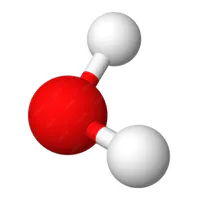
Trivia: Covalent bonds occur between nonmetal atoms with an electronegativity difference of 1.7 or less. Unlike ionic bonds, where electrons are transferred, covalent bonds involve the sharing of electrons. This sharing creates a strong bond that holds the atoms together. Examples of substances with covalent bonds include water (H2O) and methane (CH4).
5
The Power of Chemical Bonds
6
Multiple Choice
What is the difference between polar and non-polar covalent bonds?
Polar covalent bonds involve unequal sharing of electrons, while non-polar covalent bonds involve equal sharing of electrons.
Polar covalent bonds involve equal sharing of electrons, while non-polar covalent bonds involve unequal sharing of electrons.
Polar covalent bonds involve the transfer of electrons, while non-polar covalent bonds involve the sharing of electrons.
Polar covalent bonds involve the sharing of protons, while non-polar covalent bonds involve the sharing of electrons.
7
Polar vs Non-Polar Covalent Bonds
8
The Power of Chemical Bonds
9
Multiple Choice
Which type of compound is made of nonmetal atoms covalently bonded and has high melting points?
Ionic compounds
Molecular compounds
Network solids
Network covalent macromolecules
10
Network Covalent Macromolecules
Trivia: Network covalent macromolecules are made of nonmetal atoms covalently bonded and have high melting points. Examples include diamond and quartz. These compounds have a unique structure that allows for their exceptional strength and durability. They are widely used in various industries, including electronics and construction.
11
The Power of Chemical Bonds
12
Multiple Choice
Which type of bond has higher melting points than molecular compounds?
Ionic bonds
Hydrogen bonds
Dipole-dipole interactions
Van der Waals forces
13
Ionic Bonds
Ionic bonds have higher melting points than molecular compounds. This is because ionic compounds have a strong electrostatic attraction between positively and negatively charged ions, requiring more energy to break the bond. Molecular compounds, on the other hand, have weaker intermolecular forces. Examples of ionic compounds with high melting points include table salt (NaCl) and calcium chloride (CaCl2).
Understanding the strength and significance of chemical bonds in various substances and reactions.
Show answer
Auto Play
Slide 1 / 13
SLIDE
Similar Resources on Wayground

10 questions
Cation/Anion
Presentation
•
12th Grade
9 questions
Invest
Presentation
•
11th - 12th Grade
12 questions
Intro Into Chemistry
Presentation
•
11th Grade
11 questions
Crude Oil and Hydrocarbons
Presentation
•
10th Grade
11 questions
Protein
Presentation
•
12th Grade
11 questions
Enlace químico
Presentation
•
10th - 12th Grade
9 questions
Learning how to create a quiz.
Presentation
•
KG
10 questions
QUI11P4 - Material de Estudio (Apuntes)
Presentation
•
11th Grade
Popular Resources on Wayground
10 questions
Safety Day 2026 – Student Review

Quiz
•
9th Grade
21 questions
Continents and Oceans
Quiz
•
6th Grade
20 questions
Parts of Speech
Quiz
•
5th Grade
16 questions
Subject & Predicate
Quiz
•
5th Grade
25 questions
Multiplication Facts
Quiz
•
5th Grade
12 questions
Map Skills
Quiz
•
3rd Grade
22 questions
Continents and Oceans
Quiz
•
5th Grade
15 questions
Rounding Decimals
Quiz
•
5th Grade
Discover more resources for Chemistry
20 questions
electron configurations and orbital notation
Quiz
•
9th - 12th Grade
20 questions
Periodic Table Trends
Quiz
•
11th Grade
50 questions
Unit 3: Atomic Assault Summative Review
Quiz
•
11th Grade
20 questions
Physical or Chemical Change/Phases
Quiz
•
8th Grade - University
15 questions
Periodicity Module Exam Practice Quiz
Quiz
•
9th - 12th Grade
15 questions
Electron Configurations and Orbital Notation
Quiz
•
11th Grade
8 questions
Label Energy Diagram
Quiz
•
9th - 12th Grade
20 questions
Naming Covalent Compounds
Quiz
•
11th Grade