

Unit 315 Session 5 Specialist components for cold water systems

Presentation
•
Other
•
Professional Development
•
Practice Problem
•
Easy

Plumbers Cymoedd
Used 8+ times
FREE Resource
27 Slides • 13 Questions
1
we may be asked to install specialist components that we may only come into contact with on a limited number of occasions.
Even so, it is important that we become familiar with these ‘specialist’ components to ensure that we position and install them correctly and according to the manufacturer’s instructions and in line with any regulations or recommendations.


2
Open Ended
How many specialist components can you list?
3
Infrared operated taps
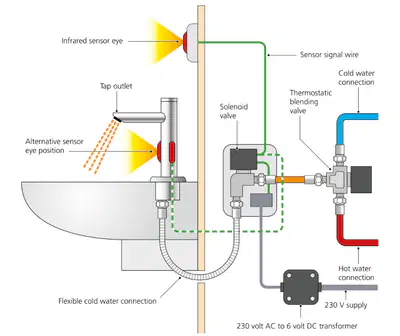
Low voltage (6 V DC current) infrared operated outlets are becoming popular for use in public conveniences, hotels and public buildings. They use infrared sensors to operate solenoid valves. The solenoid valves open for a defined length of time to allow a certain quantity of water to flow through them. They are frequently used to flush WCs and urinals, and to operate taps and shower fitments. The use of infrared operated outlets has several advantages over standard taps and outlets:
● They are easy to operate.
● They stop the spread of germs and bacteria.
● They can help with water conservation.
● They can prevent scalding injury

4
How do they work?
The method of operation of infrared operated outlets is quite simple:
1 The infrared sensor eye emits an infrared beam that is approximately 200 to 260 mm wide.
When an object, such as a hand, is within range of the infrared sensing zone, the infrared beam is interrupted and a signal wire transfers an electronic signal to a solenoid valve.

5
2 The solenoid valve acts as a latching mechanism that allows a restricted flow of water to flow through it. As soon as the valve receives the electronic signal, it snaps open, allowing the water to flow to the outlet.
6
3 When the object leaves the sensing zone, the infrared beam returns to normal, the electronic signal ceases and the valve closes.

7
Multiple Choice

What triggers the operation of an infrared operated outlet?
Radio signals
Interrupted infrared beam
Temperature change
Mechanical pressure
8
Multiple Choice

What is the role of the solenoid valve
Transmitting infrared signals
Controlling water flow
Emitting electronic signals
Closing the infrared sensor eye
9
Multiple Choice

How does the infrared outlet respond when an object is no longer within the sensing zone?
The solenoid valve opens wider
The infrared beam widens
The electronic signal continues
The solenoid valve closes
10
11
Open Ended
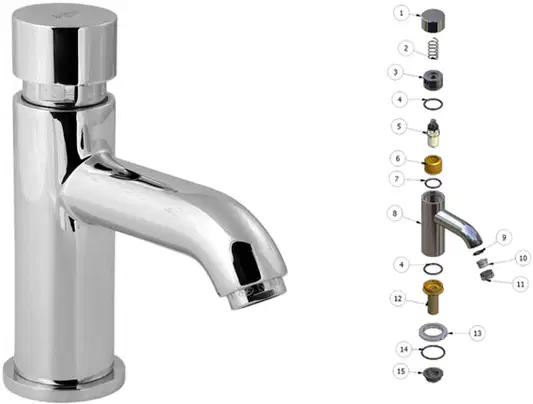
Where do you think we use Non-concussive tap would be used, and why?
12
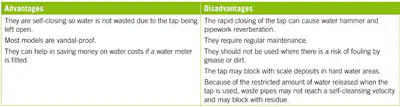
Non-concussive taps are self-closing taps that are usually used in public washrooms, hotels and places of work where there is a risk that the tap may either be left open or there is a high risk of vandalism.
13
Open Ended

Research and briefly describe how a non-concussive tap operates.
14
Spray taps are designed to reduce the flow of water from the outlet of the tap to a fine spray.
This helps to conserve water, often reducing the water consumption of the tap by as much as 20 per cent.


15
Flow limiting valves are designed to limit the flow
of water to appliances irrespective of the pressure upstream.
Most are designed with an integral service valve and interchangeable cartridges that allow the same valve body to be used for differing flow rates depending on the appliance that it is serving. The flow rate can be changed by using a different cartridge insert. They can be used on both hot and cold water
supplies and are ideal for limiting the flow to:
● washbasins
● baths and sinks
● bidets
● WCs

16
Many urinal installations do not have any form of water control and so they flush continuously even during those periods when the building is unoccupied. Quite often, the flow rate is higher than that specified by the Water Supply (Water Fittings) Regulations. Under the regulations, a urinal should use no more than 7.5 litres per bowl/hour and 10 litres/hour for a single bowl. The urinal should also have some form of limiting device to prevent unnecessary flushing during periods when the building is not used.
17
Open Ended
Research task:
List and briefly describe the operation of as many
Urinal – water conservation control methods as you can.
18
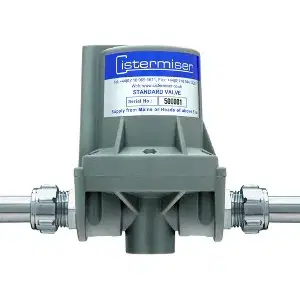
One of the original flush controllers from 25 years ago, this Cistermiser works by sensing the drop in water pressure caused by hand washing.
No electronics, no sensors. They are still chosen by some, nevertheless.
19
This Low Flush controller can initiate a flush every 1-15 hours so that the standing water in the cistern and flush pipes will be regularly 'purged', thus usually avoiding the need to carry out a dead-leg procedure to minimise the risk of legionella.

20
Consisting of an electronic control sensor unit and a solenoid for installation into the water supply pipe of a urinal auto cistern.
The unit monitors washroom traffic to schedule cistern flushes. Where no motion is detected a hygiene flush is initiated at 12 hour intervals.
During high usage periods where the number of detections exceeds 20, the unit will temporally switch from 30 or 60 minute flushing to 15 minute flushing for improved hygiene.


21
Shower booster pumps are used to give a high flow rate shower and are used in conjunction with shower mixing valves.
22
Open Ended
What do you think is meant by 'single impeller' and 'Twin impeller' ?
23
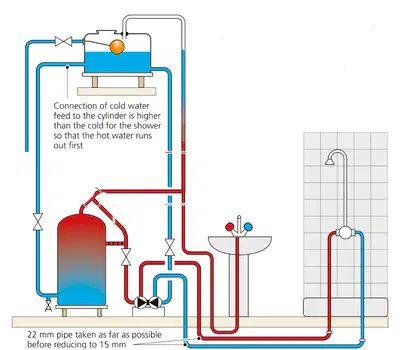
Twin impeller pump on the inlet to the mixer
valve.
The pump increases the pressure of the hot and cold water supplies to the mixer valve independently. The water is then mixed to the correct temperature in the valve before flowing to the shower head.
24

25
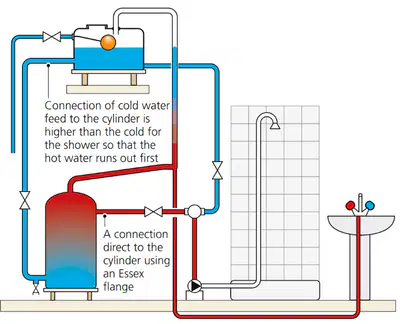
Single impeller pump off the outlet from the
mixer valve.
These boost the water AFTER it has left the mixer valve. They are usually used with concealed shower valves and fixed ‘deluge’ type, large water volume shower heads
26

27
Care must be exercised when making the hot connection to the cylinder. There are two ways in which this can be done.
The first method involves installing the hot water draw-off from the cylinder at an angle of between 30 and 60°, with the hot shower pump connection being made at an angle of 90° with a tee piece.
This allows any air in the system to filter up to the vent and away from the hot shower pump inlet.

28
The second method involves making a direct connection to the cylinder, some cylinders have a secondary hot water connection pre-installed however it may be necessary for you use a special fitting. With this method, the hot water is taken directly from the hot water storage vessel avoiding any air problems which may occur.
29
Open Ended

Research and briefly describe the different methods of connecting to a hot water cylinder
30
Essex flange
An Essex flange is used to add extra connections to a hot water cylinder (for example: a power shower connection)


31
32
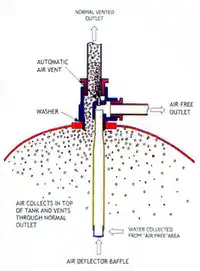
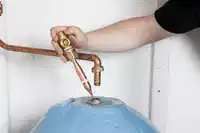
Surrey flange

Surrey flange adds a connection for a shower to a hot water cylinder and improves water quality by reducing air content, often solving problems of air locks in shower pumps and power showers.

33
In both single and double impeller installations, the pump increases the pressure of the water, which means that the minimum 1 m usually needed for an appropriate flow rate head is not necessary.
However, a minimum head of 150 mm is required to lift the flow switches as these switch the pump on.

34
Open Ended
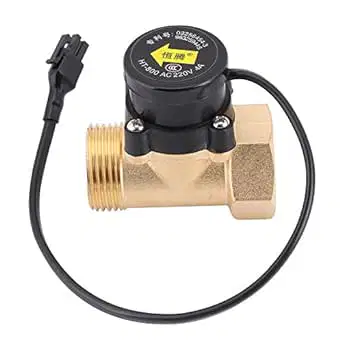
Briefly describe how the flow switch in a shower pump works
35
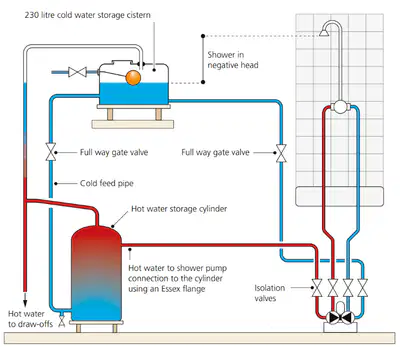
If the head of the shower is above the water level in the CWSC, there will be no movement of water when the shower valve is opened therefore the flow switch will not operate and the shower pump will not switch on.
36
Open Ended
How do you think we can install a pumped shower where the outlet head of the shower is above the water storage cistern?
37
Negative head shower pumps have the inclusion of a small accumulator or pressure vessel that sits on top of the pump.
They work by sensing a sudden drop in pressure.
When the shower valve is opened, the pressure within the system, caused by the pumping power of the shower pump, suddenly drops. The accumulator then immediately forces a small amount of water out via a small plastic tube, to activate the flow switch located inside the pump casing.

38
39
Open Ended

Research and briefly describe how a pressure reducing valve works
40
Open Ended

Research and briefly describe how a shock arrestor works
we may be asked to install specialist components that we may only come into contact with on a limited number of occasions.
Even so, it is important that we become familiar with these ‘specialist’ components to ensure that we position and install them correctly and according to the manufacturer’s instructions and in line with any regulations or recommendations.
Show answer
Auto Play
Slide 1 / 40
SLIDE
Similar Resources on Wayground

38 questions
Media and Information Literacy
Presentation
•
Professional Development
35 questions
Q2. Assessment 1 Practice: Quiz
Presentation
•
KG
36 questions
4th Amendment up to Terry
Presentation
•
University
35 questions
Lecture 2 EEE 309/EEE 3307
Presentation
•
University
38 questions
Community acquired pneumonia
Presentation
•
University
34 questions
Unit 315 session 10 Flushing and disinfection of systems
Presentation
•
Professional Development
36 questions
CÓCTELES Y COMBINADOS
Presentation
•
Professional Development
38 questions
United Kingdom - Geography, Customs, Culture, and Cuisine
Presentation
•
KG
Popular Resources on Wayground
21 questions
Continents and Oceans

Quiz
•
6th Grade
20 questions
Parts of Speech
Quiz
•
5th Grade
16 questions
Subject & Predicate
Quiz
•
5th Grade
25 questions
Multiplication Facts
Quiz
•
5th Grade
12 questions
Map Skills
Quiz
•
3rd Grade
22 questions
Continents and Oceans
Quiz
•
5th Grade
15 questions
Rounding Decimals
Quiz
•
5th Grade
20 questions
Brand Labels
Quiz
•
5th - 12th Grade
Discover more resources for Other
10 questions
How to Email your Teacher
Quiz
•
Professional Development
40 questions
Flags of the World
Quiz
•
KG - Professional Dev...
4 questions
Exit ticket for the end of class: Spotlight
Quiz
•
KG - Professional Dev...
20 questions
90s Cartoons
Quiz
•
Professional Development
20 questions
Block Buster Movies
Quiz
•
10th Grade - Professi...
10 questions
How to Email your Teacher
Quiz
•
Professional Development