Search Header Logo
Types of Reactions Review and Law of Conservation of Mass

Types of Reactions Review and Law of Conservation of Mass

Assessment

Presentation

Chemistry

12th Grade

Medium

NGSS
HS-PS1-7

Standards-aligned

Created by

Matthew Miranda

Used 5+ times

FREE Resource

4 Slides • 11 Questions

1

media

2

Multiple Choice

4Si + S8 --> 2Si2S4
1
Synthesis
2
Decomposition
3
Single displacement
4
Double displacement

3

Multiple Choice

3Ca + 2AlCl3 --> 3CaCl2 + 2Al
1
Synthesis
2
Decomposition
3
Single diplacement
4
Double displacement

4

Multiple Choice

3KOH + H3PO4 --> K3PO4 + 3H2O
1
Synthesis 
2
Decomposition
3
Single displacement
4
Double displacement

5

Multiple Choice

2Pb(NO3)2 --> 2PbO + 4NO2 + O2
1
Synthesis 
2
Decomposition
3
Single displacement
4
Combustion

6

Multiple Choice

2NO2 --> N2 + 2O2
1
Synthesis
2
Decomposition
3
Single displacement
4
Combustion

7

Multiple Choice

P4 + 3O--> 2P2O3
1
Synthesis 
2
Decomposition
3
Single displacement
4
Combustion

8

Multiple Choice

Fe + H2SO4 --> Fe2(SO4)3 + H2
1
Synthesis (combination)
2
Decomposition
3
Single replacement
4
Combustion

9

Multiple Choice

C5H10O4 + O2 --> CO2 + H2O

1
Decomposition
2
Single Replacement
3
Combustion
4
Double Replacement

10

media

11

media

12

media

13

Multiple Choice

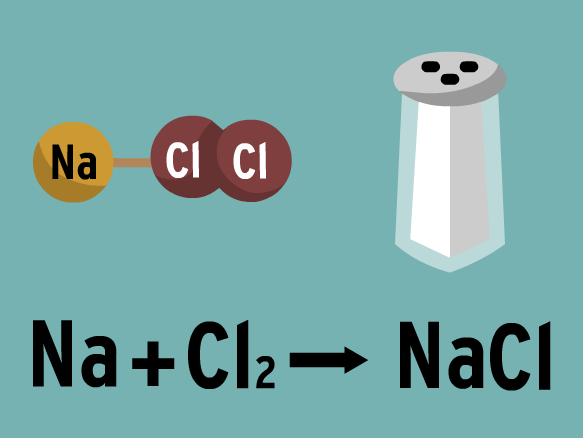
Question image

In a chemical reaction, 4 grams of sodium must combine with how many grams of chlorine to produce 10 grams of table salt?

1

4 grams

2

6 grams

3

8 grams

4

10 grams

14

Multiple Choice

In a reaction A + B ----> C,  reactant A has 5g and product  C has 9g. How many grams does reactant B should have? 
1
4g
2
5g
3
9g
4
14g

15

Multiple Choice

12g of Carbon react with 16g of Oxygen, how much carbon monoxide (CO) is formed?

1

28 g

2

4g

3

30g

4

12g

media

Show answer

Auto Play

Slide 1 / 15

SLIDE