

Reviewing the Declaration and other documents

Presentation
•
Social Studies
•
8th Grade
•
Medium

Christian Therrien
Used 27+ times
FREE Resource
19 Slides • 17 Questions
1
Reviewing the Declaration of Independence, Articles of Confederation, and Constitution


2
Colonists were angered by the new laws
Time for Independence
The Congress formed a committee to write a statement declaring independence for the colonies.
Declaration of Independence: Thomas Jefferson credited as being Father of Document
July 4th, 1776 Ready to sign


3
The Declaration of Independence did more than just say the colonies wanted their freedom. It explained why they wanted their freedom. It listed all the bad things that the king had done to the colonies and that the colonies had rights which they felt they should fight for.
Five Sections:
1) Introduction-declare causes, law of nature
2)Preamble-colony's philosophy and notable quote below
3)Indictment of King George- lists grievances against King
4)Denunciation-states position on British people, "enemies in war, brothers in peace."
5) Conclusion-finishing out the "break up." Breaks all ties with Britain
"We hold these truths to be self-evident, that all men are created equal, that they are endowed by their Creator with certain unalienable Rights, that among these are Life, Liberty and the pursuit of Happiness."
4

John Locke was an early influence on the America Founding Fathers. His writings during the Enlightenment period gave the founders ideas and natural rights and democracy.
5
Multiple Choice
What was the date the Continental Congress adopted the Declaration of Independence?
July 4,1776
August 2, 1776
April 18, 1776
December 16, 1773
6
Multiple Choice
Thomas Jefferson borrowed many of his ideas from which Enlightenment Philosopher?
John Locke
George Washington
Thomas Paine
John Adams
7

8

9

10
#1 Strength was the Articles of Confederation kept the American Government together during the American Revolution. This convinced other nations like France and Spain to join the war effort.
France and Spain were waiting to get back at Great Britain
Past Conflicts and wars made getting allies easy, but they did not want to join the losing side, or the side that was not together.

11
Multiple Choice

What were the Articles of Confederation?
The plan of government after The Constitution of the United States of America was written.
The plan of government before The Constitution of the United States of America was written.
The plan of government for any state that wanted to leave North Caldwell.
The plan of government before Columbus.
12
Multiple Choice

What was the main problem with the Articles of Confederation?
The national government was weak.
State governments were weak.
It was written in cursive.
Government could not function during the war
13
Constitutional Convention
Was held at the Pennsylvania State House in Philadelphia
Main goal was to REVISE the articles of Confederation......not create a new Constitution.
As the delegates met and discussed changes, the Federalists wanted to make a new Constitution.
The Great Compromise and 3/5 Compromise were made here.....as was the new Constitution we still use today!
James Madison is credited as being the Father of the Constitution
14

15
Multiple Choice
Why did smaller states favor the New Jersey Plan?
Smaller states would have an equal say
It stated the President must be from New Jersey
Small states would not have to pay taxes
It allowed smaller states to ignore laws from Congress
16
Multiple Choice
The Virginia Plan favored which kind of states and gave them the most representatives?
Larger states with bigger populations
Smaller states with smaller populations
This plan said all states had equal representation
This plan said that states would be ruled by the King
17
Multiple Choice
The Great Compromise did what?
Took parts from both the NJ and VA Plans
Gave States most of the power
Made the Federal Government extremely weak
Gave slaves the right to vote
18

19
Alexander Hamilton, John Jay, James Madison, John Adams
All ideas contained in a series of documents called the Federalist Papers
Considered themselves the ruling 'elite' meaning that they were fit to rule and not the "poor" people--->Electoral College
NO BILL OF RIGHTS!.......until they compromised
Believed in a powerful central/national government
Believed the Constitution protected states & individuals enough

20
Anti-Federalists
Thomas Jefferson, George Mason, Patrick Henry
Thought a president could turn into a King
Believed in direct democracy (no electoral college) & frequent elections so that people didn't get too corrupt
Needed explicit protections for States & Individual Rights
YES BILL OF RIGHTS!

21
Multiple Choice
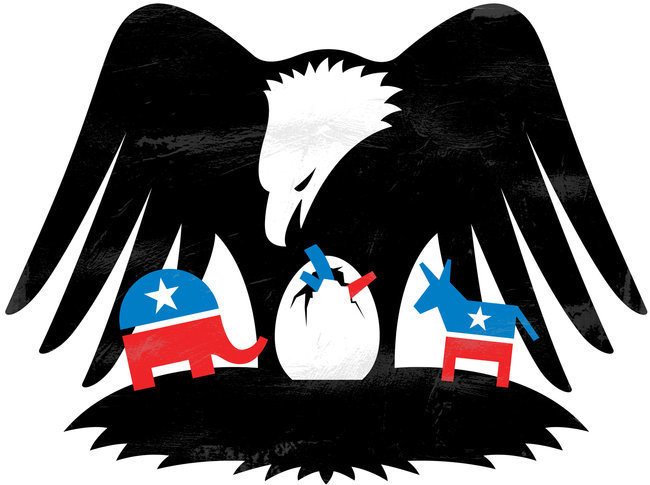
The Federalist and Anti-Federalists groups are known as _______________.
Governing Groups.
Political Parties.
Militia's.
Delegates.
22
Multiple Choice
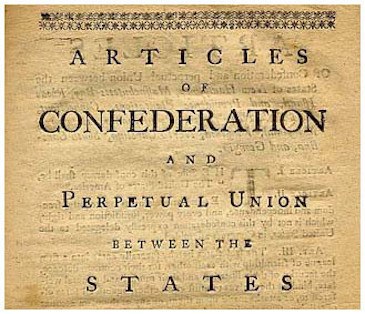
Federalists believed that the Articles of Confederation were a ________ and wanted to instead set up a ________ National Government.
Success, Strong.
Success, Weak.
Failure, Weak.
Failure, Strong.
23
Multiple Choice
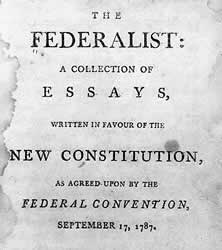
The "Federalist Papers" were written to:
Explain and convince the people into supporting the new U.S Constitution.
spark a new revolution among the American people against their government.
oppose a strong centralized government.
create a new monarchy.
24

The Great Compromise
•
Was a plan worked out by Rodger
Sherman of Connecticut
•
Called for a two-house representatives
1.
A lower house known as the House of
representatives
2.
An upper house known as the Senate
25

House of Representatives
• Also known as the lower house of Congress
• Members would be elected by popular vote
• Seats would be awarded to each state based on population
26


Senate
• Also known as the upper house of Congress
• Members would be chosen by the state legislature
• Each state would have two senators
• Senator is the name given to the elected members of
the senate.
27

Counting the slaves
• Southerners wanted to include slaves in the
population count
• If slaves were counted, southern states
would have more representative in the
House of Representatives
• Northerners argued that since slaves could
not vote they should not be counted
28

Three-fifths Compromise
• Delegates agreed that three-fifths of the
slaves in any state would be counted
• For example, if a state had 5,000 slaves,
3,000 of them would be counted in the
state’s population.
• Because the delegates did not want to use
the word "slave" in the document, they
stated that "free persons" would count as
one and "non-free persons" would count as
three-fifths of a person.
29


Signing of the Constitution
• The Constitution was ready to be signed
on September 17, 1787
• Of the 42 delegates remaining in
Philadelphia, 39 signed the document
30
Multiple Choice

What is a constitution?
A Written Plan of Government.
A Declaration
Document that criticized Britain
A Written Plan to fight the American Revolution
31
Multiple Choice
Who was the main author of the Declaration of Independence?
Thomas Jefferson
Benjamin Franklin
John Adams
John Hancock
32
Multiple Choice

33
Multiple Choice
Congress is made up of two Houses called what?
House of Representatives and Senate
Judicial and Legislative
Executive and Senate
34
Multiple Choice
What was America's first constitution called?
The Articles of Confederation
The Constitution of the United States
The Founding Principles of the United States
The Articles of American Constitution
35
Multiple Choice
What was the major problem with the Articles of Confederation?
The central government was too powerful and controlling
The state governments were too weak to solve problems
The central government was too weak to solve issues facing the country
The president was given too much power.
36
Multiple Choice
How many states had to agree before an Article could be amended or changed?
9 out of 13 states had to agree
All 13 states had to agree
A majority of states had to agree
10 out of 13 states had to agree
Reviewing the Declaration of Independence, Articles of Confederation, and Constitution
Show answer
Auto Play
Slide 1 / 36
SLIDE
Similar Resources on Wayground
![C5 Lesson 3 - A Call to Arms [Quizziz]](https://cf.quizizz.com/image/image-loader.svg)
32 questions
C5 Lesson 3 - A Call to Arms [Quizziz]
Presentation
•
8th Grade
25 questions
WIN Review SS8CG4 a-d
Presentation
•
8th Grade
28 questions
Byzantine Empire
Presentation
•
7th Grade
31 questions
qualitative graphs
Presentation
•
8th Grade
32 questions
Unit 0A Test Review
Presentation
•
8th Grade
30 questions
Sources/Types of Law
Presentation
•
7th - 8th Grade
26 questions
Battles of Gettysburg and Vicksburg
Presentation
•
8th Grade
26 questions
Argumentative Writing
Presentation
•
8th Grade
Popular Resources on Wayground
10 questions
How much do you know about our Portrait of an Eagle?

Quiz
•
10th Grade
10 questions
Fast Food Slogans
Quiz
•
6th - 8th Grade
21 questions
Continents and Oceans
Quiz
•
6th Grade
20 questions
Parts of Speech
Quiz
•
5th Grade
16 questions
Subject & Predicate
Quiz
•
5th Grade
25 questions
Multiplication Facts
Quiz
•
5th Grade
12 questions
Map Skills
Quiz
•
3rd Grade
22 questions
Continents and Oceans
Quiz
•
5th Grade
Discover more resources for Social Studies
10 questions
Exploring the Age of Exploration: Key Events and Figures

Interactive video
•
6th - 10th Grade
13 questions
13 Colonies Map Quiz
Quiz
•
6th - 8th Grade
20 questions
13 original colonies
Quiz
•
8th Grade
10 questions
Causes of the American Revolution
Quiz
•
8th Grade
10 questions
Pillars of Free Enterprise
Quiz
•
6th - 8th Grade
26 questions
QA 1 Review
Quiz
•
6th - 8th Grade
10 questions
Exploring the 13 Colonies Regions
Interactive video
•
6th - 10th Grade
3 questions
Unit 3 Road to Revolution Vocabulary
Quiz
•
8th Grade