

Highway Robbery

Presentation
•
History
•
Professional Development
•
Hard

Mrs Phillips
FREE Resource
10 Slides • 17 Questions
1
Fill in the Blanks
Between __ and ___ people would be involved in a smuggling gang.
2
Drag and Drop
3
Reorder
Reorder the following
Gangs would have to be watchful for
officers from HM Customs. The coastline was divided
into 33 areas, each with teams
of preventative officers, whose job it was to
prevent smuggling, or catch the smugglers.
4
Multiple Choice
Why were smugglers often not convicted, even when they had been caught?
The HM Customs were on their side
The gangs threatened the authorities
People 'faced the wall' so they couldn't identify smugglers
There weren't enough officials
5
Fill in the Blanks
The main gangs were the _________ and ________ gangs, who operated along the south coast of England and who dealt with several loads of smuggled goods every week.
6
Dropdown
7
Drag and Drop
8
Reorder
Reorder the following
Watchtowers were also built along the south coast
of England to protect against
French
invasion. These watchtowers made it far more likely
that smugglers would be
caught. The creation of the Coast
Guard in the 1820s also led to fewer opportunities for smugglers.
9
Fill in the Blanks
The watchtowers were called
10

11

12
Multiple Choice
Which of the following was NOT a cause of highway robbery?
Turnpike roads
social crime
lack of banking
unpoliced roads
13

14
Dropdown
15

16

17
Dropdown
18

19
Multiple Choice
Why were highwaymen considered to be socially superior to footpads.
They had horses
They had more weapons
They were able to steal more goods
They were more polite
20

21

22
Fill in the Blanks
The most famous highwayman was Dick ______. Before turning to highway robbery, he was a _______, who joined a gang of robbers. He stole cattle, burgled houses and stole money from people.
23
Multiple Choice
What crime was Dick Turpin eventually executed for?
stealing horses
burglary
stealing cattle
murder
24

25
Dropdown
26
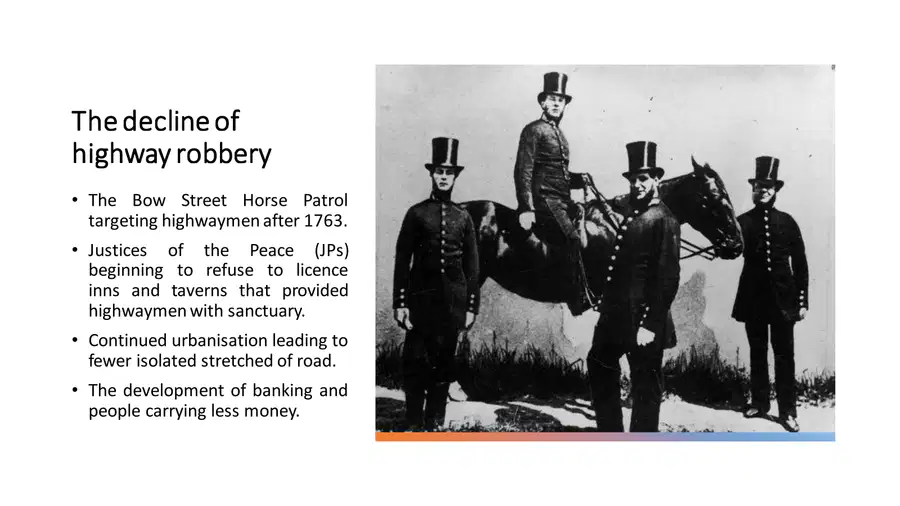
27
Multiple Select
Which of the following were reasons for the decline in highway robbery?
Bow Street Horse Patrol
Martello Towers
More banks
Fewer isolated roads
Between __ and ___ people would be involved in a smuggling gang.
Show answer
Auto Play
Slide 1 / 27
FILL IN THE BLANKS
Similar Resources on Wayground

20 questions
Forces Mastery Lesson 8.9A
Presentation
•
KG - University
19 questions
Gods
Presentation
•
Professional Development
19 questions
Modals of obligation
Presentation
•
Professional Development
19 questions
TWK (Bela Negara) MODUL 2
Presentation
•
Professional Development
20 questions
Present Perfect
Presentation
•
University
21 questions
Chapter 24: Section One: Boom Times
Presentation
•
KG
22 questions
MAC2 | Vocabulary | L05
Presentation
•
Professional Development
Popular Resources on Wayground
10 questions
Safety Day 2026 – Student Review

Quiz
•
9th Grade
21 questions
Continents and Oceans
Quiz
•
6th Grade
20 questions
Parts of Speech
Quiz
•
5th Grade
16 questions
Subject & Predicate
Quiz
•
5th Grade
25 questions
Multiplication Facts
Quiz
•
5th Grade
12 questions
Map Skills
Quiz
•
3rd Grade
22 questions
Continents and Oceans
Quiz
•
5th Grade
15 questions
Rounding Decimals
Quiz
•
5th Grade