
Exploring Protein Channels: Unlocking the Secrets of Cell Membrane Transport

Presentation
•
Biology
•
10th Grade
•
Practice Problem
•
Hard

Ferdinand Estrella
Used 1+ times
FREE Resource
9 Slides • 4 Questions
1
Unlocking the Secrets of Cell Membrane Transport
2
Protein Channels:
3
Multiple Choice
What drives passive transport of molecules across the cell membrane?
Concentration gradient
Osmosis
Active transport
Facilitated diffusion
4
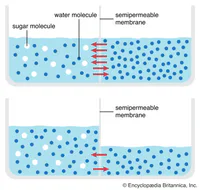
Osmosis
Osmosis is the passive transport of molecules across the cell membrane. It occurs when water molecules move from an area of lower solute concentration to an area of higher solute concentration. This process is crucial for maintaining the balance of water and solutes in cells and plays a role in various biological processes.
5
Exploring Protein Channels
6
Multiple Choice
What is the process that involves equal concentration inside and outside the cell?
H₂O movement
Concentration
Osmosis
ISOTONIC
7
Isotonic
Trivia: Isotonic refers to a process where the concentration inside and outside the cell is equal. It allows for the free movement of water molecules without any net movement. This balance is crucial for maintaining cell shape and function. Osmosis is the specific type of H₂O movement that occurs during isotonic conditions.
8
Exploring Protein Channels
9
Multiple Choice
What is the process by which water goes to where there are more particles?
Diffusion
Active transport
Osmosis
Facilitated diffusion
10
Osmosis
Osmosis is the process by which water moves from an area of low solute concentration to an area of high solute concentration through a semipermeable membrane. It is essential for maintaining the balance of water and solutes in living organisms. Osmosis plays a crucial role in processes such as nutrient absorption in plants and water regulation in animal cells.
11
Protein Channels:
12
Multiple Choice
What is the process of determining the solution's concentration relative to the cell called?
Osmosis
Diffusion
Active transport
Endocytosis
13
Osmosis
Osmosis is the process of determining the solution's concentration relative to the cell. It involves the movement of solvent molecules from an area of lower solute concentration to an area of higher solute concentration through a semipermeable membrane. This process is crucial for maintaining the balance of water and solutes in living organisms.
Unlocking the Secrets of Cell Membrane Transport
Show answer
Auto Play
Slide 1 / 13
SLIDE
Similar Resources on Wayground

10 questions
Respiration
Presentation
•
10th Grade
10 questions
Kingdom Animalia
Presentation
•
10th Grade
10 questions
Tumbuhan Biji (Spermatophyta)
Presentation
•
10th Grade
10 questions
Codons
Presentation
•
10th Grade
11 questions
Benchmark Number 2 9th
Presentation
•
10th Grade
10 questions
Cellular Respiration Review / Fermentation
Presentation
•
9th Grade
10 questions
The Chemistry of Food
Presentation
•
10th Grade
11 questions
Teenager 5 Session 24: Pronunciation & Speaking
Presentation
•
KG
Popular Resources on Wayground
10 questions
How much do you know about our Portrait of an Eagle?

Quiz
•
10th Grade
10 questions
Fast Food Slogans
Quiz
•
6th - 8th Grade
21 questions
Continents and Oceans
Quiz
•
6th Grade
20 questions
Parts of Speech
Quiz
•
5th Grade
16 questions
Subject & Predicate
Quiz
•
5th Grade
25 questions
Multiplication Facts
Quiz
•
5th Grade
12 questions
Map Skills
Quiz
•
3rd Grade
22 questions
Continents and Oceans
Quiz
•
5th Grade
Discover more resources for Biology
20 questions
Characteristics of Life
Quiz
•
9th - 10th Grade
10 questions
Exploring the 4 Major Macromolecules and Their Functions

Interactive video
•
9th - 12th Grade
20 questions
Cell organelles and functions
Quiz
•
10th Grade
20 questions
Cell Transport
Quiz
•
9th - 12th Grade
20 questions
Macromolecules
Quiz
•
10th Grade
16 questions
Population Ecology
Quiz
•
9th - 12th Grade
16 questions
AP Biology: Unit 1 Review (CED)
Quiz
•
9th - 12th Grade
10 questions
Quick 10Q: Carbohydrates
Quiz
•
9th - 12th Grade