

Supreme Court Cases/Notes

Presentation
•
Social Studies
•
•
Hard

Donald Hubbard
FREE Resource
13 Slides • 0 Questions
1

Supreme Court Cases
2
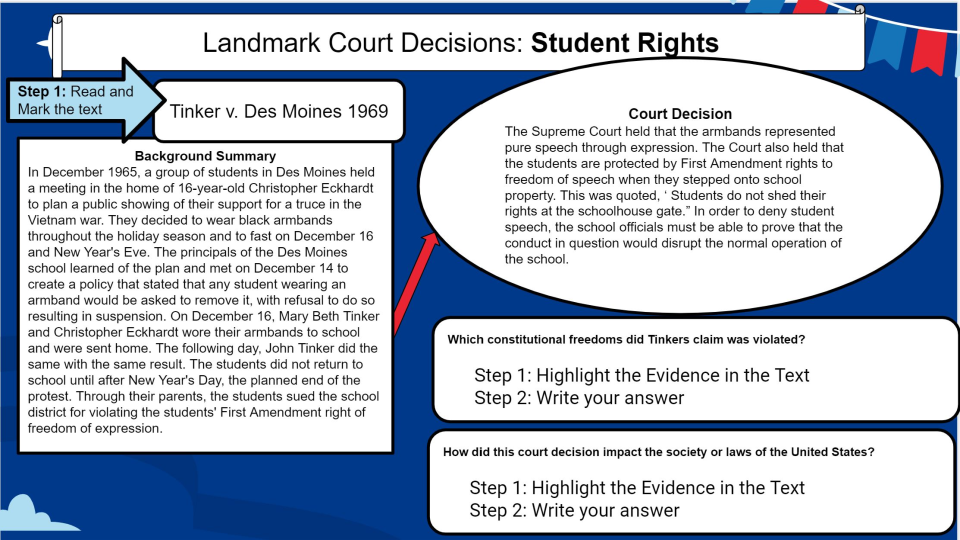
3
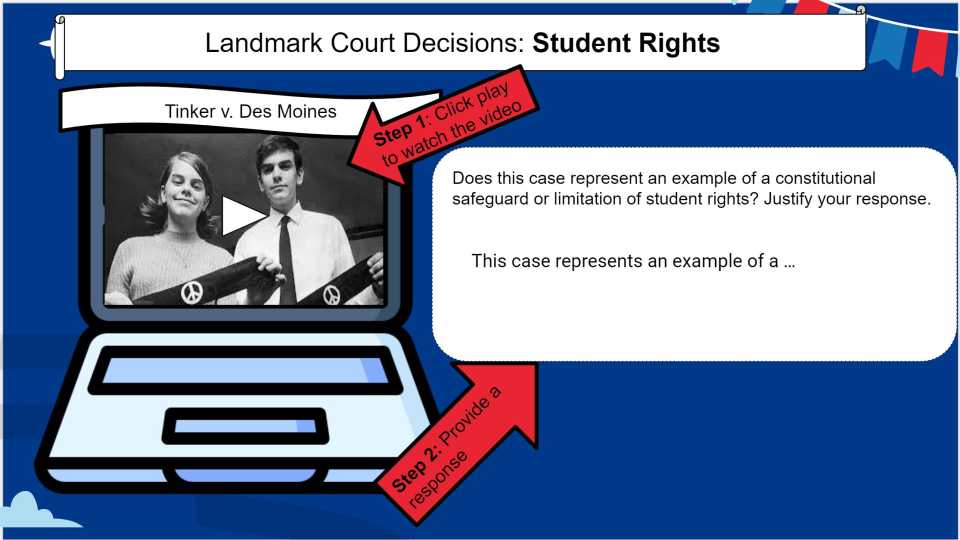
4
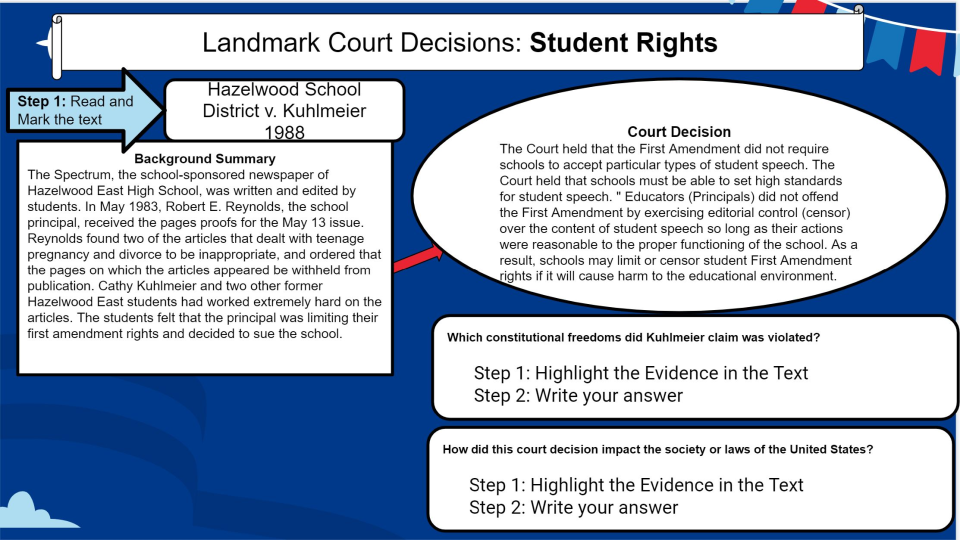
5
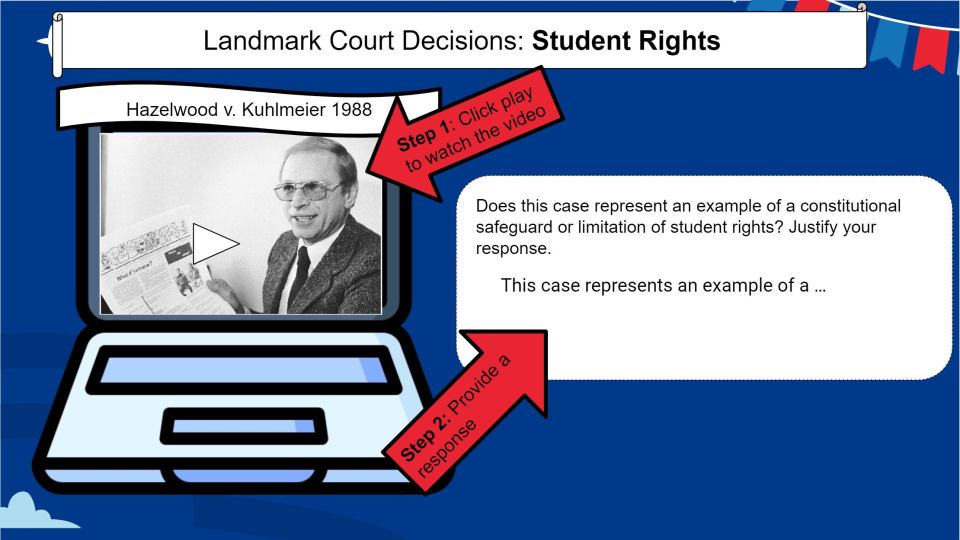
6
7
8
4th Amendment
Exclusionary Rule
This rule holds that if police violate your constitutional rights in order to obtain evidence, they cannot use that evidence against you.
9
5th/6th Amendment
In Miranda v. Arizona, the U.S. Supreme Court rules that the Fifth Amendment right against self-incrimination is not limited to in-court testimony, but also applies when a person is taken into police custody for questioning. The Court also rules that criminal suspects must be told of their Sixth Amendment right to an attorney. Once a person “indicates in any manner that he does not wish to be interrogated,” the police must stop asking questions – even if the person has answered questions up to that point, the Court says.
10
6th Amendment
In Gideon v. Wainwright, the U.S. Supreme Court unanimously extends to state court trials the rule it established for federal court trials nearly 30 years earlier in Johnson v. Zerbst: The Sixth and 14th Amendments guarantee indigent defendants the right to have an attorney appointed, at the government’s expense, if they are charged with a serious crime.
11
8th Amendment
In Ingraham v. Wright, the U.S. Supreme Court refuses to find that the Eighth Amendment bars punishment of schoolchildren by “paddling.” Based on the amendment’s history and its language, the Court concludes that the amendment applies only to punishment of criminal offenses, not civil offenses such as breaking school rules.
12
Marbury v. Madison (1803) Argued: February 11, 1803 Decided: February 24, 1803
In the early 1800s, the Constitution was still very new. There were a lot of questions about what it meant and what powers it gave to the different branches of the government. This was true when it came to the powers of the Supreme Court. Many of the powers the Supreme Court has today, like the power to declare laws unconstitutional, did not yet exist. This case is important because it explains how the Supreme Court got that power.
13

Supreme Court Cases
Show answer
Auto Play
Slide 1 / 13
SLIDE
Similar Resources on Wayground

9 questions
Holocaust Video Review
Presentation
•
8th Grade
8 questions
Colorado
Presentation
•
2nd Grade
11 questions
The Atlantic Slave Trade
Presentation
•
9th - 12th Grade
11 questions
Branches of Government
Presentation
•
3rd Grade
11 questions
United Kingdom's Parliamentary Democracy
Presentation
•
6th Grade
11 questions
New France
Presentation
•
5th Grade
11 questions
President of India
Presentation
•
University
10 questions
Supply and Demand
Presentation
•
6th Grade
Popular Resources on Wayground
20 questions
STAAR Review Quiz #3

Quiz
•
8th Grade
20 questions
Equivalent Fractions
Quiz
•
3rd Grade
6 questions
Marshmallow Farm Quiz
Quiz
•
2nd - 5th Grade
20 questions
Main Idea and Details
Quiz
•
5th Grade
20 questions
Context Clues
Quiz
•
6th Grade
20 questions
Inferences
Quiz
•
4th Grade
19 questions
Classifying Quadrilaterals
Quiz
•
3rd Grade
12 questions
What makes Nebraska's government unique?
Quiz
•
4th - 5th Grade
Discover more resources for Social Studies
20 questions
STAAR Review Quiz #3
Quiz
•
8th Grade
13 questions
The History of Easter Baskets
Quiz
•
3rd Grade
10 questions
Why Do We Play Tricks on April Fool's Day?
Quiz
•
3rd Grade
8 questions
Dr. Binocs, The Fun and History of April Fool's Day
Quiz
•
4th Grade
44 questions
2023 8th Grade US History STAAR Practice
Quiz
•
8th Grade
15 questions
Civil War Effects on Texas Review
Quiz
•
6th - 8th Grade
11 questions
The Cold War: Crash Course US History #37

Interactive video
•
10th Grade
22 questions
SS8H7 GMAS PREP
Quiz
•
8th Grade